

Now Reading: What Is Horse Rearing? A Guide to Understanding and Managing It
-
01
What Is Horse Rearing? A Guide to Understanding and Managing It


Have you ever been in the saddle when suddenly the front legs of your horse lift off the ground? It can be a terrifying moment for any rider, whether you are a beginner or a seasoned pro. This behavior, known as horse rearing, is one of the most dangerous actions a horse can take while being ridden or handled. It puts both the horse and the rider at significant risk of injury.
Understanding why a horse rears is the first step toward solving the problem. Horses don’t just act out for no reason; usually, they are trying to communicate something important. It might be pain, fear, confusion, or even an excess of energy. In this guide, we will dive deep into the world of horse rearing, exploring the root causes and offering practical solutions to keep you and your equine friend safe.
Key Takeaways
- Safety First: Rearing is dangerous; always prioritize rider safety.
- Root Causes: Pain, fear, and confusion are the top reasons for rearing.
- Health Check: Always consult a vet to rule out physical issues first.
- Training: Retraining requires patience and often professional help.
- Management: Diet and turnout time play a huge role in behavior.
Why Is Horse Rearing So Dangerous?
When we talk about dangerous behaviors in equines, horse rearing is often at the top of the list. Unlike bucking or shying, rearing involves the horse standing on its hind legs. This shifts their center of gravity backward, which can lead to a disastrous flip if they lose their balance.
A horse that flips over backward can crush the rider. This is a severe safety hazard that can result in broken bones, concussions, or worse. Even if the horse doesn’t flip, the height from which a rider might fall is significant. The unpredictability of the action makes it hard to stay seated.
Furthermore, the horse risks injury to itself. Landing hard on the front legs can cause tendon damage, while a flip can fracture the horse’s spine or pelvis. Recognizing the severity of horse rearing is crucial. It is not a behavior to be taken lightly or ignored in hopes that it will just go away on its own. Immediate action and investigation are necessary.
The Physics of the Rear
When a horse rears, they are essentially fighting gravity. A horse is designed to carry weight on four legs. When they shift that weight to two, their stability is compromised. If the rider pulls back on the reins—a natural reaction to losing balance—it pulls the horse’s head back, making a backward fall much more likely.
Common Physical Causes of Horse Rearing
Before assuming your horse is just being “naughty,” you must investigate physical causes. Pain is the number one reason for behavioral issues. A horse cannot speak, so they use their body to scream “Stop!” Horse rearing is often that scream.
dental Issues
Teeth problems are a major culprit. If a horse has sharp points on their molars or a wolf tooth interfering with the bit, the pressure from the rider’s hands can cause excruciating pain. Rearing is a way for the horse to escape that pressure. Regular dental check-ups are non-negotiable for a happy horse.
Saddle Fit and Back Pain
Imagine running a marathon with a backpack that digs into your spine. You would probably want to stop, too. Ill-fitting saddles can pinch nerves or press on sensitive muscles. When a rider sits on a sore back, the horse might rear to alleviate the weight. A professional saddle fitter can determine if your tack is the problem.
Gastric Ulcers
Ulcers are surprisingly common in horses and are incredibly painful. The splashing of stomach acid during exercise can cause discomfort that leads to explosive behaviors like horse rearing. If your horse is girthy or sensitive to the touch around the belly, ulcers might be the issue.
|
Potential Physical Issue |
Symptoms to Watch For |
Recommended Action |
|---|---|---|
|
Dental Pain |
Dropping food, fighting the bit, head tossing |
Schedule an equine dentist immediately. |
|
Saddle Fit |
White hairs on withers, soreness after riding |
Consult a certified saddle fitter. |
|
Ulcers |
Weight loss, girthiness, dull coat |
Ask your vet about scoping and medication. |
|
Lameness |
Head bobbing, reluctance to move forward |
Full lameness exam by a veterinarian. |
Psychological Triggers for Horse Rearing
Once pain is ruled out, we have to look at the horse’s mind. Horses are prey animals with a strong flight response. When they feel trapped or overwhelmed, they react. Horse rearing can be a manifestation of psychological distress.
Fear and Anxiety
If a horse is genuinely terrified of an object, a location, or a situation, their instinct is to run away. If the rider prevents them from running (by holding the reins tight), the energy has to go somewhere. Often, it goes up. This is a “flight” response turned vertical.
Confusion and Frustration
A rider who gives conflicting signals can cause a horse to rear. For example, kicking the horse to go forward while simultaneously pulling the reins to stop creates a “pressure cooker” effect. The horse doesn’t know what to do, gets frustrated, and rears to escape the conflicting aids.
Separation Anxiety
Some horses are “herd-bound.” When you try to ride them away from their pasture mates, they may panic. Horse rearing in this context is the horse’s desperate attempt to return to the safety of the herd. This requires gradual desensitization training.
The Role of Rider Error in Horse Rearing
It is a hard pill to swallow, but sometimes the rider is the problem. We must be honest with ourselves about our riding skills and how they affect our horses.
Heavy Hands
Riders who rely too much on their hands for balance or control can accidentally cause horse rearing. Constant pressure on the bit can make a horse feel trapped. They rear to get “behind the bit” and escape the relentless pulling. Learning to ride with an independent seat and soft hands is vital.
Over-facing the Horse
Asking a horse to do something they are not physically or mentally ready for is unfair. If you push a young horse too hard, too fast, they may rear as an objection. Training should always proceed in small, logical steps that the horse can understand.
The “Hold and Kick” Mistake
This is the most common rider error leading to rearing. If you want to move forward, you must release the front end. If you kick while holding tight, you are essentially closing the front door while pushing from the back. The energy has no exit route except upwards.
How to Handle a Rear in the Moment
If you find yourself on a rearing horse, knowing what to do can save your life. Panic is your enemy. You must act quickly and instinctively.
1. Loosen the Reins Immediately
This is counter-intuitive, but you must throw your hands forward toward the horse’s ears. You need to give the horse their head back so they can balance. Pulling back will pull them over on top of you.
2. Lean Forward
Shift your weight forward and grab the horse’s neck or mane. Do not lean back. Leaning back adds weight to the hindquarters, making a flip more likely. Hug the neck if you have to.
3. Disengage the Hindquarters
Once the horse’s front feet touch the ground, try to turn them in a tight circle. This is called a “one-rein stop.” By bending the neck and disengaging the hind end, you make it very difficult for the horse to rear again.
4. Drive Forward
Horse rearing happens when forward motion stops. Once they are back on the ground, encourage them to move their feet. A horse that is moving forward with energy is much less likely to rear.
Assessing Your Horse’s Diet
What goes into your horse affects what comes out in their behavior. Many riders overfeed their horses, providing high-energy grains to animals that only do light work. This excess energy can easily turn into explosive behaviors like horse rearing.
Too Much Sugar and Starch
Feeds high in sugars and starches (like sweet feeds) can make some horses “hot” or hyperactive. It is like giving a toddler a candy bar and asking them to sit still. Consider switching to a high-fiber, high-fat diet that provides cool, slow-release energy.
Lack of Forage
Horses are designed to graze constantly. If they go long periods without hay or grass, they can develop ulcers (as mentioned earlier) or simply become stressed. A stressed horse is a reactive horse. Ensuring your horse has access to forage is a simple way to reduce behavioral issues.
Supplements
There are calming supplements available on the market containing ingredients like magnesium and thiamine. While these won’t fix a training problem, they can help take the edge off a nervous horse, making training easier.
The Importance of Groundwork
Training starts on the ground, not in the saddle. If your horse does not respect you on the ground, they won’t respect you on their back. Groundwork establishes boundaries and leadership without the immediate danger of riding.
Establishing Personal Space
A horse that pushes into your space on the ground is showing a lack of respect. Use exercises that require the horse to yield to pressure, back up, and move their hips away from you. This translates to better responsiveness under saddle.
Desensitization
Expose your horse to scary objects (tarps, bags, flags) in a controlled environment on the ground. If they can learn to stand still and relax when faced with fear on the ground, they are less likely to resort to horse rearing when spooked under saddle.
Lunging for Respect
Lunging isn’t just about tiring a horse out. It is about checking in with their attitude. Are they listening to your voice commands? Are they paying attention to your body language? If the answer is no, do not get on.
Professional Training Options
Sometimes, the issue of horse rearing is too big for an amateur owner to handle alone. There is no shame in asking for help. In fact, it is the responsible thing to do.
Sending the Horse Away
Sending your horse to a professional trainer for 30 to 60 days can reset their behavior. Professionals have the timing, feel, and experience to correct deep-seated issues that an owner might accidentally be reinforcing.
Taking Lessons
Often, the horse and rider need to learn together. A trainer can watch you ride and point out subtle mistakes you didn’t know you were making. They can guide you through the process of correcting a rear safely.
Veterinary Behaviorists
In extreme cases, you might consult a veterinary behaviorist. These experts combine veterinary medicine with animal psychology to diagnose and treat complex behavioral disorders.
Management Changes to Reduce Rearing
Sometimes lifestyle changes can make a huge difference in a horse’s behavior. A horse that is kept in a stall for 23 hours a day is a ticking time bomb of energy.
Increase Turnout Time
Horses need to move. Being cooped up builds excess energy and frustration. Increasing turnout time allows the horse to burn off steam naturally. A horse that has run around in a field all morning is much less likely to rear out of sheer excitement.
Socialization
Horses are herd animals. Isolation can cause depression and anxiety. Ensuring your horse has friends to interact with can improve their overall mental state, making them more cooperative during work.
Consistent Routine
Horses thrive on routine. Sudden changes in feeding times or exercise schedules can cause stress. Try to keep their daily life as predictable as possible.
Retraining the Rearing Horse
Once you have ruled out pain and adjusted their lifestyle, you have to retrain the behavior. This requires patience and a systematic approach.
1. Go Back to Basics
Forget about jumping courses or dressage tests for a while. Focus on simple walk-trot transitions and steering. Ensure the horse responds lightly to the leg and rein aids.
2. Forward is Key
The antidote to rearing is forward movement. When you feel the horse getting “stuck” or light in the front end, drive them forward immediately. Do not let them stop and think about going up.
3. Don’t Pick a Fight
If you know a certain corner of the arena causes your horse to rear, don’t ride straight into it and demand submission. Work near the scary spot, gradually getting closer as the horse relaxes. Picking a fight you might lose will only reinforce the horse rearing behavior.
4. Reward Relaxation
The moment your horse softens, lowers their head, or takes a deep breath, reward them. Release the pressure. This positive reinforcement tells the horse that relaxation is the answer, not rearing.
Equipment Check: Bits and Bridles
We discussed saddle fit, but what is in your horse’s mouth matters just as much. The wrong bit can cause severe resistance.
Is the Bit Too Harsh?
A bit that is too severe for a horse’s level of training can cause pain and fear. If a horse is afraid of the contact, they may rear to avoid it. Try switching to a softer, simpler snaffle bit to see if the behavior improves.
Bitless Options
Some horses simply hate bits. They may have had trauma to their mouth in the past. Riding in a bitless bridle or a hackamore can be a game-changer for these horses. It removes the source of pain and can stop the horse rearing instantly if mouth pain was the cause.
Auxiliary Equipment
Avoid using tie-downs or standing martingales to physically prevent rearing. These devices can actually make the situation more dangerous. If a horse rears against a tie-down, they can lose their balance even faster and flip over.
Case Study: Analyzing a Rearing Incident
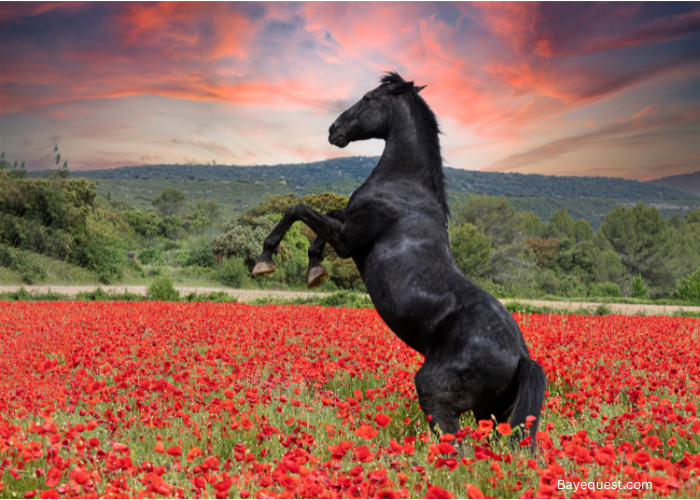
Let’s look at a hypothetical scenario to understand how to apply what we’ve learned.
The Scenario: Sarah is riding her gelding, Buster. Every time she tries to leave the barn area to go on a trail ride, Buster stops, refuses to move, and then threatens to rear.
Analysis:
- Is it pain? Sarah checks his back and teeth. All clear.
- Is it fear? Buster is bold in the arena, so it’s likely not fear of the trail.
- Is it “herd-bound” behavior? Yes. Buster doesn’t want to leave his friends.
- The Fix: Sarah needs to work on groundwork near the barn. She should ride Buster just a few feet away, then return, gradually increasing the distance. She must keep his feet moving. If he stops, she turns him in small circles rather than letting him stand and rear.
This approach addresses the psychological root (separation anxiety) without using force or causing a dangerous rear.
Safety Gear for the Rider
If you are dealing with a horse that is known to rear, you must protect yourself.
- Helmet: A certified, well-fitting helmet is mandatory.
- Body Protector: A safety vest can protect your ribs and spine if you fall.
- Safety Stirrups: These ensure your foot doesn’t get caught in the stirrup if you are thrown, preventing you from being dragged.
- Gloves: Good grip is essential when handling reins in a panic situation.
For more insights on premium lifestyle and safety choices, you can visit Forbes Planet. They offer a wealth of information on high-quality living.
When to Retire a Horse
Sadly, not every horse can be fixed. If a horse has learned that horse rearing is a successful way to get out of work, and they are willing to endanger the rider to do it, they may be too dangerous to ride.
If you have exhausted all medical and training options and the behavior persists, retirement might be the safest choice. A horse can live a happy life as a companion animal without ever being ridden again. Your safety is worth more than any horse’s riding career.
Selling a Rearing Horse
Be very careful about selling a known rearer. You have an ethical obligation to disclose the behavior to any potential buyer. Selling a dangerous horse to an unsuspecting beginner can lead to tragedy.
Frequently Asked Questions (FAQ)
Q: Can a horse rear out of happiness?
A: Yes, horses can rear while playing in the field out of joy or excess energy. However, under saddle, it is almost always a sign of resistance, pain, or fear.
Q: Should I hit my horse between the ears if they rear?
A: No! This is an old myth and it is very dangerous. Hitting a horse on the head can make them “head shy” or cause them to rear even higher in panic. It does not teach them anything positive.
Q: How long does it take to fix a rearing problem?
A: It depends on the cause. If it is due to a sore tooth, fixing the tooth might solve it instantly. If it is a learned behavior, it could take months of consistent training to resolve.
Q: Is rearing genetic?
A: Rearing itself is not genetic, but temperament is. A horse that is naturally high-strung or reactive may be more prone to rearing if not handled correctly.
Q: Can a chiropractor help with horse rearing?
A: Absolutely. Misalignments in the spine or pelvis can cause pain that leads to rearing. Many horses show dramatic improvement after a chiropractic adjustment.
Conclusion
Dealing with horse rearing is one of the most challenging aspects of horsemanship. It tests your courage, your patience, and your problem-solving skills. Remember, the horse is not your enemy. They are communicating a problem that they need you to solve.
By systematically ruling out pain, checking your equipment, analyzing your own riding, and applying consistent training methods, you can overcome this dangerous hurdle. Always put safety first, and never hesitate to call in a professional if you feel out of your depth. With the right approach, you can get all four feet back on the ground and enjoy a safe, happy partnership with your horse. For a broader definition and history of these behaviors, you can find a link from https://www.wikipedia.org/ regarding horse rearing to understand the ethology behind it.
Related Posts


Stay Informed With the Latest & Most Important News
Previous Post
Next Post










Advertisement