
Now Reading: What County Am I In? A Simple Guide to Finding Your Location
-
01
What County Am I In? A Simple Guide to Finding Your Location

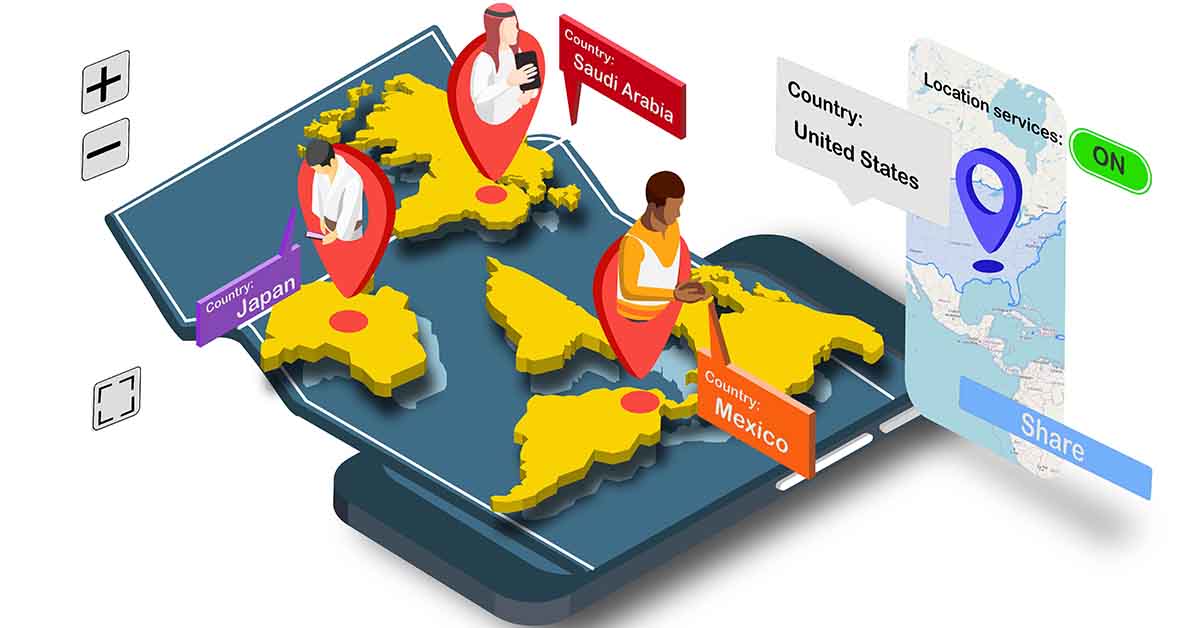
Have you ever been traveling, filling out a form, or just curious about your surroundings and asked yourself, “what county am i in?” It’s a common question that can sometimes be surprisingly tricky to answer. Counties are fundamental administrative divisions in the United States, impacting everything from local laws and taxes to emergency services and voting districts. Knowing your county is more than just a piece of trivia; it’s practical information that connects you to your local community and government. This guide will walk you through the simplest and most effective ways to answer that question, whether you’re at home, on the road, or anywhere in between.
We’ll explore various methods, from using the GPS on your smartphone to understanding physical maps and local signs. By the end of this article, you’ll have a toolbox of resources to quickly and accurately determine your county, no matter where you are in the country.
Key Takeaways
- Your smartphone is the fastest tool: Use built-in map apps or voice assistants to instantly find your current county.
- Websites offer detailed information: Online tools and government websites can provide your county along with other important jurisdictional details.
- Physical signs and documents are reliable sources: Road signs, property deeds, and tax documents all contain county information.
- Counties are important for many reasons: They manage local government functions, including law enforcement, courts, public health, and elections.
- Not all states are the same: Louisiana has parishes and Alaska has boroughs, which are equivalent to counties in other states.
Why Knowing Your County Matters
You might think knowing your county is only useful for geography buffs, but it has significant real-world implications. Counties, or their equivalents, are the primary level of local government in most of the United States. They are responsible for a wide range of essential public services that directly affect your daily life. When you stop and wonder, “what county am i in?” you’re also asking about the jurisdiction that oversees many critical functions in your immediate area.
For example, the county sheriff’s department often provides law enforcement services, especially in unincorporated areas outside of city limits. County governments maintain local roads, run public health departments, and manage emergency services like 911 dispatch. When it comes to civic duties, your county is central. It determines your voting district for local, state, and federal elections. Your property taxes are assessed and collected at the county level, funding schools, libraries, and parks. Legal matters, from marriage licenses to court filings, are also handled by county clerks and courthouses. Understanding your county helps you navigate these systems, access services, and be an informed resident.
Using Your Smartphone to Answer “What County Am I In?”
In today’s connected world, the device in your pocket is often the quickest way to solve the mystery of your location. Your smartphone’s built-in GPS capabilities make it incredibly easy to pinpoint exactly where you are. If you find yourself asking, “what county am i in?” your first and best bet is to turn to your phone. The process is simple, fast, and requires no special knowledge.
Most modern smartphones come with pre-installed map applications like Apple Maps for iOS users and Google Maps for Android users. These apps are designed to do more than just give you driving directions; they are powerful tools for identifying geographical and political boundaries. In just a few taps, you can get a definitive answer. This method is particularly useful when you’re traveling or in an unfamiliar area where you can’t rely on local landmarks or signs. It’s the 21st-century solution to a classic geographical question, available anytime and anywhere you have a signal.
Google Maps on Android and iOS
Google Maps is a universally popular application that can quickly tell you which county you’re in. The process is straightforward:
- Enable Location Services: First, ensure that your phone’s location services or GPS are turned on. You can usually find this option in your phone’s main settings menu under “Location” or “Privacy.”
- Open Google Maps: Launch the Google Maps app. It should automatically zoom in on your current location, marked by a blue dot.
- Tap and Hold: Press and hold your finger on the blue dot (or anywhere on the map you want to identify). A “Dropped pin” will appear on the screen, along with an address or coordinates at the bottom.
- View the Details: Swipe up on the information panel at the bottom of the screen. Google Maps will display detailed information about the pinned location, including the city, state, zip code, and most importantly, the county.
This method works whether you are checking your current location or exploring another area on the map. It’s a reliable way to solve the “what county am i in” puzzle in seconds.
Apple Maps on iOS
For iPhone users, Apple Maps offers a similarly simple and effective way to identify your county. The interface is clean and intuitive, making the process just as easy as with Google Maps.
- Turn On Location Services: Go to your iPhone’s Settings > Privacy & Security > Location Services and make sure the toggle is on.
- Open Apple Maps: Open the app. Your current location will be indicated by a blue pulsating dot.
- Find Your Location: If the map doesn’t center on you automatically, tap the arrow icon in the upper-right corner.
- Press and Hold: Long-press the blue dot or the specific spot you want to identify. A “Marked Location” pin will drop.
- See the County: Scroll down on the information card that appears. Along with the address and coordinates, Apple Maps will clearly list the county.
Just like that, the question of “what county am i in” is answered. It’s a built-in feature that many users overlook but is incredibly handy.
Using Voice Assistants: Siri and Google Assistant
For a completely hands-free approach, your phone’s voice assistant is your best friend. Both Siri and Google Assistant are programmed to understand and answer location-based questions. This is perfect for when you’re driving or have your hands full.
Simply activate your voice assistant and ask the question directly:
- For iPhone users: Say, “Hey Siri, what county am i in?”
- For Android users: Say, “Hey Google, what county am i in?”
The assistant will use your phone’s GPS to determine your location and respond verbally with the name of your current county. It doesn’t get much easier than that. This method is a perfect example of how technology simplifies our access to information, providing instant answers without needing to type or tap.
Top Online Tools and Websites
If you’re on a desktop computer or prefer using a web browser, there are numerous online tools designed specifically to answer the question, “what county am i in?” These websites often provide more than just the county name; they can offer a wealth of related data, including census information, property records, and local government details. They are excellent resources for those doing more in-depth research or planning.
These platforms work by using your IP address to estimate your location or by allowing you to enter a specific address manually. While using an IP address is less precise than a phone’s GPS, it’s often accurate enough to determine the correct county. For precise results, entering a full street address is the best approach. Many of these sites are free to use and serve as powerful digital atlases.
Using Search Engines
The simplest online method is to use a search engine like Google or Bing. Just typing “what county am i in” into the search bar will often yield an immediate result. These search engines are smart enough to use your device’s location information (with your permission) to provide a direct answer right at the top of the search results page.
Google, for example, will often display a “knowledge panel” or a direct answer box that states your city, county, and state. This is the digital equivalent of asking a local, but with the power of the entire internet behind it. It’s a fast, efficient, and reliable first step for anyone with an internet connection.
Specialized “What County Am I In” Websites
Several websites are dedicated solely to helping users identify their county. These sites are straightforward and easy to use. Typically, you visit the homepage, and it automatically detects your location and displays the county. Alternatively, you can type in any address in the United States to find its corresponding county.
Here are a few popular options:
- WhatCountyAmIIn.com: This website’s name says it all. It’s a simple, no-frills tool that gets the job done quickly.
- MapTechnica: This site offers a county lookup tool that provides detailed demographic and geographic data alongside the county name.
- USPS.com: The United States Postal Service website can help you find county information when you look up a ZIP code, though it may sometimes require a few extra clicks through their “Look Up a ZIP Code” tool by address.
These specialized sites are great because they focus on one task and do it well, providing a quick answer to your location query.
Government and Census Websites
For the most official and detailed information, government websites are the ultimate source of truth. The U.S. Census Bureau website is a treasure trove of geographic data. While it may require a bit more navigation, it offers unparalleled accuracy and depth.
The Census Bureau provides interactive maps and address lookup tools that can pinpoint not only your county but also your specific census tract and block. This level of detail is useful for research, community planning, and understanding demographic trends. Websites for your state or local government, like a property appraiser’s office, also allow you to search by address to find official county information. These resources are invaluable for anyone needing verified data for legal, administrative, or research purposes.
Finding Your County Offline
While technology provides instant answers, it’s not always available. You might be in an area with no cell service or have a dead battery. In these situations, traditional methods for figuring out “what county am i in?” are still incredibly useful. Learning to read your environment and use physical documents can make you a more self-reliant traveler and a more informed citizen.
From road signs on the highway to the fine print on official paperwork, clues about your county are often hiding in plain sight. These offline methods might take a little more effort, but they are just as accurate. They connect you to the physical infrastructure and administrative systems of the area you are in, offering a tangible sense of place that a digital map sometimes can’t.
Look for Road Signs
One of the most reliable offline methods is to pay attention to road signs, especially when entering a new town or region. Many highways and major roads have “Welcome” signs that display the county name. You’ll often see signs that say “Entering [County Name]” or “Welcome to [Town Name], [County Name].”
County governments are also responsible for maintaining many local roads. Look for signs identifying county routes, which are often marked with a specific shape or color unique to that county. Public works project signs, which list the responsible county commission or department, are another great clue. These signs are literally signposts telling you “what county am i in,” placed there by the very authority you’re trying to identify.
Check Official Documents
If you are at home or in your office, you have access to a wealth of documents that contain your county information. These official papers are legally tied to your specific location and are an authoritative source for identifying your county.
A few documents to check include:
- Property Deed or Lease Agreement: These legal documents will always list the county where the property is located.
- Property Tax Bills: Your tax bill is issued by the county government and will prominently feature its name.
- Voter Registration Card: This card lists all your voting districts, including your county.
- Vehicle Registration: Your car’s registration certificate typically includes the county where the vehicle is registered.
Checking these documents is a foolproof way to confirm your county without relying on any technology.
Use a Physical Map or Atlas
Before smartphones, physical maps and road atlases were the go-to tools for navigation. They are still highly effective and have the advantage of not needing batteries or a data signal. A good quality, up-to-date road atlas will show county lines clearly marked and labeled.
To use a physical map to find your county:
- Locate Your General Area: Find your approximate location on the map using nearby cities, highways, or geographical features like rivers and lakes.
- Identify County Lines: Look for the distinct, often lighter-colored or dashed lines that represent county boundaries.
- Find the County Name: The name of the county will be printed within its boundaries, usually in a large font.
Keeping a road atlas in your car is a great backup plan for any road trip, ensuring you can always answer the question, “what county am i in?”
Understanding County Equivalents in the U.S.
The term “county” is used in 48 of the 50 states, but two states have different names for their regional administrative bodies. While they function in much the same way as counties, their unique terminology is an interesting quirk of American geography and history. Understanding these differences is important, especially if you live in or are traveling through these states.
Recognizing these county equivalents is crucial for correctly identifying your location and navigating local government. When you ask “what county am i in” in Louisiana or Alaska, the answer will be a parish or a borough, respectively. These distinctions reflect the unique cultural and historical development of these states. For an even deeper look at global economic and political systems, one might check out resources like those found at https://forbesplanet.co.uk/ for broader context.
|
State |
County-Equivalent Name |
Number |
Notes |
|---|---|---|---|
|
Louisiana |
Parish |
64 |
The term originates from the original Roman Catholic church parishes. |
|
Alaska |
Borough |
19 organized, 1 unorganized |
The “unorganized borough” covers a vast area with no local government. |
|
Virginia |
Independent Cities |
38 |
These cities are not part of any county and function as county-level governments. |
|
Other |
Various |
Baltimore, St. Louis, and Carson City are also independent cities. |
Louisiana and Its Parishes
In Louisiana, the county-equivalent is called a parish. This terminology dates back to the state’s French and Spanish colonial history, when administrative districts were drawn based on the boundaries of Roman Catholic church parishes. Today, Louisiana is divided into 64 parishes, and they serve the exact same governmental function as counties in other states. So, if you’re in New Orleans and ask, “what county am I in?” the correct answer is Orleans Parish.
Alaska and Its Boroughs
Alaska uses the term borough for its regional governments. The state is divided into 19 organized boroughs, which operate similarly to counties. However, a vast portion of Alaska’s landmass is not part of any borough and is known as the “Unorganized Borough.” In this massive area, which is larger than any other U.S. state, services are provided directly by the state government or smaller incorporated cities. This unique system was designed to accommodate the state’s immense size and sparsely populated regions.
Frequently Asked Questions (FAQ)
Q1: How can I quickly find my county for free?
The fastest and easiest free method is to use your smartphone. Open Google Maps or Apple Maps, tap and hold on your location, and the app will display the county name in the location details. You can also ask your phone’s voice assistant, “Hey Siri/Google, what county am I in?”
Q2: Can I find my county using just a ZIP code?
Sometimes, but it’s not always accurate. Many ZIP codes cross county lines, meaning a single ZIP code can include addresses in two or more different counties. For a precise answer, it’s always better to use a full street address or a GPS-based tool.
Q3: What’s the difference between a city and a county?
A city is an incorporated municipality with its own government, typically responsible for services like local police, fire departments, and city parks. A county is a larger administrative division of the state that encompasses multiple cities and unincorporated areas. County governments usually handle broader responsibilities like the court system, public health, and major road maintenance.
Q4: Do all states have counties?
No. Forty-eight states have counties. Louisiana has parishes, and Alaska has boroughs. These serve as county-equivalents, performing the same types of governmental functions.
Q5: Why do some online tools show a different county than I expect?
This can happen if the tool is using your IP address for location, which is not always precise. It can also occur near a county line, where digital mapping boundaries may have slight inaccuracies. For 100% accuracy, use your phone’s GPS or check an official document like a property tax bill.
Conclusion
Knowing the answer to the question “what county am i in?” is more than just a fun fact; it’s a key piece of information that connects you to your local community and government. From paying taxes and voting to accessing public services and understanding local laws, your county plays a significant role in your life. Fortunately, finding your county has never been easier.
Whether you prefer the high-tech convenience of a smartphone app, the detailed information from an online search, or the traditional reliability of a road sign or physical map, a definitive answer is always within reach. By using the methods outlined in this guide, you can confidently identify your location anywhere in the United States. The next time you find yourself wondering about your whereabouts, you’ll have all the tools you need to find your place on the map.
Stay Informed With the Latest & Most Important News
Previous Post
Next Post
Previous Post
Next Post








Advertisement