

Now Reading: Unfurling the Mystery of the Flagge Blackbeard
-
01
Unfurling the Mystery of the Flagge Blackbeard

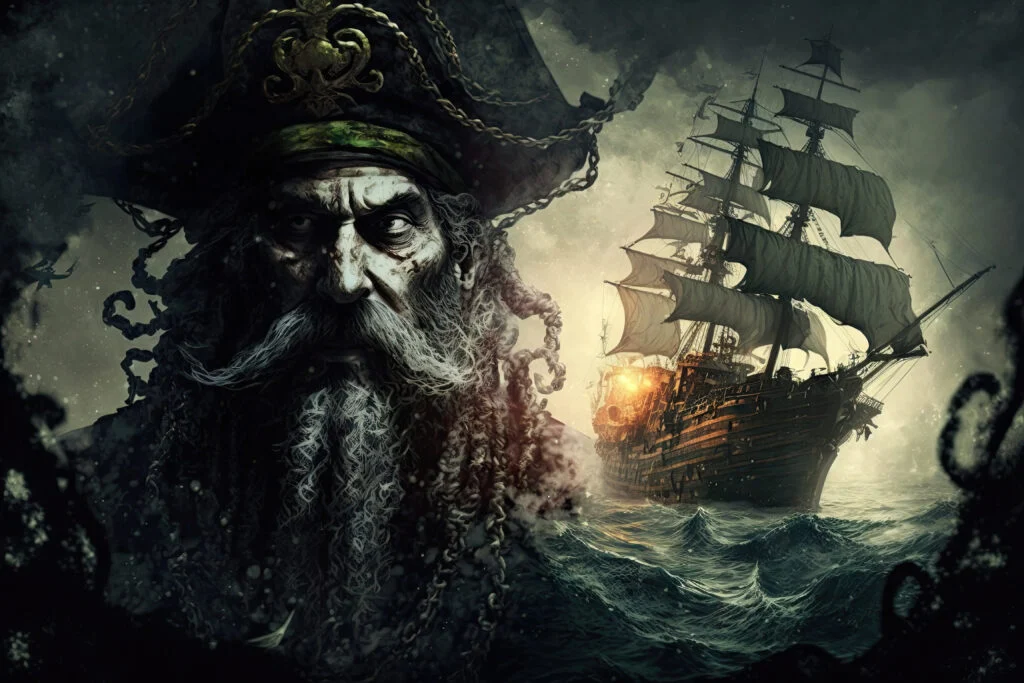
What comes to mind when you hear the name Blackbeard? Most likely, it’s a fearsome pirate with a long, dark beard, smoke billowing from fuses tied into his hair, and a reign of terror over the high seas. But what about his flag? The iconic flagge blackbeard has become a symbol of piracy itself, a haunting image of a horned skeleton spearing a bleeding heart. This striking design has captured imaginations for centuries, but how much of what we know about it is fact, and how much is fiction?
Join us as we dive deep into the history, symbolism, and enduring legacy of the flagge blackbeard. We’ll separate historical records from popular myths, explore the meaning behind its chilling imagery, and see how this single piece of cloth became one of the most recognized symbols in maritime history. From its supposed creation to its modern-day appearances in pop culture, the story of Blackbeard’s flag is as thrilling as the pirate who flew it.
Key Takeaways
- The Famous Design: The most well-known flagge blackbeard depicts a horned skeleton toasting the devil with one hand and spearing a bleeding heart with the other.
- Historical Accuracy: There is no definitive, contemporary evidence from the 18th century confirming that Blackbeard actually flew this specific flag. The design was attributed to him much later.
- Symbolism of Fear: Pirate flags, or Jolly Rogers, were a form of psychological warfare. Their purpose was to intimidate victims into surrendering without a fight, saving pirates time, resources, and lives.
- Blackbeard’s Real Flags: Historical accounts suggest Blackbeard used simpler, plain black flags or possibly flags featuring a skull to signal his intent. The elaborate skeleton design is likely a later invention.
- Enduring Legacy: Despite its questionable origins, the flagge blackbeard has become the definitive symbol of its namesake and a powerful icon of rebellion and piracy in modern culture.
The Man Behind the Flag: Who Was Blackbeard?
Before we can fully understand the flagge blackbeard, we must first get to know the pirate who supposedly flew it. Blackbeard’s real name was Edward Teach (or possibly Thatch), and he was an English pirate who operated around the West Indies and the eastern coast of Britain’s North American colonies during the early 18th century. His career was surprisingly short—lasting only about two years from 1716 to 1718—but his impact was immense.
Teach learned the ropes of piracy under the command of Captain Benjamin Hornigold. When Hornigold retired, Teach took command of his own ship, which he famously named the Queen Anne’s Revenge. He was a master of image and intimidation. He reportedly wove hemp fuses into his long black beard and lit them during battle, creating a demonic cloud of smoke around his face that terrified his enemies. This fearsome appearance, combined with his formidable size, was often enough to make crews surrender without a single shot fired. This strategy was far more profitable than fighting, as it preserved the valuable cargo, the ship itself, and the lives of his own crew.
The Reign of the Queen Anne’s Revenge
The Queen Anne’s Revenge was a heavily armed frigate that allowed Blackbeard to dominate the shipping lanes. At its peak, his pirate fleet consisted of several smaller vessels alongside his flagship, giving him control over a significant area of the Atlantic. His most audacious act was the blockade of Charles Town (now Charleston), South Carolina, in May 1718.
He and his crew held the entire port hostage for nearly a week, plundering ships and demanding a chest of medical supplies. This bold move solidified his reputation as the most feared pirate of his time. However, his reign came to a dramatic end in November 1718 when he was killed in a bloody battle with Lieutenant Robert Maynard of the Royal Navy.
Deconstructing the Iconic Flagge Blackbeard Image
The image most people associate with the flagge blackbeard is vivid and terrifying. It features a horned skeleton, sometimes identified as the devil himself, raising a toast. In its other hand, the skeleton holds a spear, which is pointed at a red, bleeding heart. Three drops of blood are often shown falling from the heart, signifying a slow and painful death. This design was meant to send a clear message: surrender or face a gruesome end.
The symbolism was powerful and direct:
- The Horned Skeleton: This figure represents death or the devil, a supernatural force aligned with the pirates.
- The Spear and Bleeding Heart: This combination symbolized a merciless death for those who resisted. It was a visual promise of violence.
- The Toasting Glass: This element is often interpreted as the skeleton toasting to the devil or to death itself, showing a cavalier and defiant attitude towards mortality.
This complex and artistic design stands out among other pirate flags, which often featured simpler motifs like a skull and crossbones. Its detailed narrative makes it particularly memorable and has contributed to its lasting fame. The psychological impact on a merchant crew seeing this flag rise on the horizon would have been immense, likely achieving Blackbeard’s goal of surrender without conflict.
The Historical Debate: Did Blackbeard Really Use This Flag?
Herein lies the central mystery. Despite its fame, there is no concrete, first-hand account from Blackbeard’s time (1716-1718) that describes him using this specific skeleton-and-heart flag. The earliest known mention linking this design to him appears many years after his death. A book published in 1912 is often cited as one of the first sources to attribute this particular flagge blackbeard to the notorious pirate.
So, what did he fly? Contemporary records suggest that Blackbeard, like many other pirates, primarily used a plain black flag. The black flag, which pirates called the “Jolly Roger,” signified that they would give quarter (show mercy) if the target vessel surrendered. If the crew resisted, pirates would often raise a red flag, which meant no quarter would be given—every person on the resisting ship would be killed.
Some sources also mention that Blackbeard might have used a flag with a skull on it, but the elaborate horned skeleton design seems to be a product of later romanticism and legend-building. This is a common theme in pirate history, where fascinating stories often overshadow the more mundane reality, a topic explored by many historical resources like those from Forbes Planet.
Why the Myth Persists
If he didn’t use it, why is this design so strongly associated with him? The answer lies in the power of a good story. Blackbeard cultivated a terrifying persona, and this flag perfectly matches that image. It’s theatrical, scary, and unforgettable—just like the man himself. Over time, as stories of Blackbeard were retold and embellished, this flag became a part of his legend. It was simply too good of a design not to be his. Authors, artists, and filmmakers have all used this flagge blackbeard to represent him, cementing the association in the public’s mind until it became accepted as fact.
The Purpose of a Pirate Flag (The Jolly Roger)
To understand the flagge blackbeard, it’s important to understand the role of pirate flags in general. These flags, known collectively as the Jolly Roger, were not just for decoration. They were a crucial tool for business. Piracy was, at its heart, a commercial enterprise, and a bloody battle was bad for profits. Fights could damage the ship and its cargo, and pirates could be injured or killed. Therefore, the primary goal was to capture a ship with as little resistance as possible.
The Jolly Roger was a form of psychological warfare.
- Signal of Intent: When a pirate ship approached a target, it would often fly a friendly nation’s flag to get close without raising alarm.
- The Reveal: Once within firing range, they would lower the false flag and raise the Jolly Roger. This was a dramatic moment intended to cause panic and fear.
- The Choice: The appearance of the pirate flag offered the merchant crew a choice: surrender immediately and likely be spared, or fight back and risk a brutal death. The terrifying symbols on the flag—skulls, bones, weapons, and hourglasses—were all meant to encourage the first option.
Blackbeard, a master of intimidation, understood this better than anyone. Whether he used a simple black flag or the more elaborate design attributed to him, the goal was the same: to make his victims so afraid that they would give up without a fight.
Other Famous Pirate Flags
While the flagge blackbeard is perhaps the most famous, many other pirates had their own unique and fearsome designs. Each flag was like a personal brand, identifying the captain and their particular style of piracy.
|
Pirate Captain |
Flag Description |
Meaning |
|---|---|---|
|
Calico Jack Rackham |
A skull with two crossed cutlasses below it. |
The crossed swords represented fighting and readiness for battle. |
|
Bartholomew “Black Bart” Roberts |
A figure of himself standing on two skulls labeled “ABH” and “AMH”. |
The skulls represented the heads of a Bajan (from Barbados) and a Martinican, symbolizing his grudge against the governors of those islands. |
|
Stede Bonnet |
A skull with a single bone below it, flanked by a heart and a dagger. |
This flag represented a balance between life (heart) and death (dagger), with the outcome uncertain. |
|
Edward Low |
A fiery red skeleton on a black background. |
The red skeleton was a particularly terrifying image, promising a violent and fiery death to those who resisted. |
These flags show the creativity and diversity in pirate symbolism. Each captain crafted a message tailored to their reputation, but the universal theme was a warning of death and a demand for surrender. The flagge blackbeard fits perfectly within this tradition, even if its direct connection to the man himself is uncertain.
The Flagge Blackbeard in Modern Pop Culture
The legend of Blackbeard and his flag is more alive today than ever before. The horned skeleton spearing a heart has become the definitive symbol of Blackbeard across movies, television shows, video games, and books. It is a visual shorthand that instantly tells the audience they are dealing with the most infamous pirate in history.
On the Big Screen and Small Screen
From the Pirates of the Caribbean film series to the television show Black Sails, the flagge blackbeard has made numerous appearances. In Pirates of the Caribbean: On Stranger Tides, the flag is shown flying from the mast of the Queen Anne’s Revenge, which is magically controlled by Blackbeard. The show Black Sails, a prequel to Treasure Island, also features a version of the flag, cementing its place in the visual lore of piracy.
In Video Games and Beyond
Video games have also embraced the iconic flag. The highly successful game Assassin’s Creed IV: Black Flag features Blackbeard as a major character, and his famous flag is a prominent symbol throughout the game. Players can even fly the flagge blackbeard from their own ship, the Jackdaw. This interactive experience has introduced the legend to a new generation of fans. The flag also appears on merchandise of all kinds, from t-shirts and hats to replica flags and coffee mugs, proving its enduring appeal as a symbol of rebellion and adventure.
Conclusion: A Symbol More Powerful Than Fact
The story of the flagge blackbeard is a fascinating case study in how myth can become more powerful than reality. While historical evidence suggests the notorious pirate Edward Teach likely never flew the famous flag with the horned skeleton and bleeding heart, the image has become inseparable from his legend. The flag embodies the terror and theatricality that Blackbeard himself cultivated, making it the perfect symbol for his brutal but brief reign over the seas. It served the same purpose as all Jolly Rogers: to strike fear into the hearts of men and secure surrender without a costly fight.
Today, the flagge blackbeard lives on not as a historical artifact, but as a cultural icon. It represents the untamed spirit of the Golden Age of Piracy and the enduring allure of one of history’s most compelling anti-heroes. The flag’s journey from a likely post-mortem attribution to a globally recognized symbol shows that a powerful story can often sail much farther than the simple truth. For more details on the historical context of Blackbeard’s life and the era he operated in, one can explore the extensive information available on his dedicated Wikipedia page.
Frequently Asked Questions (FAQ)
Q1: What is the real flag of Blackbeard?
There is no definitive historical proof of Blackbeard’s “real” flag. Contemporary accounts suggest he likely used a plain black flag to offer quarter or a red flag to signal no mercy would be given. The famous design with the horned skeleton is believed to be an invention from long after his death.
Q2: What does the symbolism on the flagge blackbeard mean?
The horned skeleton symbolizes the devil or death. In one hand, it holds a spear pointed at a bleeding heart, representing a violent, merciless death for those who resist. In the other hand, it holds a glass, as if toasting to death, symbolizing a defiant and fearless attitude.
Q3: Why is the flagge blackbeard so famous?
The flag is famous because its dramatic and terrifying imagery perfectly matches the fearsome reputation of Blackbeard himself. It’s a visually compelling story that has been widely adopted in books, movies, and games, cementing its place in popular culture as Blackbeard’s official symbol, even if it’s not historically accurate.
Q4: Did other pirates have flags similar to the flagge blackbeard?
Yes, many pirates had their own unique flags. While the skull and crossbones design was common, captains like “Black Bart” Roberts and Edward Low had complex flags with specific meanings. However, the combination of a skeleton, spear, and heart is unique to the flag attributed to Blackbeard.
Q5: Where can I see the flagge blackbeard today?
Since the original flag likely never existed, there is no artifact to see in a museum. However, replicas and artistic interpretations of the flagge blackbeard are widely available and frequently appear in media about piracy, including the TV show Our Flag Means Death and the video game Assassin’s Creed IV: Black Flag.
Stay Informed With the Latest & Most Important News
Previous Post
Next Post











Advertisement