

Now Reading: Understanding Galaxy Gas: A Journey Through the Cosmos
-
01
Understanding Galaxy Gas: A Journey Through the Cosmos

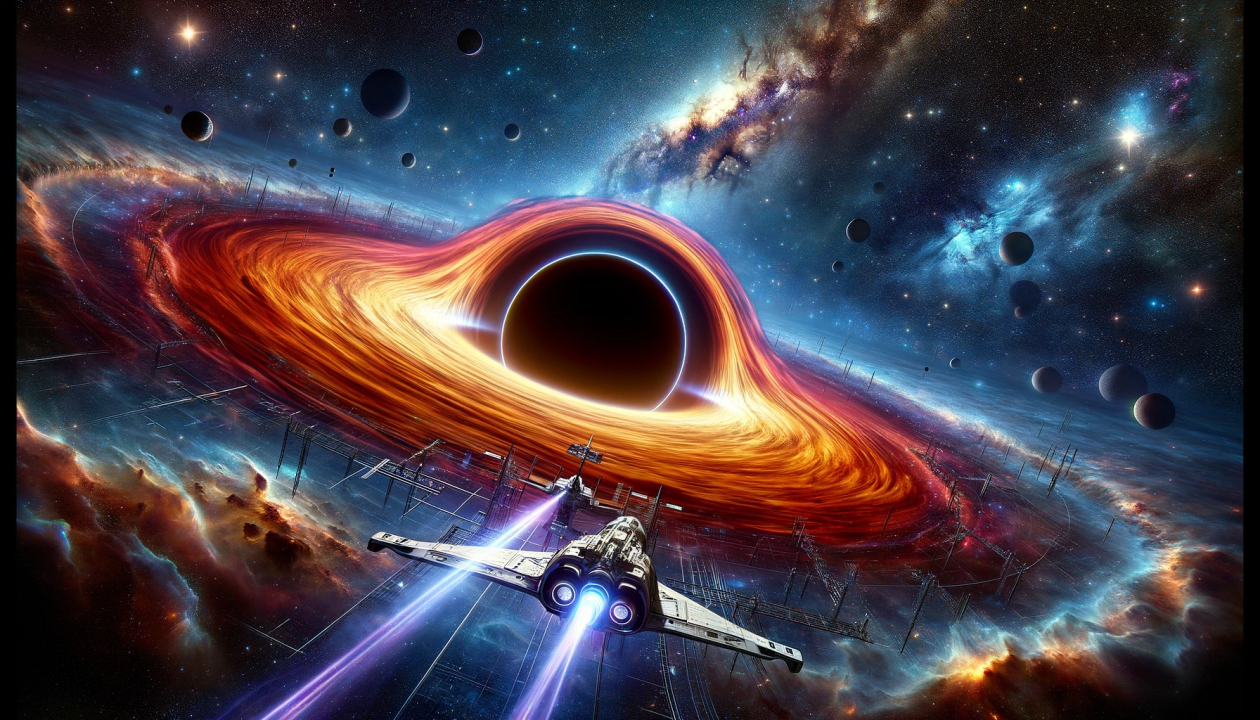
Have you ever looked up at the night sky and wondered what fills the vast, dark spaces between the stars? While it might look empty, that space is brimming with a mysterious and vital substance known as galaxy gas. This isn’t the kind of gas you put in a car; it’s the fundamental building block of everything we see in the cosmos. From the brilliant stars that dot our galaxy to the very planets themselves, it all starts with this interstellar material. Understanding galaxy gas is key to unlocking the secrets of how galaxies form, evolve, and sustain themselves over billions of years.
In this guide, we’ll take a deep dive into the fascinating world of galaxy gas. We will explore what it is, where it comes from, and why it’s so important for the life cycle of a galaxy. Think of it as the lifeblood of the universe, a cosmic soup of elements that fuels the creation of new stars and worlds. Join us on a journey to explore this invisible, yet essential, component of our universe.
Key Takeaways
- Galaxy gas is the diffuse matter, primarily hydrogen and helium, that exists in the space between stars within a galaxy.
- It is the raw material from which new stars and planetary systems are born through a process of gravitational collapse.
- The composition of galaxy gas is enriched over time by heavy elements forged inside stars and dispersed through supernovae.
- Studying this gas helps astronomers understand galactic evolution, star formation rates, and the overall structure of the cosmos.
- Galaxy gas exists in different phases—cold, warm, and hot—each playing a distinct role in the galactic ecosystem.
What Exactly Is Galaxy Gas?
At its core, galaxy gas is a mixture of atoms, molecules, dust, and charged particles called plasma that permeates a galaxy. The overwhelming majority of this gas—about 75%—is hydrogen, the simplest and most abundant element in the universe. Helium makes up most of the rest, at around 24%. That remaining 1% is a collection of all the other heavier elements, which astronomers collectively refer to as “metals.” While it seems like a tiny fraction, this 1% is incredibly important for the formation of planets and life.
This gas is not distributed evenly. It clumps together in vast, cold clouds and spreads thinly in hot, diffuse halos. You can think of it like the Earth’s atmosphere. In some places, like a dense fog, it’s thick and visible, while in others, it’s as clear and thin as the air on a mountaintop. The density of galaxy gas can range from less than one atom per cubic centimeter in the hottest regions to millions of molecules per cubic centimeter in the coldest, densest clouds where stars are born.
The Composition of Interstellar Matter
The specific makeup of galaxy gas tells a story about the history of its galaxy. In the early universe, the gas was almost purely hydrogen and helium, created during the Big Bang. The very first stars were formed from this primordial mixture. Inside the fiery cores of these massive stars, nuclear fusion cooked up heavier elements like carbon, oxygen, and iron. When these stars reached the end of their lives, they exploded in spectacular events called supernovae, scattering these newly forged elements across the galaxy. This process, known as galactic chemical enrichment, seeds the galaxy gas with the raw materials needed to form rocky planets and, eventually, life. The presence of these heavier elements dramatically changes the properties and behavior of the gas.
Different Phases of Galaxy Gas
Astronomers classify galaxy gas into several different “phases” based on its temperature and density. These phases are not separate but exist in a dynamic balance, with gas constantly moving between them. Understanding these phases is crucial for comprehending the overall structure and activity within a galaxy.
- Cold Neutral Medium (CNM): This gas is found in dense, cold clouds with temperatures around 100 Kelvin (-280°F). It’s primarily composed of neutral atoms and simple molecules. These clouds are the direct precursors to star-forming regions.
- Warm Neutral Medium (WNM): This is a more diffuse, warmer phase with temperatures of about 8,000 Kelvin (14,000°F). It surrounds the colder clouds and makes up a significant portion of the gas in a galaxy’s disk.
- Warm Ionized Medium (WIM): Similar in temperature to the WNM, this gas has been “ionized” by the intense radiation from nearby hot, young stars. The energy strips electrons from the atoms, causing the gas to glow, creating beautiful nebulae.
- Hot Ionized Medium (HIM): This extremely hot, low-density gas can reach temperatures of a million Kelvin or more. It is heated by the shockwaves from supernova explosions and fills a large volume of the galaxy, extending into a vast halo.
The Role of Galaxy Gas in Star Formation
The most critical function of galaxy gas is serving as the nursery for new stars. Stars are not eternal; they are born, they live, and they die. For a galaxy to continue shining, it must constantly form new stars, and it does so using its reserves of cold, dense gas. This process is a constant cycle of cosmic birth and renewal, driven by the fundamental force of gravity. Without a healthy supply of galaxy gas, star formation would cease, and the galaxy would slowly fade away.
The process begins inside Giant Molecular Clouds (GMCs), the largest and coldest reservoirs of galaxy gas. These clouds are enormous, stretching hundreds of light-years across and containing enough mass to form millions of stars like our Sun. They are dark, opaque structures that block the light from stars behind them, appearing as dark patches in the Milky Way. Within these cold, dark depths, the magic of star birth begins. It’s a delicate dance between gravity, which tries to pull the gas together, and internal pressure, which tries to push it apart.
From Gas Cloud to Protostar
Star formation kicks off when a region within a GMC becomes gravitationally unstable. A disturbance, like a shockwave from a nearby supernova or a collision with another cloud, can compress the gas, causing a small, dense clump to form. Once this clump reaches a critical mass, its own gravity becomes strong enough to overcome its internal gas pressure. It starts to collapse inward, pulling in more and more material from the surrounding cloud.
As the clump, now called a protostar, collapses, the material at its center gets squeezed, causing it to heat up and glow. This is the embryonic stage of a star. The protostar continues to grow by accreting galaxy gas for hundreds of thousands of years. During this time, it is shrouded in a thick envelope of gas and dust, making it invisible in visible light. However, it shines brightly in infrared light, which can penetrate the dust, allowing astronomers to peer into these stellar nurseries.
Igniting a New Star
The protostar’s core continues to grow hotter and denser as it accretes more mass. Eventually, the temperature and pressure in the core become so extreme—reaching millions of degrees—that nuclear fusion ignites. In this process, hydrogen atoms are fused together to form helium, releasing a tremendous amount of energy. This outward push of energy from fusion finally halts the gravitational collapse. A star is born! The new star emerges from its dusty cocoon, and its powerful radiation and stellar winds blow away the remaining galaxy gas, lighting up the surrounding region and sometimes triggering a new wave of star formation in the nearby cloud.
Observing Galaxy Gas: The Astronomer’s Toolkit
Because galaxy gas is so diffuse and exists in various temperature phases, astronomers need a range of specialized tools to study it. Much of the gas does not shine brightly in visible light, so we must observe it across the entire electromagnetic spectrum, from radio waves to X-rays. Each wavelength of light reveals a different piece of the puzzle, allowing us to build a complete picture of this vital galactic component.
Studying the distribution, motion, and composition of galaxy gas is a primary focus for organizations like those featured on Forbes Planet, which often highlight breakthroughs in our understanding of the universe. By observing this gas, we can trace the flow of matter within a galaxy, map out its structure, and measure how quickly it is forming new stars.
Radio Astronomy: The Cold Universe
The coldest parts of galaxy gas, the molecular clouds where stars are born, are best observed with radio telescopes. Neutral hydrogen atoms emit a faint signal at a specific wavelength of 21 centimeters. By mapping this signal, astronomers can trace the distribution of the most basic component of galaxy gas across the entire sky. Furthermore, molecules like carbon monoxide (CO), which are found in the densest clouds, emit light at millimeter wavelengths. CO is used as a tracer, as it is much easier to detect than molecular hydrogen (H2), and it signals the presence of a dense, star-forming gas reservoir. Large radio telescope arrays are essential for creating detailed maps of these stellar nurseries.
Infrared and Optical Views
The warmer phases of galaxy gas are often studied in optical and infrared light. The Warm Ionized Medium, heated by young stars, glows in distinct colors. This creates the breathtakingly beautiful nebulae captured by telescopes like Hubble. The specific colors, or emission lines, are produced when electrons recombine with ions, and they act as fingerprints, revealing the gas’s temperature, density, and chemical composition. Infrared telescopes are also crucial because they can see through the dust that obscures many regions in visible light. This allows us to observe young stars still embedded in their birth clouds and to study the dust itself, which is a key component of the interstellar medium.
X-ray Telescopes: Unveiling the Hot Gas
To see the hottest and most energetic phase of galaxy gas, the Hot Ionized Medium, astronomers must use X-ray telescopes. This million-degree plasma is so hot that it emits high-energy X-rays. Space-based observatories like the Chandra X-ray Observatory can detect this faint glow, revealing a vast, hot halo of gas that surrounds our galaxy and others. This hot halo contains a significant amount of mass and plays a critical role in the galactic ecosystem, possibly regulating the flow of gas into and out of the galaxy’s disk. Studying this hot gas helps us understand the impact of supernovae and the processes that fuel a galaxy over cosmic timescales.
|
Telescope Type |
Wavelength |
Target Gas Phase |
What It Reveals |
|---|---|---|---|
|
Radio Telescopes |
Radio / Millimeter |
Cold Neutral / Molecular |
Distribution of H, star-forming cloud locations |
|
Optical Telescopes |
Visible Light |
Warm Ionized Medium |
Glowing nebulae, chemical composition |
|
Infrared Telescopes |
Infrared |
Warm Neutral / Dusty |
Star birth, regions hidden by dust |
|
X-ray Telescopes |
X-ray |
Hot Ionized Medium |
Galactic halos, supernova remnants |
The Galactic Gas Cycle
The story of galaxy gas is not just about forming stars; it’s about a continuous cycle of matter. This process, often called the “galactic fountain” or the baryon cycle, describes how gas circulates between the galactic disk, where stars are born, and the surrounding halo. This cycle is fundamental to a galaxy’s ability to sustain star formation for billions of years. It involves gas being expelled from the disk, traveling through the halo, and eventually raining back down to fuel a new generation of stars.
This recycling process is essential. Without it, a galaxy like the Milky Way would consume its available galaxy gas in just a few billion years. The cycle of inflow and outflow ensures a long and active life for the galaxy.
Outflows: Gas Expulsion
The cycle begins in the galactic disk. When massive stars form, they exert a powerful influence on their surroundings. Their intense ultraviolet radiation and fast stellar winds push on the nearby galaxy gas. When these stars die in supernova explosions, they release an enormous blast of energy and heavy elements. The combined energy from many supernovae in a star-forming region can be so powerful that it blows gas right out of the galactic disk, creating a “superbubble” that expands into the halo. This process sends hot, metal-enriched gas tens of thousands of light-years above the disk.
Inflows: Cosmic Rain
Once in the halo, this hot gas begins to cool over millions of years. As it cools, it becomes denser and starts to fall back toward the galactic disk, like a slow, cosmic rain. This returning gas, now enriched with heavy elements from the previous generation of stars, mixes with the existing galaxy gas in the disk. In addition to this recycled gas, galaxies also pull in fresh, pristine gas from the intergalactic medium—the even more tenuous gas that fills the space between galaxies. This combination of recycled and fresh gas provides the ongoing fuel supply needed for continuous star formation, completing the cycle and ensuring the galaxy’s long-term vitality.
Conclusion: The Cosmic Engine
From the faintest whisper of a radio signal to the brilliant glow of a nebula, galaxy gas is the thread that weaves the cosmic tapestry together. It is far more than just empty space; it is a dynamic, complex, and life-giving substance. It is the birthplace of stars, the reservoir of raw materials for planets, and the medium through which galaxies live, breathe, and evolve. Every atom in our bodies, apart from hydrogen, was forged in the core of a long-dead star and recycled through the galaxy gas before becoming part of our solar system.
By studying this interstellar medium, we are learning about our own cosmic origins. The ongoing exploration of galaxy gas with advanced telescopes continues to reveal the intricate processes that govern the universe. It shows us a cosmos that is not static but is constantly in motion, with gas flowing, stars forming, and galaxies growing in a cycle that has unfolded over billions of years. The dark spaces between the stars are not empty; they are full of potential, waiting to ignite into the next generation of suns and worlds.
Frequently Asked Questions (FAQ)
Q1: Is galaxy gas dangerous to travel through?
A1: For a spacecraft, the galaxy gas in interstellar space is extremely diffuse—it’s a better vacuum than anything we can create on Earth. The primary danger would not be from the gas itself but from a collision with a rare dust grain at very high speeds. For the most part, though, the space between stars is incredibly empty.
Q2: How do astronomers know the composition of galaxy gas?
A2: Astronomers use a technique called spectroscopy. When light from a star or a glowing gas cloud is passed through a prism-like instrument, it splits into a spectrum of colors. Different elements absorb or emit light at specific, unique wavelengths, creating a pattern of dark or bright lines. By analyzing these “spectral lines,” astronomers can determine the chemical composition, temperature, and density of the gas.
Q3: Does our Sun have an effect on the galaxy gas around it?
A3: Yes, it does. The Sun produces a stream of charged particles called the solar wind, which carves out a protective bubble in the nearby interstellar medium called the heliosphere. This bubble extends far beyond the planets and helps shield our solar system from some of the denser galaxy gas and cosmic rays in our galactic neighborhood.
Q4: Can we see galaxy gas with the naked eye?
A4: Yes, in some cases. On a very dark, clear night, you can see the Milky Way arching across the sky. The dark lanes and patches that appear to split the Milky Way, like the Great Rift, are not empty spaces. They are actually vast clouds of dense galaxy gas and dust that are blocking the light from the more distant stars behind them. The Orion Nebula is another example of visible galaxy gas, which can be seen as a fuzzy patch in Orion’s sword.
Q5: How much galaxy gas is left in the Milky Way?
A5: The Milky Way still has a substantial reservoir of galaxy gas, estimated to be several billion times the mass of our Sun. At its current rate of star formation (about 1-3 solar masses per year), our galaxy has enough gas to continue forming stars for several billion more years. However, this is heavily dependent on the efficiency of the galactic gas cycle and its ability to pull in fresh gas from outside the galaxy.
Stay Informed With the Latest & Most Important News
Previous Post
Next Post











Advertisement