

Now Reading: The Slow and Surprising World of the Sloth
-
01
The Slow and Surprising World of the Sloth


Have you ever felt like you just want to hang out and take it easy? If so, you might have a lot in common with the sloth, one of the planet’s most famously unhurried animals. These gentle, tree-dwelling mammals have captured our hearts with their sleepy smiles and leisurely lifestyles. But there’s so much more to a sloth than just its slow speed. They are fascinating creatures with unique adaptations that have allowed them to thrive in the rainforests of Central and South America for millions of years.
From their upside-down existence to their surprising swimming skills, the life of a sloth is full of surprises. In this article, we’ll take a deep dive into their world. We will explore their different types, unique biology, diet, and the special relationship they have with their environment. Get ready to uncover the secrets behind one of nature’s most endearing and misunderstood animals.
Key Takeaways
- Sloths are not lazy; their slow movement is a highly effective survival strategy for conserving energy on a low-calorie diet.
- There are two main types of sloth: two-toed and three-toed, each with distinct characteristics and behaviors.
- A sloth has a unique anatomy, including specialized claws for hanging, a multi-chambered stomach for digesting tough leaves, and a lower body temperature than most mammals.
- Their fur is a complex ecosystem, hosting algae and moths that provide camouflage and potential nutrients.
- Conservation efforts are vital for protecting sloths from threats like habitat loss and human interaction.
What Exactly is a Sloth?
A sloth is a medium-sized mammal belonging to the families Megalonychidae (two-toed sloth) and Bradypodidae (three-toed sloth). They are part of the superorder Xenarthra, a group that also includes anteaters and armadillos. This group is ancient, with ancestors of the modern sloth roaming the Americas thousands of years ago. Some of these ancestors, like the Megatherium, were giant ground sloths that could grow as large as an elephant! Today’s sloths are strictly arboreal, meaning they spend almost their entire lives in the trees.
Their most defining characteristic is their incredible slowness. A sloth moves at an average speed of just 0.15 miles per hour. This isn’t a sign of laziness but a brilliant adaptation. Their diet of leaves is low in nutrients and calories, so they conserve energy by moving deliberately and slowly. This slow pace, combined with their mottled, greenish fur, also makes them difficult for predators like jaguars and harpy eagles to spot. They blend in perfectly with the leafy canopy, appearing more like a bundle of leaves or a termite nest than a potential meal.
Two-Toed vs. Three-Toed: What’s the Difference?
While they might look similar to the casual observer, the two types of sloth are quite distinct. They are not closely related and are a product of convergent evolution, where different species independently evolve similar traits. The most obvious difference is in their front limbs.
- Three-toed sloths (Bradypus) have three long, curved claws on each of their four limbs. They are known for their perpetually smiling faces and a patch of black-and-yellow fur between their shoulder blades, which is unique to adult males.
- Two-toed sloths (Choloepus) have two claws on their front “hands” and three on their back “feet.” They are slightly larger, more nocturnal, and have a more varied diet than their three-toed cousins.
Another key difference is their neck structure. A three-toed sloth has extra vertebrae in its neck, allowing it to turn its head up to 270 degrees, almost like an owl. This provides a wider field of vision for spotting predators without having to move its body. Two-toed sloths lack this extreme flexibility but are generally faster-moving of the two.
|
Feature |
Two-Toed Sloth (Choloepus) |
Three-Toed Sloth (Bradypus) |
|---|---|---|
|
Front Claws |
Two |
Three |
|
Size |
Larger and heavier |
Smaller and lighter |
|
Activity |
Primarily nocturnal |
Diurnal (active during the day) |
|
Diet |
More varied; includes leaves, fruits, insects |
Strictly folivorous (leaf-eater) |
|
Neck Rotation |
Standard for mammals |
Up to 270 degrees |
|
Temperament |
Can be more aggressive when threatened |
Generally more docile |
The Incredible Anatomy of a Sloth
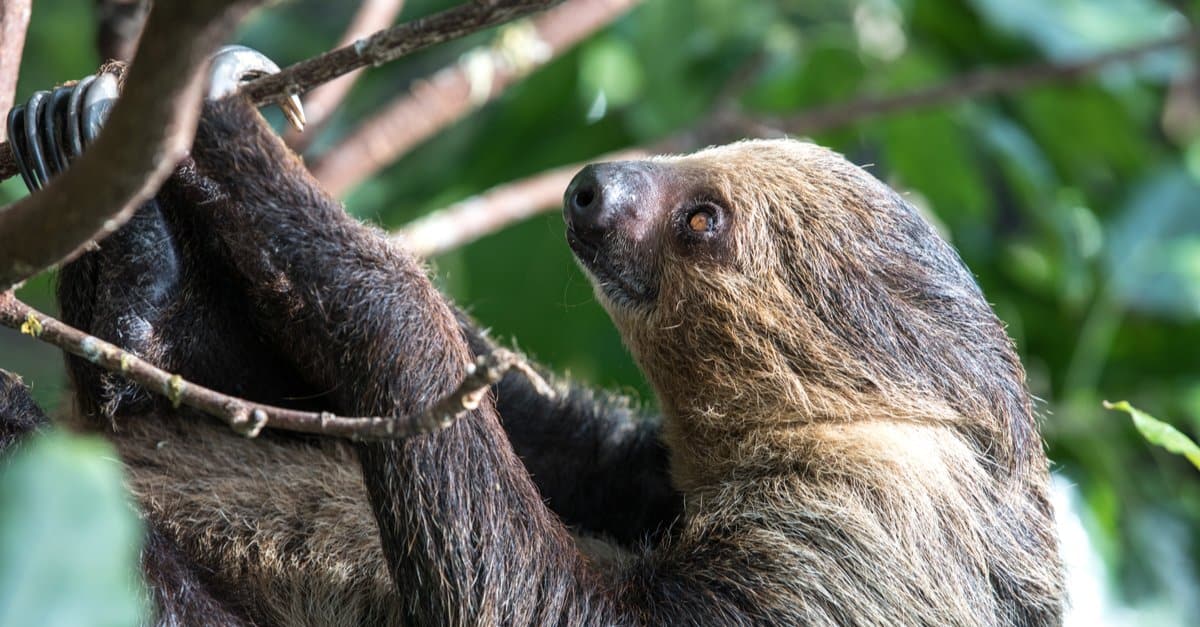
The body of a sloth is a masterpiece of evolution, perfectly designed for a life spent hanging upside down. From their specialized grip to their slow metabolism, every aspect of their biology serves their low-energy lifestyle. Their internal organs are even anchored in place to prevent them from pressing down on the lungs while inverted. This unique arrangement allows them to breathe with less effort than if they were upright.
Their metabolic rate is exceptionally low, about 40-45% of what would be expected for an animal of their size. This internal thermostat helps them conserve precious energy. They also maintain a lower body temperature, ranging from 86°F to 93°F (30°C to 34°C). To regulate their temperature, they often move between sunny and shady spots in the canopy, much like a reptile. This behavior further reduces the need to expend energy on internal heating or cooling.
Specialized Claws and Grip
The most iconic features of a sloth are its long, curved claws. These aren’t just for defense; they are essential tools for survival. The claws act as powerful hooks, allowing the sloth to hang securely from branches with minimal effort. Their grip is so strong that they have been known to remain suspended from a branch even after death.
This powerful grip is supported by specialized tendons that lock into place, meaning the sloth doesn’t need to constantly flex its muscles to hold on. It’s a highly efficient system that conserves energy, which is the central theme of sloth biology. When on the ground, however, these claws are clumsy and force them to drag their bodies with their front arms.
A Unique Digestive System
A sloth is a folivore, meaning its diet consists almost exclusively of leaves. Leaves are abundant but are also tough to digest and offer little nutritional value. To handle this, a sloth has a large, multi-chambered stomach that can make up to 30% of its total body weight. This stomach functions like a fermentation vat, where symbiotic bacteria work slowly to break down the tough cellulose in the leaves.
The entire digestive process is incredibly slow; it can take up to a month for a sloth to digest a single meal. This slow passage allows for the maximum extraction of nutrients from their low-quality food source. Due to this slow metabolism, a sloth only needs to descend from its tree about once a week to urinate and defecate.
Diet and Feeding Habits
The diet of a sloth is central to understanding its behavior. Their primary food source is tree leaves, which are difficult to digest and low in energy. This dietary constraint is the driving force behind their slow movement, low metabolism, and other energy-saving adaptations. A three-toed sloth is particularly picky, often feeding on the leaves of only a few specific tree species, primarily the Cecropia tree. This specialized diet can make them more vulnerable to habitat loss, as they depend heavily on the availability of their preferred food.
Two-toed sloths are a bit more flexible. While leaves still make up the bulk of their diet, they will also eat fruits, flowers, and occasionally small insects or lizards. This broader diet gives them more options and makes them slightly more adaptable to changing environments. A young sloth learns which leaves are safe to eat by licking them from its mother’s lips. This transfer of knowledge is crucial for survival, as many leaves in the rainforest can be toxic.
The Sloth’s Unique Fur Ecosystem
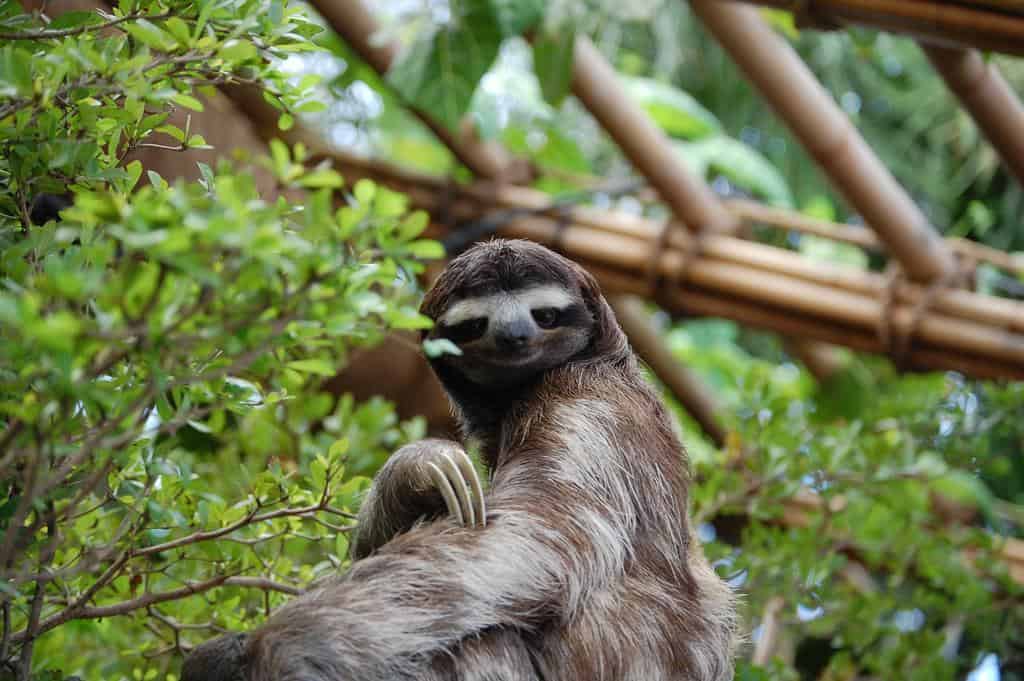
The fur of a sloth is more than just a coat; it’s a living ecosystem. Each strand of hair has unique grooves that trap moisture. In the humid rainforest environment, these grooves become the perfect home for algae to grow. This gives the sloth‘s fur a greenish tint, which provides excellent camouflage against the leafy background, hiding it from predators. This is a symbiotic relationship: the sloth provides a home for the algae, and the algae help the sloth stay hidden.
But the ecosystem doesn’t stop there. A single sloth can be home to hundreds of moths, beetles, and other insects. One species, the sloth moth, lives its entire life in the fur. When the sloth descends to the ground once a week to defecate, the female moths lay their eggs in the dung pile.
The larvae feed on the dung, mature, and then fly up into the canopy to find a sloth to call home. Researchers believe the moths may help fertilize the algae in the fur, making the camouflage even more effective. For more interesting facts about the planet’s ecosystems, resources like those on https://forbesplanet.co.uk/ can offer incredible insights.
Behavior and Daily Life
The daily life of a sloth is a quiet routine of eating, sleeping, and resting. They can sleep for up to 15 hours a day, often curled up in the fork of a tree to conserve heat and stay hidden. When they are active, their movements are slow and deliberate. A sloth will carefully move from branch to branch in search of tender new leaves to eat. Their entire existence is optimized to use as little energy as possible.
Despite their slow nature on land and in trees, sloths are surprisingly skilled swimmers. They can move through water about three times faster than they can move on the ground. They use their long arms to perform a graceful breaststroke, and their ability to hold their breath for up to 40 minutes underwater is remarkable. This skill allows them to cross rivers or travel through flooded forests in search of new territory or a mate.
Reproduction and Lifespan
The reproductive process of a sloth is as slow-paced as the rest of its life. Females typically give birth to a single offspring after a gestation period of six to eleven months, depending on the species. The baby sloth is born with its claws already developed and immediately clings to its mother’s fur. It will stay with its mother for six months to a year, learning essential survival skills like which trees to eat from and how to navigate the canopy.
The mother sloth is a dedicated parent, carrying her baby on her chest or stomach everywhere she goes. The baby learns by observing and tasting the leaves its mother eats. Once it’s old enough to be independent, the mother will leave her established territory to her offspring and move to a new area. This ensures the young sloth has a safe home range with a known food supply. In the wild, a sloth can live for 20 to 30 years, though some in captivity have lived even longer.
Threats and Conservation Status
While their slow lifestyle is a successful survival strategy, it does not protect them from modern threats. The primary danger facing every sloth is habitat loss. The deforestation of Central and South American rainforests for agriculture, logging, and urban development destroys the trees they depend on for food and shelter. As their forest homes shrink, sloths are forced to travel on the ground, where they are vulnerable to predators and traffic accidents.
Another significant threat is interaction with humans. Power lines are a major hazard, as sloths can mistake them for vines, leading to electrocution. The illegal pet trade also poses a danger. Their cute appearance makes them desirable, but a sloth does not make a good pet. Their specialized diet and environment are nearly impossible to replicate in a home setting, and most captured sloths die from stress, malnutrition, or improper care.
Conservation Efforts
Fortunately, many organizations are working to protect the sloth. Conservation efforts focus on several key areas:
- Habitat Protection: Preserving rainforests is the most critical step. This involves creating national parks, fighting illegal logging, and promoting sustainable land use.
- Rescue and Rehabilitation: Sanctuaries and rescue centers care for injured, orphaned, or confiscated sloths. They provide medical treatment and rehabilitation with the goal of returning the animals to the wild.
- Public Education: Raising awareness about the threats sloths face is crucial. Educating local communities and tourists about the harm caused by the pet trade and direct contact can reduce human-related deaths.
- Wildlife Corridors: Reforestation projects that connect fragmented patches of forest help sloths and other wildlife move safely between habitats. Installing “sloth bridges” over roads can also prevent traffic-related fatalities.
The pygmy three-toed sloth is listed as Critically Endangered, while other species are listed as Least Concern. However, all sloth populations are declining due to human activity, making conservation efforts more important than ever.
Conclusion
The sloth is far more than just a slow-moving creature with a charming smile. It is a marvel of evolutionary adaptation, perfectly suited to its unique niche in the rainforest canopy. Its slowness is not a flaw but a masterful strategy for survival, allowing it to thrive on a diet that few other animals could sustain. From its complex fur ecosystem to its surprising strength and swimming ability, the sloth is full of incredible secrets.
However, the future of this gentle animal is uncertain. Habitat destruction and other human-induced threats are pushing populations toward decline. By supporting conservation efforts, promoting reforestation, and making responsible choices, we can help ensure that the slow and steady sloth continues to hang around in our world’s forests for generations to come. Understanding and appreciating these unique animals is the first step toward protecting them and the precious ecosystems they call home.
Frequently Asked Questions (FAQ)
Q1: Are sloths really lazy?
No, sloths are not lazy. Their slow movement is a highly developed survival strategy to conserve energy. Their diet of leaves is very low in calories, so moving slowly helps them minimize energy expenditure.
Q2: How strong is a sloth’s grip?
A sloth has an incredibly strong grip, thanks to its long claws and specialized tendons. This allows it to hang from branches for long periods without using much muscle energy. Their grip is so powerful that they have been observed remaining suspended from a branch even after they have passed away.
Q3: Why do sloths have green fur?
The greenish color of a sloth‘s fur comes from algae that grow in special grooves on its hairs. This is a symbiotic relationship where the algae get a place to live, and the sloth gets excellent camouflage to hide from predators in the green forest canopy.
Q4: How long can a sloth hold its breath?
Surprisingly, a sloth can hold its breath for up to 40 minutes underwater. This ability is useful when they swim across rivers or through flooded areas, which they do with surprising speed and skill.
Q5: Can you have a sloth as a pet?
No, you should not have a sloth as a pet. They have a very specialized diet and require a specific rainforest environment to thrive. They are wild animals, and captivity causes them immense stress and often leads to an early death. Supporting the pet trade harms wild sloth populations.
Related Posts



Stay Informed With the Latest & Most Important News
Previous Post
Next Post











Advertisement