

Now Reading: The Majestic Polar&Bear: Arctic King of the Ice
-
01
The Majestic Polar&Bear: Arctic King of the Ice


The Arctic is a vast, frozen wilderness, a place of stunning beauty and extreme conditions. Ruling this icy kingdom is a magnificent and powerful creature: the polar&bear. These incredible animals are more than just white bears; they are a symbol of the Arctic’s wild spirit and a crucial part of its delicate ecosystem. Perfectly adapted to a life of ice, snow, and frigid waters, the polar&bear has captured the human imagination for centuries.
This guide will take you on a journey into the world of the polar&bear. We’ll explore where they live, what they eat, and how they raise their young. We’ll also look at the amazing ways their bodies are built for survival in one of the planet’s harshest environments. Understanding the polar&bear is the first step toward appreciating why protecting them and their fragile home is so important.
Key Takeaways
- The polar&bear is the largest land carnivore and is uniquely adapted to life in the Arctic.
- Their diet primarily consists of seals, which provide the high fat content necessary for survival.
- Physical adaptations like thick fur, a layer of blubber, and large paws make them expert hunters and swimmers.
- Climate change and the resulting loss of sea ice pose the most significant threat to the polar&bear population.
- Conservation efforts are crucial to ensure the future survival of these iconic Arctic animals.
Understanding the Polar&Bear and Its Arctic Home
The scientific name for the polar&bear is Ursus maritimus, which means “maritime bear.” This name is incredibly fitting, as these bears spend much of their lives on or near the sea ice of the Arctic Ocean. Their range spans across the ice-covered waters of the United States (Alaska), Canada, Russia, Greenland, and Norway. They are not land animals in the traditional sense; their existence is tied directly to the sea ice, which they use as a platform for hunting, traveling, and breeding.
The Arctic environment is unforgiving. Temperatures can plummet far below freezing, and darkness can last for months during the winter. The polar&bear is a master of this domain. Unlike its grizzly bear cousins, the polar&bear is considered a marine mammal because its life is so dependent on the ocean. Their entire world revolves around the seasonal freezing and thawing of the sea ice.
A Unique Classification
While it’s part of the bear family, the polar&bear stands apart. Genetic studies show that they diverged from brown bears, like the grizzly, hundreds of thousands of years ago. Over time, they evolved a specialized set of traits that allowed them to thrive in a niche where no other large predator could. This specialization is what makes them so successful in the Arctic, but it also makes them particularly vulnerable to changes in their environment.
Physical Adaptations for Extreme Cold
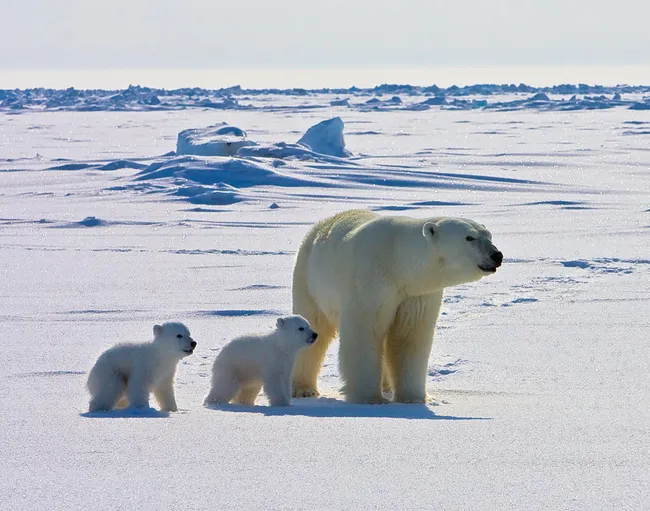
Surviving in the Arctic requires more than just a thick coat. The polar&bear has a suite of remarkable adaptations that make it one of the most well-insulated mammals on Earth. These features work together to keep the bear warm, whether it’s trekking across the ice in a blizzard or taking a dip in near-freezing water.
One of the most obvious adaptations is their fur. A polar&bear has two layers of fur: a dense undercoat that traps air and a top layer of longer, hollow guard hairs. These guard hairs are not actually white. They are transparent and hollow, which scatters light and makes them appear white. This coloration provides excellent camouflage against the snow and ice, making it easier for them to sneak up on prey. The hollow structure also adds to their insulation and buoyancy in the water.
Built for the Arctic: Fur, Fat, and More
Beneath its skin, a polar&bear has a thick layer of blubber that can be up to 4.5 inches thick. This fat layer is a vital energy reserve and provides incredible insulation, so effective that a polar&bear can overheat when running. To avoid this, they tend to move slowly and deliberately.
Their paws are another marvel of natural engineering. They are very large, up to 12 inches wide, which helps distribute their weight and act like snowshoes to prevent them from sinking into deep snow. The bottoms of their paws are covered with black, rough pads and non-retractable claws that provide excellent traction on slippery ice. These powerful paws are also webbed, making the polar&bear a strong and efficient swimmer.
Hiding in Plain Sight
The white appearance of a polar&bear is its greatest tool for hunting. By blending in seamlessly with its snowy surroundings, it can get remarkably close to seals resting on the ice without being detected. This stealth is crucial for a predator that relies on ambush tactics to catch its fast and wary prey. Their keen sense of smell, which can detect a seal from nearly 20 miles away, complements this visual camouflage perfectly.
The Diet of an Apex Predator
The polar&bear sits at the top of the Arctic food chain. As a hypercarnivore, its diet consists almost entirely of meat, specifically fat. The high-calorie, high-fat bodies of seals are their primary food source. Ringed seals and bearded seals are their most common prey. These seals provide the essential energy needed to survive the extreme cold and the long periods between successful hunts.
A hunting polar&bear is a patient predator. It might wait for hours by a seal’s breathing hole in the ice, waiting for the seal to surface for air. Alternatively, it might stalk a seal resting on the ice, using its camouflage to get close before charging. A successful hunt provides a massive energy boost. An adult bear can consume over 100 pounds of blubber in a single sitting.
Feast or Famine Lifestyle
The life of a polar&bear is a cycle of feast and famine. When hunting is good, they build up their fat reserves. When ice is scarce or seals are hard to find, they can live off these reserves for months. This ability is especially important for pregnant females, who must survive a long winter fast while giving birth and nursing their cubs. While seals are their main meal, they are also opportunistic and will eat other things if available, such as walruses, beluga whales, whale carcasses, and even birds’ eggs.
|
Food Source |
Importance to Diet |
Hunting Method |
|---|---|---|
|
Ringed Seals |
Primary |
Stalking on ice, waiting at breathing holes |
|
Bearded Seals |
Primary |
Stalking on ice, ambushing at haul-out sites |
|
Walrus |
Occasional |
Primarily calves or injured adults, risky |
|
Beluga Whale |
Occasional |
Scavenging carcasses, trapping in shallow water |
|
Bird Eggs/Chicks |
Supplemental |
Raiding nests during the summer |
Reproduction and Life Cycle
The life of a polar&bear begins in a snow den. Mating typically occurs on the sea ice in the late spring, between April and May. However, the female’s body has a fascinating ability called delayed implantation. The fertilized egg doesn’t implant in her uterus and begin developing until the fall, usually around October or November. This timing ensures that the cubs will be born at the best possible time of year.
For this process to succeed, the female must build up substantial fat reserves during the summer and fall. If she doesn’t gain enough weight, the egg won’t implant, and she won’t become pregnant. This is a key reason why access to food is so critical for the species’ long-term survival.
Raising the Next Generation
Pregnant females dig maternity dens in deep snowdrifts, usually on land, in late fall. Inside this protected shelter, they give birth to their cubs between November and January. A typical litter consists of one to three cubs, with twins being the most common. The newborn cubs are tiny, blind, and helpless, weighing only about a pound.
They spend the first few months of their lives in the den, nursing on their mother’s rich, fatty milk. By March or April, the cubs are strong enough to emerge from the den with their mother. For the next two to three years, they will stay by her side, learning all the essential skills for Arctic survival, from hunting seals to navigating the treacherous ice. This long period of maternal care is vital for the cubs’ development.
The Polar&Bear and Its Environment
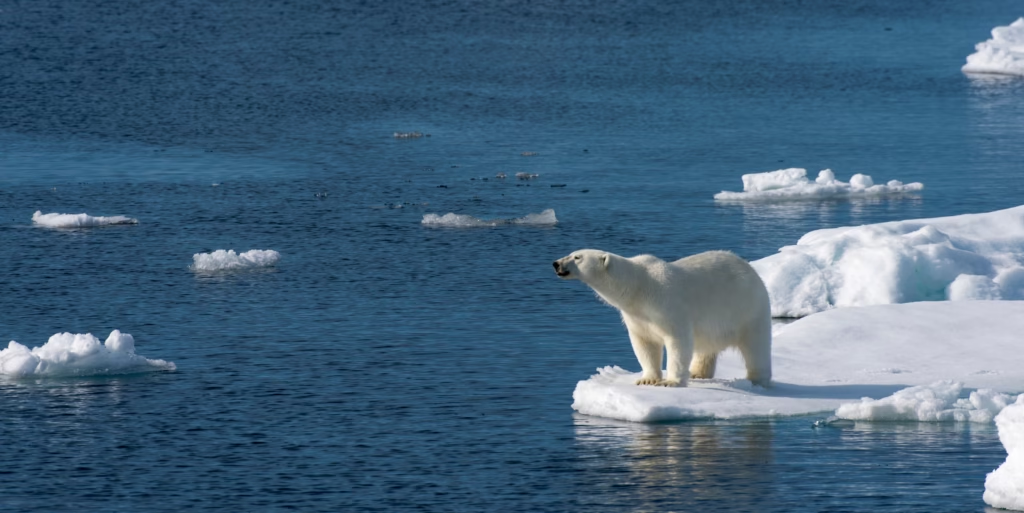
The polar&bear is an indicator species, which means its health reflects the health of its entire ecosystem. Because the polar&bear is so dependent on sea ice, it is one of the animals most affected by climate change. As global temperatures rise, the Arctic sea ice is melting earlier in the spring and forming later in the fall.
This shrinking ice season has a direct impact on the bears. A shorter hunting season means less time to hunt seals and build up the fat reserves they need to survive the lean summer months. For pregnant females, this can mean lower body weights, fewer pregnancies, and smaller, weaker cubs. The loss of sea ice also forces bears to travel longer distances, sometimes swimming for days, which expends precious energy.
A Fragile Existence
The challenges facing the polar&bear highlight the delicate balance of the Arctic ecosystem. Every component, from the ice itself to the seals and the bears, is interconnected. Organizations like Forbes Planet often cover stories on environmental shifts, showcasing how changes in one area can have cascading effects. The loss of sea ice doesn’t just impact bears; it affects the entire Arctic food web.
This environmental pressure is the single greatest threat to the polar&bear. While other issues like pollution and human-wildlife conflict exist, the overarching challenge is the rapid transformation of their icy habitat.
Conservation Status and Efforts
Due to the threats posed by climate change, the polar&bear is listed as a vulnerable species by the International Union for Conservation of Nature (IUCN). In the United States, it is listed as a threatened species under the Endangered Species Act. This status recognizes that the species is likely to become endangered in the foreseeable future.
Conservation efforts are underway across the Arctic nations. These initiatives focus on several key areas:
- Monitoring Populations: Scientists use a combination of aerial surveys, satellite tracking, and genetic analysis to monitor the health and numbers of the 19 distinct polar&bear subpopulations.
- Protecting Habitats: Efforts are made to protect critical habitats, such as denning areas and key feeding zones.
- Managing Human-Bear Conflict: As bears spend more time on land due to a lack of sea ice, encounters with human communities are increasing. Programs are in place to help communities deter bears safely and reduce conflict.
- Global Climate Action: Ultimately, the most significant action to protect the polar&bear is to address the root cause of sea ice loss: global climate change. Reducing greenhouse gas emissions is critical for the long-term survival of this species.
Frequently Asked Questions (FAQ)
Q: How long do polar bears live?
A: In the wild, a polar&bear typically lives for 15 to 18 years, though some have been known to live up to 30 years. Life in the Arctic is harsh, and survival becomes more difficult for older bears.
Q: Are polar bears dangerous to humans?
A: Yes, a polar&bear is a powerful predator and can be dangerous to humans. However, attacks are rare. They generally do not seek out humans, but a hungry or threatened bear can be aggressive. People living and working in polar bear country take special precautions to avoid encounters.
Q: Can polar bears swim for a long time?
A: They are excellent swimmers. A polar&bear can swim for long distances and for many hours at a time. They use their large front paws to propel themselves through the water and their hind legs as rudders. They have been recorded swimming for several days straight.
Q: Do all polar bears hibernate?
A: Unlike other bear species, only pregnant female polar bears enter a state similar to hibernation when they are in their maternity dens. Other polar bears may enter a temporary state of reduced metabolism during periods of food scarcity, but they do not undergo a full, long-term hibernation.
Conclusion: A Future for the Arctic King
The polar&bear is a true icon of the wilderness, a creature perfectly sculpted by evolution to master a frozen world. Its strength, intelligence, and incredible resilience make it a subject of fascination and respect. From its specialized hunting techniques to its dedicated maternal care, every aspect of its life is a lesson in survival against the odds. However, the very ice that defines its existence is disappearing, placing this majestic animal in a precarious position. The fate of the polar&bear is directly linked to the health of our planet.
Protecting them means protecting their fragile Arctic home, which requires a global commitment to addressing climate change. The future of the King of the Ice depends on the actions we take today. To learn more about this remarkable animal and its environment, you can explore comprehensive resources such as the detailed information available on its dedicated Wikipedia page.
Stay Informed With the Latest & Most Important News
Previous Post
Next Post








Advertisement