

Now Reading: The Explosive Truth About the M80 Firework
-
01
The Explosive Truth About the M80 Firework

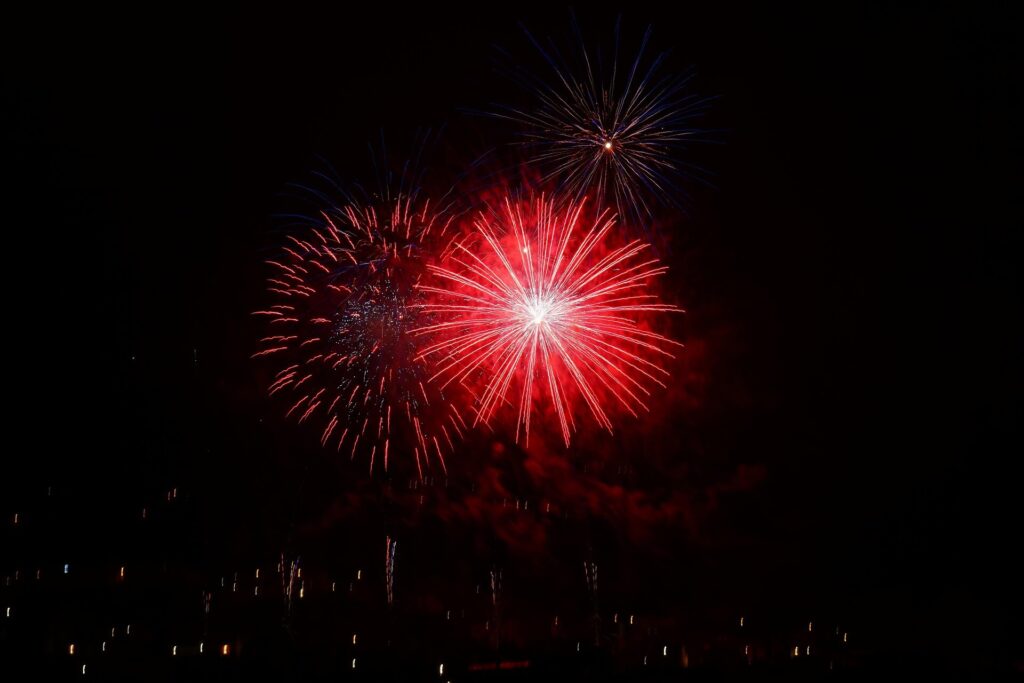
The term M80 firework often brings to mind powerful explosions and a legendary reputation in the world of pyrotechnics. For decades, stories have circulated about these devices, painting a picture of something far more potent than your average Fourth of July firecracker. But what is the real story behind the M80? Is it a firework, a military device, or something else entirely?
This guide will explore the history, construction, and legal status of the M80 firework. We will separate fact from fiction, explaining why these devices are not legal consumer fireworks and highlighting the serious dangers they pose. Understanding the truth about the M80 is crucial for ensuring safety and appreciating pyrotechnics responsibly.
Key Takeaways
- Not a Consumer Firework: The original M80 was a military device, and modern illegal versions are dangerously powerful explosive devices, not legal consumer fireworks.
- Highly Dangerous: M80s contain large amounts of flash powder, making them extremely volatile and capable of causing severe injuries, including hearing loss, burns, and loss of limbs.
- Strictly Illegal: Manufacturing, possessing, or selling an M80 firework is a federal felony in the United States, carrying severe legal consequences.
- Legal Alternatives Exist: Safe and legal firecrackers, like those adhering to Consumer Product Safety Commission (CPSC) regulations, offer a loud bang without the extreme risks of M80s.
What Exactly is an M80 Firework?
The M80 firework is one of the most misunderstood pyrotechnic devices. Originally, it was not a firework at all. The M-80 was developed by the U.S. military during World War II as a simulator for artillery fire, used in training exercises to acclimate soldiers to the sounds of battle. It was designed to produce a loud report, mimicking the sound of gunfire or small explosions on the battlefield.
These original military M-80s contained approximately 3 grams (about 45 grains) of flash powder, a highly explosive mixture. In contrast, legal consumer firecrackers in the United States are limited by federal law to a maximum of 50 milligrams (less than 1 grain) of flash powder. This massive difference in explosive composition is what gives the M80 its legendary and dangerous power. After the military surplus of these devices dried up, illicit manufacturers began creating their own versions, which are the illegal explosives commonly referred to as an M80 firework today.
The Myth vs. The Reality
The myth surrounding the M80 is that it’s just a “super firecracker.” Many people mistakenly believe it’s a commercially available item that’s just a step up from what they can buy at a fireworks stand. This could not be further from the truth. The reality is that an M80 is an improvised explosive device (IED). It is not designed for entertainment; it’s designed to create a powerful blast. The force is strong enough to cause significant property damage and life-altering injuries. The Bureau of Alcohol, Tobacco, Firearms and Explosives (ATF) classifies any device with more than 50 milligrams of flash powder as an illegal explosive, placing the M80 firmly in that category.
How an M80 Differs from a Standard Firecracker
The differences between a genuine M80 and a legal firecracker are vast and critical to understand. The primary distinctions lie in their construction, explosive content, and legal status. A standard, CPSC-compliant firecracker is designed with safety as a priority, intended for recreational use by the general public. An M80 firework, on the other hand, prioritizes explosive force above all else.
Let’s break down the key differences in a simple table:
|
Feature |
Legal Consumer Firecracker |
Illegal M80 Firework |
|---|---|---|
|
Explosive Content |
Max 50 milligrams of flash powder |
Approx. 3,000 milligrams (3 grams) of flash powder |
|
Construction |
Thin paper tube, clay plugs |
Thick, rigid cardboard tube, tightly sealed |
|
Fuse |
Visco fuse (green, slow-burning) |
Cannon fuse (often fast-burning) or hobby fuse |
|
Sound Level |
Loud “pop” or “bang” |
Deafening “BOOM” |
|
Legal Status |
Legal under federal law (state laws vary) |
Illegal federal explosive device |
|
Primary Purpose |
Entertainment and celebration |
Military simulation; illicitly for destructive power |
As you can see, the M80 firework is in a completely different league. Its explosive charge is at least 60 times greater than that of a legal firecracker, making it exponentially more dangerous.
The History of the M80
To truly understand the M80, we must look back at its military origins. The story begins during World War II, a time when realistic training was essential for preparing soldiers for the chaos of the front lines. The military needed a tool that could safely simulate the sounds of combat—artillery, grenades, and other battlefield noises—without using live ammunition. The solution was the M-80 pyrotechnic simulator.
These devices were engineered to be simple, effective, and loud. They consisted of a small cardboard tube packed with flash powder and sealed with a fuse. When lit, they produced a sharp, powerful report that effectively mimicked an explosion. This allowed troops to become accustomed to the noise and stress of a real firefight. For years, the M-80 served its purpose faithfully within the armed forces. After the war and into the following decades, surplus M-80s sometimes found their way into public hands, which is where their legendary status as a powerful “firework” began to grow.
From Military Tool to Illegal Explosive
The transition of the M-80 from a military training device to a notorious illegal explosive happened gradually. As military surplus stock dwindled, the demand for these powerful devices did not. An underground market emerged, with illicit manufacturers creating their own versions based on the original military design. These homemade devices retained the name “M80” but were now being produced and sold outside of any legal or safety-regulated framework.
These new producers often used inconsistent materials and manufacturing processes, making the devices even more unpredictable and dangerous than the military originals. The term M80 firework became synonymous with this new class of illegal explosives. Law enforcement and federal agencies like the ATF took notice of the increasing number of injuries and destructive incidents caused by these devices. This led to a major crackdown, and strict laws were put in place to ban them completely, reclassifying them from any semblance of a “firework” to what they truly are: dangerous illegal explosives.
Famous Incidents and Public Awareness
Over the years, numerous incidents involving the illegal M80 firework have highlighted their immense danger. News reports frequently detail stories of individuals suffering severe burns, losing fingers or eyesight, and even causing fires or significant property damage. One common and tragic scenario involves someone holding an M80 too long after lighting it, underestimating the speed of the fuse or the power of the blast.
These incidents have been instrumental in shaping public perception and driving safety campaigns. Organizations like the National Fire Protection Association (NFPA) and the CPSC use these real-life examples to warn the public about the risks. The message is clear: these are not toys. The powerful blast can instantly cause permanent hearing damage, and the explosive force at close range is comparable to that of a small grenade. Public awareness campaigns often run during peak firework seasons, like the Fourth of July and New Year’s Eve, to remind everyone of the legal and physical dangers associated with illegal explosives like the M80.
The Dangers and Legal Consequences of M80s
The dangers associated with an M80 firework cannot be overstated. These are not simple pyrotechnics; they are powerful explosives with the potential to cause catastrophic harm. The primary danger comes from the massive quantity of flash powder they contain. This substance is highly sensitive to heat, friction, and impact, making the device unstable and unpredictable.
A premature detonation can happen without warning, causing devastating injuries to anyone nearby. The force of the explosion can turn the cardboard casing into shrapnel, sending fragments flying at high speeds. This can lead to severe lacerations and puncture wounds. Furthermore, the intense heat and light from the blast can cause third-degree burns and permanent blindness. The sound alone is powerful enough to rupture eardrums and cause immediate, irreversible hearing loss. Handling an M80 is, simply put, a life-threatening gamble.
Understanding the Legal Penalties
The United States government takes the threat of illegal explosives very seriously. Under federal law, an M80 firework is not considered a firework at all. It is classified as an illegal explosive device because it contains far more than the 50-milligram limit of pyrotechnic composition allowed in consumer fireworks.
Possessing, manufacturing, or distributing these devices is a felony offense. The legal consequences are severe and can include:
- Significant Prison Time: A conviction can lead to years in federal prison.
- Hefty Fines: Fines can reach into the tens or even hundreds of thousands of dollars.
- A Felony Record: A felony conviction has lifelong consequences, affecting your ability to find employment, own a firearm, and vote.
The ATF actively investigates and prosecutes individuals involved with illegal explosives. State and local laws often impose additional penalties, making the legal risk of being involved with M80s incredibly high. There is no “slap on the wrist” for these types of offenses.
Why M80s Are Not Consumer Fireworks
It is crucial to differentiate between legal consumer fireworks and illegal explosives like the M80. Consumer fireworks are designed and manufactured under strict guidelines set by the CPSC. These regulations are in place to ensure a reasonable level of safety when the products are used correctly. They limit the type and amount of explosive material, mandate specific fuse burn times, and require performance stability.
An M80 firework fails to meet any of these safety standards. It is a rogue device created without any oversight or quality control. Its sole purpose is to produce the largest possible explosion, with no regard for user safety. Thinking of an M80 as a “firework” is a dangerous misconception that has led to countless injuries. For a deeper look into a variety of topics, including safety and regulations, some find valuable information at https://forbesplanet.co.uk/. When you purchase legal fireworks from a licensed vendor, you are buying a product that has been tested and regulated for public use. An M80 offers no such assurances.
Identifying an Illegal M80 Firework

Since illegal explosives are not sold through legitimate channels, it can be tricky to know what to look for. However, there are several red flags that can help you identify a potential M80 firework or a similarly dangerous device. Illicit manufacturers often try to mimic the appearance of the original military M-80s or create packaging that looks deceptively professional.
One of the most common characteristics is a plain, unmarked tube, often red or brown, that is noticeably thicker and larger than a standard firecracker. They are typically about 1.5 inches long and 5/8 of an inch in diameter. Another key indicator is the fuse. M80s often have a greenish, thick “cannon fuse” or a generic hobby fuse that may be shorter and faster-burning than the standard, slow-burning visco fuses found on legal fireworks. Finally, the sale itself is a major clue. M80s are sold “under the counter,” online from suspicious sources, or from the trunk of a car—never from a licensed and reputable fireworks dealer.
Common Mislabeling and Deceptive Products
To get around the law and trick unsuspecting buyers, illegal manufacturers often mislabel their products. They might call them “Super-Charged Firecrackers,” “Bulldog Salutes,” or give them other names that imply they are just powerful fireworks. Sometimes, they are simply sold with no label at all. Be wary of any product that seems disproportionately large or heavy for a firecracker.
Another deceptive practice is the sale of legal fireworks that are designed to look like an M80. These are often called “M-80 Salutes” or something similar and come in a red tube. However, these are legal consumer fireworks that adhere to the 50-milligram powder limit. The packaging is just a marketing gimmick. The easiest way to tell the difference is to buy from a licensed vendor. If it’s being sold legally, it’s not a real M80. If someone offers you a device they claim is a real M80 firework, you can be certain it’s an illegal explosive.
Safe and Legal Alternatives to M80s
For those seeking the thrill of a loud bang without the extreme danger and legal risks of an M80, there are plenty of safe and legal options available. The consumer fireworks industry produces a wide variety of firecrackers, often called “salutes,” that are designed to be as loud as legally possible. These products provide a satisfying “crack” or “boom” while still adhering to the strict safety standards mandated by the CPSC.
These legal firecrackers are limited to 50 milligrams of pyrotechnic composition, ensuring the explosion is contained and poses a minimal risk when used correctly. They are widely available from licensed fireworks retailers across the country where consumer fireworks are legal. Always remember to check your local and state laws, as regulations on fireworks can vary significantly from one place to another. Choosing a legal alternative is the only responsible way to enjoy the excitement of firecrackers.
Types of Legal Firecrackers
When you visit a licensed fireworks store, you will find a range of legal firecrackers to choose from. Here are some common types:
- Single Firecrackers: Individual firecrackers that produce one loud report.
- Strips and Rolls: Multiple firecrackers fused together in a string, designed to go off in rapid succession. These can range from small strips of 16 to massive rolls of several thousand.
- Salutes: This is a general term for any firework designed primarily to produce a loud noise rather than a visual effect. Legal “M-80 Salutes” fall into this category.
These products offer plenty of noise and fun for celebrations like the Fourth of July. By choosing them over an illegal M80 firework, you are protecting yourself, your family, and your community from unnecessary danger.
Safety Tips for Using Legal Fireworks
Even legal fireworks require caution and responsible handling. To ensure your celebration remains safe and fun, always follow these essential safety tips:
- Never allow young children to handle fireworks.
- Always have a bucket of water or a fire extinguisher nearby.
- Light fireworks one at a time, then move back quickly.
- Never try to relight or pick up a “dud” firework.
- Keep spectators at a safe distance.
- Never point or throw fireworks at another person.
- Soak all used fireworks in water before throwing them in the trash.
Safety should always be the number one priority. Enjoying fireworks responsibly ensures that everyone can have a good time without the risk of injury or property damage. For additional information about pyrotechnics, including their history and different types, you can find a wealth of knowledge on platforms like Wikipedia, which covers topics such as the broader category of fireworks.
Frequently Asked Questions (FAQ)
1. Is an M80 firework legal anywhere in the US?
No. An M80 firework is an illegal explosive device under federal law and is not legal for consumer use anywhere in the United States. They contain far more explosive powder than is permitted for consumer fireworks.
2. What is the difference between an M80 and a quarter stick of dynamite?
While both are powerful explosives, they are different in composition and design. Dynamite is a high explosive based on nitroglycerin, while an M80 uses flash powder, a low explosive. However, the term “quarter stick” is often used to describe illegal explosives similar in power to an M80, and both are extremely dangerous and illegal for public possession.
3. What should I do if I find what I think is an M80?
Do not touch or move it. The device could be unstable. Move away from the area immediately and call your local police or fire department. They have trained bomb disposal units that can handle the device safely.
4. Can I make my own M80 firework?
Absolutely not. Manufacturing an M80 firework is a federal felony. It is also incredibly dangerous. The chemicals in flash powder are volatile, and attempting to mix them or build a device without expert knowledge can result in a premature explosion, causing severe injury or death.
5. Are “M-80 Salutes” sold in stores real M80s?
No. Products sold legally in licensed fireworks stores with “M-80” in the name are simply using it as a marketing term. These are legal consumer fireworks that comply with the CPSC’s 50-milligram powder limit. They are designed to look like an M80 but do not have the same power or danger.
Related Posts



Stay Informed With the Latest & Most Important News
Previous Post
Next Post









Advertisement