

Now Reading: The Enduring Legacy of Philip Seymour Hoffman
-
01
The Enduring Legacy of Philip Seymour Hoffman

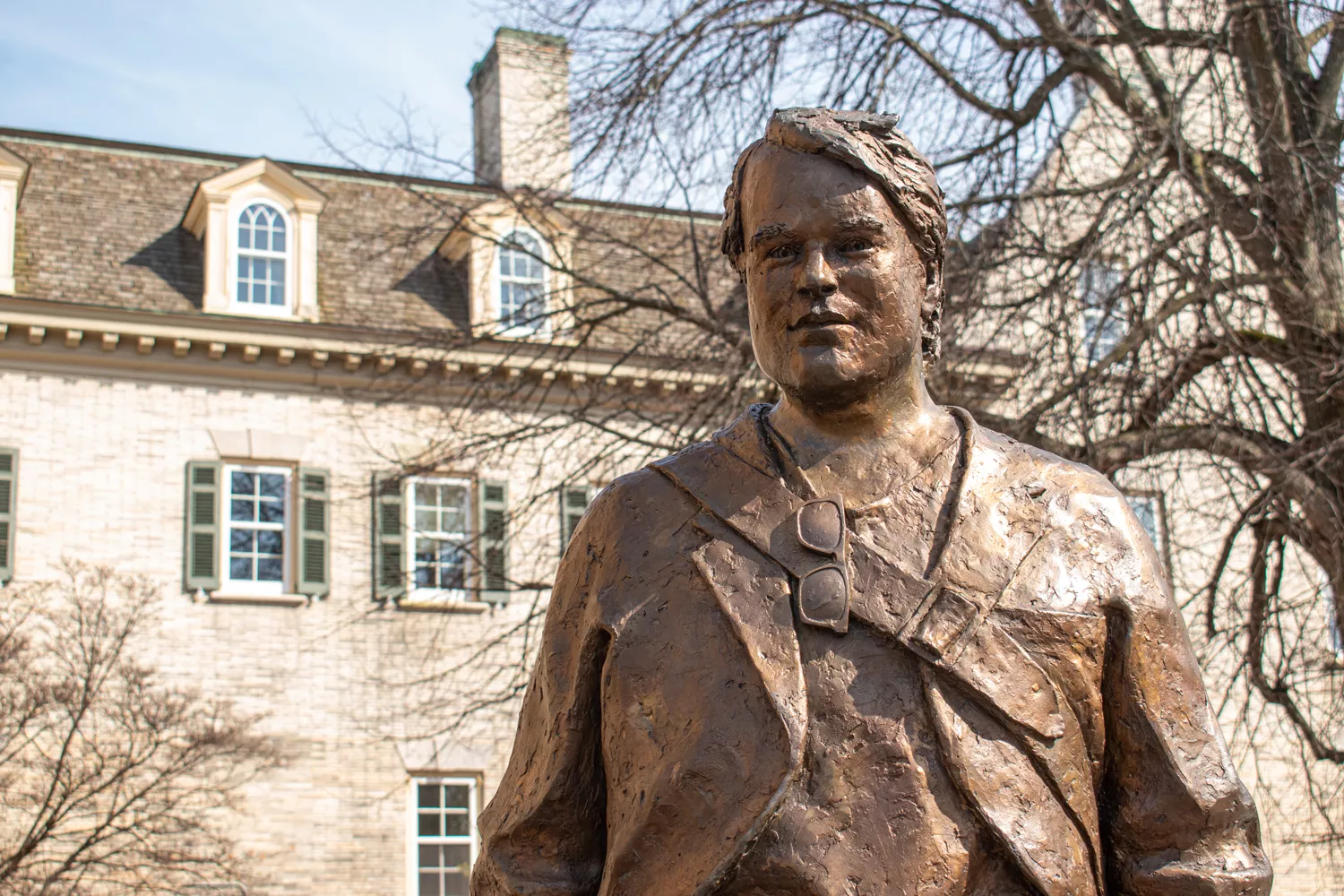
Philip Seymour Hoffman was more than just an actor; he was a force of nature on screen and stage. With a career spanning over two decades, he captivated audiences with his incredible range, transforming into a vast array of complex, deeply human characters. From awkward loners and arrogant bullies to charismatic leaders and troubled souls, Hoffman inhabited every role with a rare intensity and vulnerability. His ability to find the humanity in even the most flawed individuals made him one of the most respected and compelling actors of his generation. This article explores the life, career, and lasting impact of the unforgettable Philip Seymour Hoffman.
Key Takeaways
- Versatility as an Actor: Philip Seymour Hoffman was renowned for his ability to play a wide variety of roles, from leading men to quirky character parts, with unmatched depth and authenticity.
- Academy Award Winner: His powerful portrayal of Truman Capote in the 2005 film Capote earned him the Academy Award for Best Actor, cementing his status as a top-tier performer.
- Theater Roots: Hoffman was deeply committed to the theater, co-founding the LAByrinth Theater Company and earning three Tony Award nominations for his work on Broadway.
- Collaborations: He was a frequent collaborator with director Paul Thomas Anderson, appearing in five of his films, including Boogie Nights, Magnolia, and The Master.
- Enduring Legacy: Despite his untimely death in 2014, Hoffman’s body of work continues to influence actors and filmmakers, and his performances remain powerful examples of the craft of acting.
Who Was Philip Seymour Hoffman?
Born on July 23, 1967, in Fairport, New York, Philip Seymour Hoffman discovered his passion for acting in high school. He pursued this passion with dedication, earning a BFA in drama from New York University’s Tisch School of the Arts in 1989. After graduating, he began building a career in both theater and film, initially taking on small but memorable roles. It was his raw talent and commitment to his craft that quickly made him stand out.
Hoffman wasn’t a conventional leading man, and he used that to his advantage. He built a reputation for being a brilliant character actor, someone who could steal a scene with just a few lines of dialogue or a subtle gesture. His early work in the 1990s laid the foundation for what would become an extraordinary career, showcasing the promise of a truly special artist. He was known for his meticulous preparation and his courage in exploring the darker, more complicated aspects of the human psyche.
Early Life and Entry into Acting
From a young age, Philip Seymour Hoffman showed a creative spark. Though he was an avid athlete in his youth, a wrestling injury at 14 led him to explore other interests. He saw a local production of Arthur Miller’s All My Sons and was instantly captivated by the theater. He joined his high school’s drama club and began acting in school plays, where his natural talent was immediately apparent to his teachers and peers.
This newfound passion guided his academic choices. After high school, he was accepted into the prestigious drama program at NYU. It was in New York City that he honed his skills and connected with other aspiring artists who would become lifelong friends and collaborators, including director Bennett Miller and writer Steven Schub. After graduating, Hoffman, along with Schub and a group of fellow actors, co-founded the LAByrinth Theater Company, a creative home where he would direct and perform for many years. This commitment to the stage ran parallel to his film career, and his work in theater deeply informed his screen performances.
The Rise of a Character Actor in the 1990s
The 1990s were a pivotal decade for Philip Seymour Hoffman. He worked steadily, appearing in a string of films that established him as one of the most reliable and interesting character actors in Hollywood. One of his first notable roles was as a spoiled, conniving prep school student in the 1992 film Scent of a Woman, where he held his own opposite the legendary Al Pacino. Though a small part, it demonstrated his ability to make a strong impression.
He continued to land roles in significant films throughout the decade. His performance as the lonely, heavy-breathing Scotty J. in Boogie Nights (1997) marked the beginning of a fruitful collaboration with director Paul Thomas Anderson. He also delivered memorable performances in films like Twister (1996), where he played the rambunctious storm-chaser Dusty Davis, and The Big Lebowski (1998), as the obsequious Brandt. Each role was distinct, showcasing his incredible versatility. He wasn’t just playing a part; he was creating a fully realized person, complete with quirks, flaws, and a believable inner life.
Notable Film Roles of the 1990s
|
Film Title |
Year |
Role |
Director |
|---|---|---|---|
|
Scent of a Woman |
1992 |
George Willis, Jr. |
Martin Brest |
|
Twister |
1996 |
Dustin “Dusty” Davis |
Jan de Bont |
|
Boogie Nights |
1997 |
Scotty J. |
Paul Thomas Anderson |
|
The Big Lebowski |
1998 |
Brandt |
Joel & Ethan Coen |
|
Happiness |
1998 |
Allen |
Todd Solondz |
|
Magnolia |
1999 |
Phil Parma |
Paul Thomas Anderson |
|
The Talented Mr. Ripley |
1999 |
Freddie Miles |
Anthony Minghella |
The Paul Thomas Anderson Collaboration
One of the most significant professional relationships in Philip Seymour Hoffman’s career was with director Paul Thomas Anderson. Their partnership began with Anderson’s debut feature, Hard Eight (1996), where Hoffman had a small but memorable role as a cocky young craps player. This collaboration blossomed over the next two decades, with Hoffman becoming a key member of Anderson’s repertory company of actors. They would go on to make five films together, each one a testament to their shared artistic sensibilities.
Their work together included Boogie Nights, Magnolia (1999), Punch-Drunk Love (2002), and The Master (2012). In Magnolia, Hoffman delivered a performance of quiet empathy as Phil Parma, a nurse caring for a dying man. In contrast, his role in The Master was that of the larger-than-life Lancaster Dodd, a charismatic and manipulative cult leader. This role earned him his final Academy Award nomination. Anderson’s complex, character-driven scripts provided the perfect canvas for Hoffman’s immersive acting style, and their partnership produced some of the most iconic films of the era.
Reaching the Pinnacle: Winning an Oscar for Capote
While Philip Seymour Hoffman had long been a critical darling, his lead role in the 2005 film Capote launched him into a new stratosphere of stardom. The film, directed by his friend Bennett Miller, chronicled the period when author Truman Capote was researching and writing his seminal non-fiction novel, In Cold Blood. To prepare for the role, Hoffman underwent a stunning physical and vocal transformation, capturing Capote’s distinctive voice, mannerisms, and complex personality with breathtaking accuracy.
His performance was far more than a simple imitation. Hoffman delved deep into Capote’s psyche, exploring his ambition, his charm, and the moral compromises he made to get his story. The role was a masterclass in subtlety and control, revealing the profound loneliness and turmoil beneath Capote’s flamboyant exterior. The performance was universally praised by critics and audiences alike. It earned Philip Seymour Hoffman the Academy Award, Golden Globe, and BAFTA for Best Actor, cementing his reputation as one of the greatest actors of his generation. It was a well-deserved recognition of his immense talent and dedication.
A Deep Commitment to the Theater
Long before he was an Oscar winner, Philip Seymour Hoffman was a man of the theater. His work on stage was not a stepping stone to film but a parallel passion that he nurtured throughout his career. As a co-founder and longtime member of the New York-based LAByrinth Theater Company, he had a creative space to take risks as both an actor and a director. He directed several acclaimed Off-Broadway productions, including Jesus Hopped the ‘A’ Train and Our Lady of 121st Street.
Hoffman also conquered Broadway, earning three Tony Award nominations for his powerful performances.
- True West (2000): He co-starred with John C. Reilly in a celebrated revival of Sam Shepard’s play, with the two actors famously switching roles every few performances. This feat earned him his first Tony nomination.
- Long Day’s Journey Into Night (2003): He played the troubled elder son, Jamie Tyrone, in a revival of Eugene O’Neill’s masterpiece, earning his second nomination.
- Death of a Salesman (2012): His portrayal of the tragic hero Willy Loman in Mike Nichols’s revival of Arthur Miller’s classic play was hailed as a tour de force, earning him his third and final Tony nomination.
His stage work was raw, immediate, and powerful, reinforcing his status as an actor of profound depth and courage.
Exploring Comedic and Blockbuster Roles
While best known for his intense dramatic work, Philip Seymour Hoffman also had exceptional comedic timing and a gift for playing purely entertaining characters. He could be hilarious without sacrificing intelligence, often finding the humor in his characters’ absurdities and insecurities. In the 2004 comedy Along Came Polly, he stole every scene he was in as Sandy Lyle, a washed-up former child actor with an unearned ego. His over-the-top confidence and clumsy attempts at basketball made for one of the most memorable comedic performances of the decade.
Hoffman also ventured into the world of blockbuster films, bringing his signature gravitas to high-stakes action movies. He played the formidable villain Owen Davian in Mission: Impossible III (2006), creating a truly menacing and cold-blooded antagonist for Tom Cruise’s Ethan Hunt. Later in his career, he joined the cast of The Hunger Games franchise as Plutarch Heavensbee, the cunning Head Gamemaker who becomes a key figure in the rebellion. Even in these large-scale productions, Hoffman brought a level of nuance and complexity that elevated the material, proving that no role was too big or too small for his immense talent.
The Art of Transformation: Hoffman’s Acting Style
What made a Philip Seymour Hoffman performance so special? It was his chameleon-like ability to completely disappear into a role. He was not an actor who simply played variations of himself; instead, he built each character from the ground up, often undergoing significant physical and vocal changes. For Capote, he lost a considerable amount of weight and adopted a high-pitched, effeminate voice. For The Master, he conveyed the booming confidence of a cult leader, a stark contrast to the quiet desperation he showed in Synecdoche, New York.
His approach was rooted in deep psychological exploration. He sought to understand his characters’ motivations, fears, and desires, no matter how unsavory they might be. This allowed him to find the humanity in everyone he played, from the lonely pervert in Happiness to the compassionate priest in Doubt. He wasn’t afraid to be unlikable, vulnerable, or messy on screen. This fearless commitment to emotional honesty is what made his performances so compelling and relatable. More than just an actor, he was a student of the human condition, and the screen was his classroom. For more insights on creative pursuits, you can explore topics on platforms like Forbes Planet.
Later Career and Final Roles
In the years leading up to his passing, Philip Seymour Hoffman continued to deliver one brilliant performance after another. His work in the 2010s demonstrated his incredible range and his unwavering commitment to challenging material. In The Master (2012), he gave one of his most iconic performances as Lancaster Dodd, a character loosely based on Scientology founder L. Ron Hubbard. His portrayal of a man who is simultaneously brilliant, charming, and fraudulent earned him his fourth and final Oscar nomination.
He also co-starred in the political thriller The Ides of March (2011) as a weary campaign manager and in the sports drama Moneyball (2011) as Oakland A’s manager Art Howe. One of his last leading roles was in the spy thriller A Most Wanted Man (2014), where he played Günther Bachmann, a world-weary German intelligence agent. His performance was a quiet storm of exhaustion, dedication, and melancholy, a fitting showcase of his subtle power. His final completed roles were in The Hunger Games: Mockingjay – Part 1 and Part 2, and his character’s arc was completed using a combination of existing footage and digital techniques.
Personal Life and Legacy
Behind the scenes, Philip Seymour Hoffman was a private person who valued his family and his artistic community. He was in a long-term relationship with costume designer Mimi O’Donnell, with whom he had three children: a son, Cooper, and two daughters, Tallulah and Willa. He was known by friends and colleagues as a warm, generous, and intensely intelligent man with a great sense of humor. He was a mentor to many younger actors and a dedicated leader at the LAByrinth Theater Company.
Tragically, Philip Seymour Hoffman passed away on February 2, 2014, at the age of 46. His death was a profound loss for the entertainment world and for all who admired his work. However, his legacy endures through his incredible body of work. His performances continue to be studied and celebrated for their depth, honesty, and artistry. He raised the bar for what audiences could expect from an actor, and his influence can be seen in a new generation of performers who strive for the same level of truth in their work. He remains one of the most respected and missed talents of his time.
Frequently Asked Questions (FAQ)
Q1: What was Philip Seymour Hoffman’s most famous movie?
While he had many famous roles, his performance in the 2005 film Capote is arguably his most celebrated. It earned him the Academy Award for Best Actor and showcased his incredible transformative abilities.
Q2: How many Oscar nominations did Philip Seymour Hoffman receive?
He received four Academy Award nominations in his career. He won for Best Actor for Capote (2005) and was nominated for Best Supporting Actor for Charlie Wilson’s War (2007), Doubt (2008), and The Master (2012).
Q3: Was Philip Seymour Hoffman in The Hunger Games?
Yes, he played the role of Plutarch Heavensbee in The Hunger Games: Catching Fire, The Hunger Games: Mockingjay – Part 1, and The Hunger Games: Mockingjay – Part 2. He passed away during the filming of the final movie.
Q4: Did Philip Seymour Hoffman direct any movies?
Yes, he directed one feature film, Jack Goes Boating (2010), which was based on a play of the same name that he had also starred in and directed on stage.
Q5: What was the LAByrinth Theater Company?
It is a New York-based theater company that Philip Seymour Hoffman co-founded and served as co-artistic director for many years. It was a creative home where he developed and participated in many new plays as an actor and director.
Conclusion
Philip Seymour Hoffman’s career was a testament to the power of dedication, talent, and fearless honesty. He was an artist who consistently challenged himself and his audiences, diving into the complexities of human nature with unparalleled skill. From his early days as a standout character actor to his reign as an Oscar-winning leading man, he created a gallery of unforgettable characters that continue to resonate. Though his time with us was cut short, the impact of Philip Seymour Hoffman on film and theater is undeniable. His remarkable body of work remains a gift to audiences and a high-water mark for actors everywhere, ensuring that his legacy will endure for generations to come.
Stay Informed With the Latest & Most Important News
Previous Post
Next Post
Previous Post

Next Post










Advertisement