
Now Reading: Swirfu: A Complete Guide to This Emerging Tech Trend
-
01
Swirfu: A Complete Guide to This Emerging Tech Trend

Welcome to the world of swirfu! You might have heard this term popping up more frequently and wondered what it’s all about. Is it a new gadget, a software concept, or something else entirely? The great news is that understanding swirfu is simpler than you might think. This guide will walk you through everything you need to know, from its basic definition to its practical applications and future potential.
We will explore how this innovative concept is beginning to shape various industries and what it could mean for our daily lives. Think of this as your friendly introduction to a topic that is quickly gaining momentum. We’ll break it down into easy-to-understand sections, ensuring you leave with a clear and comprehensive picture of what swirfu is and why it matters.
Key Takeaways
- What is Swirfu?: At its core, swirfu is a framework for decentralized data integration and communication. It allows different systems and applications to share information securely and efficiently without a central authority.
- Why is it Important?: Swirfu enhances data security, improves system efficiency, and promotes interoperability between diverse digital platforms, making it a valuable tool for modern businesses.
- Real-World Applications: From supply chain management to healthcare and finance, swirfu offers practical solutions to long-standing challenges in data management.
- The Future is Bright: The potential for swirfu is vast, with ongoing developments expected to lead to even more innovative uses and widespread adoption across various sectors.
Unpacking the Concept: What Exactly is Swirfu?
Let’s start with the basics. The term swirfu refers to a decentralized protocol designed to facilitate seamless and secure interaction between independent digital systems. Imagine a world where your smart home devices, your car’s operating system, and your workplace software could all communicate with each other directly and securely, without needing to go through a central server owned by a single company. That’s the core idea behind swirfu. It acts as a universal translator and a secure bridge for data.
Unlike traditional systems that rely on a central hub to manage all communication, a swirfu-based architecture distributes this control. This decentralization is key to its power, as it eliminates single points of failure and significantly boosts security by making it much harder for unauthorized parties to intercept or corrupt data. It’s a foundational technology, much like the internet protocol (TCP/IP) that allows computers to communicate, but designed for the next generation of interconnected devices and platforms.
The Core Principles of Swirfu Technology
To truly grasp the concept, it’s helpful to understand the principles that guide swirfu technology. These principles are the bedrock of its design and functionality, ensuring it remains robust, secure, and adaptable.
- Decentralization: As mentioned, this is the most critical principle. In a swirfu network, there is no single master controller. Instead, every participant (or “node”) in the network has equal authority. This democratic structure prevents any one entity from having too much power, censoring information, or creating a bottleneck.
- Interoperability: Swirfu is built to be a universal standard. It’s designed to work with a wide range of different technologies, programming languages, and platforms. This “plug-and-play” capability means developers don’t have to build custom solutions every time they want two different systems to talk to each other.
- Security through Cryptography: Security is not an afterthought in swirfu; it’s built into its very fabric. The protocol uses advanced cryptographic techniques, like end-to-end encryption and digital signatures, to ensure that data is only accessible to authorized parties and that its integrity remains intact during transit.
- Transparency and Immutability: Many swirfu implementations use distributed ledger technology (similar to a blockchain) to record transactions or data exchanges. This creates a transparent and immutable history, meaning once a record is added, it cannot be altered or deleted. This is crucial for creating trust in applications like financial transactions or supply chain tracking.
How Does Swirfu Work? A Technical Overview
While we want to keep things simple, a little technical detail can help clarify how swirfu actually functions. Think of it as a set of rules and tools that software developers can use. When two systems want to communicate using swirfu, they first establish a secure channel. This process involves a cryptographic “handshake” where they verify each other’s identities and agree on encryption keys.
Once the secure channel is open, they can exchange data in a standardized format defined by the swirfu protocol. This data is broken down into small, encrypted packets. Each packet contains not only a piece of the information but also metadata that describes its origin, destination, and place within the larger data stream. The network of nodes then works together to route these packets to their correct destination efficiently. This distributed routing is what makes the system so resilient. If one path is blocked or fails, the network can automatically find another way.
Data Packets and Node Communication
In a swirfu network, communication relies on how nodes handle data packets. It’s not just about sending and receiving; it’s about smart and secure processing. When a node wants to send information, it doesn’t just broadcast it everywhere. Instead, it identifies the intended recipient and uses a sophisticated routing algorithm to find the most efficient path through the network. Other nodes along this path act as intermediaries, forwarding the packet without being able to read its contents due to the strong encryption. This ensures both privacy and efficiency.
Example of a Node Interaction:
- Node A wants to send a medical record to Node C.
- Node A encrypts the record using Node C’s public key, so only Node C can decrypt it.
- The encrypted data is placed in a swirfu packet.
- Node A sends the packet to a nearby, trusted peer, Node B.
- Node B cannot read the data, but it sees the destination address for Node C. It checks its own routing table and forwards the packet to the next node on the best path toward C.
- This process continues until the packet arrives at Node C, which uses its private key to decrypt and access the information.
The Key Benefits of Implementing Swirfu
Adopting a new technology only makes sense if it offers real advantages. Fortunately, swirfu brings a host of compelling benefits to the table, especially for businesses and organizations dealing with complex digital ecosystems. These advantages address some of the most pressing issues in modern technology, from security vulnerabilities to system inefficiencies.
Enhanced Security and Data Privacy
In an age of constant data breaches, security is paramount. Traditional, centralized systems present a single, high-value target for attackers. If a company’s central server is compromised, all the data it holds is at risk. Swirfu fundamentally changes this dynamic. By decentralizing data storage and communication,
it eliminates that single point of failure. An attack on one node in the network doesn’t compromise the entire system. Furthermore, the protocol’s reliance on end-to-end encryption means that data is secure both at rest and in transit. Only the intended recipient can decipher the information, providing a powerful safeguard for sensitive data like financial records, personal health information, or proprietary business intelligence. This robust security model builds trust among users and partners.
Greater Efficiency and Scalability
Centralized systems can often become bottlenecks. When every request has to pass through a single server, things can slow down, especially as the number of users or devices grows. A swirfu network, however, becomes more robust and efficient as it expands. With more nodes in the network, there are more potential pathways for data to travel, reducing congestion and improving speed. This inherent scalability makes it an ideal solution for large-scale applications, such as the Internet of Things (IoT), where billions of devices need to communicate simultaneously. The distributed nature of the workload means the system can handle a massive volume of transactions without being overwhelmed, ensuring smooth and reliable performance.
Fostering True Interoperability
One of the biggest headaches for IT departments is getting different software and systems to work together. Companies often spend huge amounts of time and money building custom integrations that are brittle and difficult to maintain. Swirfu aims to solve this problem by providing a universal standard for communication. Because it is platform-agnostic,
it can serve as a common language for diverse systems. A new piece of software built with swirfu compatibility can immediately and securely connect with any other swirfu-enabled system, regardless of who built it or what programming language it uses. This dramatically simplifies integration, reduces development costs, and fosters a more collaborative and innovative technological ecosystem. For more insights on how different technologies integrate, platforms like Forbes Planet offer a wealth of information.
Real-World Use Cases for Swirfu Technology
Theory is great, but practical application is where a technology proves its worth. Swirfu is already making inroads in several key industries, demonstrating its versatility and problem-solving capabilities. Let’s explore some of the most promising use cases.
Revolutionizing Supply Chain Management
The modern supply chain is incredibly complex, involving dozens of separate companies, systems, and geographies. Tracking a single product from raw material to final delivery is a massive challenge. Swirfu offers a powerful solution by creating a transparent and unified ledger that all partners in the supply chain can share.
- Improved Traceability: A manufacturer can attach a unique digital identity to a product using swirfu. At every step of the journey—from the factory to the shipping container, to the warehouse, to the retail store—the product’s status is updated on a distributed ledger. This creates an unchangeable record, allowing anyone with permission to see exactly where the product has been.
- Enhanced Efficiency: Automating the exchange of information, like customs documents or bills of lading, through swirfu reduces paperwork, minimizes delays, and lowers the risk of human error.
- Fraud Prevention: By providing a verifiable history of a product’s journey, swirfu makes it much harder to introduce counterfeit goods into the supply chain.
|
Stage of Supply Chain |
Traditional Method |
Swirfu-Enabled Method |
|---|---|---|
|
Manufacturing |
Internal database; paper records |
Digital twin created on a shared ledger |
|
Shipping |
Emailing PDFs, manual data entry |
Automated updates from IoT sensors |
|
Customs |
Physical documents, separate systems |
Instant, verifiable digital documents |
|
Retail |
Manual inventory scans |
Real-time inventory tracking on ledger |
Transforming Healthcare Data Exchange
Patient data is some of the most sensitive information there is, and sharing it securely between different providers—hospitals, labs, specialists—is a major challenge. The lack of interoperability leads to duplicated tests, incomplete patient histories, and medical errors. Swirfu provides a secure framework for patient-controlled data sharing. A patient could hold the “keys” to their own medical records, granting temporary access to a new doctor or specialist as needed. The swirfu protocol would ensure the data is transmitted securely and that the access is logged on an immutable ledger. This empowers patients, improves the quality of care, and maintains strict privacy, all while allowing for the seamless flow of critical information when it’s needed most.
Securing the Internet of Things (IoT)
The Internet of Things (IoT) envisions a world with billions of interconnected smart devices, from lightbulbs and thermostats to industrial sensors and medical implants. Securing this massive network is one of the biggest challenges in cybersecurity. Many IoT devices have limited processing power, making them vulnerable to attack. A swirfu network can provide a lightweight, secure communication layer for these devices. Instead of each device connecting to a central cloud server (creating a huge attack surface), they can communicate with each other directly in a decentralized, encrypted mesh network. This makes the entire ecosystem more resilient and secure, preventing the kind of large-scale IoT botnet attacks that have occurred in the past.
The Future of Swirfu: What’s Next?
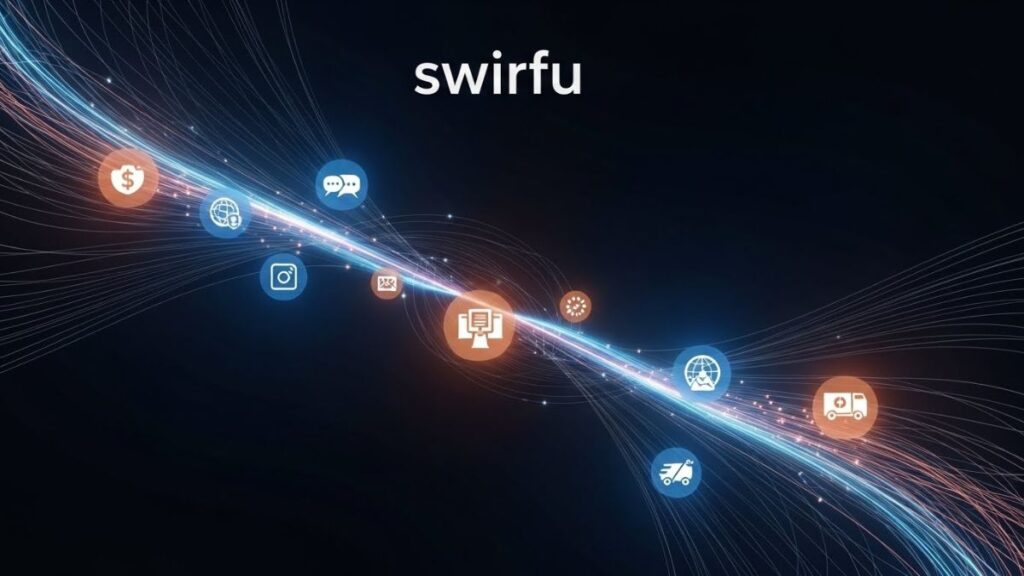
The journey for swirfu is just beginning. While the foundational technology is solid, the ecosystem around it is still growing. We can expect to see several key developments in the coming years.
Standardization and Widespread Adoption
For swirfu to reach its full potential, it needs to become a widely accepted standard, much like Wi-Fi or Bluetooth. This will require collaboration between tech companies, industry consortiums, and standards bodies. As more developers and businesses recognize the benefits, we can expect to see a groundswell of support for creating a unified swirfu protocol. This will lead to an explosion in compatible hardware and software, making it easier than ever to build powerful, decentralized applications.
Integration with AI and Machine Learning
The combination of swirfu and artificial intelligence (AI) is particularly exciting. AI systems thrive on data, and swirfu provides a secure and efficient way to feed them vast amounts of information from diverse sources. Imagine an AI-powered smart city that uses a swirfu network to gather real-time data from traffic sensors, public transit, and energy grids. The AI could analyze this data to optimize traffic flow, predict power demands, and respond to emergencies instantly. The decentralized nature of swirfu ensures that this data remains secure and tamper-proof, which is critical when making automated decisions that affect thousands of people.
Overcoming the Challenges
Of course, the path forward is not without its challenges. Widespread adoption will require overcoming technical hurdles related to performance and scalability at a global level. There are also governance questions to address: who will oversee the development of the standard, and how will disputes be resolved in a decentralized system? Furthermore, there is the challenge of education. Businesses and consumers need to understand what swirfu is and why it’s a better alternative to existing systems. Despite these obstacles, the momentum behind the concept is strong, and the brilliant minds working on it are well-equipped to find solutions.
Conclusion
Swirfu represents a significant shift in how we think about data, security, and digital interaction. By moving away from centralized, vulnerable models and toward a decentralized, secure, and interoperable framework, it offers a compelling solution to many of the digital world’s most persistent problems. From securing our supply chains and personal data to enabling the next generation of IoT and AI applications, its potential is immense. While it’s still an emerging technology, its core principles of decentralization, security, and interoperability are precisely what’s needed to build a more resilient, efficient, and trustworthy digital future. Keep an eye on the term swirfu—it’s a concept that is poised to become an increasingly important part of our technological landscape.
Frequently Asked Questions (FAQ)
1. Is swirfu the same as blockchain?
Not exactly. While some swirfu implementations may use blockchain or distributed ledger technology for transparency and immutability, swirfu itself is a broader communication protocol. The key focus of swirfu is on the secure, decentralized exchange of data between systems, whereas blockchain is primarily a specific type of distributed database. Think of blockchain as one potential tool that can be used within a swirfu framework.
2. Is swirfu difficult to implement for a small business?
Currently, implementation can be complex as the developer tools are still maturing. However, as the technology becomes more standardized, we expect to see the rise of user-friendly platforms and services that make it easy for small businesses to integrate swirfu into their operations without needing a team of specialized developers.
3. What is the biggest advantage of using swirfu?
While there are many benefits, the biggest advantage is arguably the combination of enhanced security and interoperability. It solves two major problems at once: it protects data from breaches by decentralizing it and allows different systems to communicate seamlessly without costly custom integrations.
4. How can I learn more about swirfu?
The best way to learn more is to follow technology news sites, developer blogs, and open-source projects related to decentralized communication protocols. As the technology grows, more educational resources will become available.
5. Is swirfu a specific product or a concept?
Swirfu is a concept and a protocol, not a single product from one company. Just like HTTP is the protocol for the web, swirfu is a proposed protocol for decentralized communication. Different companies and open-source projects will build their own products and platforms that are “swirfu-compatible.”
For further reading on related concepts, you can explore information available on platforms like Wikipedia.
Related Posts



Stay Informed With the Latest & Most Important News
Previous Post
Next Post











Advertisement