
Now Reading: Understanding the Status Quo Definition and Its Impact
-
01
Understanding the Status Quo Definition and Its Impact

Have you ever heard someone say they want to “challenge the status quo” or “maintain the status quo”? It’s a common phrase used in conversations about business, politics, and even our personal lives. But what does it really mean? Understanding the status quo definition is key to grasping why things stay the same and how change happens. This concept touches everything from your school’s rules to major global events.
In this article, we will break down the status quo definition in a simple and clear way. We’ll explore where the term comes from, see how it applies in different areas of life, and discuss why people might want to either protect it or tear it down. By the end, you’ll have a solid understanding of this important idea and be able to spot it in action all around you.
Key Takeaways
- Status Quo Definition: The status quo refers to the existing state of affairs or the current conditions of a situation. It’s how things are right now.
- Origins: The term comes from the Latin phrase “status quo ante bellum,” meaning “the state in which things were before the war.”
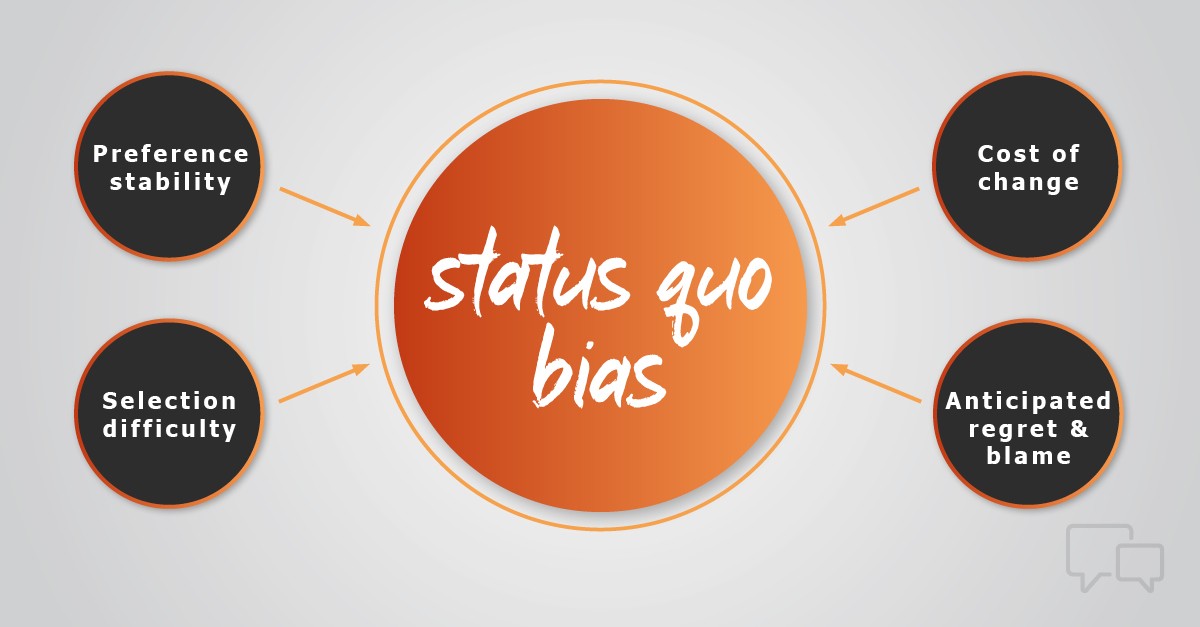
- Psychological Roots: People often prefer the status quo due to psychological biases like loss aversion, the mere-exposure effect, and a desire for stability.
- Societal Impact: The status quo shapes social norms, political systems, and economic structures, often benefiting those in power.
- Challenging vs. Maintaining: Progress and innovation often require challenging the status quo, while maintaining it provides predictability and security.
What is the Core Status Quo Definition?
At its heart, the status quo definition refers to the current state of affairs. Think of it as a snapshot of how things are at this very moment. It’s the existing social, political, and economic arrangement of a society, an organization, or even a small group. When people talk about the status quo, they are talking about the established norms, traditions, and power structures that are in place. It’s the default setting for how the world, or a piece of it, operates.
This concept isn’t just about big, societal issues. It applies to your daily life, too. The way your family celebrates holidays, the unwritten rules of your friend group, or the daily schedule at your school are all examples of a status quo. It’s the baseline from which any change is measured. So, if your school introduces a new dress code, that change is a departure from the previous status quo. Understanding this baseline is crucial because it helps us analyze why certain conditions persist and what it takes to alter them. It’s the foundation upon which discussions of progress, reform, and revolution are built.
The Latin Origins of the Phrase
The term “status quo” is a shortened version of a Latin phrase, “in statu quo res erant ante bellum.” This mouthful translates to “in the state in which things were before the war.” The phrase was originally used in diplomatic treaties to describe the restoration of pre-war conditions. Essentially, after a conflict, a treaty might demand that both sides return captured territory and go back to the way things were before the fighting started. This was a way to end a war without declaring a clear winner or loser, simply resetting the board.
Over time, the phrase was shortened to status quo ante and eventually just status quo. Its meaning expanded beyond the context of war and diplomacy. Today, it’s used in almost any situation to describe the existing conditions. While its origins are tied to conflict resolution, its modern usage is much broader, covering everything from corporate culture to social movements. This historical context is interesting because it highlights the concept’s connection to stability and the restoration of order, which are still key elements of the status quo definition today.
The Psychology Behind Sticking to the Status Quo
Why do people and organizations often resist change and prefer to maintain the status quo? The answer lies deep in human psychology. We are wired with certain cognitive biases that make the familiar feel safer and more desirable than the unknown. This preference isn’t necessarily a sign of being lazy or uncreative; it’s a natural human tendency.
One of the most powerful forces is loss aversion. Studies by psychologists Daniel Kahneman and Amos Tversky showed that the pain of losing something is psychologically about twice as powerful as the pleasure of gaining something of equal value. When faced with a change, we tend to focus more on what we might lose from the current situation (the status quo) than on what we might gain from a new one. This makes us hesitant to take risks, even if the potential rewards are great. We prefer the comfortable certainty of now over the uncertain promise of tomorrow.
Status Quo Bias Explained
Status quo bias is the specific cognitive bias that describes our preference for the current state of affairs. This bias makes any change from the baseline seem like a loss. For example, if you’ve been using the same phone for years, you might resist upgrading to a new one, even if the new model is objectively better. You’re used to your old phone’s interface, its quirks, and its layout. The effort of learning a new system and transferring your data can feel like a hassle—a potential loss of time and comfort—so you stick with what you know.
This bias is often exploited in business and marketing. Have you ever signed up for a free trial that automatically converts to a paid subscription unless you cancel? Companies know that the effort of canceling (changing the status quo) is often greater than the passive acceptance of continuing the service. They are banking on your status quo bias to keep you as a customer. Recognizing this bias in ourselves and in the world around us is the first step toward making more conscious and rational decisions.
The Comfort of Predictability
Another psychological reason we cling to the status quo is our deep-seated need for predictability and certainty. The human brain is a prediction machine; it constantly tries to anticipate what will happen next to keep us safe and conserve mental energy. The status quo is, by its nature, predictable. We know the rules, the routines, and the likely outcomes. This predictability creates a sense of psychological safety and comfort.
Change, on the other hand, introduces uncertainty. A new boss at work, a new law passed by the government, or a new technology can disrupt our established patterns and force our brains to work harder. We have to learn new rules, adapt to new expectations, and deal with unknown consequences. This uncertainty can be stressful and anxiety-inducing. Therefore, maintaining the status quo is often the path of least resistance, providing a stable environment where we feel in control. This desire for comfort isn’t a flaw; it’s a survival mechanism that has helped humans navigate a complex world for millennia.
The Status Quo in Different Contexts
The concept of the status quo is not just an abstract idea; it has real-world applications and consequences in many different areas of life. From the halls of government to the boardroom of a major corporation, understanding and navigating the status quo is essential.
Status Quo in Politics and Government
In politics, the status quo definition refers to the existing distribution of power, political structures, and public policies. Political parties and leaders often define themselves by their relationship to it. Conservative movements, by their nature, typically aim to preserve the status quo, arguing that current systems and traditions provide stability and have proven effective over time. They often caution against rapid change, fearing unintended negative consequences.
On the other hand, progressive or revolutionary movements are defined by their desire to challenge or overthrow the status quo. They argue that the current system is unjust, unequal, or outdated and that fundamental change is needed to create a better society. Debates over issues like healthcare reform, environmental regulations, and civil rights are essentially battles over whether to maintain or change the existing political status quo. The very structure of many governments, with their checks and balances, can be seen as a mechanism to make changing the status quo a slow and deliberate process.
Status Quo in Business and Economics
In the business world, the status quo represents the current market conditions, dominant business models, and established industry leaders. For a successful, established company, maintaining the status quo can be a primary goal. They have a business model that works, a loyal customer base, and a profitable position in the market. Why would they want to change? Their focus is often on incremental improvements and defending their market share from competitors.
However, this is also where the danger of complacency lies. History is filled with companies that were once giants but failed because they clung to the status quo for too long. Think of Kodak, which invented digital photography but was slow to embrace it because it threatened their profitable film business. New, disruptive startups, in contrast, have a vested interest in shattering the status quo. Companies like Uber, Airbnb, and Netflix became successful by challenging the established way of doing things in transportation, hospitality, and entertainment. Their goal is to create a new status quo where they are the leaders. As you can see, the world of business is a constant struggle between those who defend the status quo and those who seek to disrupt it, a topic often explored on platforms like Forbes Planet.
Status Quo in Society and Culture
Socially and culturally, the status quo encompasses the shared norms, values, traditions, and social hierarchies of a community. These are the unwritten rules that guide how we behave, what we believe, and how we interact with one another. Social norms about marriage, family, gender roles, and etiquette are all part of the social status quo. For many people, these traditions provide a sense of identity, belonging, and continuity with the past.
However, the social status quo can also perpetuate inequality and injustice. Social movements throughout history have been driven by the fight to change a status quo that was oppressive to certain groups. The Civil Rights Movement in the United States fought to dismantle the status quo of racial segregation. The women’s suffrage movement challenged the status quo that denied women the right to vote. Today, debates around LGBTQ+ rights, gender equality, and racial justice are ongoing struggles to redefine the social and cultural status quo to be more inclusive and equitable for everyone.
Challenging vs. Maintaining the Status Quo
The tension between maintaining the status quo and challenging it is a fundamental driver of human history and progress. Both impulses have their own set of advantages and disadvantages, and the “right” path often depends on the specific context and one’s personal values.
|
Aspect |
Maintaining the Status Quo |
Challenging the Status Quo |
|---|---|---|
|
Primary Goal |
Stability, Predictability, Security |
Progress, Innovation, Justice |
|
Key Benefit |
Avoids risk, conserves resources |
Creates opportunities, corrects flaws |
|
Main Drawback |
Can lead to stagnation, injustice |
Can lead to instability, uncertainty |
|
Associated With |
Tradition, Conservatism, Established Power |
Reform, Revolution, Disruption |
|
Example |
Keeping a long-standing company policy |
Introducing a new technology |
The Pros and Cons of Maintaining the Status Quo
Pros:
- Stability and Predictability: The greatest advantage of maintaining the status quo is the stability it provides. When things stay the same, life is predictable. This reduces anxiety and allows individuals and organizations to operate efficiently without constantly having to adapt to new rules.
- Risk Aversion: Sticking with what works is a safe bet. Change is inherently risky; a new strategy might fail, leading to financial loss or social disruption. Maintaining the status quo avoids these potential pitfalls.
- Efficiency: Established systems and processes have often been refined over time. Continuing with them saves the time and resources that would be needed to develop, test, and implement something new.
Cons:
- Stagnation: The biggest danger of clinging to the status quo is stagnation. A company that doesn’t innovate will be overtaken by competitors. A society that doesn’t adapt to changing values will face social unrest.
- Perpetuating Injustice: If the current state of affairs is unfair or oppressive to certain groups, maintaining the status quo means continuing that injustice. Progress toward equality requires change.
- Missed Opportunities: A fear of change can cause individuals and organizations to miss out on valuable opportunities for growth, improvement, and new discoveries.
The Risks and Rewards of Challenging the Status Quo
Rewards:
- Innovation and Progress: Nearly every major advancement in science, technology, and society has come from someone who dared to challenge the status quo. Challenging the accepted way of thinking is the engine of progress.
- Justice and Equality: Challenging an unjust status quo is essential for creating a fairer and more equitable society. Social movements are a powerful example of the positive outcomes of this struggle.
- Adaptability: Being willing to change allows organizations and societies to adapt to new circumstances, whether it’s a shift in the market, a new technology, or a change in the global climate.
Risks:
- Instability and Chaos: Change can be disruptive. A political revolution can lead to chaos and violence. A major shift in a company’s strategy can lead to confusion and a drop in morale.
- Uncertainty: The outcome of change is never guaranteed. A well-intentioned reform might have unintended negative consequences. You are trading a known present for an unknown future.
- Resistance: Those who benefit from the current status quo will almost always resist attempts to change it. Challengers can expect to face powerful opposition, criticism, and conflict.
How to Analyze the Status Quo in Your Own Life
The concept of the status quo definition isn’t just for politicians and CEOs; it’s a useful tool for personal growth and decision-making. By identifying the status quo in your own life, you can make more conscious choices about what you want to keep and what you want to change.
Start by looking at your daily routines, your habits, your relationships, and your career or school path. Ask yourself:
- What is the “default setting” in this area of my life?
- Why do I do things this way? Is it a conscious choice, or just because it’s what I’ve always done?
- Who benefits from this current situation? Does it serve my long-term goals and values?
- What would I be risking if I tried to change this?
- What might I gain by making a change?
For example, maybe the status quo is that you spend an hour scrolling through social media every night before bed. It’s a habit you fell into, and it’s easy. But analyzing it, you might realize it’s not serving your goal of getting more sleep or reading more books. Challenging that personal status quo—by leaving your phone in another room, for instance—could lead to positive changes, even if it feels uncomfortable at first. Applying the status quo definition to your own life is a powerful exercise in self-awareness.
Conclusion
The status quo definition describes the world as it is—the existing state of affairs that serves as the backdrop for all human activity. It is a concept rooted in the human desire for stability but is in constant tension with the drive for progress and change. From its Latin origins in diplomacy to its modern applications in politics, business, and our personal lives, the status quo is a powerful force. It is upheld by deep-seated psychological biases that make us fear loss and crave predictability.
Whether it is being defended by those who benefit from it or challenged by those who seek a better future, the status quo is never truly static. It is a dynamic balance. Understanding this concept allows you to see the world more clearly, to recognize the invisible forces that shape our societies and our choices. It empowers you to question why things are the way they are and to decide for yourself whether you want to be a force for maintenance or a catalyst for change.
Frequently Asked Questions (FAQ)
1. What is a simple status quo definition?
The simplest status quo definition is “the way things are now.” It refers to the current conditions or the existing state of affairs in any given situation, from politics to your personal life.
2. Is maintaining the status quo a good or bad thing?
It’s neither inherently good nor bad; it depends on the context. Maintaining the status quo is good when it provides stability, security, and efficiency in a system that is fair and effective. It can be bad if it leads to stagnation, prevents necessary progress, or perpetuates injustice and inequality.
3. Can you give an example of challenging the status quo?
The rise of remote work is a great example. For decades, the status quo for most office jobs was commuting to a central workplace every day. The COVID-19 pandemic forced a massive challenge to this status quo, and now many companies are embracing flexible or fully remote models, creating a new standard.
4. What is the opposite of status quo?
The opposite of the status quo is change, disruption, or reform. Phrases like “challenging the status quo,” “disrupting the norm,” or “pushing for reform” all describe actions taken against the existing state of affairs.
5. How does the status quo relate to comfort zones?
The status quo is essentially a collective comfort zone. Just as an individual’s comfort zone is the set of behaviors and situations where they feel safe and without anxiety, the status quo is the societal or organizational state that feels familiar and predictable. Pushing beyond either one involves risk and discomfort but is often necessary for growth.
Stay Informed With the Latest & Most Important News
Previous Post
Next Post










Advertisement