

Now Reading: The Ultimate Guide to the Majestic Silverback Gorilla
-
01
The Ultimate Guide to the Majestic Silverback Gorilla


Key Takeaways
- A silverback gorilla is a mature male gorilla, known for the distinctive patch of silver hair on his back.
- They serve as the protectors and leaders of their family groups, also called troops.
- These gentle giants are herbivores, eating mainly plants, shoots, and fruits.
- Conservation efforts are critical because many gorilla species are currently endangered.
- Understanding their social structure helps us appreciate their complex behaviors and emotions.
What Exactly Is a Silverback Gorilla?
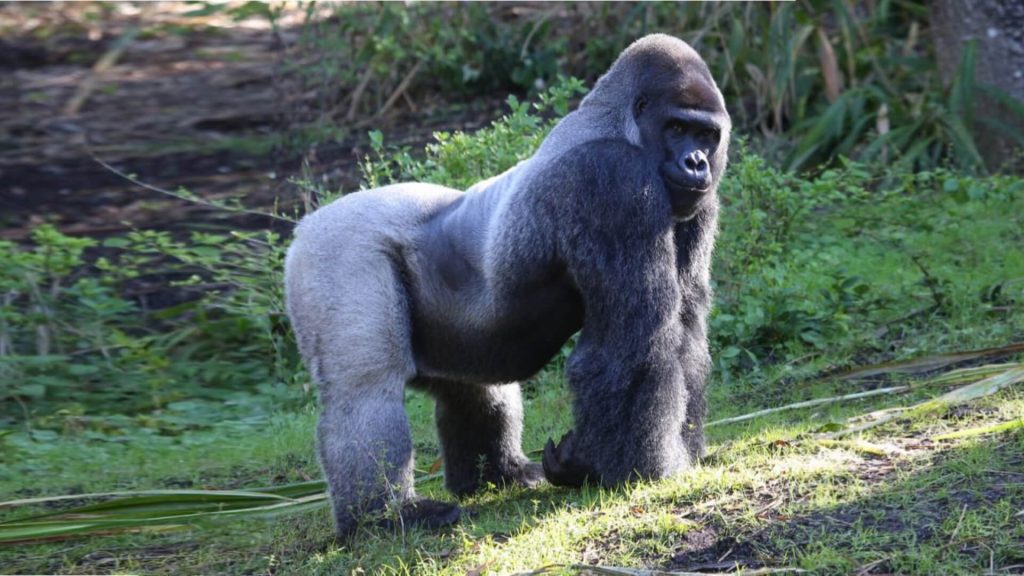
When we talk about the kings of the jungle, few animals are as impressive as the silverback gorilla. It is important to clarify that “silverback” is not a separate species of gorilla. Instead, it refers to an adult male gorilla who has reached maturity, typically around the age of 12 or older. As they age, the hair across their shoulders and down their back turns a grayish or silvery-white color. This change is very similar to how human hair goes gray with age. It signals to everyone else in the forest that this male is fully grown, strong, and ready to lead.
These massive primates are the largest living primates on Earth. An average silverback gorilla can weigh between 300 to 450 pounds and stand up to six feet tall when on two legs, though they usually walk on all fours using their knuckles. Their sheer size commands respect. But despite their scary appearance in movies, they are generally peaceful creatures unless provoked. They spend most of their day eating and resting. Being a silverback comes with a lot of responsibility. He isn’t just the biggest member of the group; he is the decision-maker. He decides where the group eats, where they sleep, and he is the one who defends them against threats.
The Role of the Leader
The primary job of a silverback gorilla is protection. He is the glue that holds the family together. A typical troop consists of several females, their offspring, and usually one dominant silverback. Sometimes, there might be younger adult males, called “blackbacks,” who support the leader, but the silverback is the boss. If another male tries to take over the group or if a predator like a leopard approaches, the silverback will charge. He beats his chest, hooting and roaring to scare away the threat. This display is usually enough to avoid a physical fight, but he will fight to the death to protect his family if he has to.
Beyond protection, he is also a father figure. He plays with the infants in the group, letting them climb on him and wrestle. This gentle side is a stark contrast to his immense power. He also settles arguments between females in the group. If two members of the troop are fighting over food or space, the silverback intervenes to keep the peace. His leadership is crucial for the troop’s survival. Without a strong leader, the group could be scattered, leaving females and babies vulnerable to predators or aggressive males from other groups.
Physical Characteristics of a Silverback
The physical build of a silverback gorilla is a marvel of nature. They are built for strength and dominance. Their arms are longer than their legs, which gives them a huge arm span that can reach up to 8 feet across. This reach is helpful for gathering food and climbing, although large silverbacks climb less often than the lighter females and children. Their chests are incredibly broad and thick, housing large lungs that allow them to produce those famous, booming calls that echo through the forest.
One of the most distinct features is the sagittal crest. This is a bony ridge on top of their skull that runs lengthwise down the middle of the head. It gives their head a high, conical shape. This bone anchors the massive jaw muscles required to chew tough vegetation. Because they eat roots, bark, and fibrous plants, they need incredible bite force—much stronger than a lion’s bite! Their teeth are also specialized; they have large, flat molars for grinding plants and long, sharp canines. While the canines look scary and dangerous, they are mostly used for display to intimidate rivals rather than for eating meat.
Strength Comparison: Gorilla vs. Human
It is hard to truly grasp how strong a silverback gorilla is without comparing it to something we know—ourselves. A silverback is estimated to be at least six to fifteen times stronger than the average human male. If you have ever struggled to lift a heavy box, imagine a gorilla effortlessly tossing it aside. They have been known to bend iron bars and snap thick bamboo stalks like they were toothpicks. This strength isn’t from going to the gym; it is purely genetic and necessary for their survival in the dense forests where they live.
To put it in numbers, a strong human might be able to bench press their own body weight or a little more. A silverback gorilla could theoretically lift nearly 2,000 pounds (roughly the weight of a small car) if they were trained to do so. This raw power is concentrated in their upper body. Their shoulders, back, and arms are packed with dense muscle. This strength allows them to tear apart banana trees to get to the juicy center or pull down heavy branches to make nests. While we rely on tools and technology, gorillas rely on their brute strength to manipulate their environment.
Habitat: Where Do They Live?
The habitat of the silverback gorilla depends largely on which species we are talking about. There are two main species: the Eastern Gorilla and the Western Gorilla. Both live in the tropical and subtropical forests of equatorial Africa. The Western Lowland Gorilla, which is the most common type found in zoos, lives in the dense, remote rainforests and swamps of Central Africa. Countries like Cameroon, the Central African Republic, the Republic of Congo, and Gabon are their home. These forests are hot, humid, and filled with thick vegetation.
On the other hand, the Mountain Gorilla—a subspecies of the Eastern Gorilla—lives at much higher elevations. You can find them in the cloud forests of the Virunga Mountains, bordering Rwanda, Uganda, and the Democratic Republic of Congo. Here, the air is cooler, and the terrain is steep and rugged. Because it gets cold up in the mountains, Mountain Gorillas have thicker, longer fur than their lowland cousins to keep them warm. Regardless of the specific location, all gorillas need vast areas of forest to roam. They are nomadic within a home range, moving daily to find fresh food and new nesting sites.
The Importance of the Rainforest
The rainforest is more than just a home for the silverback gorilla; it is their supermarket, pharmacy, and shelter. These forests provide a constant supply of food year-round. However, the density of the forest also offers protection. The thick undergrowth makes it harder for predators to spot them. Gorillas are also vital for the health of the forest itself. As they move through the jungle eating massive amounts of fruit, they spread seeds in their manure. This helps new trees grow, making gorillas the “gardeners of the forest.”
Unfortunately, these habitats are shrinking. Deforestation caused by logging, mining, and agriculture is a major threat. When forests are cut down to make room for farms or to sell timber, the gorillas lose their homes. They are forced into smaller areas, which leads to more competition for food and conflicts with humans. Protecting the rainforest is essential not just for the climate, but to ensure that the silverback gorilla has a place to live. Without these specific ecosystems, they cannot survive in the wild.
Diet and Nutrition
You might think that an animal as big and muscular as a silverback gorilla would eat tons of meat, but they are almost entirely vegetarian. Their diet consists mostly of leaves, stems, bamboo shoots, and fruits. They are classified as folivores (leaf eaters) and frugivores (fruit eaters). Because the vegetation they eat is low in energy compared to meat, they have to eat a lot of it. An adult male can consume up to 40 to 50 pounds of food in a single day! That is like a human eating over 100 hamburgers worth of salad every day.
They spend about half of their waking hours just eating. They have large stomachs specially designed to ferment and digest cellulose, the tough material found in plant cell walls. This digestion process produces a lot of gas, which is why gorillas often have potbellies. While they prefer fruit because it is sugary and energy-rich, fruit isn’t always available. In the dry season or at high altitudes where fruit is scarce, they rely heavily on celery, nettles, and thistles. They have learned to carefully handle stinging nettles so they don’t get hurt while eating them.
Do Gorillas Drink Water?
Interestingly, you will rarely see a silverback gorilla drinking from a river or a lake. This is because the vegetation they eat is incredibly lush and full of water. The wild celery, succulent shoots, and fruits provide almost all the hydration they need. Morning dew on the leaves also adds to their water intake. This adaptation is great for survival because it means they don’t have to venture out to water holes, where predators like leopards might be waiting.
However, they do know how to use water when they need it. Some gorillas have been seen soaking the fur on the back of their hand in water and then sucking on it like a sponge. In captivity, where their diet might be drier (like biscuits or hay), they drink water regularly. But in the humid rainforests of Africa, their food is their drink. This efficiency shows just how perfectly adapted they are to their specific environment.
Social Structure and Family Life
Gorilla society is fascinating and complex. They live in groups called troops or bands. The core of the troop is the dominant silverback gorilla, surrounded by adult females and their young. The females in the group usually stay with the silverback for life, although they might switch groups if the current leader dies or if they find a stronger male. The bond between the silverback and the females is the most important relationship in the troop. He grooms them, and they groom him, which strengthens their social bonds and keeps them clean.
Young males, or blackbacks, eventually have to leave the family. When they reach maturity, they become competition for the leader. Usually, they leave on their own to travel alone or form “bachelor groups” with other young males. They will spend years wandering and getting stronger until they can attract females of their own to start a new troop. It is a lonely and dangerous time for a young male, but it is nature’s way of preventing inbreeding and ensuring only the strongest males pass on their genes.
Communication Within the Troop
Communication is key to keeping the peace in a gorilla troop. A silverback gorilla uses a variety of sounds and gestures to direct his family. There are over 25 distinct vocalizations that researchers have identified. Soft grunts and belches are often used during feeding time to say, “I’m okay, you’re okay, let’s eat.” It signals contentment. High-pitched screams or barks are used by females and babies to signal alarm or distress.
Body language is just as important. If a silverback is annoyed, he might give a stiff stare or a quick jerk of his head. If he wants to intimidate, he will stand tall, throw vegetation, and beat his chest with cupped hands to make a loud popping sound. This sound can travel for over a mile! On the gentler side, mothers communicate with their babies through touch, cuddling, and soft humming sounds. This rich communication system allows them to coordinate their movements and maintain strong emotional connections.
Life Cycle of a Gorilla
The life of a gorilla moves through distinct stages, much like humans. A baby gorilla is born after a pregnancy of about 8.5 months. Newborns are tiny, weighing only about 4 pounds. They are helpless and cling to their mother’s chest or back for the first few years of their life. The mother is the primary caregiver, nursing the infant for about three to four years. During this time, the baby learns everything from her: what to eat, how to climb, and how to behave in the group.
As they grow into juveniles (around 3 to 6 years old), they become very playful. They chase each other, wrestle, and swing from branches. This play is actually practice for adulthood, building muscles and social skills. Females reach maturity around age 8 to 10, while males mature later, around age 12 to 15. In the wild, a gorilla can live to be 35 or 40 years old. In captivity, with veterinary care and no predators, they can live into their 50s. The oldest known gorilla lived to be 60!
Reproduction and Mating
In a typical troop, the dominant silverback gorilla is the only male who mates with the females. This ensures that the offspring have the genes of the strongest and most capable leader. There is no specific breeding season for gorillas; females can give birth at any time of the year. However, because they nurse their babies for several years, a female will typically only give birth once every four years. This slow reproduction rate is one reason why gorilla populations are so slow to recover from threats like poaching.
When a female is ready to mate, she will often approach the silverback. The mating process is usually calm. However, if a silverback dies, the females are in a difficult position. If a new male takes over, he may kill the nursing infants of the previous leader. This cruel act forces the females to become fertile again sooner so he can father his own children. It is a harsh reality of nature, but it drives the females to choose the strongest possible protector to prevent this from happening.
Intelligence and Emotion
Gorillas are among the smartest animals on the planet. They share about 98% of their DNA with humans. We can see this intelligence in how they solve problems. In the wild, they have been seen using tools. For example, a silverback gorilla was observed using a stick to test the depth of a river before crossing it. Others have used rocks to smash open nuts. This ability to use objects to achieve a goal shows a high level of cognitive function.
Beyond being smart, they are deeply emotional. They experience joy, sadness, fear, and love. There are many accounts of gorillas mourning their dead. When a member of the troop dies, the others will gather around, touch the body gently, and stay quiet for days. They form deep attachments to one another. Their expressive faces allow us to see when they are happy or frustrated. Understanding their emotional depth helps us realize that they are not just animals, but sentient beings deserving of our protection.
Famous Gorillas: Koko and Harambe
Two gorillas have become household names, highlighting the connection between humans and these primates. Koko was a western lowland gorilla who became famous for learning American Sign Language. Her instructor, Dr. Francine Patterson, taught her over 1,000 signs. Koko could communicate thoughts, ask for food, and even express emotions like sadness. She famously had pet kittens and named them herself, showing a gentle, nurturing side that touched the world.
Another famous name is Harambe, a silverback gorilla at the Cincinnati Zoo. His tragic death in 2016 sparked a global debate about zoos and animal captivity. After a young boy fell into his enclosure, Harambe was shot by zookeepers to protect the child. The incident brought massive attention to silverbacks, raising questions about how we interact with these powerful animals. While the event was sad, it did increase awareness about the species and their plight in the wild.
Threats to Survival
Despite their strength, the silverback gorilla is vulnerable. They are classified as critically endangered. The biggest threat is humans. Poaching remains a severe problem. In some areas, gorillas are hunted for “bushmeat,” which is sold as a delicacy. Even though it is illegal, the laws are hard to enforce in deep, remote forests. Additionally, body parts are sometimes taken for traditional medicine or trophies. Traps set for other animals, like antelope, can also accidentally catch and injure gorillas, leading to infection or loss of limbs.
Another major threat is disease. Because gorillas are so genetically similar to humans, they can catch our illnesses. A simple respiratory virus or the flu can be deadly to a gorilla because they have no natural immunity. Ebola has also devastated gorilla populations in the past, wiping out huge numbers in a short time. As humans move deeper into the forest for logging or tourism, the risk of transmitting diseases increases.
Conservation Status Table
|
Species |
Subspecies |
Status |
Estimated Population |
|---|---|---|---|
|
Western Gorilla |
Western Lowland Gorilla |
Critically Endangered |
~300,000 |
|
Western Gorilla |
Cross River Gorilla |
Critically Endangered |
200 – 300 |
|
Eastern Gorilla |
Mountain Gorilla |
Endangered |
~1,000 |
|
Eastern Gorilla |
Grauer’s Gorilla |
Critically Endangered |
~3,800 |
Conservation Efforts
The good news is that people are fighting to save the silverback gorilla. Conservation organizations are working tirelessly to protect their habitats and stop poaching. One successful method is eco-tourism. By bringing tourists to see gorillas in the wild (safely and from a distance), local communities can make money from keeping the gorillas alive rather than hunting them. This gives the local people a reason to protect the forest. The money from permits often goes directly to park rangers and anti-poaching patrols.
Organizations are also working on veterinary care for wild gorillas. The “Gorilla Doctors” are a group of vets who go into the forest to treat injured or sick gorillas. They remove snares and treat respiratory infections. These interventions have been crucial in helping the Mountain Gorilla population slowly increase. Education is another pillar of conservation. Teaching local children and adults about the value of their wildlife fosters a culture of respect and protection for the future.
How You Can Help
You don’t have to be a scientist in Africa to help the silverback gorilla. Small actions at home can make a difference. One of the easiest ways is to recycle your cell phones and electronics. Electronics contain a mineral called coltan, which is mined in the gorilla habitats of the Democratic Republic of Congo. Mining destroys the forest and drives conflict. By recycling, you reduce the demand for new mining.
You can also support reputable conservation charities like the Dian Fossey Gorilla Fund or the World Wildlife Fund (WWF). Adopting a gorilla symbolically often comes with updates on the animal, which is a fun way to stay connected. Furthermore, check out sustainable sources for products like palm oil and wood. Buying products that are certified sustainable ensures that forests weren’t destroyed to make your cookies or furniture. If you want to learn more about sustainable practices, you might find interesting resources at Forbes Planet, which covers various environmental topics.
Gorillas in Popular Culture
From King Kong to Planet of the Apes, the silverback gorilla has captured our imagination for over a century. In early movies, they were often depicted as violent monsters who kidnapped women and destroyed cities. King Kong is the ultimate example of this—a misunderstanding of the animal’s true nature. These movies played on the fear of the unknown deep jungle.
However, modern portrayals are changing. Movies like “Gorillas in the Mist,” which tells the story of researcher Dian Fossey, showed the gentle, family-oriented side of these giants. Disney’s “Tarzan” featured Kerchak, a strict but protective silverback leader. These stories help the public see gorillas not as monsters, but as complex characters with motivations and feelings. Pop culture has a huge influence on how we view animals, and shifting the narrative from “monster” to “majestic” is important for their conservation.
The Legacy of Dian Fossey
No article about gorillas would be complete without mentioning Dian Fossey. She was an American primatologist who spent 18 years studying Mountain Gorillas in Rwanda. Before her work, very little was known about their behavior. She habituated them to human presence, meaning she got them used to her so she could sit near them and observe. She discovered their strong family bonds and peaceful nature.
Fossey wasn’t just a researcher; she was a fierce warrior for their protection. She fought against poachers aggressively, destroying their traps and confronting them directly. Sadly, she was murdered in her cabin in 1985, likely by those who opposed her conservation work. Her legacy lives on, though. Her book and the movie about her life brought global attention to the silverback gorilla. Today, the rebounding numbers of Mountain Gorillas are largely credited to the foundation she laid.
Conclusion
The silverback gorilla is truly one of nature’s masterpieces. They are a perfect blend of power and gentleness, ruling their forest homes with a firm but caring hand. From their impressive physical strength to their intricate social lives and deep emotional intelligence, they command our respect. But they are fragile. Their survival hangs in the balance, threatened by human activity and disease.
By understanding more about them, we can better appreciate why they need saving. They are not just animals in a zoo or monsters in a movie; they are intelligent beings that play a crucial role in our world’s ecosystem. Whether through recycling electronics, supporting conservation groups, or spreading awareness, we all have a role to play. Let’s ensure that the mighty call of the silverback continues to echo through the rainforests for generations to come.
Frequently Asked Questions (FAQ)
Q: Can a human fight a silverback gorilla?
A: No, absolutely not. A silverback gorilla is significantly stronger than any human. Engaging in a fight would be extremely dangerous and likely fatal for the human.
Q: Do silverback gorillas eat meat?
A: Generally, no. They are primarily herbivores. While they might accidentally eat a bug or snail on a leaf, they do not hunt animals for meat.
Q: Why do their backs turn silver?
A: The silver hair is a sign of maturity in male gorillas, appearing around age 12. It signals to other gorillas that he is an adult leader, similar to humans getting gray hair.
Q: Are silverbacks aggressive?
A: They are usually gentle giants. However, they will become aggressive if they feel their family is threatened. They will charge and display to protect their troop.
Q: How long do silverback gorillas live?
A: In the wild, they typically live to be 35 to 40 years old. In captivity, they can live up to 50 years or more.
For more detailed information on this topic, you can visit the Wikipedia page about the silverback gorilla.
Related Posts



Stay Informed With the Latest & Most Important News
Previous Post
Next Post











Advertisement