
Now Reading: Everything You Need to Know About the Modern Riding Crop
-
01
Everything You Need to Know About the Modern Riding Crop


Key Takeaways:
- A riding crop is an artificial aid used to back up your natural cues, not to punish the horse.
- There are many different types of crops designed for specific riding disciplines like jumping or dressage.
- Proper holding technique and timing are essential for effective communication with your horse.
- Safety and animal welfare are the top priorities when using any riding equipment.
When you first start learning how to ride horses, you are introduced to a lot of new equipment. You have the saddle, the bridle, the reins, and often, something called a riding crop. It is a short whip that riders carry, but it is often misunderstood by people who are new to the sport. A lot of people might think it is a tool for punishment, but that is actually incorrect. In the hands of a responsible rider, it is a helpful communication tool. It acts as an extension of your arm or leg to give clear signals to your horse.
We are going to explore everything about this piece of equipment. We will look at what it is made of, how to hold it, and most importantly, how to use it kindly and effectively. Whether you are just starting your riding lessons or you are looking to buy your first crop, this guide is here to help you understand the basics. Remember, good horsemanship is all about partnership, and the tools we use should always strengthen that bond.
What Exactly Is a Riding Crop?
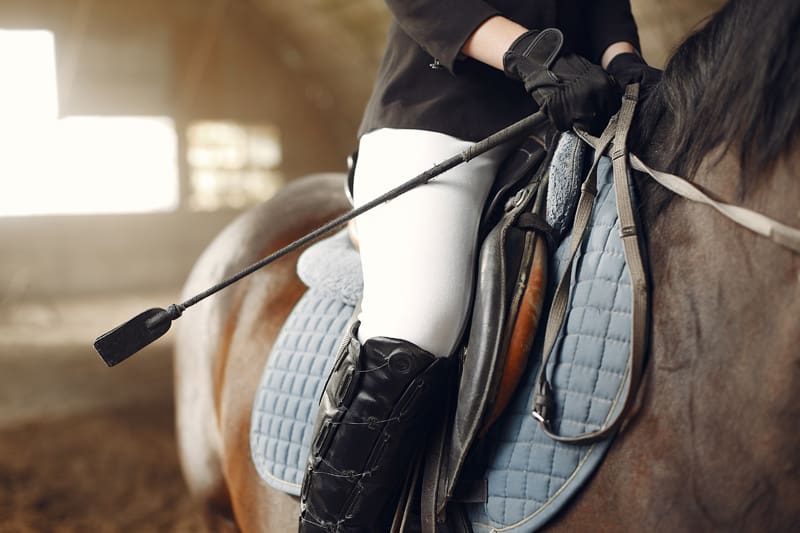
A riding crop is a short type of whip without a long lash. It typically consists of a handle, a long shaft, and a “popper” or “keeper” at the end. The popper is usually a flat piece of leather or synthetic material. When you use the crop, the noise the popper makes against the rider’s boot or saddle pad is often enough to get the horse’s attention. It is significantly shorter than a dressage whip or a lunge whip.
The history of the crop goes back centuries. Riders needed a way to reinforce their leg aids—the signals given by squeezing or nudging the horse’s sides. Sometimes a horse might be lazy or distracted, and the crop helps say, “Hey, pay attention please.” It is classified as an “artificial aid,” whereas your legs, seat, hands, and voice are considered “natural aids.” The goal is always to use the lightest natural aid first and only use the crop if the horse ignores the first polite request.
The Anatomy of the Tool
Understanding the parts of a riding crop helps you choose a good one. First, you have the handle or grip. This needs to be comfortable in your hand and easy to hold without slipping, even if you are sweating or wearing gloves. Many modern grips are made of rubber or textured leather. At the top of the handle, there is often a cap or a loop to help keep it from sliding out of your hand.
Next is the shaft. This is the main body of the tool. It can be stiff or slightly flexible. It is usually covered in woven thread, leather, or nylon. Finally, you have the popper at the end. The design of the popper is important because a wide, flat popper makes a louder noise but delivers less sting, which is generally kinder to the animal. A narrow popper might be sharper, so beginners are usually encouraged to use a wide, flat style.
Different Types of Riding Crops for Different Disciplines
Not all crops are created equal. Depending on what kind of riding you are doing, you might need a specific style. For example, a jockey in a horse race uses a very different tool than someone jumping fences in an arena. The length, flexibility, and design change based on the rules of the sport and the needs of the rider. Choosing the wrong one can actually make your riding harder or might even be against the rules of a competition.
It is important to visit a tack shop or do some research before buying. If you show up to a dressage lesson with a short jumping bat, your instructor might tell you it is not quite right. Let’s look at a few of the most common variations you will find in the equestrian world.
The Standard All-Purpose Crop
This is the most common type you will see in riding schools. It is usually about 24 to 30 inches long. It is a great middle-ground option for beginners who are learning the basics of walk, trot, and canter. It isn’t too long to handle, and it isn’t too short to be ineffective. The all-purpose riding crop usually has a simple wrist loop attached to the handle.
Beginners often find the wrist loop helpful so they don’t drop it. However, some instructors prefer you not use the loop while riding, just in case you fall off and need your hands free immediately. This style is versatile enough for trail riding, flatwork lessons, and popping over small jumps. If you are just starting out, this is likely the one you should buy first.
The Jumping Bat
If you watch show jumping on TV, you will notice the riders carry a slightly different tool. This is often called a jumping bat. It is usually shorter than a standard crop, typically under 30 inches, and it has a much wider, flatter popper at the end. The reason for the wider popper is to create a distinct sound upon contact, which encourages the horse to jump without causing pain.
Jumping bats are designed to be easy to hold while maneuvering through a course of fences. You don’t want something long and tangled when you are trying to steer quickly. The short length makes it easy to flick behind the rider’s leg or on the shoulder right before a jump if the horse hesitates. It is a specialized tool for a specific job.
The Dressage Whip vs. The Crop
It is important to distinguish between a riding crop and a dressage whip. A dressage whip is much longer, usually around 39 to 43 inches, and it has a lash at the end instead of a flat popper. In dressage, the rider keeps their hands very still and maintains contact with the reins. The length allows the rider to tap the horse gently behind their leg without moving their hands or changing their rein length.
Because of this difference, you do not hold a dressage whip the same way you hold a crop. While a crop is often used on the shoulder, the dressage whip is exclusively used behind the leg to engage the horse’s hindquarters. Beginners rarely start with a dressage whip because it requires a steady hand and good coordination to use correctly.
How to Hold a Riding Crop Correctly
Holding your equipment properly is the first step to using it safely. You should hold the riding crop in the same hand as your reins. The handle should lay across your palm, and the shaft should point upward across your thigh or the horse’s shoulder. You do not want it dangling down or pointing out to the side where it might hit a fence post or another horse.
Most riders hold it in their inside hand (the hand closest to the center of the arena). This is because you usually need to support the horse’s inside bend. However, you need to be able to switch hands smoothly while riding. This takes practice! You have to pass the whip over the horse’s neck (never under their neck) while still holding onto your reins and steering.
Maintaining Proper Rein Contact
One of the hardest things for new riders to master is keeping good rein contact while holding a riding crop. It can feel like you have too many things in your hands. You might accidentally pull on the horse’s mouth when you try to use the crop, or you might drop the reins entirely. This is why instructors often wait until a student has a good balance before giving them a crop.
To practice, try holding a small stick or a pencil while sitting in a chair. Pretend you are holding reins. Practice moving your wrist without opening your fingers completely. You want to maintain a “closed” hand so the stick stays secure, but your arms should remain relaxed. Tension in your hands travels down the reins to the horse’s mouth, which we want to avoid.
Switching Hands While Riding
As mentioned earlier, you will need to switch the crop from one hand to the other when you change direction. To do this, you bring both hands together near the horse’s withers (the base of the neck). You hold the reins and the crop in one hand for a split second, grab the crop with the new hand, and then separate your hands back to the normal riding position.
It sounds simple, but doing this while trotting or cantering can be tricky. A common mistake is lifting the hands too high or looking down at your hands instead of where you are going. When you look down, your weight shifts forward, which can confuse the horse. Practice this movement at a halt or a walk until it becomes muscle memory.
When and Why to Use a Riding Crop
The most important rule is that a crop is for reinforcement, not punishment. You use it when the horse ignores your leg aid. For example, you squeeze with your legs to ask for a trot. The horse ignores you. You kick gently. The horse ignores you. Then, and only then, do you use the crop with a quick tap behind your leg while squeezing again. This tells the horse, “When I squeeze, you must move.”
It can also be used to correct a horse that is spooking or drifting sideways. If a horse tries to run sideways away from a scary object, you might use the crop on that side to act as a wall, keeping them straight. It essentially says, “Stay on the track, please.”
Correcting Laziness or Lack of Impulsion
Some horses are naturally slower or “behind the leg.” This means they don’t move forward with energy. A riding crop is very useful here. It helps wake the horse up. You aren’t hitting them hard; you are creating a quick, surprising tap to encourage energy. Once the horse moves forward, you stop using it immediately. This is called the “release of pressure,” and it is how horses learn.
If you keep tapping while the horse is doing what you asked, you are just nagging them. They will eventually tune you out and ignore the crop completely. This is called being “dead to the aid.” Timing is everything. You must react within a second of the behavior you want to correct, and stop the moment you get the desired response.
Keeping a Horse Straight
Horses are not naturally straight; they are crooked like a banana. When you are approaching a jump or riding down the center line, you need them to be straight. If a horse bulges their shoulder out to the left, you can use the riding crop on the left shoulder to tap them back into line. This is a steering aid rather than a “go forward” aid.
Using the crop on the shoulder is common for beginners because it is easier to reach without losing balance. However, using it behind the leg is generally more effective for creating forward motion. Your instructor will tell you which placement is best for the specific situation you are in.
Common Mistakes Beginners Make
Learning to ride is a journey, and everyone makes mistakes. However, mistakes with a riding crop can upset the horse or cause safety issues. One of the biggest errors is using it out of anger. If you are frustrated because a horse won’t do what you want, you should never take it out on the animal. Riding requires emotional control. If you feel angry, drop the crop and take a deep breath.
Another mistake is accidental usage. Because the crop is in your hand, you might accidentally tap the horse when you didn’t mean to, especially if you have unsteady hands. This confuses the horse. They might jump forward or get nervous because they think they did something wrong.
Table: Do’s and Don’ts of Using a Riding Crop
|
Do |
Don’t |
|---|---|
|
Do use it to reinforce a leg aid. |
Don’t use it out of anger or frustration. |
|
Do tap behind your leg or on the shoulder. |
Don’t hit the horse on the head or neck. |
|
Do carry it firmly so it doesn’t flap around. |
Don’t use it if the horse is already trying hard. |
|
Do stop using it once the horse responds. |
Don’t use it repeatedly without giving the horse a chance to react. |
Using Too Much Force
You rarely need to use much strength. The sound and the sudden touch are usually enough. Hitting a horse hard with a riding crop can leave welts or cause them to buck in fear. Animal welfare is the number one priority in equestrian sports. If you are leaving marks on the horse, you are using the tool incorrectly and arguably abusively.
Most riding associations have strict rules about how many times you can use a crop in a competition (often no more than two or three times in a row). Breaking these rules results in disqualification. This highlights that the sport values skill and communication over force.
Inconsistent Signals
Horses thrive on consistency. If you use the crop for a specific behavior on Monday, but then let them get away with that behavior on Tuesday, they won’t learn. Also, if you use the crop but pull back on the reins at the same time, you are giving mixed signals. It is like hitting the gas and the brake in a car simultaneously.
Before you use the crop to ask for forward movement, make sure your hands are soft and allowing the horse to go forward. If you block them with the reins while tapping them, they will likely get agitated or rear up because they have nowhere to go.
Choosing the Right Crop for You
When you go to buy a riding crop, hold a few different ones in your hand. Check the grip size. If you have small hands, a thick handle will be tiring to hold. Check the balance. It should not feel too heavy on the tip. The weight should be comfortable near the handle.
You also want to consider the color and style. While black or brown is traditional for shows, you can get fun colors for practice. Just make sure the quality is decent. A cheap plastic crop might snap in half if it gets cold or bent too far.
Length Considerations
The length you choose depends on your size and your horse’s size. A small child on a pony needs a shorter crop than a tall adult on a large horse. A standard 24-inch crop is usually safe for most riders. If it is too long, it becomes clumsy. If it is too short, you have to take your hand off the reins to reach the horse’s flank, which ruins your position.
For showing, always check the rulebook of your specific organization. Hunters, jumpers, and eventers all have slightly different rules regarding the maximum length allowed in the show ring. You don’t want to be disqualified for having a stick that is one inch too long.
Material and Durability
Crops are made from fiberglass or composite materials covered in braided nylon or leather. Leather looks nicer and lasts longer but requires care (cleaning and conditioning). Nylon is durable, weather-resistant, and cheaper, making it great for everyday use or for kids who might leave it in the rain.
Look at the flexibility of the shaft. You want some bend, but not too much. If it is too “whippy,” it might accidentally tap the horse when you move your hand. If it is too stiff, it feels dead and jarring to use.
Caring for Your Equipment
Like all tack, your riding crop needs care. Do not leave it on the ground where it can be stepped on by a horse or run over by a tractor. Store it straight; if you leave it bent in a tack trunk, it might stay permanently curved or break.
If you have a leather popper or handle, clean it with saddle soap occasionally to keep it from cracking. If the threading starts to unravel, you can sometimes fix it with electrical tape for practice use, but it won’t look good for shows.
Storage Tips
Many tack rooms have whip holders on the wall. These are clips or slots that hold the whips upright. This is the best way to store them. Hanging them by the wrist loop is also okay. Avoid throwing them in a corner where they can get tangled with bridles or halters.
Keeping your gear organized also helps with safety. You don’t want a loose whip falling under a horse’s feet in the aisle. That could spook the horse and cause an accident.
When to Replace Your Crop
If the shaft is broken or splintered inside the covering, throw it away. A broken shaft loses its structural integrity and can be dangerous. Also, if the popper falls off, the exposed end can be sharp and painful for the horse, so you must replace it immediately.
Generally, a good quality crop can last for years if you take care of it. It is a small investment that plays a big role in your riding development.
The Psychology of the Horse
To use a riding crop effectively, you have to think like a horse. Horses are prey animals. Their instinct is to run away from pain or fear. If you use the crop aggressively, you trigger their “flight” response. They stop thinking and start reacting out of panic. This is dangerous for you.
When used correctly, the crop triggers a “learning” response. It creates a mild annoyance or a surprising “snap” sound that motivates them to find the right answer to make the annoyance stop. Once they give the right answer (moving forward), you stop. They learn, “Oh, if I move when her leg squeezes, the stick doesn’t tap me.”
Building Trust
Trust is easy to break and hard to build. If a horse trusts you, they will accept the crop as a guide. If they fear you, the sight of the crop will make them tense up. You can tell a lot about a rider by how their horse reacts when they pick up a whip. The horse should remain relaxed, not flinch.
If you are riding a horse that has been abused in the past, you might not be able to carry a crop at all. They might have too much trauma associated with it. In these cases, you have to be patient and use other training methods.
Positive Reinforcement
Remember that the crop is a form of negative reinforcement (adding pressure until behavior changes). You should balance this with positive reinforcement. When the horse does well, pat them, praise them with your voice, or give them a scratch on the withers.
Riding is a partnership. We ask the horse to do difficult physical tasks for us. The least we can do is be fair, clear, and kind in our communication.
Conclusion
The riding crop is a fundamental tool in the equestrian world, but it carries a heavy responsibility. It is not a weapon; it is a wand of communication. When you hold it, you are making a promise to your horse to use it fairly. From understanding the different types—like the jumping bat versus the dressage whip—to mastering the art of the “tap and release,” there is a lot to learn.
As you progress in your riding journey, your reliance on artificial aids should decrease. You want to reach a point where your horse responds to the lightest whisper of your leg. But until then, the crop is there to help you clarify your signals and keep you safe. Always prioritize your horse’s well-being, seek guidance from a qualified instructor, and remember that patience is the most valuable tool in your tack box.
For more insights on luxury lifestyle and perhaps even some high-end equestrian gear reviews, you can visit Forbes Planet. Happy riding!
Frequently Asked Questions (FAQ)
Q1: Does using a riding crop hurt the horse?
A: When used correctly by a trained rider, it does not hurt the horse. It is meant to startle or annoy the horse into paying attention, not to cause pain. However, excessive force is abusive and can cause pain.
Q2: At what age can I start using a crop?
A: It isn’t about age; it is about skill. A rider should have a steady seat and independent hands before carrying a crop. This ensures they don’t accidentally hit the horse while trying to steer or balance.
Q3: Can I use a riding crop on a pony?
A: Yes, you can use them on ponies. Just make sure the size of the crop is appropriate for the size of the pony and the rider. A very long whip might be overwhelming for a small pony.
Q4: Why do jockeys hit horses so fast in races?
A: Racing is a very specific sport with strict rules. While it looks aggressive, modern racing crops are heavily regulated. They are padded with air cushions to make noise without causing pain. Jockeys are also limited in how many times they can strike a horse.
Q5: What should I do if my horse is afraid of the crop?
A: If your horse is scared, put the crop away. Work with a professional trainer to desensitize the horse slowly. You want the horse to respect the aid, not fear it.
Q6: Is a riding crop the same as a whip?
A: Technically, yes, it is a type of whip. However, in the horse world, “crop” usually refers to the short stick with a popper used for jumping or general riding, while “whip” often refers to longer schooling or dressage whips with a lash.
Related Posts



Stay Informed With the Latest & Most Important News
Previous Post
Next Post










Advertisement