

Now Reading: Mother Mary: An Enduring Figure of Faith and History
-
01
Mother Mary: An Enduring Figure of Faith and History


Mother Mary is one of the most recognized and revered figures in history, holding a central place in Christianity and respected in other faiths as well. Known as the mother of Jesus Christ, her story is one of faith, courage, and profound influence that has spanned millennia. From her humble beginnings in Nazareth to her status as a global icon of maternal love and grace, the life of Mother Mary has been a source of inspiration, comfort, and deep theological discussion. Her image is found in art, her name is invoked in prayers, and her story continues to captivate people from all walks of life. This article will explore the life, significance, and enduring legacy of this remarkable woman.
Key Takeaways
- Central Role in Christianity: Mother Mary is primarily known as the mother of Jesus Christ, a pivotal role that makes her a central figure in Christian theology, especially in Catholicism and Orthodoxy.
- The Annunciation: The announcement by the angel Gabriel that she would conceive a child through the Holy Spirit is a cornerstone of her story, highlighting her faith and acceptance of God’s will.
- Symbol of Purity and Grace: Throughout history, she has been viewed as a symbol of purity, humility, and unwavering faith, often referred to as “full of grace.”
- Cultural and Artistic Impact: The story of Mother Mary has inspired countless works of art, music, and literature, making her one of the most depicted women in history.
- Marian Apparitions: Reported appearances of Mother Mary around the world have led to the establishment of major pilgrimage sites and have strengthened the faith of millions.
Who Was Mother Mary?
Mother Mary, also known as the Virgin Mary, was a Jewish woman from Nazareth in Galilee, living in the first century BC. According to the New Testament of the Bible, she was the mother of Jesus. The primary sources for her life are the Gospels of Matthew and Luke, which describe her as a young, devout woman betrothed to a carpenter named Joseph. Her life took an extraordinary turn with the event known as the Annunciation, where the angel Gabriel appeared to her and announced that she would conceive a child by the power of the Holy Spirit.
Despite the potential social disgrace of being pregnant before marriage, Mary accepted her role with faith, stating, “Behold, I am the handmaid of the Lord; let it be to me according to your word” (Luke 1:38). This moment of acceptance is central to her identity as a figure of obedience and trust in God. Her story is not just about giving birth; it’s about her journey as a mother who raised Jesus, stood by him during his ministry, and was present at his crucifixion. The life of mother mary is a profound testament to faith, sacrifice, and unconditional love, making her a figure of deep spiritual significance for billions of people.
Her Early Life and Family
Little is definitively known about the early life of Mother Mary beyond what is shared in scripture and early Christian tradition. Tradition holds that her parents were Saint Anne and Saint Joachim. While they are not mentioned in the canonical Gospels, their story is told in apocryphal texts like the Gospel of James. According to these traditions, Anne and Joachim were a devout, childless couple who prayed earnestly for a child. An angel appeared to them and promised they would have a daughter who would be known throughout the world. This child was Mary.
She was raised in a devout Jewish household in Nazareth, a small town in the region of Galilee. Life at that time was simple and centered around family, faith, and community. As a young woman, she would have learned domestic skills, including weaving, cooking, and managing a household. Her upbringing would have been steeped in the traditions and scriptures of her Jewish faith, preparing her for a life of piety and devotion. It was in this humble setting that she was betrothed to Joseph, a local carpenter, an arrangement that set the stage for the incredible events that would soon unfold.
The Annunciation: A Divine Calling
The Annunciation is one of the most pivotal moments in the story of mother mary. As described in the Gospel of Luke, the angel Gabriel was sent by God to visit Mary in her hometown of Nazareth. The angel greeted her with the now-famous words, “Hail, full of grace, the Lord is with you!” (Luke 1:28). Naturally, Mary was troubled and confused by this greeting and the angel’s presence.
Gabriel then delivered his message: she had found favor with God and would conceive and bear a son, whom she was to name Jesus. The angel explained that he would be the Son of the Most High and his kingdom would have no end. Mary, a virgin, questioned how this could be possible. Gabriel explained that the Holy Spirit would come upon her, and the power of the Most High would overshadow her; therefore, the child to be born would be called holy, the Son of God. In an act of profound faith and humility, Mary consented to this divine plan. This event marks the moment of the Incarnation—the belief that God became flesh in the person of Jesus Christ—and it all began with Mary’s willing “yes.”
The Nativity: The Birth of Jesus
Following the Annunciation, a pregnant Mary traveled to a town in the hill country of Judah to visit her relative Elizabeth, who was also miraculously pregnant in her old age with the child who would become John the Baptist. When Mary greeted Elizabeth, the infant in Elizabeth’s womb leaped, and Elizabeth, filled with the Holy Spirit, proclaimed Mary “blessed among women.” It was during this visit that Mary recited a song of praise known as the Magnificat, which begins, “My soul magnifies the Lord, and my spirit rejoices in God my Savior.”
Later, a decree from the Roman Emperor Augustus required Joseph and Mary to travel to Bethlehem, Joseph’s ancestral home, to be registered for a census. The journey was long and arduous, especially for a woman so close to giving birth. When they arrived in Bethlehem, the town was so crowded that there was no room for them in the inn. They found shelter in a humble stable, and it was there that mother mary gave birth to her son, Jesus. She wrapped him in swaddling clothes and laid him in a manger, a feeding trough for animals. This humble birth is celebrated by Christians worldwide as Christmas.
Key Events in the Life of Mother Mary
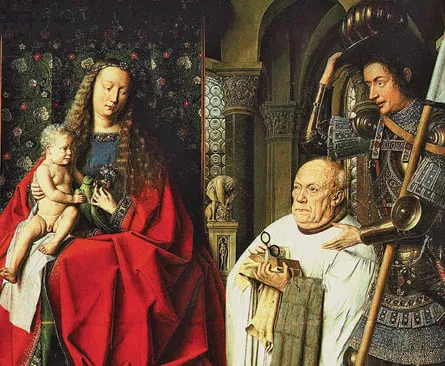
The life of Mother Mary was marked by several significant events that are central to Christian faith and narrative. Each moment reveals more about her character, her faith, and her unique role in salvation history.
The Presentation in the Temple
According to Jewish law, a firstborn son was to be consecrated to the Lord. Forty days after Jesus’s birth, Mary and Joseph took him to the Temple in Jerusalem to present him. There, they met Simeon, a righteous and devout man who had been promised by the Holy Spirit that he would not die before seeing the Messiah. Taking the infant Jesus in his arms, Simeon praised God. He then turned to Mary and gave a prophecy that was both a blessing and a warning. He said that the child was destined for the fall and rising of many in Israel and would be a sign that would be contradicted. He then added a personal and painful prophecy for her: “and a sword will pierce through your own soul also.” This foreshadowed the immense sorrow that mother mary would experience as the mother of the suffering Messiah.
The Flight into Egypt
Not long after Jesus’s birth, Mary and Joseph’s lives were thrown into peril. Wise men from the East, known as the Magi, arrived in Jerusalem seeking the newborn “king of the Jews.” Their inquiry alarmed King Herod, the paranoid and ruthless ruler of Judea, who saw the infant as a threat to his throne. After the Magi found Jesus in Bethlehem and offered him gifts, they were warned in a dream not to return to Herod and so went home by another route.
Furious, Herod ordered the execution of all male children two years old and under in and around Bethlehem. This event is known as the Massacre of the Innocents. However, Joseph had also been warned in a dream. An angel told him to take Mary and Jesus and flee to Egypt to escape Herod’s wrath. The Holy Family became refugees, leaving their home and seeking safety in a foreign land. They remained in Egypt until an angel informed Joseph that Herod had died and it was safe to return to Israel. This event highlights the constant danger that surrounded Jesus from his earliest days and the protective role Mary and Joseph played.
The Finding in the Temple
One of the few stories recorded about Jesus’s childhood is the incident of his being found in the Temple. When Jesus was twelve years old, the family traveled to Jerusalem for the annual Passover festival, as was their custom. When it was time to leave, Mary and Joseph began the journey home with their group of relatives and friends. They assumed Jesus was among the crowd and traveled for a full day before realizing he was missing.
Filled with anxiety, they rushed back to Jerusalem to search for him. For three days, they looked everywhere. Finally, they found him in the Temple, sitting among the religious teachers, listening to them and asking them intelligent questions. Everyone who heard him was amazed at his understanding and his answers. Mary expressed her relief and worry, asking, “Son, why have you treated us so? Behold, your father and I have been searching for you in great anxiety.” Jesus’s reply was enigmatic and profound for a boy of twelve: “Why were you looking for me? Did you not know that I must be in my Father’s house?” This was the first indication of his divine mission, a moment that mother mary “kept… in her heart.”
Mother Mary in Jesus’s Public Ministry
After the quiet years in Nazareth, Jesus began his public ministry around the age of thirty. While the Gospels focus primarily on Jesus’s teachings and miracles, Mother Mary appears at several crucial moments, demonstrating her supportive presence and unwavering faith in her son.
One of the most significant events is the Wedding at Cana, recorded in the Gospel of John. Jesus, his mother, and his disciples were guests at a wedding where the wine ran out. This would have been a major social embarrassment for the host family. Seeing the problem, Mary turned to Jesus and simply said, “They have no wine.” Her statement was not a command but a gentle nudge, an expression of her complete confidence that he could solve the problem. Jesus’s initial response seemed hesitant, but Mary did not waver. She turned to the servants and instructed them, “Do whatever he tells you.” Following his mother’s prompting, Jesus performed his first public miracle, turning water into wine. This event not only launched his public ministry but also showed the influential and faith-filled role mother mary played in his life.
The Crucifixion: A Mother’s Sorrow
The most heart-wrenching moment in the life of Mother Mary was undoubtedly the crucifixion of her son. While many of Jesus’s disciples fled in fear, Mary stood steadfastly at the foot of the cross, alongside the disciple John and a few other women. She endured the unimaginable pain of watching her son suffer and die a brutal death. This moment fulfilled the prophecy of Simeon from years earlier that a “sword would pierce her soul.” Her silent strength and profound grief have made her a powerful symbol of maternal suffering and love.
Even in his final moments of agony, Jesus thought of his mother. Looking down from the cross, he saw her standing with John, the “disciple whom he loved.” He entrusted them to each other’s care, saying to Mary, “Woman, behold, your son!” and to John, “Behold, your mother!” From that moment on, John took Mary into his home. This act ensured his mother would be cared for, but it also had a deeper theological meaning. In this exchange, Jesus gave his mother to the Church, represented by John, to be a spiritual mother to all believers. Her presence at the cross solidifies her role as a model of faith that endures even in the face of the darkest suffering.
Mother Mary in Christian Denominations
While Mother Mary is a universally respected figure in Christianity, the way she is viewed and venerated differs significantly among the various denominations.
|
Denomination |
Key Beliefs about Mother Mary |
Role in Worship |
|---|---|---|
|
Roman Catholicism |
Immaculate Conception (conceived without original sin), Perpetual Virginity (virgin before, during, and after Jesus’s birth), Assumption (taken body and soul into heaven). She is called the “Mother of God” and “Queen of Heaven.” |
Highly venerated through prayers (like the Rosary), feast days, and devotion. She is seen as a powerful intercessor who prays for humanity. |
|
Eastern Orthodoxy |
Similar to Catholicism, holds belief in her perpetual virginity and dormition (falling asleep) before being assumed into heaven. She is revered as the Theotokos (God-bearer). |
Deeply revered and considered the most exalted of all saints. Icons of her are prominent in churches and homes, and she is frequently mentioned in liturgy. |
|
Protestantism |
Generally, she is respected as the mother of Jesus and a model of faith and obedience. The miraculous virgin birth is a core belief. |
Veneration is not practiced. Protestants believe in praying directly to God through Jesus, so Mary is not seen as an intercessor. Beliefs like the Immaculate Conception and Assumption are not accepted as they are not explicitly in the Bible. |
These differences stem from varying interpretations of scripture, tradition, and theological development over centuries. However, all Christian traditions agree on her foundational role as the mother of Jesus Christ.
Marian Apparitions and Pilgrimage Sites
Throughout history, there have been numerous reports of apparitions, or appearances, of Mother Mary to individuals and groups around the world. These supernatural events are a significant part of Catholic and Orthodox faith, often leading to the establishment of major shrines that attract millions of pilgrims each year. While the Church is cautious and investigates these claims thoroughly before granting approval, several have become globally recognized.
Some of the most famous approved Marian apparitions include:
- Our Lady of Guadalupe (1531): Appeared to an indigenous man, Juan Diego, in Mexico. She left her image miraculously imprinted on his tilma (cloak), which is still on display in Mexico City and is a powerful symbol of Mexican identity and faith.
- Our Lady of Lourdes (1858): Appeared to a young peasant girl, Bernadette Soubirous, in France. She identified herself as the “Immaculate Conception” and revealed a spring of water that has been associated with numerous healings.
- Our Lady of Fátima (1917): Appeared to three shepherd children in Portugal. She delivered messages concerning prayer, penance, and prophecies about world events.
These sites are places of intense prayer, conversion, and healing. They stand as a testament to the ongoing and active role that many believe mother mary plays in the life of the Church and the world. For more on global cultural phenomena, one might explore resources like those on https://forbesplanet.co.uk/.
The Significance of Mother Mary Today
In the 21st century, Mother Mary remains an incredibly powerful and relevant figure. For billions of Christians, she is a spiritual mother, a comforter, and a model of how to live a life of faith. Her story resonates far beyond theological circles. She is a symbol of maternal love, gentle strength, and grace under pressure. Her journey from a humble girl in a small village to the Queen of Heaven inspires people to believe that the ordinary can be a vessel for the extraordinary.
Her role as a woman who said “yes” to a difficult and uncertain path speaks to anyone facing challenges in their own lives. She represents hope in the midst of sorrow and faith in the face of the unknown. Furthermore, in an often-divided world, the figure of mother mary transcends cultural and even religious boundaries. She is respected in Islam as Maryam, the only woman named in the Quran. Her universal appeal as a nurturing, protective mother figure continues to make her one of the most beloved and enduring personalities in human history.
Conclusion
The story of Mother Mary is a rich tapestry woven with threads of faith, humility, sorrow, and immense love. From her quiet life in Nazareth to her place at the foot of the cross and her exalted status in Christian tradition, she has been a constant presence in the story of salvation. She is more than just a historical figure; she is a living symbol of devotion and a spiritual mother to millions. Whether seen as a powerful intercessor, a model of perfect discipleship, or simply as the devoted mother of Jesus, her influence is undeniable. The legacy of mother mary continues to inspire, comfort, and guide people across the globe, proving that a life of simple faith can indeed change the world.
Frequently Asked Questions (FAQ)
Q1: Is Mother Mary worshipped?
In Catholicism and Orthodoxy, Mary is venerated, not worshipped. Worship is reserved for God alone. Veneration means showing deep respect and honor to Mary as the mother of God and the greatest of the saints. Believers ask for her intercession, meaning they ask her to pray for them to God, much like asking a friend to pray for you.
Q2: Did Mother Mary have other children?
This is a point of theological difference among Christian denominations. The Catholic and Orthodox Churches hold the doctrine of the Perpetual Virginity of Mary, believing she remained a virgin her entire life and had no other children. The “brothers” of Jesus mentioned in the Bible are interpreted as either cousins, step-brothers (Joseph’s children from a previous marriage), or other close relatives. Most Protestant denominations interpret these passages to mean that Mary and Joseph had other children together after Jesus was born.
Q3: Why is Mother Mary called the “Mother of God”?
The title “Mother of God” (in Greek, Theotokos, or “God-bearer”) was officially affirmed at the Council of Ephesus in 431 AD. It doesn’t mean Mary is the source or creator of God. Rather, it affirms the Christian belief that Jesus is fully God and fully man. Since Mary gave birth to the person of Jesus, and Jesus is God, she can rightfully be called the Mother of God. It is a statement more about the identity of Jesus than it is about Mary herself.
Q4: Do you have to be Catholic to pray to Mary?
No, anyone can ask for Mary’s prayers or feel a connection to her. While formal veneration is most common in Catholicism and Orthodoxy, many people from other Christian denominations and even other faiths find comfort and inspiration in the life of mother mary. Her role as a universal symbol of motherhood and compassion makes her accessible to all.
Stay Informed With the Latest & Most Important News
Previous Post
Next Post









Advertisement