

Now Reading: Milton: The Enduring Legacy of a Literary Titan
-
01
Milton: The Enduring Legacy of a Literary Titan

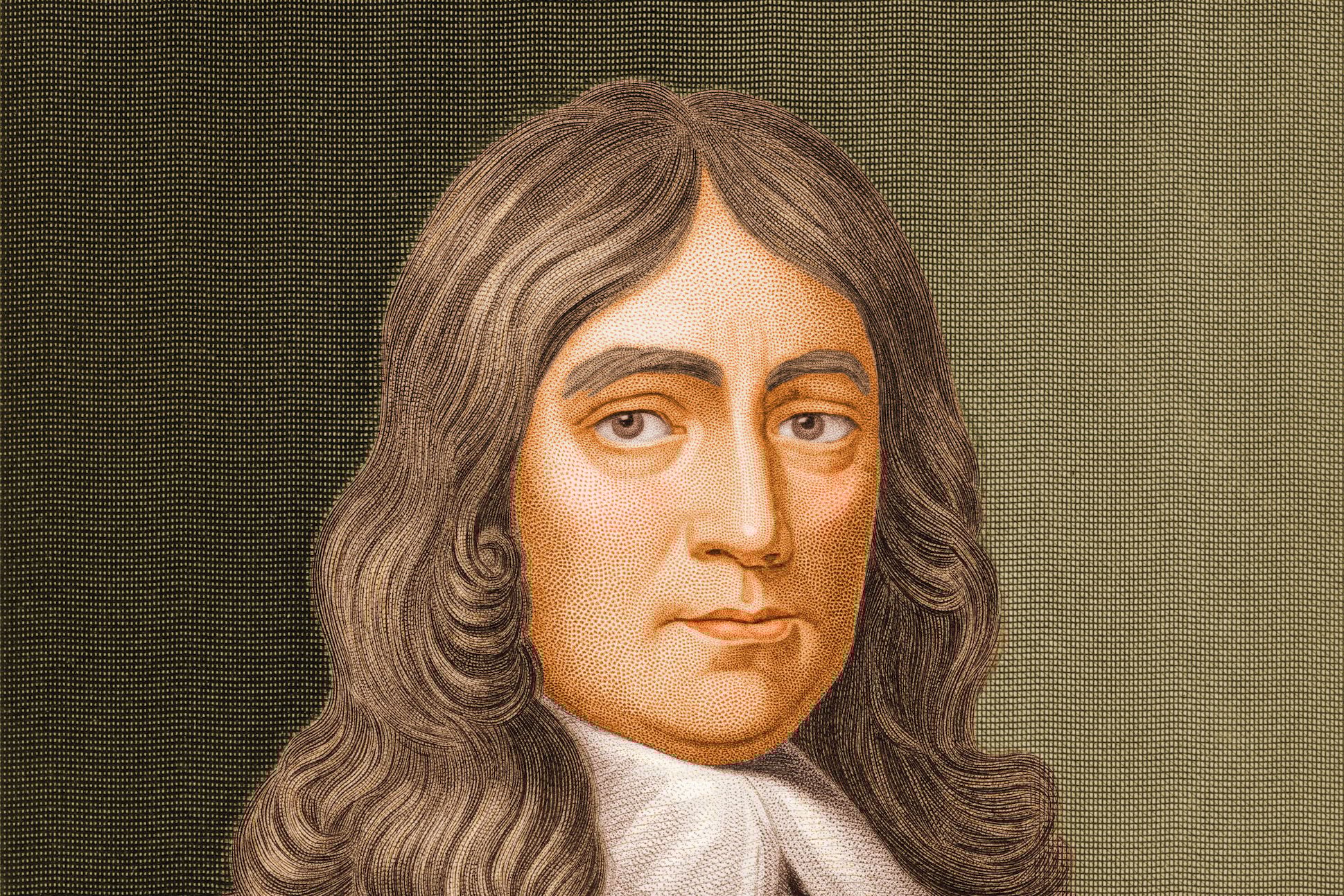
Have you ever heard the name Milton and wondered about its significance? For many, the name immediately brings to mind John Milton, a towering figure in English literature whose influence echoes through centuries of poetry, politics, and thought. He was more than just a poet; he was a revolutionary thinker, a passionate civil servant, and a man whose personal struggles fueled some of the most powerful verses ever written. This article will explore the life, works, and lasting impact of Milton, offering a comprehensive look at why his legacy continues to be so important. We will journey through his early life, examine his monumental epic Paradise Lost, and understand how his ideas on liberty and free will still resonate today.
Understanding Milton is to understand a pivotal moment in history. His work provides a window into the political and religious turmoil of 17th-century England. By exploring his story, we gain insight not only into classic literature but also into the foundations of modern ideas about freedom and expression.
Key Takeaways
- Who was John Milton? An English poet, polemicist, and civil servant who lived during a time of great political and religious change in England.
- Major Works: He is best known for his epic poem Paradise Lost, but he also wrote other significant works like Paradise Regained, Samson Agonistes, and influential prose on topics like censorship and divorce.
- Enduring Influence: Milton’s ideas on republicanism, freedom of speech, and individual conscience have had a profound impact on later thinkers, writers, and even political movements.
- Literary Style: Known for his complex syntax, classical allusions, and mastery of blank verse, which set a new standard for English poetry.
The Early Life and Education of a Prodigy
John Milton (1608-1674) was born in London to a supportive and culturally rich family. His father, also named John, was a prosperous scrivener (a type of legal professional) and a talented amateur composer. This nurturing environment allowed young Milton to pursue his intellectual passions from an early age. He was a voracious reader and a dedicated student, showing a remarkable aptitude for languages and literature. His father invested heavily in his education, hiring private tutors and encouraging his son’s poetic ambitions. This early support was crucial in shaping the future literary giant.
He attended St. Paul’s School in London before moving on to Christ’s College, Cambridge, where he earned both his bachelor’s and master’s degrees. At Cambridge, he was known as the “Lady of Christ’s” due to his delicate features and high moral standards. His university years were a time of intense study, where he honed his skills in Latin, Greek, Hebrew, and several modern languages. This classical education would become the bedrock of his poetry, filling his works with rich allusions to ancient myths, history, and philosophy. After Cambridge, instead of entering the clergy as was common, Milton undertook six years of private study at his family’s home, further deepening his knowledge and preparing himself for a great poetic career.
Milton and the English Civil War
The 17th century was a period of immense turmoil in England, culminating in the English Civil War (1642–1651). This conflict between the Parliamentarians (“Roundheads”) and the Royalists (“Cavaliers”) was not just a battle for political power but also for the soul of the nation. Milton was a staunch supporter of the Parliamentarian cause and its leader, Oliver Cromwell. He passionately believed in republicanism and opposed the concept of an absolute monarchy and the divine right of kings. His political convictions were deeply intertwined with his Puritan religious beliefs, which emphasized individual conscience and a direct relationship with God.
A Voice for the Republic
During this period, Milton temporarily set aside his poetic ambitions to serve the new government. He became a polemicist, writing powerful and persuasive pamphlets in defense of the Commonwealth. His most famous prose works from this time argue for radical ideas, including the lawfulness of executing a tyrannical king. In 1649, after the execution of King Charles I, he was appointed Secretary for Foreign Tongues to the Council of State. This role required him to compose official correspondence with foreign powers in Latin. This service to the state was a practical application of his beliefs, but it came at a great personal cost, as the intense work likely contributed to his eventual blindness.
The Masterpiece: An Introduction to Paradise Lost
Even people with a passing knowledge of literature have heard of Paradise Lost. This epic poem is widely considered the greatest work of Milton and one of the most important poems in the English language. Published in its first version in 1667, it tells the biblical story of the Fall of Man: the temptation of Adam and Eve by the fallen angel Satan and their expulsion from the Garden of Eden. However, Milton does more than just retell a familiar story. He expands it into a cosmic drama, exploring profound theological and philosophical questions.
The poem seeks to “justify the ways of God to men,” tackling difficult concepts like predestination, free will, and the nature of evil. Milton‘s portrayal of Satan is particularly famous and complex; he is a charismatic, proud, and tragic figure who rebels against God’s authority. This depiction has fascinated readers and critics for centuries, with some Romantic poets even viewing Satan as the true hero of the epic. The sheer scale, ambition, and linguistic brilliance of Paradise Lost cemented the reputation of Milton as a literary genius.
The Poetic Style of Milton
Reading Milton is a unique experience, largely due to his distinctive and masterful poetic style. His writing is characterized by its grandeur, complexity, and deep roots in classical tradition. He was a master of blank verse—unrhymed iambic pentameter—which he used in Paradise Lost to create a rhythm that was both powerful and flexible, similar to the epics of Homer and Virgil. His goal was to elevate the English language to the level of classical Greek and Latin.
Key Elements of Milton’s Style
- Latinate Syntax: He often structured his English sentences like Latin ones, using long, complex clauses and placing verbs at the end. This can make his poetry challenging for modern readers but also gives it a unique, sonorous quality.
- Elevated Diction: Milton used a rich and formal vocabulary, often coining new words (neologisms) or using existing words in new ways.
- Biblical and Classical Allusions: His work is dense with references to the Bible, Greek and Roman mythology, and classical literature. Understanding these allusions enriches the reading experience immeasurably.
- Epic Similes: He employed long, elaborate comparisons (known as epic or Homeric similes) that digress from the main narrative to create a vivid and expansive picture.
Later Works: Paradise Regained and Samson Agonistes
While Paradise Lost is his most famous work, the creative output of Milton did not end there. In 1671, he published a volume containing two final major works: Paradise Regained and Samson Agonistes. These pieces show a different, more subdued side of the poet, but they are equally profound in their themes and artistry. Both were written after he had become completely blind and had lived through the restoration of the monarchy, which saw the downfall of the republican cause he had championed.
Paradise Regained is a shorter epic that serves as a sequel to Paradise Lost. It focuses on the temptation of Christ in the wilderness. Where the first epic dealt with temptation and fall, this one deals with temptation and resistance. It is a more contemplative and theological work, emphasizing Christ’s inner strength and obedience to God.
Samson Agonistes is a powerful tragedy modeled on Greek drama. It tells the story of the biblical hero Samson, now blind and a captive of the Philistines. It’s impossible not to see parallels between Samson’s plight and that of the blind Milton, living in a hostile political climate. The work is a deep meditation on faith, suffering, and divine providence.
|
Work |
Genre |
Subject Matter |
Key Theme |
|---|---|---|---|
|
Paradise Lost |
Epic Poem |
The fall of Adam and Eve |
Justifying God’s ways |
|
Paradise Regained |
Epic Poem |
The temptation of Christ |
Resistance and obedience |
|
Samson Agonistes |
Poetic Drama |
Samson’s final days |
Suffering and faith |
Milton’s Enduring Influence on Literature and Thought
The shadow of Milton looms large over the last 350 years of Western culture. His influence is not confined to the halls of academia; it can be seen in literature, art, politics, and theology. Subsequent generations of poets, from the Romantics like William Blake and Percy Bysshe Shelley to modernists like T.S. Eliot, had to grapple with his legacy. They either tried to emulate his “grand style” or consciously rebelled against it. The critic Harold Bloom even coined the term “the anxiety of influence” to describe the struggle of later poets to escape the shadow of a powerful predecessor like Milton.
Beyond literature, his prose works, particularly Areopagitica, remain foundational texts for the principles of free speech and freedom of the press. His passionate defense against pre-publication censorship has been cited in legal and philosophical arguments for centuries. Similarly, his political writings on republicanism influenced Enlightenment thinkers and the founding fathers of the United States. His ideas about liberty, individual rights, and the right to resist tyranny were truly ahead of their time. For anyone interested in the history of these core democratic values, exploring the prose of Milton is essential, much like how resources on sites like https://forbesplanet.co.uk/ offer deep dives into modern global issues.
Conclusion
John Milton was far more than a blind poet who wrote a long book about the Bible. He was a man of fierce intellect, deep conviction, and unparalleled artistic talent. From his early days as a brilliant student to his time as a political revolutionary and his final years as a blind but visionary poet, his life was one of extraordinary dedication to his craft and his ideals. His works, especially Paradise Lost, set a new standard for what was possible in the English language.
The legacy of Milton endures because his work grapples with the most fundamental questions of human existence: the nature of good and evil, the price of freedom, and the relationship between humanity and the divine. He challenges readers, pushes linguistic boundaries, and forces us to think deeply about our own beliefs. To read Milton is to engage with one of the most powerful minds in literary history and to see how one person’s vision can shape the world for centuries to come.
Frequently Asked Questions (FAQ)
Q1: Was John Milton blind his entire life?
No, John Milton was not born blind. He began to lose his sight in the 1640s, and by 1652, while he was serving the government under Oliver Cromwell, he was completely blind. He composed his greatest works, including Paradise Lost, entirely in his head and dictated them to amanuenses (helpers or scribes).
Q2: Is Paradise Lost difficult to read?
Paradise Lost can be challenging for modern readers due to its complex sentence structure, elevated vocabulary, and numerous classical allusions. However, reading it with the help of annotations or a good guide can make it a deeply rewarding experience. Starting with a summary or a modern translation can also be helpful.
Q3: Why is Milton’s version of Satan so appealing?
Milton presents Satan as a complex and charismatic character. He is an arch-rebel who utters famous lines like, “Better to reign in Hell, than serve in Heav’n.” His pride, ambition, and defiance make him a compelling, albeit tragic, figure. This has led to centuries of debate over whether Milton unintentionally made the devil the most interesting character in his poem.
Q4: What are Milton’s most important prose works?
While best known for his poetry, Milton was also a prolific prose writer. His most famous and influential prose work is Areopagitica; A speech of Mr. John Milton for the Liberty of Unlicenc’d Printing, to the Parlament of England (1644), which is a powerful argument against censorship and for freedom of the press. He also wrote pamphlets defending divorce and the execution of King Charles I.
Related Posts


Stay Informed With the Latest & Most Important News
Previous Post
Next Post










Advertisement