
Now Reading: Mark Carney Canada Election Polls: What Do They Say?
-
01
Mark Carney Canada Election Polls: What Do They Say?

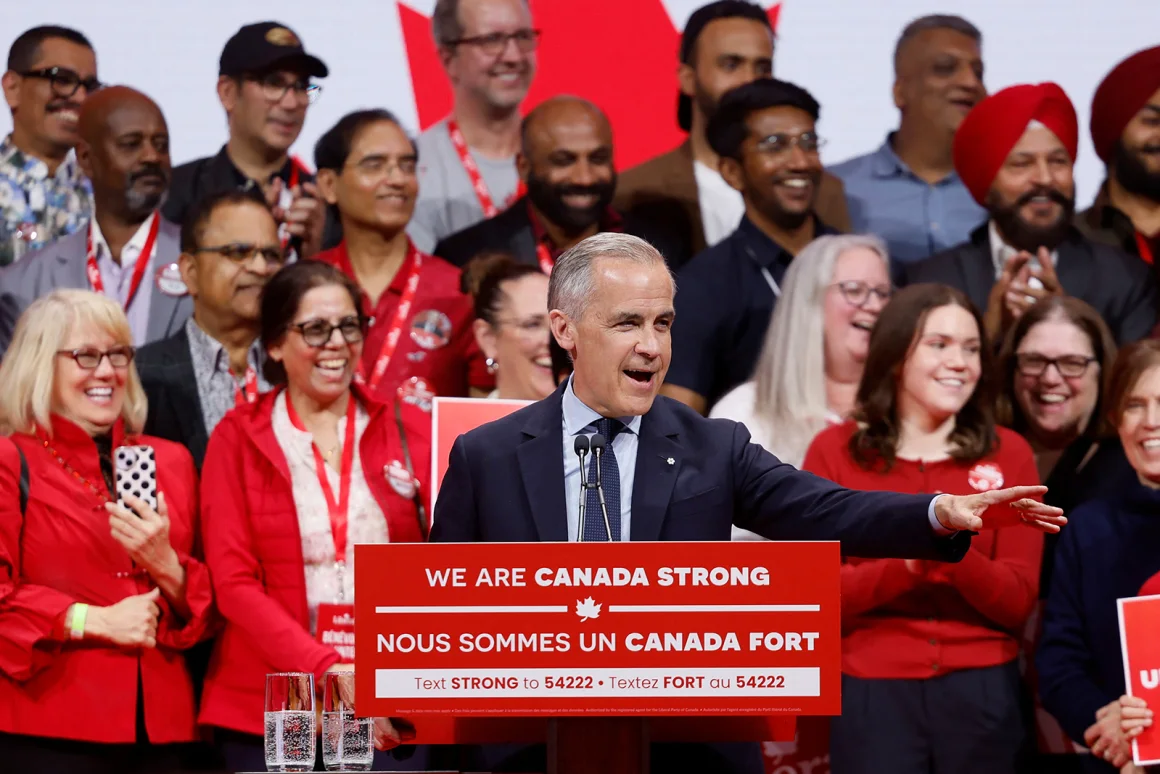
Political speculation is a constant in any democracy, and Canada is no exception. For years, one name has consistently surfaced in discussions about future leadership: Mark Carney. As the former Governor of the Bank of Canada and the Bank of England, his economic expertise is world-renowned. This has led to persistent chatter about a potential run for Prime Minister. When you search for Mark Carney Canada election polls, you’re tapping into a deep well of public curiosity and political strategy. But what do these polls actually reveal about his chances and the Canadian political landscape?
This article will dive deep into the world of Mark Carney Canada election polls. We’ll explore who Mark Carney is, why he’s considered a potential contender for the Liberal Party leadership, and what the public opinion data says about his electability. We will also break down how political polling works, analyze recent trends, and discuss the factors that could influence a potential Carney campaign. Whether you’re a seasoned political observer or just curious about the future of Canadian politics, we’ve got you covered.
Key Takeaways
- Who is Mark Carney?: An accomplished economist and central banker, Mark Carney has led the Bank of Canada and the Bank of England, giving him significant credibility on economic issues.
- The Liberal Leadership Question: With current Prime Minister Justin Trudeau’s approval ratings fluctuating, there is ongoing speculation about who might eventually succeed him as leader of the Liberal Party.
- Polling Data is Mixed: While Carney often polls well as a potential candidate due to his name recognition and expertise, his actual support can vary significantly once pitted against other established politicians.
- The “Outsider” Advantage and Disadvantage: His background outside of career politics can be seen as a refreshing change, but it also means he lacks the ground-level political experience of his rivals.
- Economic Credibility is His Superpower: In an era of inflation and economic uncertainty, Carney’s primary appeal is his perceived ability to manage the economy effectively.
Who is Mark Carney? A Brief Biography
Before we can understand the Mark Carney Canada election polls, it’s essential to know the man behind the name. Mark Carney is not your typical politician. His career has been built in the world of high finance and global economics, not on the campaign trail. Born in Fort Smith, Northwest Territories, and raised in Edmonton, Alberta, Carney’s roots are firmly Canadian. He earned his bachelor’s degree in economics from Harvard University and went on to receive his master’s and doctorate in economics from Oxford University.
His professional journey is impressive. After a thirteen-year career with Goldman Sachs in their London, Tokyo, New York, and Toronto offices, Carney entered public service. He served as a senior official at the Canadian Department of Finance before being appointed Governor of the Bank of Canada in 2008. He was widely praised for his leadership during the global financial crisis, helping Canada navigate the turmoil better than most other developed nations. His success led to a historic appointment in 2013 as the Governor of the Bank of England, making him the first non-Briton to hold the post. After his term ended in 2020, he became the UN Special Envoy on Climate Action and Finance.
From Central Banker to Political Figure
Carney’s transition from central banker to a potential political figure has been a subject of intense media focus. He joined the board of the Liberal Party of Canada and has been an advisor to the current government, signaling a clear alignment. He has also been more vocal on public policy issues, particularly climate change and economic strategy, often speaking at Liberal Party conventions. This has fueled speculation that he is laying the groundwork for a leadership bid. His supporters see him as a steady hand, a serious person for serious times. However, critics point to his long career in international finance as a potential liability, suggesting he may be out of touch with the concerns of everyday Canadians.
Understanding the Buzz: Why Carney for Liberal Leader?
The buzz around Mark Carney as a potential Prime Minister isn’t random. It stems from a specific set of circumstances within the Canadian political environment, particularly concerning the Liberal Party. Prime Minister Justin Trudeau has been in power since 2015, and after three elections, questions about his political future are natural. Political parties always need to think about succession planning, and the Liberals are no different. The constant stream of Mark Carney Canada election polls is a direct reflection of this forward-looking speculation.
The primary driver is the search for a candidate who can offer a fresh start while maintaining the party’s core values. Carney fits this description well. He is not a career politician and is therefore not associated with the political baggage that can accumulate after years in government. His global stature and economic expertise present a compelling alternative, especially when economic issues like inflation, housing affordability, and national debt are top-of-mind for voters. Many Liberals believe that a leader with Carney’s resume could be a powerful counter to the Conservative Party’s focus on economic management.
The Appeal of an Economic Expert
In politics, timing is everything. The current global economic climate is marked by uncertainty. Inflation has been a major concern, interest rates have risen, and families are feeling the squeeze on their budgets. In this context, a leader whose entire career has been dedicated to managing economies is incredibly appealing.
Carney’s supporters argue he could:
- Bring unparalleled credibility to economic debates.
- Reassure international markets and investors about Canada’s financial stability.
- Develop innovative policies to tackle inflation and promote growth.
- Effectively challenge opposition leaders on their economic plans.
This “competence” argument is the cornerstone of the pro-Carney movement within the Liberal camp. The theory is that voters, weary of partisan bickering, would be drawn to a leader who is perceived as a capable manager above all else.
Analyzing the Mark Carney Canada Election Polls
So, what do the polls actually say? It’s complicated. When you look at Mark Carney Canada election polls, you find a mixed bag of results that depend heavily on how the question is asked. The data often shows a difference between his popularity as a hypothetical candidate and his standing when compared directly to other potential leaders.
Public opinion firms like Abacus Data, Léger, and Angus Reid frequently test the waters for potential leadership candidates. In many of these polls, Mark Carney’s name is included alongside other prominent Liberals, such as Deputy Prime Minister Chrystia Freeland, Minister of Innovation, Science and Industry François-Philippe Champagne, and Minister of Foreign Affairs Mélanie Joly. Understanding these numbers requires looking at a few different metrics.
Head-to-Head Matchups
In hypothetical head-to-head matchups for the Liberal leadership, Carney often performs respectably. His high name recognition gives him an initial advantage over some cabinet ministers who are less known to the general public. For example, a poll might ask, “If the following people were running for leader of the Liberal Party, who would you prefer?” In this scenario, Carney’s global reputation can make him an attractive choice for those who are not deeply engaged with the party’s internal politics.
However, when pollsters ask more specific questions, the picture can change. For instance, a poll might ask Liberal Party supporters specifically who they would vote for. In these cases, candidates with more direct political experience and stronger ties to the party’s grassroots, like Freeland or Champagne, often show more strength. Carney’s challenge is to convert his general public appeal into concrete support among the party members who would actually vote in a leadership race.
Carney vs. Opposition Leaders
Perhaps the most crucial polling data involves how Carney stacks up against the leaders of other parties, particularly the Conservative leader, Pierre Poilievre. The Mark Carney Canada election polls that test this scenario are designed to measure electability. The central question for Liberals is: who gives us the best chance to win the next general election?
Here, the results are often promising for Carney. His perceived moderation and economic expertise can appeal to centrist voters who may be undecided between the Liberals and the Conservatives. Some polls suggest that Carney could win back some of the support the Liberals have lost in recent years. However, other polls indicate that Poilievre’s populist message resonates strongly with a different segment of the electorate, and Carney’s “global elite” background could be used against him effectively.
Hypothetical Election Matchup: Carney vs. Poilievre
|
Voter Segment |
Potential Advantage: Carney |
Potential Advantage: Poilievre |
|---|---|---|
|
Centrist/Undecided Voters |
Perceived as a moderate, stable choice. |
Focus on “pocketbook” issues like the carbon tax. |
|
Suburban Families |
Strong on economic management and long-term stability. |
Promises immediate relief from cost-of-living pressures. |
|
Business Community |
Deeply respected for his financial acumen. |
Pro-business, anti-regulation rhetoric. |
|
Working-Class Voters |
May seem out of touch with their daily struggles. |
Strong appeal with a populist, anti-establishment message. |
This table illustrates the strategic push-and-pull a potential Carney candidacy would face. His strengths in some areas could be offset by weaknesses in others.
The Path to Power: Hurdles for a Carney Candidacy

Even with promising poll numbers, a path to the Prime Minister’s office for Mark Carney is far from guaranteed. He would face several significant hurdles, both within the Liberal Party and in a general election. Understanding these challenges is key to interpreting the Mark Carney Canada election polls accurately.
First and foremost, the Liberal leadership is not currently vacant. Justin Trudeau remains the leader, and as long as he decides to stay, there is no contest. A challenge to a sitting Prime Minister is almost unheard of in Canadian politics and would be incredibly divisive. Therefore, Carney’s ambitions depend entirely on Trudeau’s decision to step down before the next election. This creates a situation where potential candidates must be careful not to appear too eager, lest they be accused of disloyalty.
The “Outsider” Problem
While being an outsider can be an advantage, it also comes with major disadvantages. Carney has never run in an election, held a seat in Parliament, or managed a constituency office. He lacks the retail politics skills that are honed over years of town halls, community barbecues, and door-knocking campaigns. He would need to quickly learn how to connect with voters on a personal level, not just on a policy level. Furthermore, his French language skills have been questioned, a critical factor for any national leader in bilingual Canada. He would need to prove his fluency to be a credible leader in Quebec.
The “Davos Man” Critique
The most potent line of attack against Carney would undoubtedly be his elite, globalist background. Opponents would paint him as a “Davos Man,” a member of the international financial elite who is disconnected from the realities of ordinary Canadians. His long tenure at Goldman Sachs and the Bank of England would be used to portray him as someone who is more comfortable in corporate boardrooms than in community hockey rinks. In an age of rising populism, this is a powerful narrative to overcome. Pierre Poilievre has already honed this style of attack against the current government, and he would surely amplify it against a candidate like Carney.
What Do the Experts Say?
Political analysts and commentators are divided on the viability of a Mark Carney leadership bid. The debate often centers on whether his economic credentials outweigh his political inexperience.
Some experts, like those you might read about on platforms covering global finance and politics such as forbesplanet.co.uk, argue that in a complex world, expertise is exactly what the country needs. They believe voters are tired of career politicians and would welcome a leader with real-world experience in managing large, complex organizations. They point to the successful transitions of other non-politicians into high office in other countries as a model.
On the other hand, many seasoned political strategists are skeptical. They argue that winning an election requires a specific skill set that Carney has not yet demonstrated. They emphasize the importance of grassroots organization, compelling communication, and the ability to withstand the brutal nature of a modern political campaign. They worry that Carney’s policy-heavy approach might come across as dry and academic to a general electorate that responds more to emotion and charisma. The consensus is that while the Mark Carney Canada election polls show potential, the reality would be a tough, uphill battle.
Conclusion: A Potential Candidate in Waiting
The persistent discussion around Mark Carney Canada election polls highlights a fascinating moment in Canadian politics. It reflects a desire for competent leadership in uncertain economic times, as well as a search for renewal within the governing Liberal Party. Mark Carney represents a unique and compelling option: a globally respected economist with a deep understanding of the financial levers that shape our world. The polling data suggests he has a baseline of support and a potential to be a formidable candidate.
However, potential does not always translate to victory. Carney’s path is fraught with challenges, from his lack of political experience to the powerful “elite” narrative that would be used against him. His political future remains entirely hypothetical, contingent on the decisions of the current Prime Minister and the strategic calculations of the Liberal Party. For now, he remains a candidate in waiting, a figure of immense interest whose name will continue to dominate headlines and poll questions as Canada looks toward its political future. The numbers tell a story of possibility, but the final chapters have yet to be written.
Frequently Asked Questions (FAQ)
Has Mark Carney announced he is running for office?
No, Mark Carney has not officially announced any intention to run for political office, including the leadership of the Liberal Party or a seat in Parliament. His activities, such as speaking at party events and advising the government, have fueled speculation, but he remains a private citizen.
What is Mark Carney’s current job?
Mark Carney holds several prominent roles. He is the UN Special Envoy on Climate Action and Finance, where he works on mobilizing private finance for climate goals. He is also the Chair of Brookfield Asset Management’s transition fund, focusing on investments that accelerate the global transition to a net-zero economy.
Why do people think he would run for the Liberal Party?
Speculation about Mark Carney running for the Liberals stems from several factors. He has publicly aligned himself with the party, served as an advisor to the Trudeau government, and his policy positions on issues like climate change and the economy are generally in line with the Liberal platform. His name is consistently included in Mark Carney Canada election polls because he is seen as the most high-profile potential successor to Justin Trudeau.
How does he poll against Conservative leader Pierre Poilievre?
Polling results vary, but generally, Mark Carney polls competitively against Pierre Poilievre. Some polls show him with a slight edge, particularly among centrist voters, due to his economic credibility. However, other polls suggest Poilievre’s populist appeal is very strong, and Carney’s “elite” background could be a significant weakness in a head-to-head contest.
What are his biggest weaknesses as a potential candidate?
His primary weaknesses are his lack of on-the-ground political experience and his background in international finance. Opponents would likely portray him as an out-of-touch globalist. Additionally, his French language abilities would be heavily scrutinized, as fluency is considered essential for a national leader in Canada.
Stay Informed With the Latest & Most Important News
Previous Post
Next Post










Advertisement