

Now Reading: Everything You Need to Know About the Karcher Pressure Washer
-
01
Everything You Need to Know About the Karcher Pressure Washer

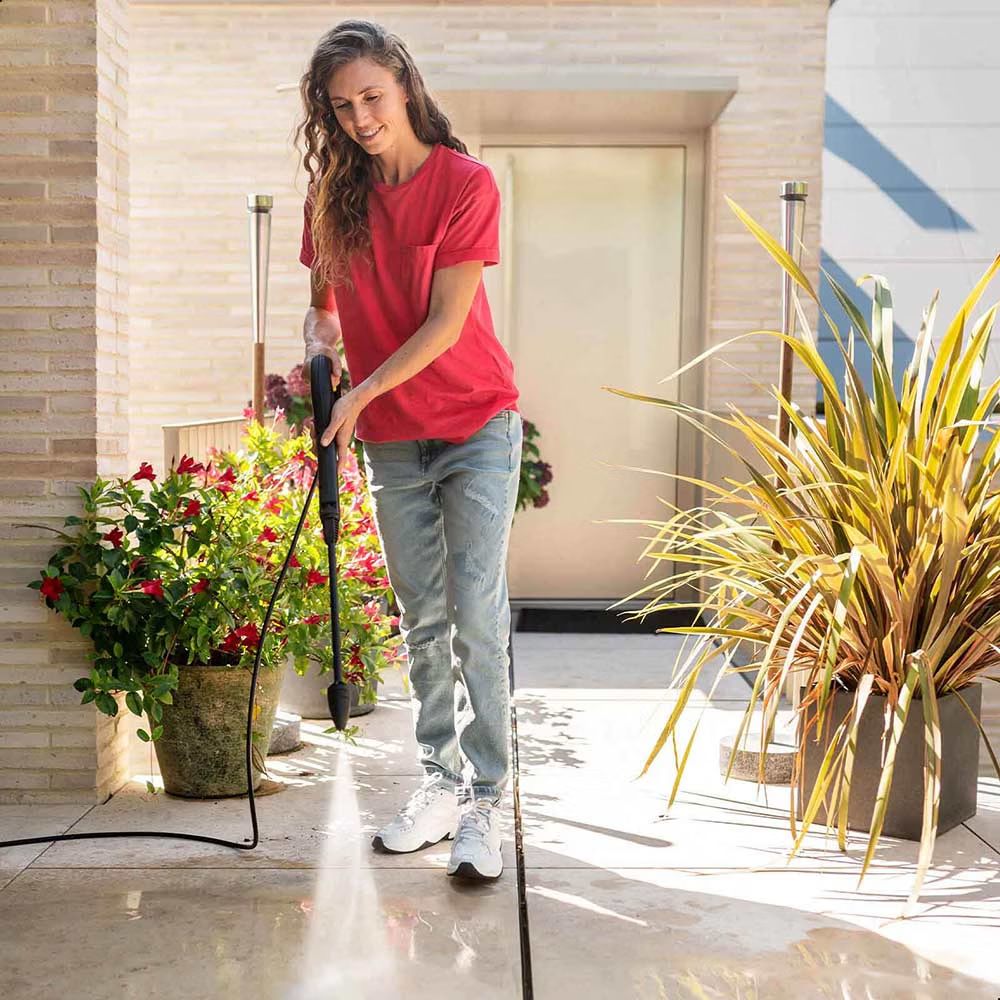
Cleaning your home’s exterior doesn’t have to be a back-breaking chore. Whether you are scrubbing down a muddy driveway, revitalizing a weathered deck, or just washing your car on a sunny Saturday, the right tool makes all the difference. Enter the karcher pressure washer. This bright yellow machine has become a staple in garages and sheds across the United States. But what makes it so special? Why do so many homeowners swear by this specific brand when there are dozens of others on the shelf?
In this guide, we are going to dive deep into the world of Karcher. We will explore why these machines are top-rated, how to pick the right one for your specific needs, and the best ways to keep it running for years. If you have been on the fence about buying a karcher pressure washer, or if you just bought one and aren’t sure where to start, you are in the right place. Let’s get cleaning!
Key Takeaways
- Variety of Choice: Karcher offers electric and gas models suitable for everything from light car washing to heavy-duty concrete cleaning.
- Innovative Technology: Features like the Vario Power Spray Wand and water-cooled motors set these washers apart.
- User-Friendly: Designed for ease of use with plug-and-play components.
- Maintenance Matters: Simple care routines can extend the life of your machine significantly.
Why Choose a Karcher Pressure Washer?
When you walk into a hardware store, the aisle is full of pressure washers. You see red ones, blue ones, and green ones. So, why do so many people gravitate toward the yellow karcher pressure washer? The answer usually comes down to a mix of heritage and innovation. Karcher isn’t a new player in the game; they invented the high-pressure cleaner back in 1950. That is over 70 years of engineering experience packed into the machine sitting in your driveway.
Another reason homeowners love them is their focus on user experience. A karcher pressure washer is typically designed to be lightweight and easy to maneuver. Unlike bulky industrial machines that require a team to move, most Karcher models for home use have wheels and ergonomic handles. They understand that you aren’t a professional cleaner; you are a homeowner who wants to get the job done quickly and get back to relaxing. The “Plug ‘n’ Clean” detergent system found on many models is a perfect example of this. You don’t have to mix messy chemicals in a separate bucket; you just snap a bottle in and start spraying.
Finally, the sheer variety of accessories sets them apart. When you buy a karcher pressure washer, you aren’t just buying a pump and a hose. You are buying into an ecosystem. From surface cleaners that wash your patio without streaking to special brushes for your car rims, Karcher has thought of almost every cleaning scenario. This versatility means your investment goes further, allowing you to tackle multiple different projects with a single machine.
The History of Karcher Cleaning Power
Alfred Kärcher was an inventor at heart. He started his company in 1935 in Stuttgart-Bad Cannstatt, Germany. Initially, they made heating designs and even airplane engine heaters. However, the real breakthrough happened in 1950 with the development of the first European hot-water pressure washer. This invention changed cleaning forever. Before this, cleaning heavy machinery or large surfaces was incredibly labor-intensive.
Over the decades, Karcher transitioned from industrial giants to household helpers. In 1984, they launched the first portable pressure washer for private households, the HD 555. This was the moment the karcher pressure washer truly entered the consumer market. Since then, they have continued to innovate, introducing electric models, battery-powered options, and smart control features that connect to your phone. It is a legacy of German engineering that focuses on solving real-world problems with water and pressure.
Understanding the Different Karcher Series
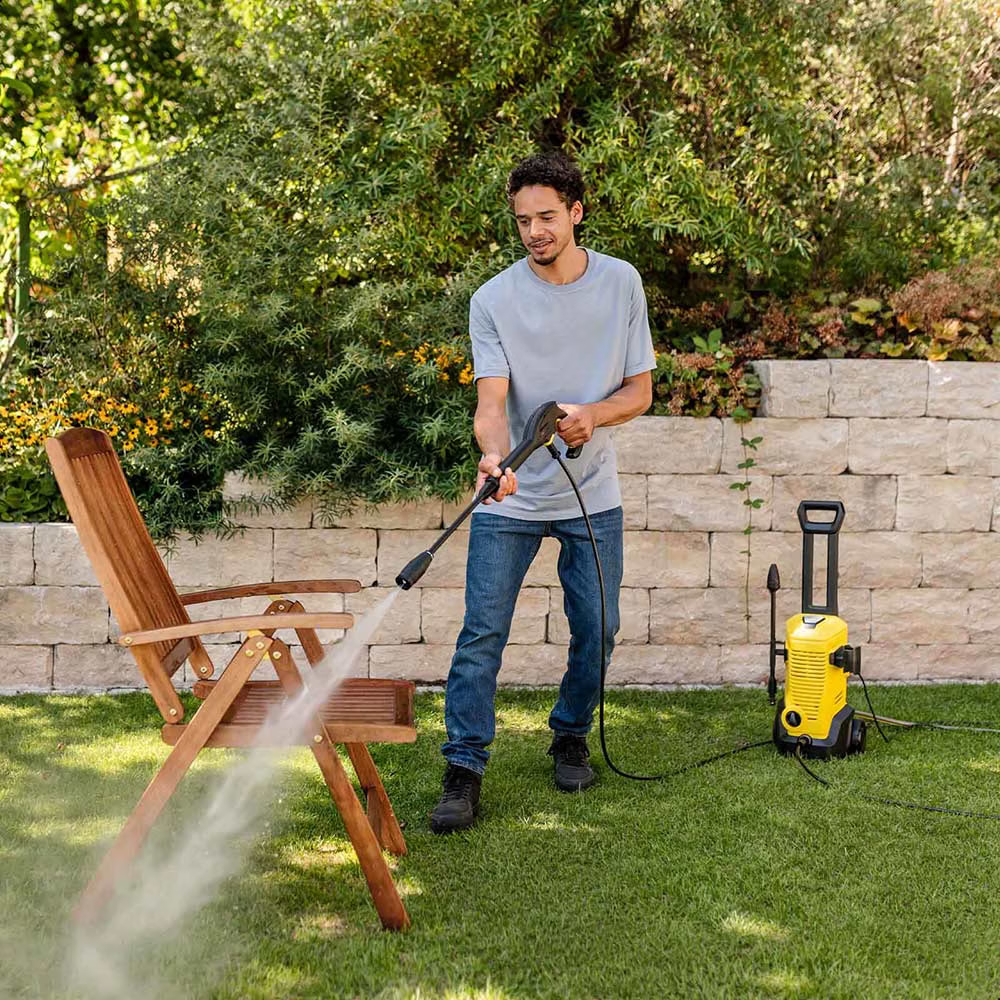
Not all pressure washers are created equal, and Karcher knows this. They categorize their electric residential machines into different series, usually labeled K2 through K5 (in the US market). Understanding these differences is crucial because buying a machine that is too weak will leave you frustrated, while buying one that is too powerful might damage your property or waste your money.
The entry-level models are great for small jobs. If you live in a townhouse or have a small patio, these are perfect. As you move up the series, you get more power (measured in PSI, or Pounds per Square Inch) and more water flow (GPM, or Gallons per Minute). You also get better durability features. For example, higher-end models often feature water-cooled induction motors, which last much longer than the standard universal motors found in cheaper units. Let’s break down the main categories you will find when shopping for a karcher pressure washer.
The Compact K2 Series: Entry Level
The K2 series represents the entry point into the karcher pressure washer family. These machines are incredibly lightweight and portable. They are designed for “light duty” tasks. Think about cleaning off patio furniture that has gathered dust over the winter, washing a bicycle after a muddy ride, or rinsing off gardening tools. They usually output around 1600 PSI. While this isn’t enough to strip paint or clean a massive driveway quickly, it is plenty for delicate tasks.
One of the best things about the K2 series is the storage. Because they are small, they fit easily on a shelf in the garage or in a small closet. They are also very affordable, making them a great first purchase for someone who has never owned a pressure washer before. However, be realistic about what it can do. If you try to clean a 2,000-square-foot concrete driveway with a K2, you will be out there for days. It is a tool for quick, small jobs, not major renovations.
The K3 and K4 Series: The Mid-Range Workers
Stepping up to the K3 and K4 series, you start to see more power and better features. These are the “medium duty” machines. A karcher pressure washer in this range typically offers between 1800 and 2000 PSI. This is the sweet spot for most homeowners. With this amount of pressure, you can effectively clean cars, fencing, and medium-sized patios. The K4 series, in particular, is very popular because it often includes the water-cooled motor technology, which is quieter and more durable.
These models often come with the Vario Power Spray wand. This allows you to adjust the pressure simply by twisting the wand, rather than having to stop and change out nozzles. This is a huge time saver when you are switching from washing a delicate wooden fence to cleaning a concrete walkway. The K3 and K4 models strike a balance between performance and price, offering enough power for 80% of household tasks without breaking the bank.
The Premium K5 Series: High Performance
If you take cleaning seriously, the K5 series is where you want to look. These are the top-tier electric models in the residential lineup. A K5 karcher pressure washer usually delivers around 2000+ PSI and utilizes a robust water-cooled induction motor. This motor design circulates water around the motor to keep it cool, which can extend the life of the machine by up to five times compared to standard motors.
The K5 is designed for large areas and stubborn dirt. If you have a large SUV, a boat, a big deck, or a long driveway, the K5 will save you significant time. It often comes with a built-in hose reel, which makes packing up much easier, and the onboard detergent tank is usually larger. While it is heavier and more expensive than the K2 or K3, the performance boost is noticeable. It runs smoother, quieter, and simply cleans faster.
Gas vs. Electric: Which Karcher is Right for You?
While Karcher is famous for their yellow electric machines, they also produce powerful gas-powered pressure washers. Choosing between a gas or electric karcher pressure washer depends entirely on your lifestyle and your property. Electric models are generally quieter, require less maintenance (no oil changes or gas cans), and are easier to start—just push a button. They are perfect for suburban neighborhoods where noise might be a concern.
On the other hand, gas models offer raw power and portability. You aren’t tethered to an electrical outlet, so you can take the washer to the far corners of your property. If you have a large farm, a long fence line far from the house, or need to do heavy-duty stripping of stains, a gas model is superior. Gas washers usually start at around 2700 PSI and go up from there, offering cleaning speeds that electric models just can’t match.
Table: Electric vs. Gas Comparison
|
Feature |
Electric Karcher Pressure Washer |
Gas Karcher Pressure Washer |
|---|---|---|
|
Power Source |
Power cord (needs outlet) |
Gasoline (needs fuel/oil) |
|
Noise Level |
Low to Moderate |
High (loud engine) |
|
Maintenance |
Minimal |
Moderate (oil changes, spark plugs) |
|
Portability |
Limited by cord length |
Unlimited range |
|
PSI Range |
1600 – 2300 PSI |
2700 – 4000+ PSI |
|
Best For |
Cars, patio furniture, small decks |
Long driveways, siding, paint prep |
Essential Accessories for Your Karcher
One of the biggest advantages of owning a karcher pressure washer is the wide range of accessories available. These attachments transform your machine from a simple sprayer into a versatile cleaning system. Using the right accessory can cut your cleaning time in half and provide a much better result. It is worth setting aside a small budget to pick up a few of these add-ons when you buy your machine.
Accessories attach easily via Karcher’s bayonet connection system. You just push and twist, and the new tool is locked in place. This is much faster than screw-on connections found on some other brands. Whether you need to reach high gutters or scrub a flat surface evenly, there is a tool designed specifically for that job. Let’s look at some of the most popular ones.
The T-Racer Surface Cleaner
If there is one accessory you absolutely must have for cleaning driveways, patios, or decks, it is the T-Racer Surface Cleaner. This attachment looks like a hovering disc. Inside the casing, two rotating nozzles spin at high speed. This creates a uniform cleaning path that prevents the “zebra striping” you often get when using a standard spray wand. Because the nozzles are enclosed, it also prevents splashback, keeping your legs and shoes dry while you clean. It makes cleaning large flat areas incredibly fast and satisfying.
Vehicle Wash Brushes and Cannons
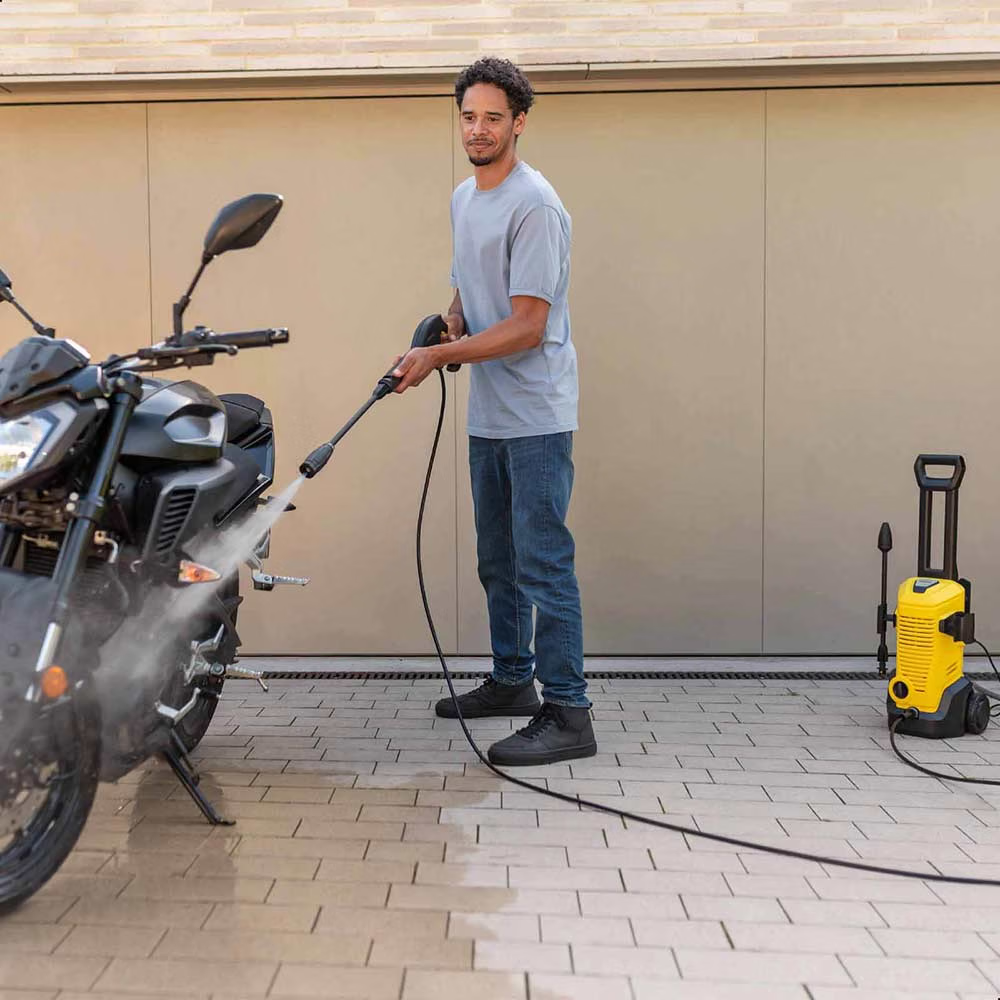
For car enthusiasts, a karcher pressure washer is a dream tool, especially when paired with a foam cannon. A foam cannon attaches to the wand and mixes soap with air and water to create a thick, shaving-cream-like suds that cling to your car. This lifts dirt away from the paint without scratching. Karcher also offers rotating wash brushes. The water pressure spins the bristles, doing the scrubbing for you. This is excellent for removing road grime from wheels or bug splatter from bumpers.
How to Set Up Your Machine for the First Time
Unboxing your new karcher pressure washer is exciting, but setting it up correctly is vital for safety and performance. First, lay out all the parts. You will usually have the main unit, a high-pressure hose, a spray gun, a wand, and maybe some wheels or handles that need to be snapped on. Most Karcher models are designed to be assembled without tools, or maybe just a simple screwdriver.
Before you plug anything into the electrical outlet, connect your water supply. Attach your garden hose to the washer’s inlet. It is crucial to run water through the machine before you turn it on. Squeeze the trigger on the spray gun until water flows steadily out of the nozzle. This purges air from the pump. If you turn the motor on while there is air in the pump (running it “dry”), you can permanently damage the internal components in seconds. Once the water is flowing smoothly, you can plug it in and flip the switch to “On.”
Safety First: Tips for Operation
Pressure washers are powerful tools, not toys. The water jet from a karcher pressure washer can cause serious injury if directed at skin or eyes. Never point the wand at people or pets. Always wear closed-toe shoes (no flip-flops!) and safety glasses to protect yourself from flying debris. When you are cleaning, be aware of where the electrical cord is so you don’t trip over it or spray it with water.
Maintenance: Keeping Your Karcher Alive
You want your investment to last. A karcher pressure washer is a robust machine, but like any mechanical device, it needs a little care. The number one killer of pressure washers is improper storage during the winter. If water freezes inside the pump, it will crack the housing, rendering the machine useless. This damage is typically not covered by warranty because it is considered user error.
To prevent this, you must winterize your machine. You can buy a “pump guard” or “pump saver” fluid. This is an antifreeze-like liquid that you inject into the pump inlet. It pushes out the water and lubricates the seals, protecting the machine from freezing temperatures and corrosion. Aside from winterizing, regularly check the inlet filter. This small screen prevents dirt and debris from your garden hose from entering the pump. If it gets clogged, your pressure will drop. Rinse it out under a tap periodically.
Troubleshooting Common Issues
Sometimes things go wrong. If your karcher pressure washer is pulsing (the motor revs up and down), it usually means there is not enough water flow or there is air in the system. Check that your garden hose is fully unkinked and the faucet is wide open. If the pressure is low, check your nozzle. It might be clogged with a grain of sand. A small needle or paperclip can usually clear the blockage.
Environmental Benefits of Pressure Washing
Believe it or not, using a karcher pressure washer can actually be more environmentally friendly than using a standard garden hose. A garden hose typically flows at about 10 gallons per minute (GPM) or more. A Karcher pressure washer usually uses between 1.2 and 1.5 GPM. Because the water is pressurized, it cleans much more effectively using significantly less water.
This means you can clean your entire driveway using a fraction of the water you would use if you were just spraying it down with a hose. Additionally, the power of the water often means you don’t need to use harsh chemicals. For many jobs, the mechanical force of the water alone is enough to remove mold, mildew, and dirt, keeping chemical runoff out of your lawn and storm drains.
Comparing Karcher to Competitors
Why choose a karcher pressure washer over a brand like Sun Joe, Ryobi, or Greenworks? It’s a fair question. Competitors often offer similar specs at competitive prices. Ryobi, for instance, is known for its utilitarian design and integration with other tools. Sun Joe often competes on price, offering very affordable entry-level units.
However, Karcher often wins on longevity and engineering. The water-cooled induction motor found in the K4 and K5 series is a distinct advantage that many competitors lack in the same price range. Also, the global availability of parts and service centers for Karcher is superior. If you need a replacement O-ring or a new hose five years from now, you will likely have an easier time finding it for a Karcher than for a generic brand.
User Reviews and Satisfaction
If you look at online reviews, owners of the karcher pressure washer often praise the “set it and forget it” nature of the machine. They appreciate that it doesn’t leak right out of the box and that the connections feel secure. A common complaint across all pressure washer brands, including Karcher, is the stiffness of the high-pressure hose. However, Karcher has addressed this in newer models with more flexible “Uberflex” style hoses. Generally, the brand loyalty is high, with many customers upgrading from a K2 to a K5 as their needs grow.
Where to Buy and Warranty Information
You can find a karcher pressure washer at almost any major home improvement retailer in the US, including Home Depot, Lowe’s, and Amazon. Buying from a major retailer is often a good idea because of the return policy. If you open the box and something is missing, it is easy to exchange.
Karcher typically offers a “Rapid Exchange Program” warranty for their electric models. This is a huge selling point. Instead of waiting weeks for a repair, if your machine fails under warranty, they effectively replace it. The warranty period varies by model, usually ranging from one to two years. Always register your product online after purchase to ensure your warranty is active and to receive updates on any product recalls or safety notices.
Expert Tips for the Perfect Clean
To get the most out of your karcher pressure washer, follow these pro tips. First, always work from the top down. If you are washing siding, start at the roofline and work your way to the foundation so you aren’t rinsing dirt over areas you just cleaned. Second, when using detergent, apply it from the bottom up. This seems counterintuitive, but it prevents streaks from forming in the soap as it runs down a dry surface.
Third, maintain a consistent distance. Holding the nozzle too close can damage wood or paint, while holding it too far away won’t clean effectively. A good rule of thumb is to start about 12 inches away and move closer only if necessary. Finally, sweep your spray. Don’t just hold the trigger in one spot; use broad, overlapping strokes to ensure an even clean without missed spots.
Conclusion
Owning a karcher pressure washer is about more than just having a clean driveway; it is about taking pride in your home with a tool that makes the job satisfying. From the compact K2 to the powerful K5, there is a model designed for every homeowner’s needs. These machines combine German engineering with user-friendly features to deliver a superior cleaning experience.
Remember to choose the right machine for your specific tasks, invest in a few key accessories like the surface cleaner, and take care of your pump by winterizing it every year. By doing so, your yellow cleaning companion will serve you well for many seasons to come.
For more tips on home maintenance and lifestyle, check out our other guides at Forbes Planet.
If you are interested in the deeper history of high-pressure cleaning technology, you can find more information on this Wikipedia page related to the karcher pressure washer and its mechanics.
FAQ: Common Questions About Karcher Pressure Washers
Q: Can I use hot water in my electric Karcher pressure washer?
A: Generally, no. Most residential electric Karcher models are designed for cold water only (usually up to 104°F or 40°C). Using hot water can damage the pump seals. Always check your specific manual.
Q: Can a Karcher pressure washer remove oil stains?
A: Yes, but you will likely need to use a degreaser detergent in combination with the pressure washer. For deep, old oil stains on concrete, a high-pressure model (like a gas unit or K5) combined with a scrub brush works best.
Q: How long can I run my pressure washer continuously?
A: Electric models are designed for intermittent use. It is good practice to give the machine a break every 15-20 minutes to prevent overheating, although water-cooled models can run longer. Gas models can run as long as they have fuel.
Q: My Karcher is losing pressure. What do I do?
A: Check the water supply first (kinks in the garden hose). Then check the nozzle for blockages. Finally, ensure the water inlet filter is clean. If these don’t work, there may be air in the pump—disconnect the wand and run water through the gun to purge it.
Q: Is it safe to wash my car with a Karcher?
A: Yes, absolutely. However, use a lower pressure setting or a wide-angle nozzle (like the Vario Power wand set to “Mix” or a low setting). Never use the “Dirtblaster” or 0-degree nozzle on car paint, as it can strip the clear coat.
Stay Informed With the Latest & Most Important News
Previous Post
Next Post











Advertisement