
Now Reading: Google Block Breaker: The Ultimate Guide to This Classic Game
-
01
Google Block Breaker: The Ultimate Guide to This Classic Game

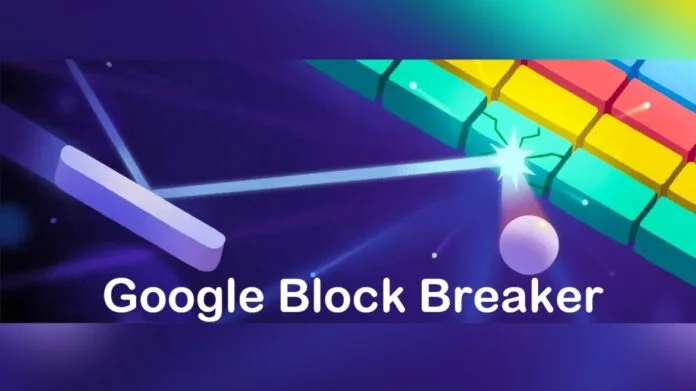
Do you remember the simple joy of classic arcade games? The kind that were easy to learn but hard to master? Many of us have fond memories of spending hours trying to beat a high score. One game that often comes to mind in this category is the google block breaker. This type of game, with its straightforward paddle-and-ball mechanic, has been a staple of casual gaming for decades. It’s a game of skill, timing, and strategy that has captivated players across various platforms.
This comprehensive guide will explore everything you need to know about the google block breaker genre. We will dive into its history, explore different variations, and provide tips to improve your gameplay. We’ll cover the core mechanics, the evolution of these games, and why they remain so popular. Whether you’re a long-time fan or a newcomer curious about this classic, you’ll find valuable information to enhance your understanding and enjoyment. Get ready to break some blocks!
Key Takeaways
- Timeless Appeal: The google block breaker format has a simple yet addictive gameplay loop that has kept it popular for decades.
- Skill-Based Gameplay: Success depends on reflexes, timing, and strategic thinking rather than just luck.
- Evolution and Variation: The genre has evolved from simple arcade versions to modern interpretations with complex power-ups, level designs, and graphics.
- Cognitive Benefits: Playing these games can help improve hand-eye coordination, reaction time, and problem-solving skills.
- Accessibility: Google block breaker games are widely available on various platforms, from web browsers to mobile devices, often for free.
What Exactly is a Google Block Breaker Game?
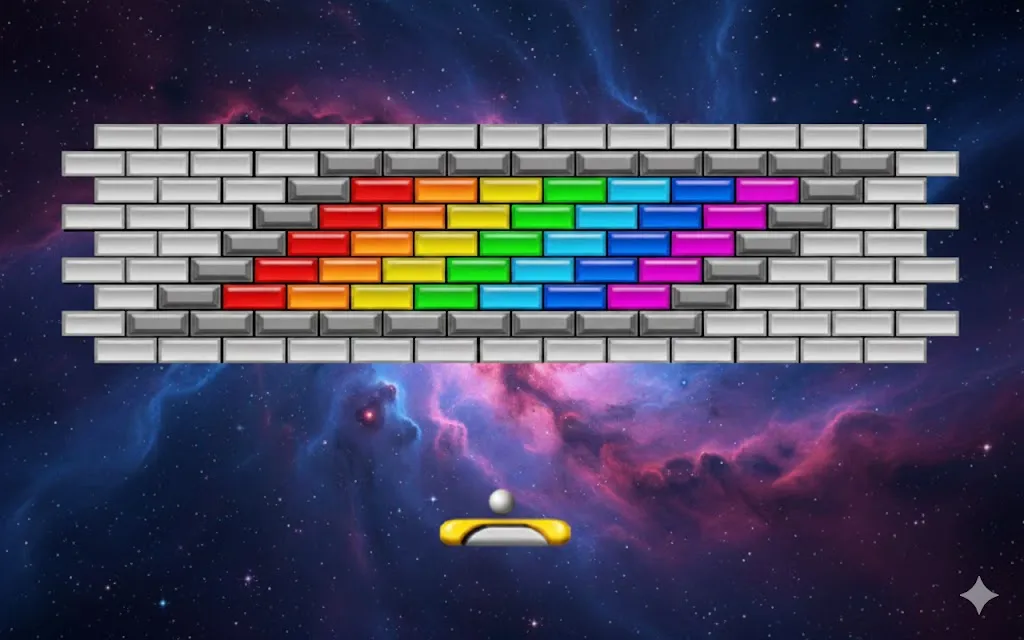
At its core, a google block breaker game is a type of arcade-style video game where the player controls a paddle at the bottom of the screen. The objective is to deflect a bouncing ball towards a wall of blocks at the top of the screen. When the ball hits a block, the block is destroyed, and the ball ricochets away. The player must continuously move the paddle to prevent the ball from falling off the bottom of the screen. Clearing all the blocks on the screen typically advances the player to the next, more challenging level.
The core gameplay loop is incredibly simple to grasp but offers a surprising amount of depth. The physics of the ball’s bounce, the angle of impact on the paddle, and the layout of the blocks all play a crucial role. Some blocks may require multiple hits to be destroyed, while others might release power-ups or power-downs. This simple formula has proven to be incredibly durable and has been reimagined countless times since its inception, cementing its place as a true classic in the world of video games.
The Origins and History of Block Breaker Games
The concept of the google block breaker game didn’t just appear out of nowhere. Its roots can be traced back to the very early days of video games. The primary inspiration came from Atari’s 1976 arcade classic, Breakout. Designed by Nolan Bushnell and Steve Bristow, with some initial conceptual work by Steve Wozniak and Steve Jobs, Breakout was a single-player evolution of their earlier hit, Pong. Instead of a second player, the opponent was a static wall of colorful bricks. The goal was to break through the wall using a single ball.
Breakout was an instant success in arcades and became one of the most influential games of its era. It spawned numerous clones, ports, and sequels across home consoles and computer systems. This early success laid the groundwork for the entire genre. As technology advanced, developers began to add new features like power-ups, varied level designs, and more complex physics. The simple idea of breaking blocks with a ball and paddle proved to be a powerful and enduring concept that continues to inspire game developers today.
The Evolution into the Digital Age
As personal computers and the internet became more widespread, the google block breaker genre found a new home. Flash games and browser-based gaming portals in the late 1990s and early 2000s were filled with different takes on the classic formula. These versions were often free to play and easily accessible, introducing a new generation of players to the addictive gameplay. Developers experimented with new themes, from space adventures to fantasy settings, and introduced a wide array of creative power-ups.
The rise of mobile gaming with smartphones and tablets provided another massive platform for these games. The touch-screen interface is perfectly suited for controlling the paddle, making the experience intuitive and responsive. Today, a quick search on any app store will reveal hundreds of block breaker variants, each with its own unique twist. The ability to play a quick round anytime, anywhere has contributed significantly to the genre’s lasting popularity.
Key Milestones in Block Breaker History
The journey of the block breaker game is marked by several key titles that pushed the genre forward. Here’s a look at some of the most influential games over the years.
|
Year |
Game Title |
Key Innovation |
|---|---|---|
|
1976 |
Breakout |
The original arcade game that started it all. |
|
1986 |
Arkanoid |
Introduced enemy ships and a wide variety of power-ups. |
|
1996 |
DX-Ball |
A popular PC shareware game with enhanced graphics and sound. |
|
2001 |
Alleyway |
A launch title for the Nintendo Game Boy, bringing the genre to handhelds. |
|
2009 |
Shatter |
A modern take on the genre with innovative physics and level design. |
Core Mechanics of a Google Block Breaker
While there are many variations, most google block breaker games share a set of core mechanics that define the experience. Understanding these fundamentals is key to mastering any game in this genre.
The Paddle
The paddle is your primary tool. It’s the horizontal bar at the bottom of the screen that you control. Your main job is to position the paddle correctly to intercept the ball and send it back up towards the blocks. In most games, the paddle’s movement is restricted to the horizontal axis. The part of the paddle the ball hits is often important. Hitting the ball with the center of the paddle might send it straight up, while hitting it with the edges can send it off at a sharper angle, giving you more control over its trajectory.
The Ball
The ball is the projectile you use to destroy the blocks. It typically starts attached to the paddle, and you launch it to begin the level. Once in motion, it will bounce off the walls, the blocks, and your paddle. The speed of the ball can often increase as the level progresses or after hitting certain types of blocks, adding to the challenge. Many games allow for multiple balls to be in play at once, usually as a result of a power-up, creating chaotic but effective block-clearing potential.
The Blocks
The blocks are your targets. They are arranged in various patterns at the top of the screen. The most basic blocks are destroyed with a single hit. However, many games introduce different types of blocks to add variety and challenge.
- Hardened Blocks: These may require multiple hits to break. They often change color or crack with each hit.
- Indestructible Blocks: These blocks cannot be broken and act as permanent obstacles, forcing you to navigate the ball around them.
- Power-Up Blocks: These special blocks release a power-up when destroyed.
- Explosive Blocks: Hitting one of these can cause a chain reaction, destroying adjacent blocks.
The Role of Power-Ups and Power-Downs
Power-ups are a central feature in most modern google block breaker games, adding a layer of strategy and excitement. These are special items, usually released from destroyed blocks, that fall towards the bottom of the screen. You must catch them with your paddle to activate their effect.
Common Types of Power-Ups
- Enlarge Paddle: Makes your paddle wider, giving you a larger surface area to hit the ball. This is one of the most common and helpful power-ups.
- Laser Cannon: Equips your paddle with lasers, allowing you to shoot blocks directly. This is great for clearing hard-to-reach blocks.
- Multi-Ball: Splits your current ball into three or more balls, allowing you to destroy blocks much faster.
- Slow Ball: Decreases the speed of the ball, making it easier to control and react to.
- Catch Paddle: Makes the ball stick to your paddle when it makes contact, allowing you to aim your next shot carefully.
- Extra Life: Grants you an additional life, giving you another chance if you miss the ball.
Of course, not all falling items are helpful. Power-downs, or “power-ups” with negative effects, also exist to trip you up. These might include shrinking your paddle, speeding up the ball to an unmanageable degree, or even taking away a life. Deciding whether to risk catching a falling capsule is part of the strategy.
Strategies for Achieving a High Score
Want to dominate the leaderboards in your favorite google block breaker? It takes more than just quick reflexes. A solid strategy can make all the difference.
Master the Angles
The most important skill to develop is controlling the ball’s angle. Don’t just mindlessly hit the ball back up. Pay attention to where the ball strikes your paddle.
- Center Hits: Hitting the ball with the center of your paddle will send it bouncing at a predictable, often vertical, angle.
- Edge Hits: Hitting the ball with the left or right edge of your paddle will send it off at a much sharper angle. This is crucial for getting the ball into tight spaces and clearing out blocks on the sides of the screen.
Practice using the edges of your paddle to “cut” the ball and send it where you want it to go. This level of control is what separates beginners from experts.
Prioritize Your Targets
Not all blocks are created equal. At the start of a level, your priority should be to create an opening. Try to carve a tunnel through the blocks that allows the ball to get to the top of the screen. Once the ball is bouncing between the top wall and the remaining blocks, it will clear them out much faster than you could by hitting them from below. This is the single most effective strategy for clearing levels quickly. Also, keep an eye out for special blocks, like explosive ones, that can create large openings with a single hit.
Strategic Use of Power-Ups
Don’t just grab every power-up that falls. Think about your current situation. If you already have a multi-ball power-up active, grabbing a laser might not be the best idea as it could cancel out the multi-ball. Similarly, if the level is almost clear, you might not need that paddle extension. Be selective and choose the power-ups that will help you the most in the moment. For a deeper look into strategic resource management in various contexts, you can find interesting parallels on sites like https://forbesplanet.co.uk/, which often cover efficiency and strategy in business and technology.
The Cognitive Benefits of Playing
Playing a google block breaker is not just a fun way to pass the time; it can also be good for your brain. The fast-paced nature of the game requires constant focus and quick decision-making, which can help sharpen several cognitive skills.
Improved Hand-Eye Coordination
The game demands that you visually track a fast-moving ball and translate that information into precise hand movements to control the paddle. This continuous feedback loop is an excellent exercise for improving hand-eye coordination.
Faster Reaction Time
As levels progress, the ball speed often increases, forcing you to react more quickly to prevent it from falling. Regularly playing the game can help reduce your reaction time, which is a beneficial skill in many real-world activities, from driving to playing sports.
Enhanced Strategic Thinking
Beyond simple reactions, google block breaker encourages strategic thinking. You need to plan your shots, prioritize targets, and decide which power-ups to pursue. This involves forward-thinking and problem-solving, as you constantly assess the state of the game and adapt your strategy to clear the level efficiently.
Finding the Best Google Block Breaker Games Today
Thanks to the internet and app stores, you are never far from a great block breaker game. A simple search for “google block breaker” will yield countless options. Many are available to play directly in your web browser for free. Popular gaming websites and portals often have curated lists of the best browser-based games.
For mobile users, both the Google Play Store and the Apple App Store are treasure troves of block breaker titles. You can find everything from faithful recreations of the classics to highly stylized modern versions with unique mechanics and storylines. Read reviews and look at ratings to find a high-quality game that suits your preferences. Many of these games are free-to-play with optional in-app purchases, so you can try them out without any commitment.
Conclusion: The Enduring Legacy of a Classic
The google block breaker genre is a perfect example of how a simple concept can lead to decades of engaging and entertaining gameplay. From its origins as Breakout in the arcades of the 1970s to the countless variations available on our phones and computers today, the core loop of paddle, ball, and blocks remains as compelling as ever. It’s a testament to brilliant game design that is easy to learn, difficult to master, and always fun to play. The genre has successfully adapted to new technologies and player expectations, incorporating power-ups, complex levels, and stunning visuals while retaining its fundamental charm.
Whether you’re looking for a quick five-minute distraction or an in-depth challenge to master, there is a google block breaker game out there for you. These games offer more than just entertainment; they provide a workout for your reflexes, coordination, and strategic mind. The legacy of this genre is secure, and it will undoubtedly continue to evolve and captivate players for many years to come. For more information on the history and impact of these types of games, you can explore resources like Wikipedia’s page on Breakout clones, which details the extensive influence of the original game.
Frequently Asked Questions (FAQ)
Q1: What was the very first block breaker game?
A1: The first and most influential block breaker game was Atari’s 1976 arcade game, Breakout. It established the core gameplay mechanics that define the genre to this day.
Q2: Are google block breaker games free to play?
A2: Many google block breaker games are available for free, especially browser-based games and mobile games that are supported by ads or optional in-app purchases.
Q3: How can I improve my control over the ball?
A3: The key to better control is using the edges of your paddle. Hitting the ball with the side of the paddle will send it off at a sharper angle, allowing you to aim for specific spots and hard-to-reach blocks.
Q4: What is the most useful power-up?
A4: This often depends on the situation, but many players find the Multi-Ball power-up to be the most effective for clearing levels quickly. The Laser Cannon and Enlarge Paddle power-ups are also extremely helpful.
Q5: Can playing these games help with my reflexes?
A5: Yes, the fast-paced nature of a google block breaker requires quick reactions to track and hit the ball. Regular play can help improve your reaction time and hand-eye coordination.
Related Posts


Stay Informed With the Latest & Most Important News
Previous Post
Next Post








Advertisement