

Now Reading: Unveiling the Galaxy Program EG NYT: Your Guide to the Stars
-
01
Unveiling the Galaxy Program EG NYT: Your Guide to the Stars


Have you ever looked up at the night sky and wondered about the countless stars twinkling back at you? Our universe is a vast and mysterious place, filled with galaxies, planets, and phenomena that spark our curiosity. Programs designed to explore these cosmic wonders help us piece together the puzzle of our existence. One such initiative that has captured attention is the galaxy program eg nyt, a topic that brings together cutting-edge science and public fascination. This article will serve as your friendly guide, breaking down what this program is all about, why it matters, and how it connects to the broader human endeavor of space exploration. We will journey through the cosmos, exploring the science, the technology, and the people behind the mission to understand our universe.
The cosmos has always been a source of inspiration and inquiry. From ancient civilizations charting constellations to modern scientists using powerful telescopes, the desire to know what lies beyond our world is a shared human trait. The galaxy program eg nyt represents the next chapter in this age-old quest. It’s not just about discovering new stars or planets; it’s about understanding the fundamental laws that govern the universe and our place within it. We’ll delve into the specifics of this program, making complex ideas simple and accessible for everyone.
Key Takeaways
- Understanding the Core Mission: The galaxy program eg nyt is a scientific initiative focused on studying galaxies, their formation, and their evolution to provide deeper insights into the structure of the universe.
- The Role of Technology: Advanced telescopes, data processing systems, and sophisticated software are crucial for collecting and analyzing the vast amounts of data generated by the program.
- Why It Matters: This research helps answer fundamental questions about where we come from, the nature of dark matter and dark energy, and the ultimate fate of the cosmos.
- Public Engagement and Education: The program emphasizes making its findings accessible to the public, inspiring the next generation of scientists and astronomers through educational outreach.
What Exactly is the Galaxy Program EG NYT?
When you hear the term galaxy program eg nyt, it can sound a bit complex. Let’s break it down. At its heart, this is a scientific research initiative dedicated to the study of galaxies. A galaxy is a massive system of stars, stellar remnants, interstellar gas, dust, and dark matter, all bound together by gravity. Our own solar system is part of the Milky Way galaxy. This program uses advanced tools to observe distant galaxies, map their locations, and analyze their properties. The “eg nyt” part of the name likely refers to a specific designation, project codename, or perhaps a collaborative effort highlighted by major news outlets, symbolizing its significance in the scientific community. The primary goal is to create a comprehensive map of the universe, which can help us understand its history and large-scale structure.
Think of it like being a cosmic cartographer. Instead of mapping continents and oceans on Earth, scientists involved in the galaxy program eg nyt are mapping the locations and movements of entire galaxies. This isn’t just about creating a pretty picture of the night sky. Each piece of data collected—whether it’s a galaxy’s color, brightness, or distance from us—tells a story. By putting these stories together, researchers can test theories about how the universe began, how it has changed over billions of years, and what might happen to it in the future. It’s a massive undertaking that requires international collaboration and some of the most powerful technology ever created.
The Main Objectives of the Program
Every major scientific program has a clear set of goals. The galaxy program eg nyt is no different. Its objectives are ambitious and aimed at tackling some of the biggest questions in modern astrophysics.
- Mapping the Cosmic Web: One primary goal is to map the large-scale structure of the universe. Scientists believe that galaxies aren’t scattered randomly but are arranged in a vast, interconnected structure known as the cosmic web, with massive clusters, long filaments, and vast empty spaces called voids.
- Understanding Galaxy Evolution: The program seeks to understand how galaxies form and evolve. By observing galaxies at different distances, astronomers are essentially looking back in time, allowing them to see what galaxies looked like at various stages of the universe’s history.
- Probing Dark Matter and Dark Energy: A significant portion of the universe is made of mysterious substances called dark matter and dark energy. The galaxy program eg nyt aims to study their effects on the distribution and movement of galaxies, providing crucial clues to their nature.
- Measuring Cosmic Expansion: The program contributes to precisely measuring the expansion rate of the universe. This is key to understanding the age of the cosmos and refining our cosmological models.
The Technology Driving the Discoveries
You can’t explore the cosmos without some seriously impressive hardware. The success of the galaxy program eg nyt relies on a suite of state-of-the-art technologies, from ground-based observatories to sophisticated data analysis centers. These tools are the eyes and brains of the operation, allowing scientists to peer across billions of light-years and make sense of what they see. The instruments used are incredibly sensitive, capable of detecting the faint light from galaxies that are so far away their light has been traveling for billions of years to reach us. This technological prowess is what transforms theoretical ideas into observational science.
The heart of the program is its telescopes. These aren’t the kind you might have in your backyard. We’re talking about massive observatories, often located on remote mountaintops where the air is thin and clear, providing an ideal window to the universe. These telescopes are equipped with powerful cameras and spectrographs. A camera captures images of galaxies, while a spectrograph breaks down the light from a galaxy into its constituent colors, much like a prism. This spectrum contains a wealth of information, including the galaxy’s composition, temperature, and how fast it’s moving away from us. Processing this data is another technological marvel, requiring supercomputers to handle the sheer volume of information collected every night.
Telescopes and Observatories
The workhorses of the galaxy program eg nyt are its powerful telescopes. These observatories might be located in places like the Atacama Desert in Chile or on volcanic peaks in Hawaii. They use huge mirrors, some several meters in diameter, to collect as much light as possible from distant cosmic objects. The larger the mirror, the fainter the objects it can see. These telescopes often work in tandem, combining their power to achieve even greater resolution.
Spectroscopic Surveys: The Key to Mapping
A critical component of this research is the use of spectroscopy. When a telescope is pointed at a galaxy, a spectrograph attached to it measures the galaxy’s light spectrum. A key feature in this spectrum is “redshift.” Because the universe is expanding, distant galaxies are moving away from us, which stretches the light waves coming from them, shifting them towards the red end of the spectrum. The amount of redshift tells scientists the galaxy’s distance. By measuring the redshift for millions of galaxies, the galaxy program eg nyt can create a three-dimensional map of the universe.
Data Processing and Analysis
Collecting data is only half the battle. The telescopes involved in the galaxy program eg nyt generate a colossal amount of information—terabytes of data every single night. To put that in perspective, a single terabyte can hold hundreds of thousands of photos. Handling this data deluge requires immense computing power and clever algorithms. Scientists develop sophisticated software to automatically identify galaxies in the images, measure their properties, and calculate their redshifts. This automated pipeline allows them to build their cosmic map far more quickly than would be possible by hand. This intersection of astronomy and big data is a rapidly growing field, often referred to as astroinformatics.
Why Should We Care About a Galaxy Program?
It’s a fair question. With so many pressing issues here on Earth, why invest so much time, money, and brainpower into studying distant galaxies? The answer lies in our fundamental curiosity and the long-term benefits of scientific discovery. Research conducted by the galaxy program eg nyt helps us answer some of the most profound questions we can ask: Where did we come from? What is the universe made of? Where is it all going? This knowledge enriches human culture and provides a deeper perspective on our place in the cosmos. It’s a journey of discovery that speaks to the explorer in all of us.
Furthermore, the pursuit of this knowledge drives technological innovation. The challenges of building more powerful telescopes, more sensitive detectors, and faster computers for the galaxy program eg nyt lead to advancements that often find applications in other fields. Technologies developed for astronomy have contributed to medical imaging (like MRI and CT scans), satellite communication, GPS navigation, and even the Wi-Fi you might be using right now. As a hub for scientific news and analysis, a platform like https://forbesplanet.co.uk/ often highlights how these seemingly abstract scientific pursuits can lead to tangible technological benefits for society. Science is a web of interconnected disciplines, and a breakthrough in one area can trigger progress in many others.
Answering Fundamental Questions
The research from the galaxy program eg nyt directly addresses our understanding of cosmology, the science of the origin and development of the universe.
|
Big Question |
How the Galaxy Program EG NYT Helps Answer It |
|---|---|
|
How did the universe begin? |
By studying the distribution of galaxies, scientists can test and refine models of the Big Bang and the early universe. |
|
What is dark matter? |
The program maps the gravitational effects of dark matter on galaxies, giving clues about its mysterious nature. |
|
What is dark energy? |
By measuring the accelerating expansion of the universe, it provides crucial data to understand the force driving it apart. |
|
What is the fate of the universe? |
The precise measurements of cosmic expansion help predict whether the universe will expand forever or eventually collapse. |
Inspiring the Next Generation
One of the most important, yet often overlooked, benefits of large-scale scientific projects like the galaxy program eg nyt is their power to inspire. When we hear about discoveries of new galaxies or see stunning images from deep space, it captures the imagination. This inspiration is crucial for encouraging young people to pursue careers in science, technology,engineering, and math (STEM). The program often includes significant outreach and education components, providing resources for teachers, students, and the general public. By making science accessible and exciting, it ensures that the spirit of exploration and discovery will continue for generations to come.
Key Discoveries and Contributions
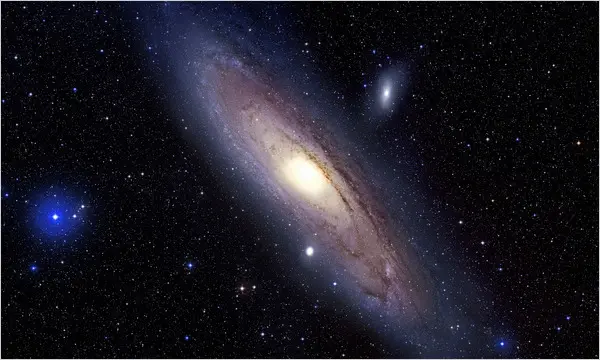
While the galaxy program eg nyt is an ongoing effort, its methodology is built upon decades of cosmological research that has already reshaped our view of the universe. Similar galaxy surveys in the past have led to monumental discoveries. For instance, the confirmation that the expansion of the universe is accelerating was a Nobel Prize-winning breakthrough that came from studying distant supernovae within galaxies. This discovery led to the concept of dark energy, which is now a central focus of modern physics. The program continues this legacy, aiming for even greater precision and deeper understanding.
The detailed maps created by the galaxy program eg nyt and its predecessors have provided the strongest evidence yet for the “cosmic web.” These maps show that galaxies are not distributed randomly but are organized into immense structures. This structure is a direct prediction of our leading cosmological model, which includes the Big Bang, dark matter, and dark energy. Every galaxy that is mapped and added to the dataset helps to either confirm this model or highlight areas where our understanding is incomplete. This constant process of testing and refinement is how science moves forward, and this program is at the very forefront of that process.
The Mystery of Dark Energy
Perhaps the most exciting area of research related to the galaxy program eg nyt is the study of dark energy. In the late 1990s, astronomers discovered that the universe’s expansion is not slowing down due to gravity, as everyone expected, but is actually speeding up. This implies that there is a mysterious repulsive force, or energy, permeating all of space that is pushing everything apart. We call it “dark energy” because we don’t know what it is. It is thought to make up about 70% of the entire universe, yet it remains one of the greatest mysteries in all of science. By precisely mapping the universe’s expansion history, the program provides crucial data to help scientists figure out the nature of this enigmatic force.
The Search for Dark Matter
Another deep mystery is dark matter. Observations of how galaxies rotate and how they cluster together show that there’s far more gravity at play than can be accounted for by the visible stars and gas. This suggests the existence of an invisible substance called “dark matter.” Like dark energy, we don’t know what it’s made of, but we can see its effects. It’s believed to form a kind of gravitational scaffolding upon which galaxies are built. The galaxy program eg nyt helps to map the distribution of this invisible matter by observing its gravitational influence on the galaxies it can see.
Conclusion: Charting the Cosmos for a Better Future
The galaxy program eg nyt is more than just an astronomy project; it is a testament to human curiosity, ingenuity, and our relentless desire to understand our place in the universe. By creating a detailed, three-dimensional map of the cosmos, scientists are piecing together the story of our universe from its earliest moments to its ultimate fate. The program tackles profound mysteries like dark matter and dark energy, pushing the boundaries of our knowledge and technology.
The impact of this research extends far beyond the realm of astrophysics. It inspires future generations, drives technological innovation that benefits society in countless ways, and offers us a perspective that transcends our daily lives. Looking up at the stars is a universal human experience, and programs like this one empower us to move beyond simply wondering. They allow us to explore, to measure, and to understand. The cosmic map being built by the galaxy program eg nyt is, in many ways, a map of ourselves—a record of our quest for knowledge in the vast and beautiful universe we call home.
Frequently Asked Questions (FAQ)
What does the “eg nyt” in “galaxy program eg nyt” stand for?
The exact meaning of “eg nyt” can vary. It could be an acronym for the collaborating institutions, a project code, or a reference to a specific survey field. In the context of public discussion, it often becomes a shorthand identifier for a major galaxy research initiative mentioned by sources like the New York Times (NYT).
How is this different from the Hubble Space Telescope?
The Hubble Space Telescope is a single, incredibly powerful observatory that can take very deep, detailed images of small patches of the sky. A survey program like the galaxy program eg nyt is often a broader project that might use multiple telescopes (some ground-based) with the specific goal of mapping millions of galaxies over a much larger area of the sky to understand large-scale structures.
Can I see the data from this program?
Yes, many major astronomy projects, including large galaxy surveys, have a policy of making their data publicly available after a certain proprietary period. This allows scientists from all over the world, and even amateur astronomers, to work with the data and make their own discoveries.
What is the biggest challenge for the galaxy program eg nyt?
One of the biggest challenges is simply managing the enormous volume of data. The telescopes generate terabytes of information, and developing the automated software pipelines to process it all accurately and efficiently is a major undertaking in computer science and data analysis. Another challenge is distinguishing faint, distant galaxies from other celestial objects and atmospheric noise.
Does this program search for alien life?
The primary mission of the galaxy program eg nyt is not to search for extraterrestrial intelligence (SETI). Its focus is on cosmology—studying the formation, distribution, and evolution of galaxies to understand the universe as a whole. However, the data collected can be useful for identifying potential star systems that might be interesting for future searches for habitable planets.
Stay Informed With the Latest & Most Important News
Previous Post
Next Post











Advertisement