

Now Reading: The Ferrari F40: A Legend of Speed and Design
-
01
The Ferrari F40: A Legend of Speed and Design


The world of supercars is filled with fast, expensive, and beautiful machines, but very few have achieved the legendary status of the Ferrari F40. When you close your eyes and picture a classic red supercar, there is a very good chance this is the car you see. It wasn’t just built to drive; it was built to make a statement. It was raw, loud, and incredibly fast, capturing the hearts of car lovers everywhere.
In this article, we are going to take a deep dive into what makes this car so special. We will look at its history, the amazing engine that powers it, and why it is still worth millions of dollars today. Whether you are a lifelong car fan or just curious about automotive history, there is something here for everyone.
Key Takeaways
- The Ferrari F40 was the last car personally approved by Enzo Ferrari.
- It was the first production car to break the 200 mph speed barrier.
- The design focused purely on performance, stripping away luxuries like radios and door handles.
- Today, it is one of the most collectible and valuable cars in the world.
The Birth of a Legend: Why the Ferrari F40 Was Built
The story of the Ferrari F40 begins in the late 1980s. Ferrari wanted to celebrate their 40th anniversary in a big way. They didn’t just want to release another car; they wanted to create something that would show the world they were the kings of the road. At the time, they were facing tough competition from other car makers, specifically the Porsche 959, which was a technological marvel. Ferrari needed to respond, and their answer was brute force and emotion.
Enzo Ferrari, the founder of the company, was nearing the end of his life. He wanted one final masterpiece to leave as his legacy. He famously told his team to build “the best car in the world.” The engineers took this seriously. Instead of packing the car with heavy computers and luxury items, they went the opposite direction. They decided to use race car technology for the street. The result was a car that was light, powerful, and demanding to drive.
Celebrating 40 Years of Excellence
The “F40” name is quite simple when you think about it. The “F” stands for Ferrari, and “40” represents the 40th anniversary of the company’s road car production. It was unveiled in 1987, and the world was stunned. It looked like a spaceship compared to the other cars on the road. The low nose, the giant rear wing, and the visible engine cover were unlike anything else. It wasn’t just a celebration of the past; it was a bold look into the future of performance.
This car was not designed for comfort. It was designed for speed. When customers first sat inside, they were surprised to find almost nothing there. There was no leather upholstery, no stereo, no carpets, and not even real door handles—just a pull cord to open the door. This was done to save every ounce of weight possible. Every decision made during the building of the Ferrari F40 was about making it go faster.
Under the Hood: The Engine That defined an Era
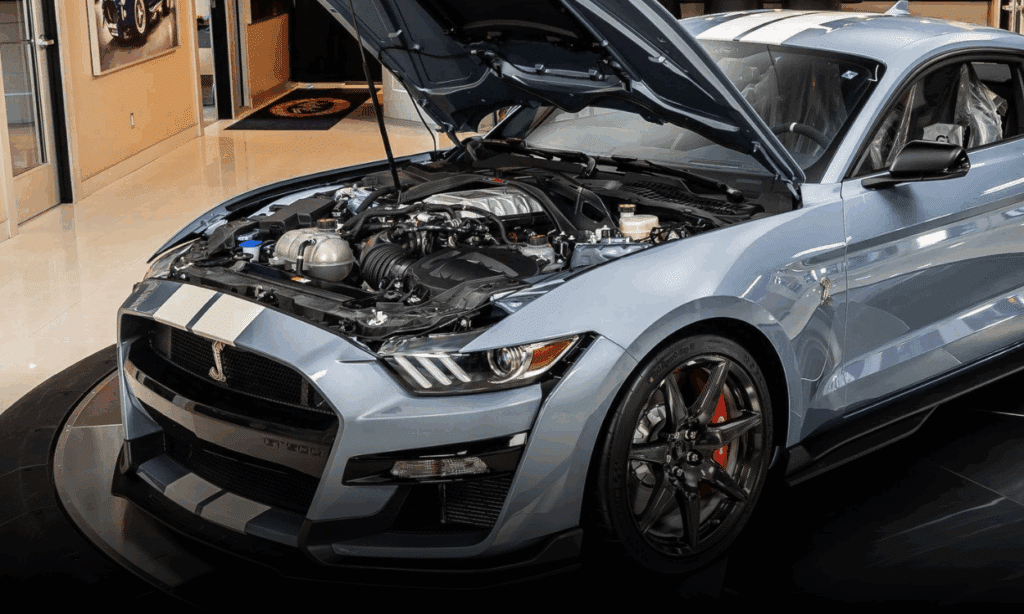
The heart of any Ferrari is its engine, and the Ferrari F40 has one of the best hearts in history. It is powered by a 2.9-liter twin-turbocharged V8 engine. While 2.9 liters might sound small compared to modern engines, the two turbochargers made a huge difference. They forced air into the engine, creating massive explosions of power. This setup allowed the car to produce 471 horsepower. In 1987, that was an unbelievable amount of power for a street car.
But it wasn’t just about the horsepower number; it was about how the power was delivered. When you stepped on the gas pedal, there was a moment of hesitation—known as “turbo lag”—and then suddenly, the turbos would kick in. The car would rocket forward with terrifying speed. Drivers described it as being shot out of a cannon. This wild, untamed nature is part of what makes the car so exciting to drive even today.
Technical Specifications Table
To help you understand just how impressive this machine is, here is a table of its key specs:
|
Feature |
Specification |
|---|---|
|
Engine Type |
2.9L Twin-Turbo V8 |
|
Horsepower |
478 hp @ 7,000 rpm |
|
Torque |
425 lb-ft @ 4,000 rpm |
|
0-60 mph |
4.1 seconds |
|
Top Speed |
201 mph (324 km/h) |
|
Transmission |
5-speed manual |
|
Weight |
Approx. 2,425 lbs (1,100 kg) |
|
Production Years |
1987 – 1992 |
Design and Aerodynamics: Form Follows Function
When you look at a Ferrari F40, you aren’t just looking at a pretty shape; you are looking at wind tunnel science. The body was designed by Pininfarina, a famous Italian design house. But unlike other cars that were designed to look elegant, this one was designed to cut through the air. The body panels were made from composite materials like Kevlar and carbon fiber. This was very high-tech for the 1980s and helped keep the car incredibly light.
The most iconic part of the design is the massive rear wing. It isn’t there just for show. When the car is driving at high speeds, the air pushes down on that wing, which pushes the tires into the road. This is called “downforce,” and it keeps the car stable. Without it, a car going 200 mph might feel like it is about to fly off the road. Every vent, scoop, and curve on the body has a specific job, usually related to cooling the engine or brakes.
The Interior Experience
A Race Car for the Road
Stepping inside the Ferrari F40 is a unique experience. As mentioned earlier, there are no luxuries. The chassis is visible inside the cabin, showing the green bonding glue used to hold the carbon fiber together. Ferrari didn’t bother to paint over it or hide it with trim. This rawness tells you immediately that this car means business. The seats are bright red bucket seats made to hold you tight when you go around corners fast.
There is no air conditioning (unless you ordered the US version which had a basic unit), no power steering, and no power brakes. This means the driver has to do all the work. Turning the steering wheel at low speeds requires muscle. Pressing the brake pedal requires real force. It is a physical experience. You don’t just sit in a Ferrari F40; you operate it. This connection between man and machine is something that modern cars with all their computers have lost.
The Driving Experience: What It Feels Like
Driving a Ferrari F40 is often described as scary but rewarding. Because there are no electronic safety nets like traction control or anti-lock brakes (ABS), if you make a mistake, the car won’t save you. You have to be a skilled driver to push this car to its limits. The clutch is heavy, and the gear shifter—a classic metal gated shifter—makes a satisfying “clink-clink” sound as you change gears.
The sound of the engine is another major part of the experience. At idle, it rumbles with a deep growl. As you accelerate, the turbochargers start to whine and whistle, and the exhaust note turns into a scream. It is loud inside the cabin because there is almost no sound insulation. You hear every pebble hitting the underside of the car and every mechanical noise the engine makes. For car enthusiasts, this is music. For someone used to a quiet luxury sedan, it might be overwhelming.
Breaking the 200 MPH Barrier
One of the biggest claims to fame for the Ferrari F40 is its top speed. It was the first production car ever to break the 200 mph barrier, reaching a top speed of 201 mph. In 1987, this was headline news around the world. Being able to go that fast put Ferrari back on top of the automotive world. It proved that they could build a street car that was faster than almost anything else on the planet.
Achieving 200 mph requires more than just power; it requires aerodynamics. The car’s shape allows it to slice through the air with minimal resistance. While very few owners ever drove their cars that fast, just knowing the car could do it was a huge selling point. It gave the owner bragging rights. Even today, 200 mph is a benchmark for supercars, and the F40 did it over 30 years ago.
The Legacy of Enzo Ferrari
We cannot talk about this car without talking about the man behind it. Enzo Ferrari was a difficult, passionate, and brilliant man. He dedicated his life to racing and building cars. By the late 80s, he knew his time was short. The Ferrari F40 was his goodbye gift to the world. He personally approved the project and oversaw its development. When the car was launched, he was frail but proud.
Because it was the last car he touched, it holds a special place in history. It marks the end of an era. After Enzo passed away in 1988, Ferrari changed. They became more corporate and modern. The F40 represents the old-school Ferrari spirit: passion over logic, speed over comfort, and racing over everything else. Collectors cherish this connection to “Il Commendatore” (The Commander), as Enzo was known.
Production and Rarity
Originally, Ferrari planned to build only around 400 units of the Ferrari F40. However, the demand was so high that they ended up building 1,311 cars by the time production ended in 1992. Even with over 1,300 cars made, it is still considered rare. When it was new, people were paying huge amounts over the sticker price just to get one. It was the “it” car of the decade.
The fact that they made more than planned didn’t hurt its value in the long run. Today, finding one for sale is a special event. Most are locked away in private collections or museums. Seeing one driving on the street is a rare treat that car spotters dream of. The chassis numbers and history of each car are carefully tracked by historians and enthusiasts to ensure they are authentic.
Why the Ferrari F40 is a Great Investment
If you had bought a Ferrari F40 when it was new, you would have paid around $400,000. That was a fortune back then. But if you held onto it, you would be very happy today. In recent auctions, these cars have sold for anywhere between $1.5 million to over $3 million, depending on their condition and history. It has proven to be a fantastic investment, outperforming gold and the stock market in many cases.
Why is it so valuable?
- Historical Significance: It’s the last Enzo-approved Ferrari.
- Analogue Feel: Modern drivers miss the mechanical feel of older cars.
- Iconic Design: It is the poster car for a generation.
- Performance: It is still fast by modern standards.
Maintenance and Ownership Costs
Owning a Ferrari F40 isn’t just about buying it; you have to maintain it, and that is not cheap. The fuel tanks, for example, are made of a special rubber material and need to be replaced every 10 years. This service alone can cost over $20,000. Tires are hard to find in the correct sizes. An oil change is not something you can do at your local quick-lube shop.
Specialist mechanics are required to work on these cars. They need to know the specific quirks of the engine and the electronics. Parts are becoming scarcer and more expensive. However, for the people who own them, these costs are worth it. They view themselves as custodians of history, preserving a piece of art for the future.
Comparing the F40 to its Rivals
When the Ferrari F40 came out, its main rival was the Porsche 959. The Porsche was the opposite of the Ferrari. It was full of computers, had all-wheel drive, and was very comfortable and easy to drive. The Ferrari was rear-wheel drive, scary, and basic. Car magazines at the time loved to compare them. They were the two kings of the road.
While the Porsche was technically more advanced, the Ferrari won on emotion. It was more exciting. It looked wilder. Another rival that came later was the McLaren F1, which eventually took the speed record. But the F40 had already established itself as the icon. Even compared to modern hypercars, the F40 offers a thrill that is hard to replicate because it is so dangerous and raw.
Evolution of Ferrari Supercars
The Ferrari F40 started a lineage of “halo” cars for Ferrari. These are the top-of-the-line models released every decade or so.
- 288 GTO: The predecessor, a beautiful but less aggressive car.
- F40: The raw racer.
- F50: Used a Formula 1 engine but was often criticized for being “too soft” compared to the F40.
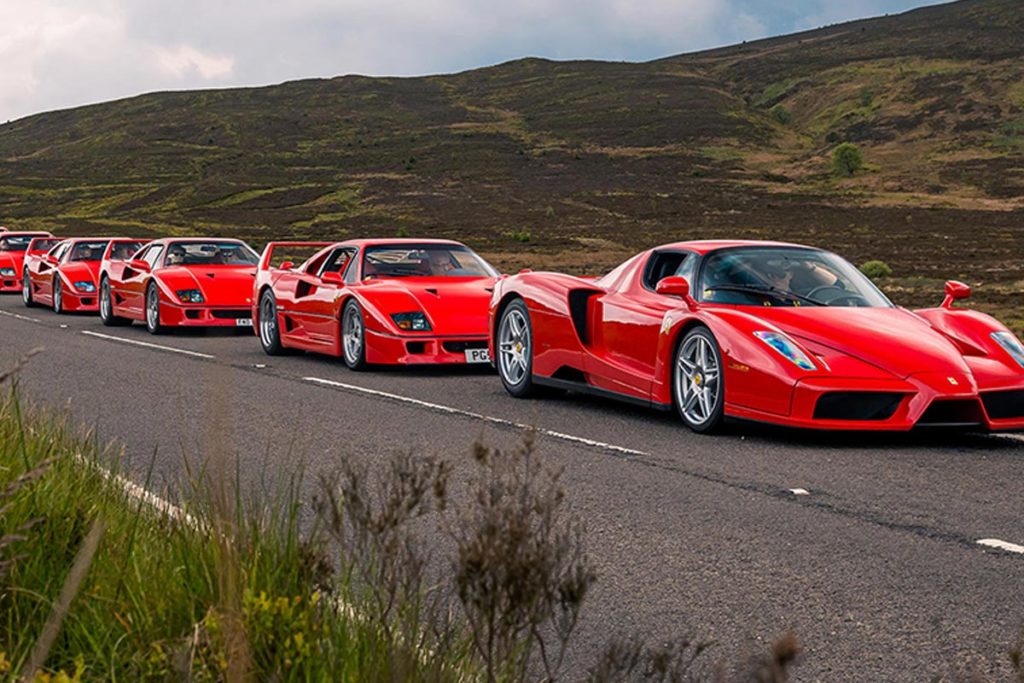
- Enzo: Named after the founder, a technological leap forward.
- LaFerrari: A hybrid hypercar with incredible speed.
Each of these cars is special, but the F40 remains the fan favorite. It strikes the perfect balance between looking cool and driving fast without being overly complicated.
Pop Culture and Fame
The Ferrari F40 is a celebrity in its own right. It has appeared in countless video games, from “Need for Speed” to “Gran Turismo.” For many kids growing up in the 90s, driving this car in a video game was their first introduction to Ferrari. It has also been featured in movies and music videos. Its shape is so recognizable that you don’t even need to see the badge to know what it is.
Posters of this car adorned the bedroom walls of millions of teenagers. It became the symbol of success. If you made it big, you bought an F40. This cultural impact is part of why the value stays so high. Those teenagers are now adults with money, and they want to buy the dream car from their childhood posters.
Common Modifications
Believe it or not, some people modify their Ferrari F40. The most common modification is changing the exhaust. Owners often install straight-pipe exhausts to make the car even louder and let the turbo noise sing. Some owners also upgrade the brakes to modern standards for safety, as the original brakes were good for the 80s but weak compared to today’s technology.
However, most collectors prefer the car to be 100% original. Modifying a car this valuable can actually hurt its resale value. The “Ferrari Classiche” certification is a program by Ferrari that certifies a car is authentic and original. Having this red book adds significant value, so most owners keep their modifications reversible.
Frequently Asked Questions (FAQ)
Here are some common questions people ask about this legendary car.
1. How many Ferrari F40s were made?
Ferrari produced a total of 1,311 units between 1987 and 1992.
2. How much is a Ferrari F40 worth today?
Prices vary, but they typically range from $1.5 million to $3 million depending on mileage and history.
3. Is the Ferrari F40 street legal?
Yes, it is a street-legal car, although it was designed with race car technology.
4. Does the F40 have air conditioning?
Most models did not, but it was an option. It was standard on US-spec cars due to regulations and market demand.
5. How fast is the F40?
It has a top speed of 201 mph and can go from 0 to 60 mph in roughly 4.1 seconds.
6. Why is the paint on F40s so thin?
To save weight, Ferrari painted the cars with a very thin layer of paint. On many cars, you can actually see the weave of the carbon fiber through the paint!
Conclusion
The Ferrari F40 is more than just a car; it is a legend. It represents a specific moment in time when engineers were allowed to go wild, and safety regulations hadn’t yet choked the fun out of driving. It is a machine built for pure adrenaline. From its screaming twin-turbo engine to its iconic rear wing, every inch of it is designed to thrill.
It stands as a tribute to Enzo Ferrari and his vision of the ultimate driving machine. Even decades later, it commands respect and awe wherever it goes. Whether you see one at a car show or just look at pictures online, the aggressive beauty of the Ferrari F40 is undeniable. For those lucky enough to drive one, it is a memory that lasts a lifetime. For more incredible stories about wealth, luxury, and success, check out Forbes Planet for more insights.
The automotive world will likely never see another car quite like this one. It was raw, dangerous, and beautiful—a perfect storm of engineering and passion. If you want to learn even more details about its production and history, you can visit the Wikipedia page about the Ferrari F40 to see more technical data.
Stay Informed With the Latest & Most Important News
Previous Post
Next Post










Advertisement