

Now Reading: The Ultimate Guide to the Double Barrel Shotgun: History, Types, and Uses
-
01
The Ultimate Guide to the Double Barrel Shotgun: History, Types, and Uses

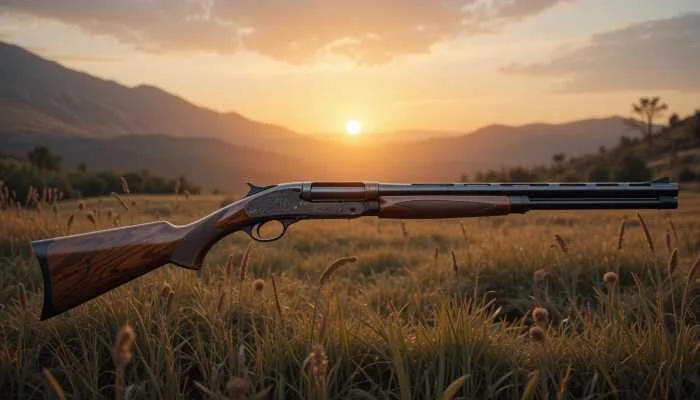
Key Takeaways
- Historical Significance: The double barrel shotgun is one of the oldest and most reliable firearm designs, dating back centuries.
- Two Main Configurations: They primarily come in Side-by-Side (SxS) and Over-and-Under (O/U) configurations.
- Versatility: These shotguns are excellent for hunting, clay shooting, and home defense due to their simplicity and reliability.
- Mechanism: Their break-action design makes them safer to handle and easier to check if loaded compared to pumps or semi-autos.
The world of firearms is vast and filled with technological marvels, but few designs command the same level of respect and nostalgia as the double barrel shotgun. Whether you picture a stagecoach guard in the Old West or an Olympian aiming at clay pigeons, this firearm is iconic. It represents a perfect blend of simplicity, reliability, and effectiveness that has stood the test of time. Unlike modern semi-automatics that rely on complex gas or recoil systems, the double barrel is mechanical elegance at its finest. It doesn’t jam easily, it handles a wide variety of ammunition, and it offers an immediate second shot without any manual pumping.
For many enthusiasts in the United States, owning a double barrel shotgun is a rite of passage. It connects the shooter to a lineage of hunters and sportsmen who valued precision and durability. In this guide, we are going to dive deep into everything you need to know about this legendary firearm. We will explore its history, the different types available, how it works, and why it remains a top choice for many gun owners today. Whether you are a seasoned hunter looking for your next field gun or a beginner curious about the mechanics, this article is designed to be your comprehensive resource. So, let’s break open the action and look inside.
What Exactly Is a Double Barrel Shotgun?
At its core, a double barrel shotgun is exactly what the name implies: a shotgun with two parallel barrels aligned horizontally or vertically. This design allows the user to fire two shots in quick succession without needing to manually chamber a new round between shots, like you would with a pump-action shotgun. The two barrels are usually mounted on a single frame or receiver. This configuration was a massive leap forward in firepower during the days of muzzleloaders and early cartridge firearms. The ability to have a second shot ready instantly could mean the difference between bagging a prize buck or going home empty-handed—or in more dangerous times, surviving a conflict.
The beauty of the double barrel shotgun lies in its break-action mechanism. To load the gun, you push a lever (usually the top lever), which unlocks the barrels and allows them to hinge downward. This exposes the breech, where you manually insert the shotgun shells. Once loaded, you snap the action closed, and the gun is ready to fire. This mechanism is incredibly safe because you can easily see if the gun is loaded just by “breaking” it open. Furthermore, because there are very few moving parts compared to a semi-automatic, there is very little that can go wrong mechanically. It is a tool built for reliability in the field, rain or shine.
The Mechanics of the Break-Action Design
The break-action design is the heart and soul of the double barrel shotgun. It is a system that has been refined over hundreds of years but remains largely unchanged in principle. When you push the top lever to the side, it retracts a locking bolt that holds the barrels to the receiver. The barrels then pivot on a hinge pin. This action does two things simultaneously: it exposes the chambers for loading or unloading, and in many modern guns, it also cocks the internal hammers so the gun is ready to fire once closed. Some older models or specific “hammer guns” require you to manually pull back external hammers, adding a layer of old-school cool to the process.
Another critical aspect of the break-action mechanic is the extraction and ejection system. When you open a double barrel shotgun after firing, you will notice one of two things happening. In simpler or older models, “extractors” will lift the spent shells slightly out of the chambers so you can pull them out by hand. In more modern or higher-end models, “ejectors” are used. These spring-loaded mechanisms sense which barrel has been fired and will forcefully kick the empty shell out over your shoulder when you open the gun, leaving the unfired shell (if there is one) raised for easy removal. This makes reloading significantly faster, which is crucial during a bird hunt or a competitive shooting round.
The History and Evolution of the Double Barrel
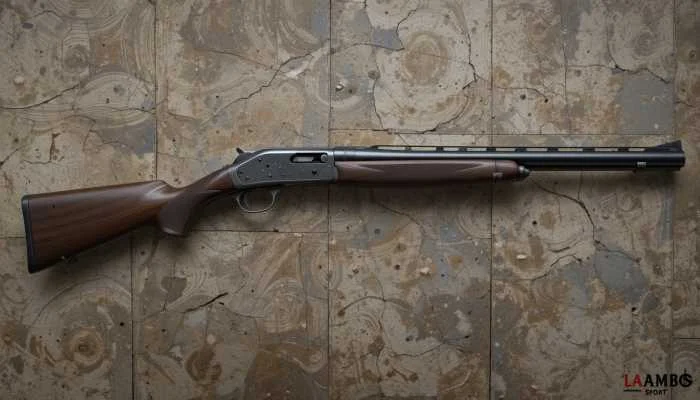
The history of the double barrel shotgun is a fascinating journey that mirrors the evolution of firearms technology itself. Long before self-contained cartridges were invented, muskets and fowling pieces were muzzleloaders. The desire for a second shot led gunsmiths to simply weld two barrels together. Early versions were flintlocks, followed by percussion cap systems. These early double barrels were heavy and cumbersome, but they offered a distinct advantage: a follow-up shot. This was revolutionized in the mid-19th century with the invention of the breech-loading system and the self-contained shotgun shell. Suddenly, reloading wasn’t a minute-long process of pouring powder and shot; it took mere seconds.
During the late 1800s, often called the Golden Age of shotgun making, the double barrel shotgun was perfected. British gunmakers like Purdey and Holland & Holland set the standard for quality, creating works of art that are still coveted today. In America, companies like Parker Brothers, L.C. Smith, and Winchester began mass-producing high-quality double barrels that were accessible to the average farmer and hunter. These guns helped settle the West and put food on the table for millions of families. The design proved so effective that even with the advent of pump-action and semi-automatic shotguns in the early 20th century, the double barrel never went obsolete. It simply moved into a more specialized role for sporting and refined hunting.
Famous Historical Models
When discussing the history of the double barrel shotgun, certain models stand out as legends. The Parker Invincible, for instance, is often cited as one of the finest American shotguns ever made. Known as “Old Reliable,” Parker shotguns were famous for their durability and exquisite engraving. Another icon is the Winchester Model 21. Introduced in the 1930s, it was an American side-by-side built to rival the best European guns. It was incredibly strong and became a favorite of famous writers and sportsmen like Ernest Hemingway. These guns weren’t just tools; they were status symbols and heirlooms passed down through generations.
In the realm of the Over-and-Under, the Browning Superposed deserves a special mention. Designed by the legendary John Browning, it was the first commercially successful O/U shotgun. Before the Superposed, over-and-under guns were expensive novelties. Browning brought this configuration to the masses, and it changed the sporting world forever. The Superposed proved that a double barrel shotgun with stacked barrels offered a single sighting plane, which many shooters found more natural for aiming. This innovation paved the way for the dominance of O/U shotguns in modern clay shooting sports like Trap and Skeet.
Side-by-Side (SxS) Configuration Explained
The Side-by-Side (SxS) is the classic configuration where the two barrels sit next to each other horizontally. When most people think of a traditional “stagecoach” gun or a classic bird hunting firearm, this is the image that comes to mind. The sight picture on a side-by-side is wide, which some shooters find excellent for tracking fast-moving game birds against the sky. There is a distinct aesthetic appeal to the SxS; it looks traditional, elegant, and timeless. Many upland bird hunters swear by them, claiming that the wide plane of the barrels helps them level the gun on the horizon more effectively.
However, shooting a side-by-side double barrel shotgun does require getting used to. Because the barrels are offset to the left and right of the center, the recoil can sometimes feel like it is pushing the gun sideways slightly, though this is minimal. More importantly, the barrels are regulated (angled) to hit the same point at a specific distance, usually around 40 yards. If you shoot at a target very close or very far, the point of impact might be slightly left or right of where you aim, depending on which barrel you use. Despite these quirks, the SxS remains a beloved choice for traditionalists who value the heritage and style of the sport.
Over-and-Under (O/U) Configuration Explained
The Over-and-Under (O/U) configuration stacks the barrels vertically, one on top of the other. This design has become the dominant style for competitive shooting and many modern hunting applications. The primary advantage of the O/U double barrel shotgun is the “single sighting plane.” When you look down the barrel, you are looking over a narrow rib, similar to a pump or semi-auto. This makes it very intuitive for shooters to point and aim, as there is less visual obstruction compared to the wide profile of a side-by-side. This precision is why almost all Olympic shotgun events are won with O/U shotguns.
Another benefit of the Over-and-Under design is recoil management. Because the bottom barrel is positioned lower in the receiver, closer to the shooter’s shoulder line, firing the first shot from the bottom barrel results in less muzzle rise. This allows the shooter to recover faster and take a more accurate second shot. This is a significant advantage in sports like sporting clays or when hunting flushing birds where a quick follow-up is necessary. While they may lack the “cowboy” nostalgia of the SxS, the O/U is widely considered the superior performance tool for modern shooting sports.
Comparing Double Barrels to Pump and Semi-Auto
|
Feature |
Double Barrel Shotgun |
Pump-Action Shotgun |
Semi-Automatic Shotgun |
|---|---|---|---|
|
Capacity |
2 Rounds |
4-8 Rounds |
3-8 Rounds |
|
Reliability |
Extremely High |
High (User dependent) |
Moderate to High |
|
Safety |
Very Safe (Break open) |
Manual Safety |
Manual Safety |
|
Maintenance |
Low |
Low to Moderate |
High (Gas systems get dirty) |
|
Follow-up Shot |
Instant |
Requires pumping |
Instant |
|
Ammunition |
Handles almost anything |
Handles most loads |
Can be picky with light loads |
|
Cost |
Wide range (Cheap to very expensive) |
Generally affordable |
Moderate to expensive |
When comparing a double barrel shotgun to pump-actions or semi-autos, the most obvious difference is capacity. With a double barrel, you have two shots, and that’s it. A pump or semi-auto can hold anywhere from 3 to 8 shells or more. For tactical situations or high-volume bird shooting (like duck hunting), the extra capacity is a clear winner. However, for upland hunting (pheasant, quail) and clay sports, two shots are rarely a disadvantage because the game usually moves out of range after two shots anyway.
Where the double barrel shotgun truly shines is in balance and reliability. Because the action is shorter (there is no bolt moving back and forth inside a long receiver), double barrel guns are often shorter and more compact than pumps or semi-autos with the same barrel length. This makes them swing faster and feel more lively in the hands. Additionally, they are not fussy about ammunition. A semi-auto might fail to cycle if you use a light target load because there isn’t enough gas pressure. A double barrel doesn’t care; if the shell fits in the chamber, it will fire. This mechanical reliability is a huge comfort to many shooters.
Why Choose a Double Barrel for Home Defense?
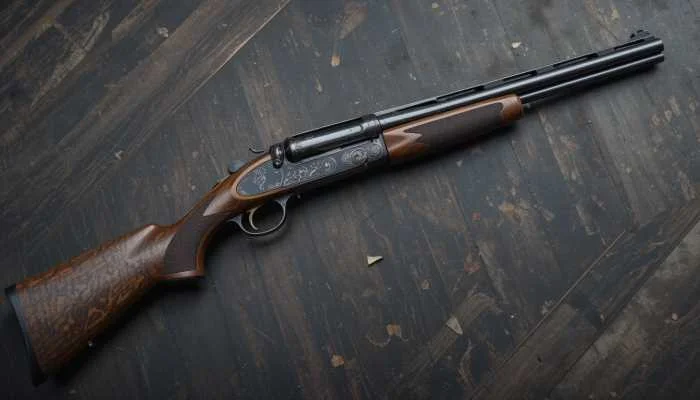
While it might seem outdated compared to a tactical shotgun with a 7-round magazine, a double barrel shotgun is a formidable choice for home defense, especially for novice shooters. The primary argument for it is simplicity. In a high-stress situation, fine motor skills degrade. Remembering to disengage a safety, pump a slide, or clear a jam can be difficult. With a double barrel, the operation is incredibly simple: break it open, drop in shells, close it, and pull the trigger. There is essentially zero chance of a mechanical jam that would render the gun useless.
Furthermore, the intimidating factor of a double barrel shotgun is undeniable, but there is also a safety aspect for the home. Since the gun can be stored broken open, you can instantly verify its condition. It is easy to secure but quick to deploy. While the limitation to two shots is a valid concern, many defense experts argue that in a typical home defense scenario, the conflict is often resolved quickly. For those who live in states with strict restrictions on magazine capacity or “assault weapon” bans, the double barrel remains universally legal and effective. It delivers massive stopping power without the complexity of modern tactical firearms.
The “Coach Gun” Variant
A specific type of double barrel shotgun often discussed in the context of home defense is the “Coach Gun.” These are side-by-side shotguns with shorter barrels, typically around 18 to 20 inches. The name comes from their historical use by stagecoach guards who needed a compact, maneuverable weapon to fend off bandits. Today, Coach Guns are popular in Cowboy Action Shooting competitions, but they also serve as excellent home defense weapons. Their short length makes them easy to maneuver around corners and in tight hallways where a long hunting shotgun would be clumsy.
Despite their utility, Coach Guns do have a kick. The shorter barrels and often lighter weight mean that the recoil is not dampened as much as it is in a long, heavy sporting gun. If you choose a Coach Gun for defense, practice is essential. You need to be comfortable with the recoil impulse and proficient at reloading quickly. Many modern Coach Guns come with external hammers for that authentic Old West look, but for defense, “hammerless” (internal hammer) models are generally faster to operate and less likely to snag on clothing or bedding.
Double Barrels in Clay Pigeon Shooting
If you visit a trap or skeet range, you will see a sea of double barrel shotgun models, specifically Over-and-Unders. In the world of competitive clay shooting, the O/U is the king. The reasons are partly mechanical and partly ergonomic. Competitive shooters fire thousands of rounds. They need a gun that is heavy enough to absorb recoil (saving their shoulder) but balanced enough to swing smoothly. High-end competition O/Us are engineered with precise balance points to facilitate this smooth movement.
Another advantage in sports like Sporting Clays, where targets are presented at different distances and angles, is the ability to use two different “chokes.” A double barrel shotgun has two barrels, and you can screw a different choke tube into each one. For example, you might have a wide “Improved Cylinder” choke in the first barrel for a close target and a tighter “Modified” choke in the second barrel for a distant target. A single-barrel pump or semi-auto forces you to use one choke for all shots. This flexibility gives the double barrel shooter a significant tactical advantage on the clay course.
Understanding Chokes in Double Barrels
We just mentioned chokes, but what are they? A choke is a constriction at the muzzle end of the shotgun barrel that controls the spread of the shot. Think of it like the nozzle on a garden hose. If you tighten the nozzle, the water stream is narrow and goes far. If you loosen it, the spray is wide and covers a large area close up. In a double barrel shotgun, having two barrels means you can have two different “nozzles” set up at the same time. This is one of the platform’s greatest strengths.
Common choke constrictions include Cylinder (no constriction), Improved Cylinder (slight), Modified (moderate), and Full (tight). In a hunting scenario, a pheasant might flush right at your feet. You take the first shot with the open choke barrel so you don’t destroy the meat. If you miss, or if a second bird flushes further out, you take the second shot with the tighter choke barrel to ensure you have enough pellet density to take the bird down cleanly at range. Most modern double barrels have screw-in chokes, allowing you to change them to suit the situation, making the gun incredibly versatile.
Buying Guide: What to Look For
Buying a double barrel shotgun can be tricky because the price range is enormous. You can find a used budget model for $400 or a bespoke British gun for $100,000. For the average buyer, look for a solid lock-up. When the gun is closed (without ammo), shake it gently. There should be no rattle or movement between the barrels and the receiver. The lever should sit slightly to the right of center; if it’s dead center or to the left, the gun might be worn out.
Check the barrels for rust or pitting, especially on the inside. Since many older double barrels were used with corrosive primers, internal damage is common. Also, check for “barrel regulation.” This is hard to do in a shop, but ask if the gun shoots straight. Finally, fit is everything. A shotgun must fit the shooter. When you mount the gun to your shoulder, your eye should naturally align with the rib or sight. If you have to scrunch your neck or move your head around to see the bead, the gun doesn’t fit you, and you won’t shoot it well.
New vs. Used Market
The used market is a treasure trove for double barrel shotgun enthusiasts. Many older guns from brands like Browning, Winchester, or SKB offer incredible value. These guns were built in an era where hand-fitting was more common, and you can often get a higher quality firearm for the price of a new budget gun. However, verify that older guns can handle modern steel shot if you plan to hunt waterfowl. Many older barrels are made of softer steel designed for lead shot only, and steel shot can damage them.
On the new market, modern manufacturing has made entry-level double barrels surprisingly good. Turkish manufacturers, in particular, are producing reliable and attractive SxS and O/U shotguns at very competitive prices. Brands like CZ-USA and Stoeger import these guns, offering warranties and support that give buyers peace of mind. Whether you go vintage or brand new, ensure you research the specific model’s reputation for durability, as a poorly made double barrel can suffer from regulation issues (barrels not shooting to the same point).
Maintenance and Care for Longevity
A well-made double barrel shotgun can last several lifetimes if properly cared for. The maintenance routine is relatively simple. After shooting, always clean the barrels. A bore snake or cleaning rod with a patch is usually sufficient to remove powder residue and plastic fouling from the wads. The most critical area to maintain is the hinge pin and the metal surfaces where the barrels pivot on the receiver. These are high-friction areas.
Apply a high-quality grease (not just oil) to the hinge pin and the knuckles of the receiver before every shooting session. This prevents galling and keeps the action opening and closing smoothly. If you neglect this, the gun will eventually become loose and “off the face,” meaning the barrels no longer seal tightly against the breech, which is a dangerous and expensive problem to fix. Also, wipe down the exterior metal with an oiled cloth to prevent rust, as blued steel is susceptible to moisture.
The Aesthetic Appeal and Craftsmanship
One cannot discuss the double barrel shotgun without mentioning its beauty. Unlike the utilitarian black plastic of modern tactical rifles, double barrels are often canvases for art. The receiver offers a flat surface perfect for engraving. From simple scrollwork to elaborate scenes of hunting dogs and game birds inlaid with gold, the level of artistry found on high-end shotguns is breathtaking. The stocks are typically made from walnut, with higher grades featuring rich, complex grain patterns that shimmer in the light.
This appreciation for craftsmanship is a huge part of the ownership experience. Taking a beautiful double barrel shotgun into the field feels different. It feels like honoring a tradition. Even on budget guns, you will often find checkering on the wood grip and fore-end, which serves a practical purpose for grip but also adds to the visual appeal. For many, the gun is not just a tool for shooting; it is a piece of functional art that brings joy just by being handled and admired.
Common Myths and Misconceptions
There are several myths surrounding the double barrel shotgun. One common one is that they are “not accurate.” This is false. A quality double barrel is incredibly accurate; however, it is designed for moving targets, not stationary bulls-eyes like a rifle. Another myth is that they kick like a mule. While a lightweight, fixed-breech gun does transfer recoil directly to the shooter, proper gun fit and shooting stance can mitigate this significantly. An ill-fitting gun of any type will hurt to shoot.
Another misconception is that they are “slow.” While you only have two shots, a skilled shooter can reload a double barrel with ejectors incredibly fast. In fact, in sustained fire over a long period, a break-action can sometimes be faster than a tube-fed pump gun because loading two shells into wide-open chambers is often less fumbling-prone than pushing shells one by one into a magazine tube. Don’t underestimate the effectiveness of a practiced hand with a classic double.
Legal Considerations in the US
In the United States, the double barrel shotgun is generally one of the least restricted firearms. It does not fall under “assault weapon” bans that target magazine capacity or pistol grips. However, barrel length is a critical legal factor. Under federal law (the National Firearms Act), a shotgun barrel must be at least 18 inches long, and the overall length of the weapon must be at least 26 inches.
If you modify a double barrel shotgun by sawing off the barrels to be shorter than 18 inches, you are creating a “Short Barreled Shotgun” (SBS), which requires a special tax stamp and registration with the ATF. Possession of an unregistered sawed-off shotgun is a serious federal felony. Always ensure your barrels meet the legal length requirements. Aside from length, these firearms are widely legal to own and hunt with across all 50 states, making them a hassle-free option for travelers and hunters.
Conclusion
The double barrel shotgun is far more than just a relic of the past; it is a refined, reliable, and versatile tool that continues to hold its own in the modern world. From the rugged simplicity of a coach gun protecting a home to the sophisticated engineering of an Olympic trap gun, this design covers a spectrum of needs that few other firearms can match. Its ability to offer two instant shots with different chokes, its safety, and its mechanical reliability make it a top-tier choice for hunters and shooters alike.
Whether you are drawn to the nostalgic charm of a Side-by-Side or the competitive edge of an Over-and-Under, investing in a double barrel is an investment in quality shooting. It forces you to make your shots count and connects you to the rich history of marksmanship. If you are looking for more insights into lifestyle, hobbies, and smart investments like high-quality sporting gear, check out resources like https://forbesplanet.co.uk/ for more great reads. Ultimately, the double barrel shotgun proves that sometimes, the old ways really are the best ways.
FAQ
Q: Is a double barrel shotgun good for a beginner?
A: Yes, absolutely. They are very safe because it is easy to see if they are loaded, and their operation is simple. However, be mindful of recoil with lighter models.
Q: Can I shoot slugs through a double barrel shotgun?
A: Generally, yes, but you should not use slugs in barrels with very tight chokes (like “Full” chokes). It is best to use “Cylinder” or “Improved Cylinder” chokes for slugs to avoid damaging the barrel.
Q: Which is better: Side-by-Side or Over-and-Under?
A: It is a matter of preference. O/U is generally preferred for target shooting due to the single sighting plane. SxS is often preferred by traditional bird hunters for the wide sighting plane.
Q: Do all double barrel shotguns have two triggers?
A: No. Traditional models often have double triggers (one for each barrel), but most modern sporting O/U and some SxS shotguns feature a single selective trigger that fires one barrel and then resets to fire the second.
Q: Why are some double barrel shotguns so expensive?
A: The cost comes from the complex manufacturing process of regulating the barrels (making them hit the same spot) and the high level of hand-finishing, engraving, and quality wood used in premium models.
Related Posts



Stay Informed With the Latest & Most Important News
Previous Post
Next Post










Advertisement