
Now Reading: Define Curbside: The Ultimate Guide to Modern Convenience
-
01
Define Curbside: The Ultimate Guide to Modern Convenience

Have you ever ordered something online and picked it up without leaving your car? Or maybe you’ve dropped off a package at a designated spot right outside a store. If so, you’ve experienced the convenience of “curbside” services. This concept has rapidly changed how we shop, eat, and interact with businesses. But what does it really mean when we define curbside? It’s more than just a buzzword; it’s a fundamental shift in retail and customer service that blends the speed of e-commerce with the immediacy of a physical location.
This guide will walk you through everything you need to know about the world of curbside services. We’ll explore its history, how it works for different industries, and what the future holds for this incredibly popular model. Whether you’re a shopper who loves the convenience or a business owner looking to adapt, understanding the ins and outs of curbside is essential.
Key Takeaways
- Defining Curbside: Curbside service allows customers to pick up pre-ordered items at the edge of a store’s property, often without leaving their vehicle. It combines online ordering with physical pickup.
- The Evolution: While it feels new, the concept has roots in drive-in and drive-thru models from the mid-20th century. The rise of smartphones and e-commerce supercharged its modern adoption.
- Benefits for Everyone: Customers gain convenience, safety, and time. Businesses see increased sales, better inventory management, and improved customer satisfaction.
- Industry-Wide Impact: Curbside has been adopted by a wide range of sectors, including restaurants, grocery stores, retail, libraries, and even healthcare for prescription pickups.
- The Future is Hybrid: The curbside model is evolving with technology, incorporating AI, drones, and automated lockers to create an even more seamless customer experience.
What Does It Mean to Define Curbside Service?
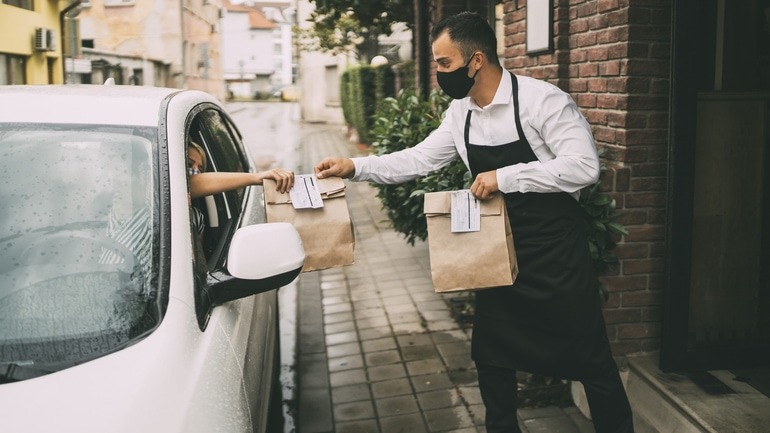
At its core, to define curbside is to describe a service model where customers place an order in advance—usually online or through an app—and then pick it up at a designated spot outside the physical store. This spot is typically along the curb, in a dedicated parking space, or at a specific outdoor pickup point. The key feature is that the customer doesn’t need to enter the store. An employee brings the order out to them, often placing it directly into their car’s trunk. This process minimizes contact and saves a significant amount of time for the shopper.
Think of it as the perfect hybrid between online shopping and traditional brick-and-mortar retail. You get the ease of browsing and paying from your couch, combined with the instant gratification of getting your items the same day without waiting for shipping. This model is also known by other names like “click-and-collect,” “buy online, pick up in-store” (BOPIS), or “drive-up,” but the fundamental principle remains the same: bringing the store to you, right at the curb.
Curbside vs. Drive-Thru: What’s the Difference?
Many people use the terms “curbside” and “drive-thru” interchangeably, but they are distinct service models. Understanding the difference helps to fully define curbside and its unique advantages. A drive-thru involves a dedicated lane where customers proceed in a line, place their order, pay, and receive their items through a window, all without turning off their engine. This is the classic model for fast-food restaurants.
Curbside pickup, on the other hand, is built around pre-ordering. Customers don’t order on-site. Instead, they arrive after their order has been prepared and “check in” via an app or a phone call. They then wait in a designated parking spot for an employee to bring their items out.
Here’s a simple breakdown:
|
Feature |
Drive-Thru |
Curbside Pickup |
|---|---|---|
|
Ordering |
On-site at a speaker box |
In advance (online, app, phone) |
|
Customer Action |
Follows a specific, one-way lane |
Parks in a designated spot |
|
Wait Time |
Variable, depends on the line |
Minimal, as the order is already ready |
|
Typical Use |
Fast food, coffee, banking |
Retail, groceries, full-service restaurants |
While both offer convenience, curbside pickup is often more efficient for larger or more complex orders, as the items are gathered and packed before the customer even arrives.
The History and Evolution of Curbside Pickup
The idea of bringing services to a customer’s car is not new. To properly define curbside today, it’s helpful to look back at its origins. The concept can be traced back to the 1920s and 30s with the rise of “drive-in” restaurants. These establishments featured “carhops”—waitstaff, often on roller skates—who would take orders and deliver food directly to customers in their parked cars. This was a novelty that catered to America’s growing car culture. The first true drive-thru window is credited to a bank in 1930, but it was Red’s Giant Hamburg on Route 66 that opened the first drive-thru restaurant in 1947, further cementing the car as a point of service.
The modern curbside model, however, is a product of the digital age. In the early 2000s, some grocers and large retailers began experimenting with “click-and-collect” services. This was an early attempt to merge their online presence with their physical footprint. However, the technology was clunky, and customer adoption was slow. The real turning point came with the widespread adoption of smartphones. Mobile apps made it incredibly easy to place an order, pay, and notify the store of your arrival with a single tap. Retailers like Target and Walmart became early pioneers, investing heavily in the infrastructure needed to make drive-up services seamless and efficient.
The Pandemic’s Role in Accelerating Adoption
The COVID-19 pandemic was the ultimate catalyst for curbside pickup. Almost overnight, what was once a convenient option became an essential service. Health and safety concerns made shoppers wary of entering crowded stores. Curbside provided a contactless solution that allowed businesses to continue operating and customers to get the goods they needed safely. During this period, retailers who had already invested in curbside infrastructure saw a massive surge in demand, while others scrambled to implement it. This intense period of adoption solidified curbside as a permanent fixture in the retail landscape, proving its value beyond just convenience. Now, customers don’t just want it—they expect it.
How Does Curbside Pickup Work? A Step-by-Step Guide
For the customer, the curbside process is designed to be simple and friction-free. While the exact steps can vary slightly between retailers, the general flow is consistent. Understanding this process is central to how we define curbside as a user-centric experience.
- Place Your Order: The journey begins online. The customer browses a retailer’s website or mobile app, adds items to their cart, and proceeds to checkout. At this stage, they select “Curbside Pickup” or a similar option as their delivery method. They also choose the specific store location for their pickup.
- Receive a Confirmation: After payment, the customer receives an order confirmation via email or text message. This message confirms the order details and provides an estimated pickup time. It lets them know that the store’s employees are now “picking” the items from the shelves.
- Get the “Ready for Pickup” Notification: Once the order is assembled and ready, the store sends a second notification. This is the green light for the customer to head to the store. This alert often includes specific instructions, such as where to park and how to check in upon arrival.
- Check-In at the Store: Upon arriving, the customer parks in one of the specially marked curbside pickup spots. They then “check in” to let the store know they’ve arrived. This is typically done through the mobile app, which may use geofencing to automatically detect their arrival. Alternatively, they might call a number posted on a sign or reply to a text message with their parking spot number.
- Receive Your Order: A store employee receives the check-in notification, grabs the customer’s completed order, and brings it out to their car. For a truly contactless experience, the employee will often ask the customer to open their trunk, placing the bags inside without any direct interaction. The process is complete, and the customer can drive away with their purchase.
The Benefits of Curbside Services
The widespread popularity of curbside pickup is no accident. It offers compelling advantages for both shoppers and businesses. When we define curbside, we are also defining a new standard of efficiency and customer satisfaction in the modern economy.
For Customers: Convenience, Safety, and Speed
The primary draw for customers is undeniable convenience. Imagine completing your entire weekly grocery run without ever stepping out of your car.
- Time-Saving: Customers skip the hassle of navigating crowded aisles, searching for items, and waiting in long checkout lines. For busy parents, professionals, or anyone with a packed schedule, this saved time is invaluable.
- Safety and Comfort: The contactless nature of curbside pickup became a massive benefit during the pandemic, but its appeal continues. It reduces exposure to germs and is a comfortable option during bad weather or for individuals with mobility challenges.
- No Shipping Costs or Delays: Curbside offers the instant gratification that online shopping often lacks. Customers can get their items the same day without paying for expedited shipping or waiting for a delivery service.
For Businesses: Driving Growth and Efficiency
For retailers, implementing a robust curbside program is a strategic move that pays dividends. It’s not just about meeting customer expectations; it’s about building a more resilient and profitable business model.
- Increased Sales and Larger Basket Sizes: Curbside services attract new customers who prioritize convenience. Furthermore, studies have shown that “click-and-collect” shoppers often spend more than in-store-only customers. They are also less likely to abandon their carts, as the purchase feels more immediate.
- Improved Inventory Management: By integrating online orders with physical store inventory, retailers can fulfill orders from the location closest to the customer. This “ship-from-store” model is more efficient than relying on a few large distribution centers and helps move products off shelves faster.
- Enhanced Customer Loyalty: A smooth, reliable curbside experience can be a powerful differentiator. When a customer knows they can count on a quick and easy pickup, they are more likely to become a repeat shopper. This builds brand loyalty in a competitive market. For more insights into modern business strategies, publications like Forbes Planet often cover emerging trends.
Industries Transformed by Curbside Pickup
The curbside model is incredibly versatile and has been successfully adapted by a wide range of industries beyond just big-box retail. The ability to define curbside in different contexts shows its flexibility.
Retail and Grocery
This is the sector where curbside has made its biggest splash. Supermarkets like Kroger and Albertsons, along with retail giants like Target and Walmart, have perfected the curbside grocery model. Customers can order everything from fresh produce to pantry staples and have it loaded into their trunk. Similarly, stores like Best Buy and The Home Depot use curbside for electronics and home improvement goods, allowing customers to pick up bulky items with ease.
The Rise of BOPIS (Buy Online, Pick Up in Store)
A close cousin to curbside is BOPIS. While it often involves the customer entering the store to retrieve their order from a designated desk or locker, many retailers have extended this service to the curb. This strategy allows them to leverage their entire network of physical stores as mini-fulfillment centers, competing directly with online-only giants like Amazon.
Restaurants and Food Service
The restaurant industry was quick to embrace curbside, especially during the pandemic. While fast-food chains had their drive-thrus, full-service restaurants needed a way to offer takeout without disrupting their dining rooms. Curbside was the perfect solution. Customers could enjoy their favorite restaurant meals at home by placing an order online or by phone and having it brought out to their car. This created a vital new revenue stream and has remained a popular option for diners seeking convenience.
Other Surprising Adopters
The flexibility of the curbside model has led to its adoption in some unexpected places.
- Libraries: Many public libraries now offer curbside pickup for reserved books, audiobooks, and movies. Patrons can place holds online and schedule a time to pick up their materials without leaving their vehicle.
- Pharmacies: Major pharmacies like CVS and Walgreens have implemented curbside services for prescription refills and over-the-counter medications. This is particularly beneficial for customers who are sick or have mobility issues.
- Small Businesses: Local boutiques, bookstores, and specialty shops have also adopted curbside pickup. It allows them to compete with larger retailers by offering a safe and convenient way for their community to shop local.
The Future of Curbside: Technology and Innovation
The curbside model is far from static. As technology advances, the experience is becoming even more streamlined and integrated. The future of how we define curbside will likely be shaped by automation, data, and a focus on hyper-efficiency.
Automation and Robotics
To speed up the process, some retailers are experimenting with automated systems. This includes using robots within the store to pick and pack orders, reducing the manual labor required from employees. We may also see the rise of automated curbside lockers or cubbies. In this scenario, a customer would pull up, scan a QR code on their phone, and a door would automatically open with their order inside, requiring no employee interaction at all.
The Role of AI and Data Analytics
Artificial intelligence (AI) is already playing a role behind the scenes. AI algorithms can help predict demand, optimize staffing levels for peak pickup times, and even estimate a customer’s arrival time based on traffic data. This allows stores to have orders ready the moment a customer pulls in, minimizing wait times. In the future, AI could be used to offer personalized suggestions or promotions to customers when they place a curbside order, further enhancing the experience.
Drone and Autonomous Vehicle Delivery
Looking further ahead, the “curb” itself might become mobile. Companies are actively testing drone and autonomous vehicle delivery. Imagine placing an order and having a small, self-driving robot or a drone deliver it right to your doorstep or meet you at a designated public pickup point. This would represent the ultimate evolution of curbside, untethering the pickup process from the physical store entirely and bringing a new level of convenience to consumers.
Frequently Asked Questions (FAQ)
1. Is curbside pickup free?
In most cases, yes. Retailers offer curbside pickup as a free service to encourage sales and provide a convenient option for customers. You simply pay for the items you purchase.
2. Do I need to tip for curbside pickup?
Tipping policies vary by retailer. For grocery and retail stores, employees are often not permitted to accept tips. However, for restaurant curbside pickup, it is common and appreciated to tip the staff member who brings out your food, similar to how you would tip for takeout. When in doubt, you can ask the employee about their store’s policy.
3. What if an item in my curbside order is out of stock?
Most retailers have a system for handling substitutions. During the online ordering process, you can often choose whether you want to allow substitutions for out-of-stock items. If you agree, the store employee will select a similar item for you. If you don’t allow substitutions, the item will be removed from your order, and you won’t be charged for it.
4. How long do I have to pick up my curbside order?
Once you receive the “ready for pickup” notification, most stores will hold your order for a specific period, typically ranging from 24 hours to a few days. The confirmation email or app notification will usually state the pickup window. If you don’t pick up your order within that time, it may be canceled and your money refunded.
5. Can someone else pick up my curbside order?
Yes, most retailers allow you to designate an alternate person to pick up your order. You can typically enter their name and contact information during the checkout process. They will need to provide the order confirmation details and may be asked for ID upon arrival.
Conclusion
The concept of “curbside” has evolved from a simple convenience into a cornerstone of modern commerce. To define curbside is to recognize a powerful fusion of digital technology and physical infrastructure that puts the customer’s time and safety first. It has reshaped consumer expectations and forced businesses across all sectors to innovate and adapt. From its humble beginnings as a drive-in novelty to its current high-tech form, curbside service has proven its staying power.
As technology continues to advance, the curbside experience will only become faster, smarter, and more integrated into our daily lives. Whether through AI-powered logistics, automated pickup points, or drone delivery, the core principle will remain the same: bringing goods and services to people where they are, with as little friction as possible. For both consumers and businesses, the convenience of the curb is here to stay.
Stay Informed With the Latest & Most Important News
Previous Post
Next Post










Advertisement