

Now Reading: Alan Dershowitz: A Life in Law and Controversy
-
01
Alan Dershowitz: A Life in Law and Controversy

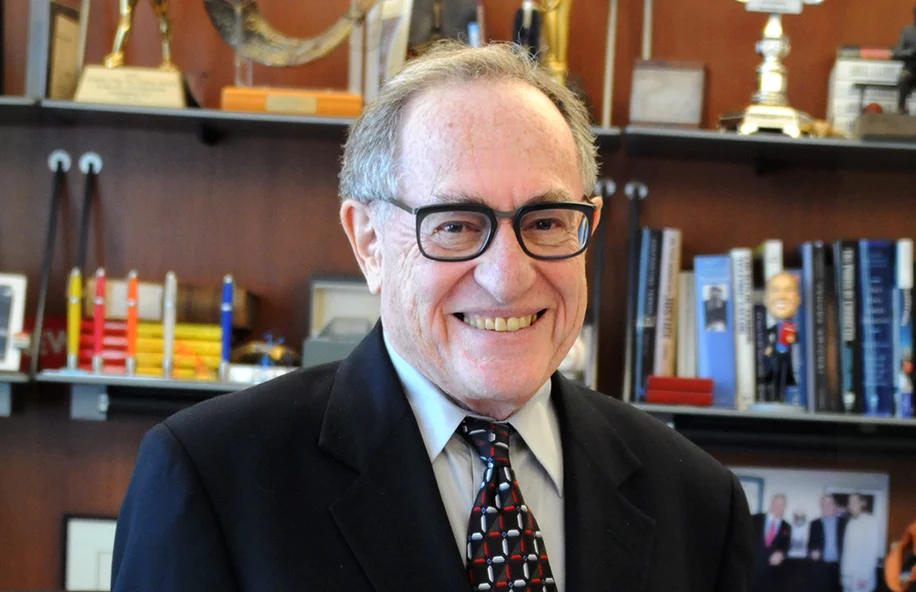
Alan Dershowitz is a name that often sparks debate. For over half a century, he has been a prominent figure in the American legal system, a celebrated academic, and a vocal commentator on civil liberties and political issues. Known for his brilliant legal mind and his willingness to take on controversial cases, Dershowitz has built a career that is as complex as it is influential. From the halls of Harvard Law School to the nation’s most-watched courtrooms, his journey has been marked by high-profile clients, landmark arguments, and a consistent presence in the public eye. This article will explore the life, career, and enduring impact of Alan Dershowitz, a man who has undeniably shaped modern legal discourse.
Key Takeaways
- Early Life and Academic Brilliance: Alan Dershowitz’s journey began in Brooklyn, where his early intellectual promise led him to Yale Law School and a distinguished career at Harvard Law School, becoming its youngest full professor at age 28.
- Champion of Civil Liberties: A core aspect of his career has been a staunch defense of civil liberties and the Bill of Rights, often advocating for unpopular clients to uphold the principle that everyone deserves a defense.
- High-Profile Legal Cases: He is famous for his involvement in several notorious cases, including the appeals of Claus von Bülow and the defense of O.J. Simpson, which cemented his reputation as a “lawyer for the damned.”
- Prolific Author and Commentator: Beyond the courtroom, Alan Dershowitz has written dozens of books and is a frequent commentator in the media, sharing his legal and political opinions on a wide range of subjects.
- Enduring Controversy: His career has not been without controversy, facing criticism for his legal strategies, client choices, and evolving political stances, which keep him a subject of public fascination and debate.
The Formative Years of Alan Dershowitz
Born in Brooklyn, New York, in 1938, Alan Morton Dershowitz was raised in an Orthodox Jewish community. His early life was steeped in intellectual rigor and debate, which set the stage for his future career. He attended Yeshiva University High School before heading to Brooklyn College, where he graduated with a Bachelor of Arts degree. It was clear from an early age that he possessed a sharp intellect and a passion for argumentation. His academic journey continued at Yale Law School, where he excelled, finishing first in his class and serving as the Editor-in-Chief of the Yale Law Journal. This early success was a strong indicator of the influential career that lay ahead.
After graduating from Yale, Alan Dershowitz clerked for two of the most respected legal minds of his time: Judge David Bazelon of the U.S. Court of Appeals and Supreme Court Justice Arthur Goldberg. These experiences provided him with invaluable insight into the inner workings of the American judicial system and further honed his legal reasoning. His exceptional talent did not go unnoticed, and at the remarkably young age of 25, he joined the faculty of Harvard Law School. Just three years later, in 1967, he was made a full professor, the youngest in the school’s history. This rapid ascent in the academic world established him as a leading voice in criminal law and constitutional rights.
A Titan of Academia: Harvard Law School
For nearly 50 years, Alan Dershowitz was a fixture at Harvard Law School, where he became the Felix Frankfurter Professor of Law. His classes on criminal law, constitutional law, and civil liberties were legendary, known for their challenging Socratic method and the professor’s dynamic, often provocative, teaching style. He mentored thousands of students who would go on to become prominent lawyers, judges, and public servants. His impact on legal education was profound, as he encouraged students to think critically about the law and to question established norms. His courses were not just about memorizing statutes; they were about understanding the fundamental principles of justice and fairness that underpin the legal system.
His Contribution to Legal Scholarship
Beyond his teaching, Alan Dershowitz is a prolific author. He has written more than 40 non-fiction books and hundreds of articles on law and related subjects. His writings cover a vast range of topics, from the intricacies of criminal procedure to broad philosophical questions about rights and justice. Books like The Case for Israel, Chutzpah, and Rights from Wrongs: A Secular Theory of the Origins of Rights showcase his ability to communicate complex legal and political ideas to a general audience. His scholarly work has been cited in hundreds of court opinions and has helped shape legal debates across the country. Through his writing, he has made a lasting contribution to legal scholarship, ensuring his ideas will be studied for generations to come.
The Unpopular Principle Doctrine
A central theme in the work of Alan Dershowitz is what could be called the “unpopular principle doctrine.” He firmly believes that the strength of a free society is tested by its willingness to defend the rights of its most despised members. He argues that civil liberties are most at risk when the public is clamoring for conviction and that it is precisely in these moments that a zealous defense is most needed. This philosophy has guided his career and led him to represent clients whom many others would refuse. He contends that defending the constitutional rights of the “worst” among us protects those same rights for everyone. This principle is a cornerstone of his legal identity and a recurring subject in his public commentary.
High-Stakes and High-Profile: A Career in the Courtroom
While his academic career is impressive, Alan Dershowitz is perhaps best known to the public for his role as a defense attorney and appellate lawyer in some of the most sensational cases of the 20th and 21st centuries. He has often described his role as being a “lawyer for the damned,” taking on clients who are already convicted in the court of public opinion.
The Claus von Bülow Appeal
One of his first major cases to capture national attention was the appeal of Claus von Bülow, a British socialite convicted in 1982 of attempting to murder his wealthy wife, Sunny. Dershowitz was hired to handle the appeal. He and his team of Harvard students meticulously picked apart the prosecution’s case, uncovering legal errors and challenging the scientific evidence presented at trial. Their efforts were successful, and the conviction was overturned in 1985. Von Bülow was acquitted in a second trial. The case was a stunning victory for Alan Dershowitz and was later dramatized in the film Reversal of Fortune, further cementing his status as a legal superstar.
The “Dream Team” and the O.J. Simpson Trial
Perhaps no case defined the public image of Alan Dershowitz more than the O.J. Simpson murder trial in 1995. He was part of the so-called “Dream Team” of defense lawyers assembled to defend the former football star, who was accused of murdering his ex-wife, Nicole Brown Simpson, and her friend, Ron Goldman. While other attorneys like Johnnie Cochran and Robert Shapiro handled the day-to-day trial work, Dershowitz served as the appellate advisor. His role was to handle the legal arguments, challenge the judge’s rulings, and prepare the case for a potential appeal. The trial was a media circus, and his involvement placed him at the center of a national obsession. The acquittal of O.J. Simpson remains one of the most controversial verdicts in American history, and Dershowitz’s role continues to be a subject of intense debate.
Other Notable Clients
Over the years, Alan Dershowitz has advised or represented a diverse and often controversial group of clients. His client list reads like a who’s who of famous and infamous figures.
|
Client/Case |
Role of Alan Dershowitz |
Outcome/Significance |
|---|---|---|
|
Mike Tyson |
Defense Attorney |
Advised on the appeal of Tyson’s rape conviction. |
|
Leona Helmsley |
Appellate Counsel |
Handled the appeal for the hotel magnate’s tax evasion conviction. |
|
Jeffrey Epstein |
Part of Legal Team |
Negotiated a controversial 2008 non-prosecution agreement. |
|
Harvey Weinstein |
Legal Consultant |
Briefly consulted for the film producer’s defense against sexual assault charges. |
|
Donald Trump |
Defense Counsel |
Represented the former president during his first impeachment trial in 2020. |
His willingness to represent such figures stems from his core belief that everyone, regardless of their alleged crimes or public unpopularity, is entitled to a vigorous legal defense. This stance has earned him both admiration for his principles and condemnation for the company he keeps. For more insights on public figures and their impact, one might explore resources like those found at forbesplanet.co.uk.
A Voice in the Public Square: Author and Commentator
Beyond the courtroom and the classroom, Alan Dershowitz has cultivated a significant presence as a public intellectual. He is a prolific writer of op-eds, a frequent guest on television news programs, and a sought-after speaker. His opinions are often bold, contrarian, and designed to provoke thought and debate. He has weighed in on nearly every major legal and political issue of the last several decades, from the impeachment of presidents to debates over free speech on college campuses. His ability to distill complex legal arguments into soundbites has made him a go-to commentator for media outlets seeking a sharp, authoritative voice.
This public role has not been without its challenges. His political views have shifted over time, leading to accusations of inconsistency from both the left and the right. A lifelong Democrat and liberal, his defense of President Donald Trump during his impeachment trial and his criticisms of what he sees as excesses on the political left have alienated some of his former allies. In turn, his liberal stances on social issues and civil liberties often put him at odds with conservatives. Alan Dershowitz seems to relish this position, often describing himself as a classical liberal who is ideologically homeless in today’s polarized political landscape.
The Intersection of Law, Politics, and Israel
A significant portion of the public work of Alan Dershowitz has been dedicated to advocating for the State of Israel. He is one of its most ardent and visible defenders in the United States. His 2003 book, The Case for Israel, was written as a direct response to critics of the Jewish state and sought to provide a legal and moral justification for its policies. He has been a vocal opponent of the Boycott, Divestment, and Sanctions (BDS) movement, which he argues is antisemitic and aims to delegitimize Israel.
His advocacy is deeply personal, rooted in his Jewish identity and his belief in the necessity of a Jewish homeland. He travels frequently to Israel, lectures at its universities, and meets with its political leaders. However, his defense is not uncritical. He has often expressed support for a two-state solution and has been critical of certain Israeli government policies, particularly those related to settlement expansion. For Alan Dershowitz, supporting Israel means supporting its right to exist as a democratic Jewish state, a position he defends with the same legalistic fervor he applies to his court cases.
Controversy and Criticism
A career as public and provocative as that of Alan Dershowitz is bound to attract controversy. He has faced significant criticism from various quarters throughout his life.
Criticisms of His Legal Tactics
Some legal experts have criticized his methods, arguing that he sometimes prioritizes winning over a broader pursuit of justice. His “attack the prosecution” strategy, famously used in the O.J. Simpson trial, has been accused of undermining public faith in the justice system. Others argue that his focus on procedural errors and technicalities, while legally valid, can sometimes obscure the moral questions at the heart of a case. Dershowitz, in response, maintains that his only duty as a defense attorney is to his client and to the Constitution, and that his job is to ensure the prosecution proves its case beyond a reasonable doubt according to the law.
The Jeffrey Epstein Case
No aspect of his career has drawn more intense scrutiny and condemnation than his involvement with the late financier Jeffrey Epstein. Alan Dershowitz was part of the legal team that negotiated a highly controversial 2008 non-prosecution agreement for Epstein, who was facing federal charges related to the sexual abuse of underage girls. The deal allowed Epstein to plead guilty to lesser state charges and serve only 13 months in a county jail with work-release privileges. Critics have called the deal a miscarriage of justice that protected a wealthy and powerful predator. Dershowitz has vehemently defended his role, arguing that the deal was the best possible outcome at the time, given the evidence. The controversy was reignited by Epstein’s 2019 arrest on federal sex trafficking charges and his subsequent death in jail. Dershowitz has also had to defend himself against allegations, which he has strenuously denied, that he was personally involved in Epstein’s crimes.
The Legacy of Alan Dershowitz
Assessing the legacy of Alan Dershowitz is a complex task. He is a figure of immense talent and equally immense contradictions. To his admirers, he is a brilliant defender of the Constitution, a courageous champion of civil liberties who is unafraid to stand up for principle, even when it is unpopular. They see him as a vital check on government power and a necessary advocate for the rights of the accused. He has undoubtedly contributed to a greater public understanding of the law, even if his views are often contentious.
To his detractors, he is an opportunist who uses his legal genius to help the wealthy and powerful evade justice. They see his career as a series of moral compromises, where the letter of the law is used to subvert its spirit. His recent political alignments have only deepened this criticism, with many former supporters now viewing him as a sellout. Regardless of one’s opinion, it is impossible to deny his impact. For more than half a century, Alan Dershowitz has been at the center of America’s most important legal and political conversations, forcing people to confront difficult questions about justice, rights, and the rule of law.
Conclusion
The story of Alan Dershowitz is the story of a towering figure in American law whose career has been a relentless series of intellectual battles fought in courtrooms, classrooms, and the court of public opinion. He is a man defined by his unwavering, if controversial, commitment to the principle that everyone deserves a defense and that civil liberties must be protected for all. His life’s work serves as a powerful reminder of the complexities of the justice system and the enduring debates over its true meaning. Whether viewed as a principled defender of rights or a morally compromised advocate, Alan Dershowitz has left an indelible mark on the American legal landscape, and his legacy will continue to be debated for years to come.
Frequently Asked Questions (FAQ)
1. What is Alan Dershowitz most famous for?
Alan Dershowitz is most famous for his role as a prominent law professor at Harvard, his defense of high-profile clients like O.J. Simpson and Claus von Bülow, and his prolific writing and commentary on legal and political issues.
2. Why did Alan Dershowitz defend O.J. Simpson?
He served as an appellate advisor on the O.J. Simpson defense “Dream Team.” He has stated that his role was to uphold the constitutional principle that every defendant is entitled to a robust defense and to ensure the prosecution was held to its burden of proof.
3. What is his connection to the Jeffrey Epstein case?
Alan Dershowitz was part of the legal team that negotiated a controversial 2008 non-prosecution agreement for Jeffrey Epstein. He has defended his role by stating it was a legal strategy to avoid a potentially worse outcome for his client at the time, though the deal has been widely criticized.
4. Is Alan Dershowitz a liberal or a conservative?
He describes himself as a classical liberal and has been a lifelong Democrat. However, his defense of President Donald Trump during his impeachment and his criticisms of certain progressive movements have led some to question his political alignment. He maintains his core liberal beliefs in free speech and civil liberties.
5. How many books has Alan Dershowitz written?
He is a very prolific author, having written over 40 non-fiction books on a wide array of subjects, including law, politics, civil rights, and Israel.
Related Posts


Stay Informed With the Latest & Most Important News
Previous Post
Next Post











Advertisement