Now Reading: Inside the Nerve Center: Understanding the Modern Rail Operating Centre
-
01
Inside the Nerve Center: Understanding the Modern Rail Operating Centre
Inside the Nerve Center: Understanding the Modern Rail Operating Centre

Key Takeaways:
- A rail operating centre serves as the “brain” of a railway network, controlling signals and train movements.
- These centers combine signaling, control, and incident management into one location.
- Modern centers use advanced technology to improve safety and reduce delays for passengers.
- Different roles, from signalers to incident controllers, work together under one roof.
Imagine looking at a giant map of a city, but instead of roads, you see thousands of glowing lines representing train tracks. Little dots move along these lines in real-time. This isn’t a video game; it’s real life. This is what happens inside a rail operating centre.
Railways are the arteries of transportation, moving millions of people and tons of cargo every day. But have you ever wondered who makes sure two trains don’t end up on the same track at the same time? Or who decides which train goes first when there is a delay? The answer lies within these sophisticated hubs. In this article, we are going to explore exactly what a rail operating centre is, how it functions, and why it is vital for modern transportation.
What Exactly Is a Rail Operating Centre?
A rail operating centre, often abbreviated as ROC, is a centralized location where all aspects of train movement are monitored and controlled. Think of it like air traffic control, but for trains. Historically, railways were managed by hundreds of small signal boxes scattered along the tracks. A signalman would pull giant levers to change switches and signals for just a few miles of track.
Today, technology has allowed railways to consolidate these small boxes into massive, high-tech facilities. A single rail operating centre can now manage hundreds of miles of railway and thousands of daily train services. It brings together signaling staff, train operators, and maintenance teams into one room. This collaboration helps them solve problems faster and keeps the network running smoothly.
The primary goal of these centers is safety and efficiency. By having a “bird’s-eye view” of the entire network, controllers can spot potential conflicts before they happen. If a train breaks down, they can immediately see it on their screens and route other trains around it. This centralization is a huge leap forward from the old days of isolated signal boxes communicating via telegraph or telephone.
The Evolution from Signal Boxes to Super Hubs
To understand the modern rail operating centre, we have to look at history. In the past, railways relied on “block signaling.” A signal box was placed every few miles. The person inside was responsible for that specific “block” of track. They couldn’t see what was happening five stations away. Communication was slow, often relying on bells or simple telegraph codes.
As computers became more powerful, railway companies realized they could control signals remotely. This led to the creation of Power Signal Boxes (PSBs) in the mid-20th century. These were bigger than the old boxes but still limited in range. The true revolution came with the digital age. Fiber optic cables and advanced software allowed for the creation of the mega-hubs we see today.
Now, a controller sitting in a rail operating centre in a major city might be controlling switches and signals in a rural area 100 miles away. This shift hasn’t just saved money; it has revolutionized how railways respond to emergencies. Instead of making ten phone calls to find a train, a controller just looks at a screen.
How a Rail Operating Centre Works
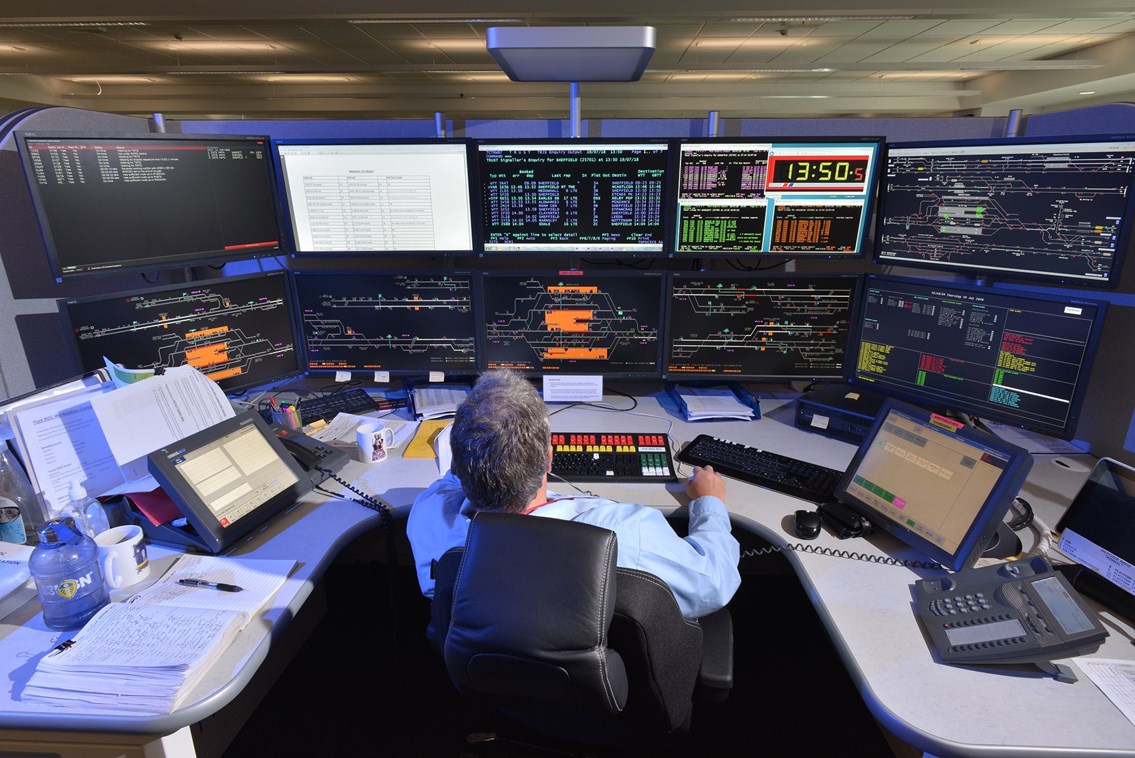
The daily operation of a rail operating centre is a mix of routine monitoring and high-pressure problem solving. The room is usually dominated by a “video wall”—a massive bank of screens showing the entire rail network in schematic form. Lines turn red when a train occupies a section of track and green when the track is clear.
Controllers sit at workstations equipped with multiple monitors, communication headsets, and specialized keyboards. They don’t steer the trains—the drivers do that. Instead, the rail operating centre sets the path. They control the switches (points) that guide trains from one track to another and the signals that tell drivers when it is safe to proceed.
The systems are heavily automated. In normal conditions, a computer program known as “Automatic Route Setting” (ARS) sets the paths for trains based on the timetable. The humans are there to supervise. When things go wrong—like a delay or equipment failure—the humans take over. They manually override the computer to prioritize express trains or route trains around obstacles.
The Technology Behind the Screens
The technology powering a rail operating centre is incredibly complex. It relies on a combination of legacy systems (old wiring near the tracks) and cutting-edge software. The core system is usually a Traffic Management System (TMS). This software knows where every train is supposed to be and where it actually is.
Sensors on the tracks, known as axle counters or track circuits, detect the presence of a train. This data is sent instantly to the ROC via fiber optic networks. The TMS processes this data and updates the displays in real-time. If a train is even thirty seconds late, the system flags it.
Communication technology is also vital. The rail operating centre is connected to train drivers via a dedicated radio network (often GSM-R). This allows instant voice communication. If a controller sees a dangerous situation, like a landslide or an obstruction, they can send a “GSMR Stop” command that alerts all drivers in the area to stop immediately.
Different Roles Within the Centre
A rail operating centre isn’t just full of signalers. It is a collaborative workspace hosting various professionals. Here is a breakdown of who you might find on the floor:
|
Role |
Responsibility |
|---|---|
|
Signaler/Controller |
Sets routes, changes signals, and manages train movements directly. |
|
Incident Controller |
Takes charge when accidents or major delays occur. |
|
Train Operator Liaison |
Representatives from train companies who manage crew and rolling stock issues. |
|
Maintenance Control |
Monitors track and signal health; dispatches repair crews if something breaks. |
|
Information Controller |
Updates passenger information screens and apps at stations. |
This mix of people is crucial. In the old days, if a signal broke, the signaler had to call a maintenance office, who then called a team. Now, the maintenance controller is sitting right next to the signaler. They can coordinate a fix instantly.
The Importance of Safety in a Rail Operating Centre
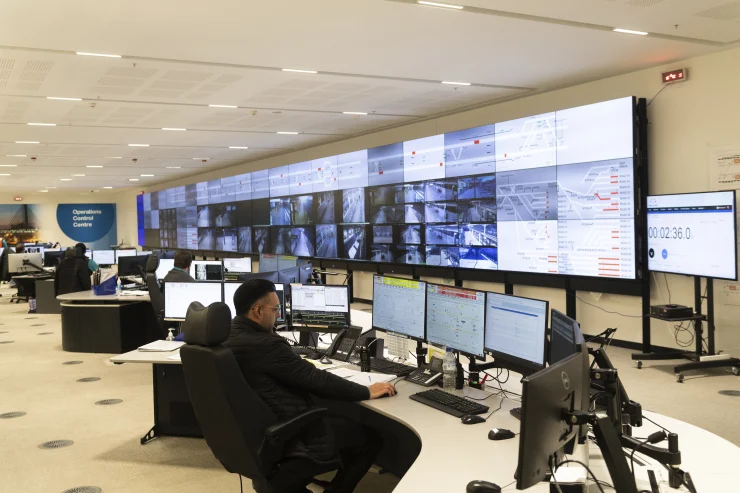
Safety is the absolute number one priority in any rail operating centre. Every decision made in that room has life-or-death consequences. Because of this, the systems are designed with “fail-safe” logic. This means that if any part of the system fails (like a wire breaks or power is lost), the signals automatically turn red. Trains stop rather than risking a collision.
The environment in the ROC is designed to keep staff alert and focused. The lighting is carefully controlled to reduce glare on screens. Noise levels are kept low so clear communication can happen. Staff work in shifts to ensure they are never too tired to make critical decisions.
Furthermore, rigorous training is required to work in a rail operating centre. Controllers practice in simulators that look exactly like the real workstations. They run through scenarios like derailments, power outages, and severe weather. This ensures that when a real emergency happens, their reaction is automatic and calm.
Managing Incidents and Emergencies
When an emergency happens, the atmosphere in the rail operating centre changes instantly. Whether it is a trespasser on the tracks, a medical emergency on board, or a mechanical failure, the ROC is the command post. The Incident Controller takes charge of the situation.
First, they secure the area. Signals are set to red to stop all trains from entering the affected zone. Then, they coordinate with emergency services. If an ambulance is needed, the ROC guides them to the nearest access point. They also communicate with the train driver to keep passengers calm and informed.
During these events, the rail operating centre also has to manage the “ripple effect.” One stopped train can delay fifty others behind it. Controllers work frantically to turn trains back, route them onto different lines, or cancel services to prevent the entire network from gridlocking. It is a high-stakes puzzle that needs solving in minutes.
Benefits of Centralized Control
Why are railways moving toward the rail operating centre model? The biggest benefit is efficiency. When one team controls a large area, they can make better decisions. For example, if a freight train is moving slowly, a controller can see a gap in traffic twenty miles away and move the freight train into a siding to let a fast passenger train pass.
This wasn’t possible when control was split between ten different signal boxes. The first signalman wouldn’t know what was happening further down the line. Centralization also saves money. Maintaining hundreds of old, crumbling signal boxes is expensive. A modern ROC is easier to maintain and cheaper to run in the long term.
Another major benefit is passenger information. Because the rail operating centre knows exactly where every train is, they can provide accurate updates to apps and station screens. If your train is delayed by five minutes, it’s the data from the ROC that updates the arrival board at your station.
Challenges Faced by Operations Centers
Despite their high-tech nature, running a rail operating centre has challenges. One major issue is the reliance on technology. If the central computer system crashes, it can affect hundreds of miles of track instantly. While there are backup systems, a total failure is a nightmare scenario.
Another challenge is the mental load on the staff. Monitoring screens for eight to twelve hours requires intense concentration. “Alarm fatigue” can set in, where staff hear so many beeps and alerts that they might miss a critical one. Railways are constantly studying human factors to design better interfaces that help, rather than overwhelm, the controllers.
There is also the challenge of integrating old and new. The US and UK rail networks are old. Connecting a brand new rail operating centre to track infrastructure that might be 50 years old is technically difficult. It requires constant maintenance and upgrades to ensure the two systems talk to each other correctly.
The Human Element: Working in a ROC
It is easy to focus on the screens and computers, but the heart of a rail operating centre is its people. These are highly skilled professionals. They need to be calm under pressure, excellent communicators, and able to multitask. It is not a job for everyone.
The culture inside a ROC is unique. It is a 24/7 operation. Trains might stop running for a few hours at night for maintenance, but the ROC never sleeps. Maintenance crews are out on the tracks at 3 AM fixing rails, and the controllers in the ROC are the ones protecting them by keeping signals red.
Teamwork is essential. You often see controllers rolling their chairs over to a colleague’s desk to discuss a problem. They share a sense of responsibility for the thousands of passengers traveling on their watch. When things run smoothly, no one notices them. But when things go wrong, they are the unsung heroes working to get everyone home.
Training and Qualifications
You can’t just walk in off the street and start controlling trains. The path to working in a rail operating centre involves rigorous testing. Candidates are tested on their concentration, pattern recognition, and ability to follow strict rules.
Once hired, the training can take months. It involves classroom learning about railway rules and regulations. Then comes the simulator training. Finally, a trainee works alongside an experienced mentor on the live floor. They have to pass strict exams to get their license to operate.
Even after qualifying, the learning never stops. Every time the software is updated or the track layout changes, the staff in the rail operating centre must be retrained. They also have regular competency assessments to ensure their skills remain sharp.
Future Trends in Rail Operations
The future of the rail operating centre looks even more high-tech. Artificial Intelligence (AI) is starting to play a role. AI programs can analyze historical data to predict delays before they happen. For example, AI might notice that a specific train is always slow on rainy Tuesdays and suggest a schedule change.
We are also seeing more integration with trains themselves. In the future, the computer in the ROC might talk directly to the computer on the train to adjust its speed automatically. This creates a smoother ride and saves energy. This is already happening with some high-speed and metro lines.
Another trend is “Traffic Management.” This goes beyond just setting signals. It involves managing the flow of the entire network dynamically. If a platform at a major station is blocked, the software in the rail operating centre will instantly recalculate platform assignments for all incoming trains to minimize delay.
The Role of Data Analytics
Data is the new oil for railways. A rail operating centre generates massive amounts of data every second. Railway companies are now hiring data scientists to analyze this information. They look for patterns that humans might miss.
For example, data might show that a certain signal switch fails more often when the temperature drops below freezing. The maintenance team can then install heaters or replace the part before winter arrives. This predictive maintenance prevents delays and keeps the rail operating centre running smoothly.
This data also helps with long-term planning. If the data shows that a specific line is constantly congested at 5 PM, the railway planners can use that evidence to argue for building more tracks or buying more trains.
Comparing US and International Rail Centers
While the concept of a rail operating centre is global, the implementation varies. In the US, freight railroads often have massive dispatch centers covering thousands of miles across multiple states. Passenger networks like Amtrak or commuter lines like Metro-North have their own dedicated centers.
In Europe and the UK, the trend has been toward consolidating into a few regional “super centers.” For example, the UK is moving from hundreds of signal boxes to just a handful of Rail Operating Centres covering the whole country.
Japan is famous for its Shinkansen (bullet train) control centers. These are incredibly precise. If a bullet train is 15 seconds late, it is considered a major delay. Their rail operating centre technology is often years ahead of the rest of the world, focusing heavily on automation and precision timing.
Frequently Asked Questions (FAQ)
Here are some common questions people have about how these centers function.
Q: Can a rail operating centre stop a train remotely?
A: In most modern systems, yes. Through systems like GSM-R or Positive Train Control (PTC), controllers can send emergency stop commands that apply the train’s brakes automatically.
Q: What happens if the power goes out in the centre?
A: A rail operating centre has massive backup generators and Uninterruptible Power Supplies (UPS). If the grid fails, the batteries take over instantly, and generators kick in within seconds.
Q: Do controllers see the trains via video cameras?
A: Generally, no. They rely on the schematic map and sensors. CCTV is used for station platforms and security, but not usually for tracking train movements between stations.
Q: Is the job stressful?
A: It can be. While there are quiet periods, peak hours and emergencies are high-pressure. Controllers are trained to manage this stress and stay calm.
Q: How many people work in a rail operating centre?
A: It depends on the size of the area controlled. A small center might have 10 people, while a large regional hub could have over 100 staff working on a single shift.
Why You Should Care
You might think, “I just ride the train; why does this matter?” Understanding the rail operating centre helps you appreciate the complexity of your commute. When you are stuck on a delayed train, it’s easy to get frustrated. But knowing that there is a team of people in a room somewhere working frantically to get you moving again provides a different perspective.
It also highlights the importance of infrastructure investment. Modernizing these centers costs money, but the payoff is a safer, more reliable railway for everyone. As we look for greener ways to travel, efficient trains managed by a high-tech rail operating centre will be a huge part of the solution.
Conclusion
The rail operating centre is truly the unsung hero of the modern transport world. It represents a perfect marriage of heavy industrial machinery and cutting-edge digital technology. From the early days of levers and bells to the modern era of AI and fiber optics, the goal has remained the same: to get passengers and goods from A to B safely and on time.
As technology continues to advance, these centers will only become more capable. They are the invisible hands guiding our journeys. If you are interested in more fascinating insights into business, infrastructure, and how the world works, be sure to check out Forbes Planet for more great articles.
The next time you step onto a train and the doors slide shut, take a moment to think about the rail operating centre. Miles away, a controller is watching a screen, clearing a signal, and watching over your journey. For more detailed history on railway signaling systems and the evolution of control centers, you can visit this page on Wikipedia.
Stay Informed With the Latest & Most Important News
Previous Post
Next Post









Advertisement