

Now Reading: What Is Annatto Color and Why Is It in Your Food?
-
01
What Is Annatto Color and Why Is It in Your Food?


Have you ever looked at the ingredient list on a package of cheese, butter, or snacks and noticed the words “annatto color”? It’s a common ingredient, yet many people have no idea what it is or where it comes from. This natural food coloring gives many of our favorite products their appealing yellow, orange, or red shades. Far from being a synthetic chemical cooked up in a lab, annatto color comes from a plant and has been used for centuries, not just for coloring food but also for culinary and medicinal purposes.
This article will dive deep into the world of annatto color. We will explore its origins, how it’s made, its safety, and its many uses in the modern food industry. You’ll learn why that block of cheddar has such a vibrant orange hue and discover the fascinating story behind this humble yet powerful natural dye. Get ready to uncover the secrets of one of the most important natural food colorants on the market today.
Key Takeaways
- Annatto color is a natural food dye derived from the seeds of the achiote tree (Bixa orellana).
- It provides a spectrum of colors ranging from pale yellow to deep reddish-orange.
- Commonly used in dairy products like cheese and butter, as well as snacks, cereals, and beverages.
- Annatto is generally recognized as safe (GRAS) by the FDA, though rare allergic reactions can occur.
- The primary coloring compounds in annatto are bixin (oil-soluble) and norbixin (water-soluble).
- It has a long history of use in traditional cuisines and cultural practices, particularly in Latin America and the Caribbean.
The Origins of Annatto: The Lipstick Tree
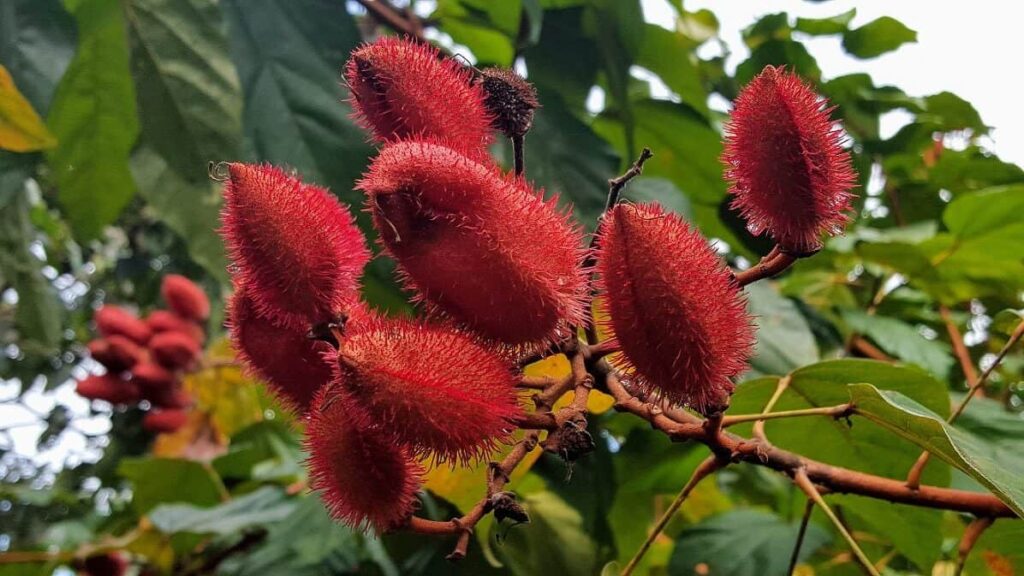
The story of annatto color begins with a tropical plant known as the achiote tree (Bixa orellana). This small tree or shrub is native to the tropical regions of the Americas, from Mexico down to Brazil. It’s often called the “lipstick tree” because of the vibrant, waxy paste that comes from its seeds, which indigenous peoples have historically used as a body paint and lipstick. The tree produces spiky, heart-shaped pods that, when ripe, burst open to reveal dozens of small seeds coated in a reddish-orange pulp. This pulp is the source of the annatto colorant.
For centuries, before it became a staple in the global food industry, the achiote tree was a cornerstone of indigenous cultures. Its uses were incredibly diverse, ranging from a potent spice in cooking to a natural dye for textiles and a key ingredient in traditional medicine. The pigment was also used in religious ceremonies and as a form of protection against insects and the sun. This rich cultural history highlights the plant’s value long before it was commercialized. The journey of annatto from a ceremonial body paint to a global food additive is a testament to its versatility and potent coloring properties.
How Is Annatto Color Made?
The process of extracting annatto color from the achiote seeds is relatively straightforward, which is one reason for its popularity as a natural alternative to synthetic dyes. The primary goal is to separate the colorful pigment from the seeds themselves. There are a few different methods to achieve this, and the method chosen often depends on the final application of the colorant. The two main coloring compounds in the seed coating are bixin and norbixin.
The most traditional method involves simply steeping the seeds in water or oil. When soaked in oil, the oil-soluble pigment, bixin, leaches out, creating a vibrantly colored oil that can be used directly in cooking. When soaked in water, the pigment can be processed further. For commercial production, more advanced methods are used.
This typically involves using an alkaline solution to extract the pigment, which converts the oil-soluble bixin into water-soluble norbixin. This solution is then filtered to remove the seeds and other solid matter. The resulting liquid can be sold as is or further concentrated and dried to create a powder or paste. The form of the final product—liquid, powder, or paste—determines its use in different food manufacturing processes.
Understanding Bixin and Norbixin
The two key components responsible for annatto color are bixin and norbixin. These are carotenoids, the same family of pigments that give carrots their orange color and tomatoes their red hue. The primary difference between them lies in their solubility.
- Bixin: This is the original, fat-soluble pigment found in the seed coating. Because it dissolves in oil and fat, it’s the perfect colorant for high-fat products. Think of butter, margarine, and processed cheese, where the color needs to mix evenly with the fats in the product. Bixin provides a lovely yellow to reddish-orange shade.
- Norbixin: This is a derivative of bixin, created by a chemical process that removes a specific part of the bixin molecule. This change makes norbixin water-soluble. This form is ideal for coloring water-based products like beverages, dairy-free yogurts, ice creams, and some baked goods. It allows the annatto color to disperse evenly in liquids without separating.
This dual solubility makes annatto incredibly versatile for food manufacturers, as they can choose the specific extract that works best for their product’s formulation, whether it’s oil-based or water-based.
Why Is Annatto Color Used in Food?
The primary reason annatto color is added to food is for aesthetics. We eat with our eyes first, and the color of food can significantly impact our perception of its flavor and quality. A pale, lifeless-looking block of cheddar cheese might not seem as appealing as one with a rich, golden-orange hue. Annatto helps standardize the appearance of products, ensuring they look consistent from batch to batch. For example, the color of milk from cows can vary depending on their diet and the time of year. Using annatto in cheese production ensures that the final product always has that familiar, appetizing color consumers expect.
Beyond just making food look good, annatto serves as a natural alternative to synthetic dyes like Yellow No. 5 and Red No. 40. As consumers have become more interested in “clean label” products with ingredients they recognize, the demand for natural colorants has soared. Annatto fits this need perfectly. It comes from a plant source and has a long history of safe use. This allows manufacturers to achieve the desired colors in their products without resorting to artificial additives that some consumers prefer to avoid. This shift towards natural ingredients is a major driver of annatto’s widespread use.
Common Foods That Contain Annatto Color
You might be surprised by how many products in your kitchen contain annatto color. It’s one of the most common natural food dyes used today. Its ability to produce shades from light yellow to deep orange makes it suitable for a wide array of foods. Here are some of the most common categories where you’ll find annatto listed on the label:
- Dairy Products: This is perhaps the most well-known use. Cheddar cheese, Colby, and other cheese varieties often get their characteristic orange color from annatto. It’s also found in butter, margarine, and some yogurts.
- Snack Foods: Many crackers, popcorn, and potato chips use annatto to achieve a cheesy or buttery appearance. Goldfish crackers are a classic example.
- Cereals and Baked Goods: Breakfast cereals, breadings for fried foods, and some bakery items use annatto to impart a golden-brown or yellowish color.
- Beverages and Desserts: You can find it in some fruit juices, ice creams, custards, and puddings where a yellow or orange hue is desired.
The next time you’re at the grocery store, take a moment to read the ingredient labels on some of these products. You’ll likely see “annatto color,” “annatto extract,” or simply “colored with annatto” listed.
Is Annatto Color Safe to Eat?
For the vast majority of people, annatto color is perfectly safe to consume. Regulatory agencies around the world, including the U.S. Food and Drug Administration (FDA), have approved it for use in food. The FDA classifies annatto as “generally recognized as safe” (GRAS), which means it is exempt from certification as a food additive due to its long history of common use in food without evidence of harm. It is derived from a natural source and is not associated with the health concerns linked to some synthetic food dyes.
However, like many foods and food additives, annatto can cause allergic reactions in a small subset of the population. These reactions are rare but can range from mild skin irritations like hives to more severe digestive issues, similar to those experienced by individuals with Irritable Bowel Syndrome (IBS). It’s important to note that these are allergic-type responses, not a sign that annatto is toxic. If you suspect you have a sensitivity to annatto, it’s best to consult with a doctor or allergist. For the general population, the amount of annatto used in food is very small and considered safe for daily consumption.
Potential Health Benefits of Annatto
While primarily used as a colorant, the achiote seeds from which annatto color is derived contain compounds that may offer some health benefits. These potential benefits are linked to the plant’s traditional use in herbal medicine and the antioxidant properties of its carotenoids. The main compounds, bixin and norbixin, are powerful antioxidants. Antioxidants help protect the body’s cells from damage caused by unstable molecules called free radicals. This cellular damage is linked to aging and various chronic diseases.
Some studies suggest that the compounds in annatto may have antimicrobial and anti-inflammatory properties as well. In traditional medicine, parts of the achiote tree were used to treat everything from heartburn and fevers to skin wounds and infections. While modern scientific research into these benefits is still in its early stages and more studies are needed to confirm these effects in humans, the antioxidant content of annatto is well-established. However, it’s important to remember that the amount of annatto consumed in food as a colorant is very small, so it’s unlikely to provide significant health benefits on its own.
Annatto in Different Cuisines
Long before it was an industrial food additive, annatto was a staple ingredient in many traditional cuisines, especially in Latin America, the Caribbean, and parts of Asia. In these regions, it is used as both a spice and a coloring agent, prized for its subtle, slightly peppery and earthy flavor profile. It imparts a beautiful golden-red hue to dishes, making them visually stunning. One of the most common ways to use it in home cooking is by infusing oil with the seeds, creating a vibrant liquid known as achiote oil or aceite de achiote.
This colored oil is a foundational element in many iconic dishes. In Mexican cuisine, particularly in the Yucatán Peninsula, annatto is the star ingredient in recado rojo, a spice paste used to marinate meats for dishes like cochinita pibil (slow-roasted pork). In Puerto Rican cooking, it’s used to color rice, stews, and soups. In the Philippines, it is used to give a reddish color to dishes like pancit. Using annatto color in this way is about more than just appearance; it connects the food to a deep cultural and culinary heritage. For those interested in exploring global flavors, checking out resources like https://forbesplanet.co.uk/ can offer insights into diverse culinary traditions.
Flavor Profile of Annatto
When used in the small quantities required for coloring industrial food products, annatto color is virtually tasteless. Its purpose in items like cheese or crackers is purely visual. However, when used more generously as a spice in traditional cooking, annatto does contribute a distinct flavor. The flavor is subtle and can be hard to pinpoint, but it’s often described as slightly peppery with a hint of bitterness and an earthy, floral note.
The taste is not overpowering, which allows it to complement a wide range of other spices and ingredients without dominating the dish. It adds a layer of complexity and a beautiful color that is difficult to replicate with other spices. For example, in a spice blend, it might add a mild peppery kick and a beautiful aroma that enhances the overall sensory experience of the meal. So, while you won’t taste it in your store-bought shredded cheese, using whole annatto seeds or achiote paste in your own cooking can introduce you to a new and interesting flavor dimension.
Annatto vs. Other Natural Colorants
Annatto is just one of several natural colorants used by the food industry. Each one has its own unique properties, color spectrum, and best uses. Understanding the differences helps to see why manufacturers might choose one over the other for a specific product.
Here’s a comparison of annatto color with other popular natural food dyes:
|
Colorant |
Source |
Colors Produced |
Common Uses |
Solubility |
|---|---|---|---|---|
|
Annatto |
Achiote Tree Seeds |
Yellow, Orange, Red |
Cheese, Butter, Snacks, Cereals |
Oil- and Water-soluble |
|
Turmeric |
Turmeric Root |
Bright Yellow |
Curries, Mustards, Pickles, Beverages |
Oil-soluble |
|
Saffron |
Saffron Crocus |
Golden-Yellow |
Rice (Paella), Breads, Desserts |
Water-soluble |
|
Paprika |
Paprika Peppers |
Orange, Red |
Sausages, Spice Blends, Sauces, Snacks |
Oil-soluble |
|
Beetroot |
Beetroot |
Pink, Red, Purple |
Yogurts, Ice Creams, Soups, Tomato Paste |
Water-soluble |
As the table shows, annatto color is particularly valuable for its versatility, offering both oil- and water-soluble options. While turmeric provides a brilliant yellow, it can have a strong flavor that isn’t always desirable. Saffron is incredibly expensive, making it unsuitable for most mass-produced foods. Paprika is excellent for red shades but also carries a distinct flavor. Beetroot provides beautiful reds and pinks but can be less stable when heated. Annatto strikes a balance of cost-effectiveness, color stability, and a neutral flavor in small amounts, making it a go-to choice for many applications.
How to Use Annatto at Home
If you’re inspired to experiment with annatto color in your own kitchen, it’s easy to get started. You can typically find whole annatto seeds or prepared achiote paste in the international aisle of larger supermarkets or at Latin American or Asian grocery stores. Whole seeds are the most versatile starting point. The most common way to use them is to make achiote oil.
To make achiote oil, simply heat one cup of a neutral oil (like canola or vegetable oil) in a small saucepan over low to medium heat. Add about a quarter cup of annatto seeds and let them gently simmer in the oil. Be careful not to let the oil get too hot, as this can turn the color a dull brown and make the seeds bitter.
After 5 to 10 minutes, the oil will have taken on a deep, beautiful orange-red hue. Strain the oil through a fine-mesh sieve to remove the seeds, and your achiote oil is ready to use. You can store it in an airtight container in the refrigerator for several weeks. Use it to sauté vegetables, color rice, or as a base for marinades.
Cooking with Achiote Paste
Another convenient way to use annatto at home is with achiote paste, also known as recado rojo. This is a thick, brick-red paste made from ground annatto seeds mixed with other spices, herbs, and vinegar. The exact ingredients can vary, but they often include cumin, oregano, cloves, garlic, and pepper. This paste is a flavor powerhouse and a fantastic shortcut for adding authentic taste and color to your dishes.
To use achiote paste, you typically dilute it with a bit of water, citrus juice (like orange or lime), or broth to create a marinade or sauce. This is the key to classic dishes like pollo pibil (achiote chicken) or cochinita pibil (achiote pork). Simply rub the diluted paste all over the meat and let it marinate for several hours, or even overnight, before slow-cooking or grilling. The result is an incredibly flavorful and tender meat with a stunningly vibrant red exterior. You can also add a small amount of the paste to stews, soups, or beans to give them extra color and a subtle, complex flavor boost.
Conclusion
From its ancient origins as a ceremonial body paint to its modern-day role as a key ingredient in countless food products, annatto color has had a remarkable journey. This natural dye, sourced from the seeds of the humble achiote tree, brings the warm, appealing shades of yellow and orange to our favorite cheeses, snacks, and cereals.
Its versatility, offered through both oil-soluble bixin and water-soluble norbixin, makes it a reliable and effective choice for food manufacturers aiming to meet consumer demand for clean-label ingredients. While it is virtually flavorless in the small amounts used for coloring, annatto also holds a special place in global cuisines as a spice that imparts a subtle, earthy flavor and a rich, cultural heritage to traditional dishes.
Generally recognized as safe and approved by food authorities worldwide, annatto stands as a testament to the power of nature in our food supply. Whether you’re simply noticing it on an ingredient list or are inspired to cook with achiote paste at home, you now have a deeper appreciation for this vibrant pigment. The story of annatto is a colorful thread woven through history, culture, and the food we eat every day. To learn more about its botanical origins and chemical properties, you can explore the extensive information available on its dedicated Wikipedia page, which details the history and science behind annatto color.
Frequently Asked Questions (FAQ)
Is annatto the same as turmeric?
No, they are not the same. While both are natural colorants that can produce a yellow color, they come from different plants. Annatto comes from the seeds of the achiote tree, while turmeric comes from the root of the Curcuma longa plant. Annatto has a mild, peppery flavor, whereas turmeric has a much more distinct, earthy, and slightly bitter taste.
Does annatto color have a taste?
In the small quantities used for food coloring in commercial products, annatto color is considered flavor-neutral. Its primary purpose is to add color without affecting the taste of the food. However, when used in larger amounts as a spice in traditional cooking, it does contribute a subtle, earthy, and slightly peppery flavor.
Can you be allergic to annatto?
Yes, though it is rare. A small percentage of the population may experience allergic reactions to annatto. Symptoms can include skin reactions like hives or digestive issues. If you suspect an allergy, it is best to avoid foods containing annatto and consult with a healthcare professional.
Why is annatto added to cheese?
Annatto is added to cheese primarily to give it a consistent and appealing orange color. The natural color of cow’s milk can vary based on the cow’s diet. Adding annatto color ensures that the cheese, particularly varieties like Cheddar and Colby, always has the familiar golden-orange hue that consumers expect.
Is annatto a healthy choice?
Annatto is a natural colorant and is generally considered a safe and healthy alternative to synthetic food dyes. The compounds that give annatto its color, bixin and norbixin, are antioxidants, which can help protect the body’s cells from damage. However, the amount used in food is very small, so it’s not consumed in quantities that would provide significant health benefits.
Stay Informed With the Latest & Most Important News
Previous Post
Next Post










Advertisement