

Now Reading: Does Taekwondo Work? The Ultimate Guide to Benefits and Effectiveness
-
01
Does Taekwondo Work? The Ultimate Guide to Benefits and Effectiveness

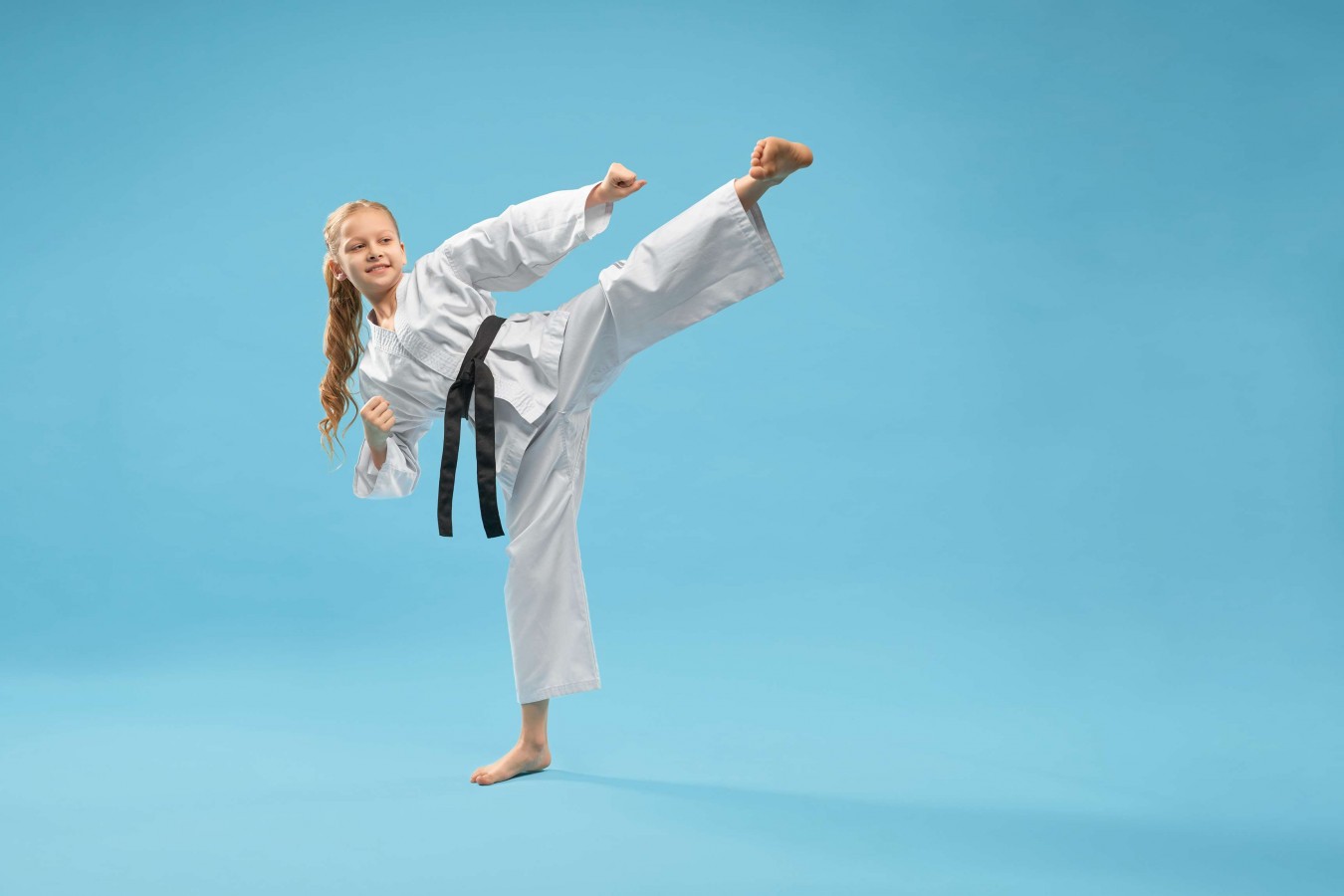
Many people looking for a new hobby or a way to get fit often find themselves asking the same question: does taekwondo actually deliver on its promises? Whether you have seen flashy kicks in movies or watched Olympic sparring matches, it’s natural to wonder if this Korean martial art is right for you or your children. It is more than just breaking boards and shouting; it is a discipline that combines physical fitness, mental toughness, and self-defense skills.
In this article, we are going to dive deep into everything you need to know. We will cover how it affects your body, whether it works in a street fight, and if it is suitable for kids. By the end, you will have a clear picture of what this martial art offers.
Key Takeaways
- Physical Fitness: Learn how Taekwondo improves flexibility, stamina, and strength.
- Self-Defense: Understand the practical applications and limitations in real-world scenarios.
- Mental Benefits: Discover how it builds confidence, discipline, and focus.
- Age Appropriateness: See why it is one of the most popular activities for children and teens.
What Is Taekwondo Exactly?
Before we answer ” does taekwondo work,” we need to understand what it is. Taekwondo is a Korean martial art characterized by its emphasis on head-height kicks, jumping spinning kicks, and fast kicking techniques. The name itself translates roughly to “the way of the foot and fist.” Unlike some other martial arts that focus heavily on grappling or ground fighting, Taekwondo is primarily a striking art.
It has a rich history and has evolved over the decades into a global sport. Today, it is practiced by millions of people in nearly every country. There are different styles, mainly the World Taekwondo (WT) style seen in the Olympics and the International Taekwondo Federation (ITF) style, which is often considered more traditional. Regardless of the style, the core principles of courtesy, integrity, perseverance, self-control, and indomitable spirit remain the same.
The training usually involves learning forms (poomsae or tul), sparring (kyorugi), and breaking techniques. It is a full-body workout that challenges you mentally just as much as it does physically. If you are looking for a workout that isn’t just running on a treadmill, this might be the perfect fit.
Does Taekwondo Build Muscle and Strength?
One of the most common questions beginners ask is: does taekwondo help build muscle? The short answer is yes, but perhaps not in the way bodybuilding does. Taekwondo training is fantastic for developing lean, functional muscle. Because you are constantly moving, kicking, and maintaining stances, your legs and core get an incredible workout.
The explosive nature of the kicks requires fast-twitch muscle fibers, which helps in developing power. You aren’t just lifting a heavy weight slowly; you are snapping your leg out with speed and precision. This tones the quadriceps, hamstrings, calves, and glutes. Furthermore, balancing on one leg while executing a kick engages your deep core muscles, leading to stronger abs and better posture.
Upper body strength isn’t neglected either. While it is famous for kicks, there are plenty of punches, blocks, and strikes involved. Push-ups and other calisthenics are standard parts of warm-ups and conditioning. Over time, practitioners notice a significant increase in their overall body strength and muscle definition without becoming bulky.
Does Taekwondo Improve Flexibility?
If you can’t touch your toes right now, you might worry that you can’t participate. People often wonder, does taekwondo require you to be flexible before you start? Absolutely not. In fact, improving flexibility is one of the main goals of training. You don’t need to be able to do the splits on day one.
Every class begins with a thorough warm-up designed to loosen up the muscles and joints. As you progress, you will perform dynamic stretches (like leg swings) and static stretches (holding a position). Over time, these exercises lengthen your muscles and increase your range of motion. High kicks are a hallmark of the sport, and training for them naturally pushes your flexibility limits.
Better flexibility has benefits beyond the dojang (training hall). It reduces the risk of injury in daily life, improves your posture, and can help alleviate back pain. So, if you feel stiff as a board, that is actually a great reason to start training, rather than a reason to avoid it.
Does Taekwondo Help with Weight Loss?
We all know that losing weight requires burning more calories than you consume. So, does taekwondo burn enough calories to help with weight loss? Yes, it is a high-intensity cardiovascular workout. An hour of vigorous training can burn anywhere from 500 to over 800 calories, depending on your intensity level and body weight.
The constant movement, jumping, and sparring keep your heart rate up. It is essentially a form of interval training. You have bursts of high-intensity activity (like a flurry of kicks) followed by short periods of lower intensity (resetting your stance or listening to instruction). This type of training is known to be very effective for burning fat and boosting metabolism.
Moreover, the discipline you learn often spills over into your diet and lifestyle choices. When you treat your body like an athlete’s, you are less likely to fuel it with junk food. Many students find that once they commit to regular classes, the weight starts to drop off naturally as a side effect of their hard work and enjoyment of the sport.
Calorie Burn Comparison Table
|
Activity (1 Hour) |
Approximate Calories Burned (155 lb person) |
|---|---|
|
Taekwondo |
700+ |
|
Jogging |
450 |
|
Weight Lifting |
220 |
|
Yoga |
200 |
|
Basketball |
550 |
Does Taekwondo Teach Real Self-Defense?
This is a controversial topic in the martial arts world. Does taekwondo work in a street fight? The answer is nuanced. Taekwondo definitely provides tools that can be used for self-defense. The kicks are powerful and can incapacitate an attacker from a distance, keeping you out of grabbing range. Learning how to punch, block, and evade are also critical skills.
However, modern Taekwondo—especially the Olympic style—is heavily focused on sport. This means there are rules, like no punching to the face or kicking below the belt. In a real street fight, there are no rules. An attacker might tackle you or try to grapple. If a school focuses 100% on tournament sparring, students might develop habits that are bad for self-defense, like keeping their hands down.
That said, many schools teach “traditional” self-defense techniques separately from sport sparring. These include wrist releases, takedowns, and strikes to vital areas. The most valuable self-defense skill Taekwondo teaches is distance management and situational awareness. Being able to move quickly and deliver a powerful strike creates an opportunity to escape, which is the ultimate goal of self-defense.
Pros and Cons for Self-Defense
- Pros:
-
- Strong, long-range kicks keep attackers away.
- Improves reaction time and reflexes.
- Builds confidence to face confrontation.
- Cons:
-
- Sport rules may create bad habits (e.g., no face punches).
- Limited ground fighting or grappling skills.
- High kicks can be risky on slippery or uneven surfaces.
Does Taekwondo Instill Discipline in Children?
Parents are constantly looking for activities that build character. The question is, does taekwondo help kids behave better and focus? The consensus among parents and educators is a resounding yes. The structure of a class is built on respect. Students must bow to the instructor, follow commands immediately, and treat their peers with courtesy.
This environment creates a sense of order. Children learn that success comes from practice and listening. They can’t just run around and do whatever they want; they have to control their bodies and their impulses. This “self-control” is a core tenet of the martial art.
For children with high energy or attention difficulties, the fast-paced but structured nature of the training can be very beneficial. They get to burn off energy in a constructive way while learning to focus on specific tasks. Many parents report that after starting lessons, their children show improved grades and better behavior at home because they understand the value of discipline.
Does Taekwondo Improve Mental Health?
Physical health is important, but what about the mind? Does taekwondo offer mental health benefits? Engaging in martial arts can be a powerful stress reliever. After a long, frustrating day at work or school, hitting a heavy bag or focusing on a complex pattern allows you to disconnect from your worries. It acts as a form of moving meditation.
The “Kihap” (the shout made when striking) is not just for show; it allows practitioners to release tension and focus their energy. This release can be incredibly therapeutic. Additionally, the endorphins released during the intense physical exercise act as natural mood lifters, combating feelings of anxiety and depression.
Furthermore, the belt system provides a clear path of progression. Setting a goal (like getting the next belt) and achieving it boosts self-esteem. It proves to you that you can overcome challenges. This growth mindset—believing you can improve through effort—is a key component of mental resilience.
Mental Benefits Breakdown
- Stress Reduction: Physical outlet for frustration.
- Focus: Requires intense concentration on technique.
- Confidence: Achieving belt ranks builds self-worth.
- Community: Being part of a supportive group combats loneliness.
Does Taekwondo Require Expensive Gear?
Starting a new sport can be daunting if the equipment list is long and pricey. Does taekwondo require a huge financial investment upfront? Generally, no. Compared to sports like hockey or golf, the barrier to entry is low. Most schools allow you to take a few trial classes in comfortable workout clothes (t-shirt and sweatpants).
Once you sign up, you will need a uniform, called a dobok. These are usually white, durable, and relatively inexpensive. As you progress to sparring (usually after a few months), you will need safety gear. This typically includes a helmet, chest protector (hogu), shin guards, arm guards, a mouthguard, and a groin cup.
While the full sparring kit represents an investment, it usually lasts for years. You don’t need to buy new bats, balls, or expensive shoes every season. Most schools offer packages that bundle the gear with tuition, making it easier for beginners to get started.
Does Taekwondo Have an Age Limit?
You might think martial arts are a young person’s game. Does taekwondo exclude older adults? Not at all. While you might not see a 60-year-old doing jumping spinning hook kicks like a teenager, the art is adaptable. Many people start their journey in their 40s, 50s, or even later.
Adult classes often focus more on fitness, technique, and self-defense rather than high-impact competitive sparring. Instructors are usually very good at modifying exercises to accommodate different physical abilities and past injuries. The emphasis is on personal progress, not comparing yourself to the 20-year-old next to you.
For seniors, the balance and coordination training is invaluable for preventing falls. The social aspect also keeps older adults engaged and active. As long as you have your doctor’s approval to exercise, age is rarely a barrier to learning the basics and enjoying the benefits.
Does Taekwondo Help with Balance and Coordination?
We briefly mentioned balance earlier, but it deserves its own section. Does taekwondo significantly improve coordination? Think about what a kick involves. You have to lift one leg, pivot on the supporting foot, strike a specific target, and recoil the leg back to the floor without falling over. This requires immense coordination and balance.
Training forces your brain to communicate effectively with your muscles. You learn proprioception—the awareness of where your body is in space. This is developed through the repetition of forms (patterns) where you must move in different directions while executing precise hand and foot techniques.
For kids who are going through growth spurts and might feel “clumsy,” this training helps them reconnect with their changing bodies. For adults, maintaining this coordination is key to long-term mobility and athleticism in other sports.
Does Taekwondo Differ from Karate?
It is common to confuse different martial arts. Does taekwondo differ significantly from Karate? While they share some historical roots and both use a belt ranking system and white uniforms, they are distinct. The primary difference lies in the focus of techniques.
Karate, originating from Okinawa and Japan, tends to focus roughly 60% on hand techniques (punches, strikes) and 40% on kicks. The stances are often lower and more grounded. Taekwondo, originating from Korea, places a much heavier emphasis on kicking—roughly 70-80% kicks. Taekwondo stances are generally higher and more mobile to facilitate fast footwork and kicking.
Visually, Taekwondo is more “aerial” and fluid, known for jumping and spinning. Karate is often more linear and “snappy” with hand strikes. Both are excellent arts, but if you prefer using your legs and want a more aerobic workout, Taekwondo is often the preferred choice.
Does Taekwondo Have Risks of Injury?
No physical activity is completely risk-free. Does taekwondo carry a high risk of injury? Like any contact sport, there are risks, but they are generally manageable. The most common injuries are minor: bruises, muscle strains, or sprained toes/ankles. These usually happen during sparring or when landing incorrectly from a jump.
Serious injuries are less common in recreational training compared to competitive elite levels. Instructors prioritize safety. Warm-ups are mandatory to prevent muscle pulls. Protective gear is strictly enforced during sparring. Furthermore, controlled contact rules (meaning you don’t hit your partner with full force) are standard in most dojos for colored belts.
Listening to your body and your instructor is the best way to stay safe. If you don’t feel comfortable doing a certain move, good instructors will help you modify it. The benefits of the exercise usually far outweigh the risks of minor bumps and bruises.
Does Taekwondo Improve Social Skills?
In a digital age where we are often isolated behind screens, does taekwondo offer a way to connect? The dojang (school) is a community. You are training alongside people who share a common goal: self-improvement. This shared struggle—sweating together, learning difficult moves together—creates a bond.
Partner drills require communication and trust. You have to work with your partner to help them learn, not just beat them. This fosters empathy and cooperation. For shy children or adults, it provides a structured environment to interact with others without the pressure of making small talk.
Many schools also host events, belt testing ceremonies, and potlucks, making it a social hub for families. Resources like Forbes Planet often discuss the importance of community activities for holistic well-being, and martial arts schools are prime examples of this.
Does Taekwondo Require a Lot of Time?
We are all busy. Does taekwondo demand too much of your schedule? Most recreational students train 2 to 3 times a week. Classes typically last 45 to 60 minutes. This is a very manageable commitment for the massive benefits you receive.
Consistency is key, but you don’t need to live at the gym. In fact, training every single day as a beginner might lead to burnout or injury. A schedule of Monday, Wednesday, and Friday, for example, allows for rest days in between.
As you advance to higher belts or if you join a competition team, the time requirement might increase. However, for the average person looking for fitness and fun, a few hours a week is sufficient to see steady progress and earn your black belt eventually.
Conclusion: Is It Right For You?
So, does taekwondo work? The evidence points to a resounding yes. It works for fitness, burning calories, and building lean muscle. It works for mental health by building confidence and reducing stress. It works for kids by instilling discipline and respect. While its application in a street fight has some limitations depending on how you train, it certainly provides a better foundation for self-defense than having no training at all.
If you are looking for a dynamic, challenging, and rewarding activity that engages both your body and your mind, Taekwondo is an excellent choice. The best way to find out for sure is to visit a local school and try a class. You have nothing to lose and a whole new set of skills to gain.
Frequently Asked Questions (FAQ)
Q: How long does it take to get a black belt?
A: On average, it takes anywhere from 3 to 5 years of consistent training to earn a 1st-degree black belt. This varies by school and student dedication.
Q: Is Taekwondo hard for beginners?
A: It is designed to be progressive. You start with basic moves and build up. It will be challenging, but not impossible. Everyone was a beginner once!
Q: Can I learn Taekwondo at home?
A: You can learn basics via videos, but to truly learn the art, you need an instructor to correct your form and partners to drill with. It is hard to learn self-defense alone.
Q: Does Taekwondo involve meditation?
A: Yes, many classes start or end with a brief period of meditation (Mokuso) to clear the mind and focus on the training.
For more information on the history and specifics of this martial art, you can visit the Wikipedia page.
Related Posts



Stay Informed With the Latest & Most Important News
Previous Post
Next Post











Advertisement