

Now Reading: The Fascinating World of the Black Monkey: A Complete Guide
-
01
The Fascinating World of the Black Monkey: A Complete Guide


Have you ever looked into the deep, expressive eyes of a primate and felt a sudden connection? The world of primates is vast and full of surprises, but few creatures capture the imagination quite like the black monkey. Often referring to specific species like the Celebes Crested Macaque (or black macaque), these animals are famous for their jet-black fur, unique social behaviors, and sometimes, their accidental celebrity status as photographers.
This article isn’t just a biology lesson; it is a journey into the rainforests to meet one of nature’s most charismatic characters. We will explore where they live, what they eat, and why they are so important to our ecosystem. Whether you are a student working on a project or just an animal lover, you are in the right place.
Key Takeaways:
- Identification: Learn exactly which species people mean when they say “black monkey.”
- Habitat: Discover the tropical islands where these primates thrive.
- Diet: Understand what fuels their active lifestyles.
- Conservation: Find out why they are endangered and how we can help.
- Culture: Explore their unique social structures and “smiling” behaviors.
What Exactly Is a Black Monkey?
When people search for a black monkey, they are usually looking for the Celebes Crested Macaque (Macaca nigra). While there are other dark-furred primates, like the Black Howler Monkey or the Black Spider Monkey, the Crested Macaque is the most iconic “all-black” species. These monkeys are distinct because of their hairless black faces, reddish-brown eyes, and a cool tuft of hair on top of their heads that looks like a mohawk.
It is important to distinguish them from other species. For example, the Black Howler Monkey is found in South America and is famous for its loud calls. However, the Celebes Crested Macaque is found in Indonesia. Throughout this article, we will focus primarily on this fascinating macaque, while touching on other black primates to give you a full picture. Their appearance is striking—jet black skin and fur from head to toe—which makes them stand out against the vibrant green of their jungle homes.
The Celebes Crested Macaque: The Star of the Show
The Celebes Crested Macaque is critically endangered and native to the Tangkoko nature reserve in Indonesia. They are Old World monkeys, which means they have distinct features different from monkeys in the Americas. One of the most interesting facts about this specific black monkey is that they have almost no tail. Because of this, people sometimes mistake them for apes, but they are definitely monkeys.
Their “crest” is a long tuft of hair on the top of their head. When they get excited or aggressive, this hair stands up, making them look bigger and more intimidating. It’s a bit like a built-in mood ring! Understanding these physical traits helps researchers and tourists identify them quickly in the dense forest.
Other Primate Species With Black Fur
While the Crested Macaque is the most famous, other monkeys share the “black monkey” descriptor. The Black Spider Monkey, for instance, lives in the Amazon and uses its tail like a fifth limb to swing through trees. Then there is the Black Colobus monkey of Africa, known for its incredible jumping ability and unique stomach designed to digest toxic leaves.
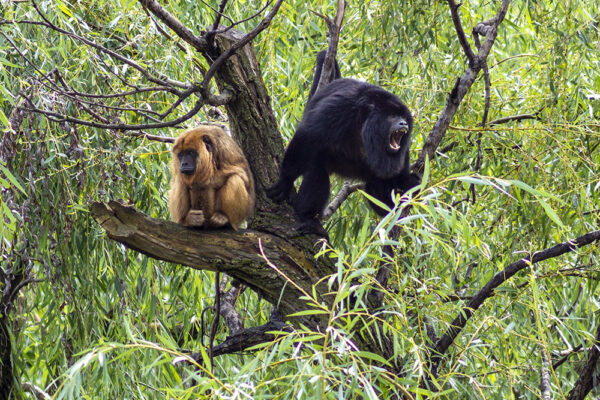
Even the Black Howler Monkey deserves a mention. Interestingly, only the males are black; the females are blonde! This is called sexual dimorphism. So, if you see a black monkey in the South American rainforest, it is likely a male Howler. Knowing the difference between these species helps us appreciate the biodiversity of our planet.
Habitat and Distribution of the Black Monkey
If you want to find a black monkey in the wild, you will need to pack your bags for a tropical adventure. The Celebes Crested Macaque is found exclusively on the island of Sulawesi (formerly Celebes) in Indonesia, and some smaller neighboring islands. They prefer the tropical rainforests where trees are tall, and fruit is plentiful.
These environments are hot, humid, and full of life. The monkeys spend a lot of time on the ground compared to other monkey species, but they are excellent climbers when they need to be. They sleep in high trees at night to stay safe from predators like large snakes. Their habitat is currently shrinking, which is a major concern for conservationists worldwide.
Why Sulawesi is Special
Sulawesi is a unique island with wildlife found nowhere else on Earth. It is shaped like the letter “K” and sits between the Asian and Australian continental plates. This isolation allowed the black monkey to evolve into the unique species we see today. The island’s volcanic soil creates lush forests that provide the perfect home for these primates.
However, living on an island has downsides. Because they have nowhere else to go, they are very vulnerable to habitat loss. If the forests of Sulawesi disappear, so do these monkeys. This makes protecting their specific geographic home incredibly important for the survival of the species.
The Role of Rainforests
Rainforests are often called the lungs of the Earth, but for the black monkey, they are simply home. The canopy provides shelter from heavy rains and the hot sun. The complex structure of the forest—from the forest floor to the emergent layer—offers different resources. These monkeys mostly hang out in the lower canopy and on the ground.
They rely on primary forests, which are untouched, old-growth forests. While they can survive in secondary forests (forests that have regrown after being cut down), they don’t thrive as well there. Protecting primary rainforests is essential for their future.
Diet: What Does a Black Monkey Eat?
You might think monkeys only eat bananas, but the diet of a black monkey is much more varied. They are frugivores, which means their favorite food is fruit. In the rich forests of Sulawesi, they have access to over 70 different types of fruit. Figs are a particular favorite because they are high in energy and available almost all year round.
But they aren’t picky eaters. When fruit is scarce, they will eat leaves, buds, seeds, fungi, birds’ eggs, and even small insects or lizards. This flexibility helps them survive when the seasons change and their favorite fruits aren’t growing.
The Importance of Seed Dispersal
Because they eat so much fruit, these monkeys play a crucial role as gardeners of the forest. When a black monkey eats fruit, it swallows the seeds. Later, as the monkey moves through the forest, it poops out the seeds in a new location, complete with a little bit of natural fertilizer.
This process helps the forest grow and regenerate. Without animals like these to spread seeds, many tree species would not be able to reproduce effectively. So, saving the monkey actually helps save the trees, too!
Foraging Behaviors
Foraging is a group activity. The troupe moves together through the forest, communicating with grunts and calls to let others know where the good food is. They spend a large part of their day just looking for food. This keeps them active and healthy.
Interestingly, sometimes they raid crops from nearby farms, which causes conflict with humans. They might steal corn, yams, or coconuts. Farmers often see the black monkey as a pest, which is a complicated issue that conservationists are trying to solve by finding ways for humans and monkeys to live side by side.
Social Structure and Behavior
One of the most human-like qualities of the black monkey is their complex social life. They live in large groups called troops, which can contain anywhere from 25 to over 70 members. These groups are mixed, containing males, females, and babies.
Living in a group offers protection. With so many eyes watching, it is harder for predators to sneak up on them. But it also means they have to navigate complex relationships, friendships, and hierarchies. It’s a bit like a high school drama, but in the jungle!
The Alpha Male
In every troop of black monkey groups, there is usually a dominant male, known as the Alpha. He is the boss. He gets the best food and the best sleeping spots. However, his main job is to protect the group. If there is a threat, the Alpha male is the first one to defend his family.
Becoming the Alpha isn’t easy. Males have to fight or intimidate others to get to the top. They use their large canine teeth and aggressive displays—like yawning to show off those teeth—to assert dominance. But being Alpha is stressful, and they usually only hold the position for a few years before a younger, stronger male takes over.
Female Hierarchies
While males come and go (they often leave their birth group to find a new one), females stay in the same group their whole lives. This means the core of any black monkey troop is a group of related females—mothers, sisters, and aunts.
They have their own hierarchy, too. High-ranking females get better access to food and are less stressed. They form strong bonds by grooming each other. Grooming isn’t just about cleaning fur; it’s the social glue that holds the group together. It reduces stress and builds trust between members.
Daily Routine of a Black Monkey Troop
|
Time of Day |
Activity |
Description |
|---|---|---|
|
Morning |
Waking & Grooming |
The troop wakes up and socializes to strengthen bonds. |
|
Mid-Morning |
Foraging |
The group moves out to find fruit and seeds. |
|
Noon |
Resting |
They take a nap or relax during the hottest part of the day. |
|
Afternoon |
Foraging & Play |
More eating, and young monkeys play to learn skills. |
|
Evening |
Sleeping |
They climb into tall trees to sleep safely for the night. |
Communication: How They Talk
If you walked into a forest full of these primates, you wouldn’t just see them; you would hear them. The black monkey is a vocal animal. They use a variety of sounds to talk to each other. They have alarm calls to warn of danger, contact calls to keep track of each other while moving, and aggressive screams during fights.
But they also use body language. A very famous expression is the “fear grin.” If a monkey pulls its lips back and shows its teeth, it looks like a smile to us humans. But in monkey language, this usually means “I am scared” or “I surrender.” Misinterpreting this can be dangerous for tourists!
The Famous “Selfie” Monkey
You might remember a news story about a black monkey taking a selfie. That was a Celebes Crested Macaque named Naruto! A photographer left his camera setup, and the curious monkey pressed the button. The result was a hilarious, grinning photo that went viral around the world.
This event sparked a huge legal debate about who owned the copyright—the photographer or the monkey? While the courts eventually decided animals can’t own copyrights, the incident made the black monkey famous and highlighted their intelligence and curiosity. It showed the world just how much personality these creatures have.
Why They “Smack” Their Lips
Another unique behavior is lip-smacking. If a male wants to be friendly with a female, or if two monkeys want to show they mean no harm, they will smack their lips together rapidly. It is a peaceful gesture.
Seeing a black monkey smack its lips is a good sign. It means they are calm and social. This is different from the open-mouth threat where they stare directly at you. Understanding these subtle cues is fascinating for animal behaviorists who study them in the wild.
Reproduction and Lifecycle
The lifecycle of a black monkey is quite similar to humans in some ways. Females are pregnant for about 5.5 months. They usually give birth to a single baby. Twins are very rare. The bond between mother and baby is incredibly strong.
For the first few months, the baby clings to the mother’s belly. As they get older, they ride on her back like a little jockey. The whole troop is often tolerant of infants, and you will sometimes see other females “babysitting” or interacting with the young ones.
Growing Up in the Jungle
Young monkeys are very playful. Play is essential because it teaches them how to climb, fight, and socialize. A young black monkey spends hours chasing friends and wrestling. This helps them build the muscles and coordination they will need as adults.
They reach maturity at different ages. Females are ready to have babies around 4 years old, while males mature a bit later, around 6 or 7 years old. Once males are grown, they usually leave the group to prevent inbreeding, venturing out into the dangerous forest to find a new family.
Pink Bottoms?
One physical trait that often makes people giggle is the large, pink, calloused pads on their bottoms. These are called ischial callosities. They act like built-in seat cushions, allowing the black monkey to sit on rough tree branches or hard rocks for hours without pain.
For females, the area around the tail swells up and turns bright pink when she is ready to mate. This is a visual signal to the males in the group. While it looks strange to us, it is a perfectly natural and important part of their biology.
Threats and Conservation Status
Sadly, the story of the black monkey is not all happy. The Celebes Crested Macaque is listed as Critically Endangered by the IUCN. This means they are at extremely high risk of extinction in the wild. Their population has dropped by more than 80% in the last 40 years.
The biggest threats are habitat loss and hunting. As human populations grow in Sulawesi, forests are cut down to make room for houses and farms. Without trees, the monkeys have nowhere to live. Additionally, in some local cultures, monkey meat is considered a delicacy, leading to illegal poaching.
Hunting and Bushmeat Trade
Hunting is a severe problem. Despite laws protecting them, black monkey meat is still sold in some local markets. It is often served at special celebrations like weddings or holidays. Conservation groups are working hard to change these traditions by educating locals about the importance of these animals.
Education is key. When people understand that the monkeys help the forest grow (which helps the humans by preventing landslides and keeping the water clean), they are less likely to hunt them. Many programs now focus on teaching school children to love and protect their unique wildlife.
Deforestation
Illegal logging and the expansion of agriculture are shrinking the black monkey habitat every day. Palm oil plantations are a major culprit in Indonesia generally, though in Sulawesi, it is often coconut plantations and small-scale farming.
When the forest is fragmented (broken into small pieces), troops of monkeys get stuck. They can’t reach other groups to find new mates, which leads to inbreeding and weaker babies. Reconnecting these forest fragments with “wildlife corridors” is one solution scientists are proposing.
How You Can Help
You don’t have to live in Indonesia to help the black monkey. There are several things you can do from home. First, spread awareness. Tell your friends and family about these amazing animals. The more people know, the more they care.
You can also support organizations that work in Sulawesi to protect primate habitats. Groups like the macaque conservation projects rely on donations to pay for rangers who patrol the forests and stop poachers.
Sustainable Choices
Be mindful of what you buy. Products containing unsustainable palm oil contribute to deforestation in Indonesia. Look for products with the RSPO (Roundtable on Sustainable Palm Oil) label. By choosing sustainable snacks and shampoos, you are helping to save the home of the black monkey.
Also, if you ever travel to see them, be a responsible tourist. Don’t feed them, and keep a safe distance. Feeding wild animals makes them aggressive and dependent on humans. It also exposes them to human diseases, which can wipe out a whole troop.
Eco-Tourism
Eco-tourism can be a double-edged sword, but when done right, it saves lives. When locals can make money by guiding tourists to see the black monkey in the wild, they have a financial reason to protect them. A live monkey becomes more valuable than a dead one.
If you visit Tangkoko Nature Reserve, hire a local guide. Your money goes directly into the local economy, proving that conservation pays. It is a win-win for humans and monkeys alike. For more insights on global travel and conservation economies, you can check out resources like https://forbesplanet.co.uk/ which often discusses sustainable business and travel practices.
Comparison: Black Monkey vs. Other Macaques
How does the Crested Black Macaque compare to its cousins? Let’s look at the differences. Most macaques, like the Rhesus Macaque or the Long-tailed Macaque, are brown or grey. The jet-black color of our subject is quite rare for this genus.
The black monkey is also generally more tolerant and less aggressive than Rhesus macaques. Their social groups are tighter, and they spend more time grooming. This “friendlier” nature is part of what makes them such popular tourist attractions, though they are still wild animals and should be respected.
Tail Length
The most obvious difference is the tail. The Long-tailed Macaque has, as the name suggests, a very long tail. The black monkey (Celebes Crested Macaque) has a tiny vestigial tail, only about an inch long.
This lack of a tail suggests they spent a lot of evolutionary time on the ground, where a long tail isn’t needed for balance as much as it is for tree-dwelling species. It is a classic example of form following function in nature.
Frequently Asked Questions (FAQ)
Q: Are black monkeys dangerous?
A: generally, they are not dangerous if left alone. However, they are wild animals with large teeth. If they feel threatened or if they are used to being fed by humans, they can bite. It is best to keep a safe distance.
Q: Can I keep a black monkey as a pet?
A: No. It is illegal and unethical. They are critically endangered animals that need complex social groups and a specific diet. They do not make good pets and can become aggressive as they grow up.
Q: Why do they have red eyes?
A: The Celebes Crested Macaque has distinctive reddish-brown eyes. This is just their natural eye color, which contrasts strikingly with their black fur.
Q: How long do they live?
A: In the wild, a black monkey can live for about 15 to 20 years. In captivity, where they have veterinary care and no predators, they can live up to 30 years.
Q: What is the main predator of the black monkey?
A: Their main natural predator is the Reticulated Python. Large birds of prey might take babies. However, their biggest threat by far is humans.
Conclusion
The black monkey, specifically the Celebes Crested Macaque, is a treasure of the natural world. From their punk-rock hairstyles to their gentle lip-smacking greetings, they are creatures full of personality and intelligence. They play a vital role in maintaining the health of the rainforests in Sulawesi.
However, their future hangs in the balance. Habitat loss and hunting are pushing them to the brink. It is up to us to ensure that these “selfie-taking,” fruit-loving primates remain part of our world for generations to come. By learning about them and making sustainable choices, we can help protect the incredible black monkey.
For further reading on their taxonomy and scientific classification, you can find a link from https://www.wikipedia.org/ related to this keyword “black monkey” and add it to your reading list, specifically the page on the Celebes crested macaque.
Stay Informed With the Latest & Most Important News
Previous Post
Next Post









Advertisement