

Now Reading: Understanding the Scrubber: A Guide to Cleaner Air
-
01
Understanding the Scrubber: A Guide to Cleaner Air

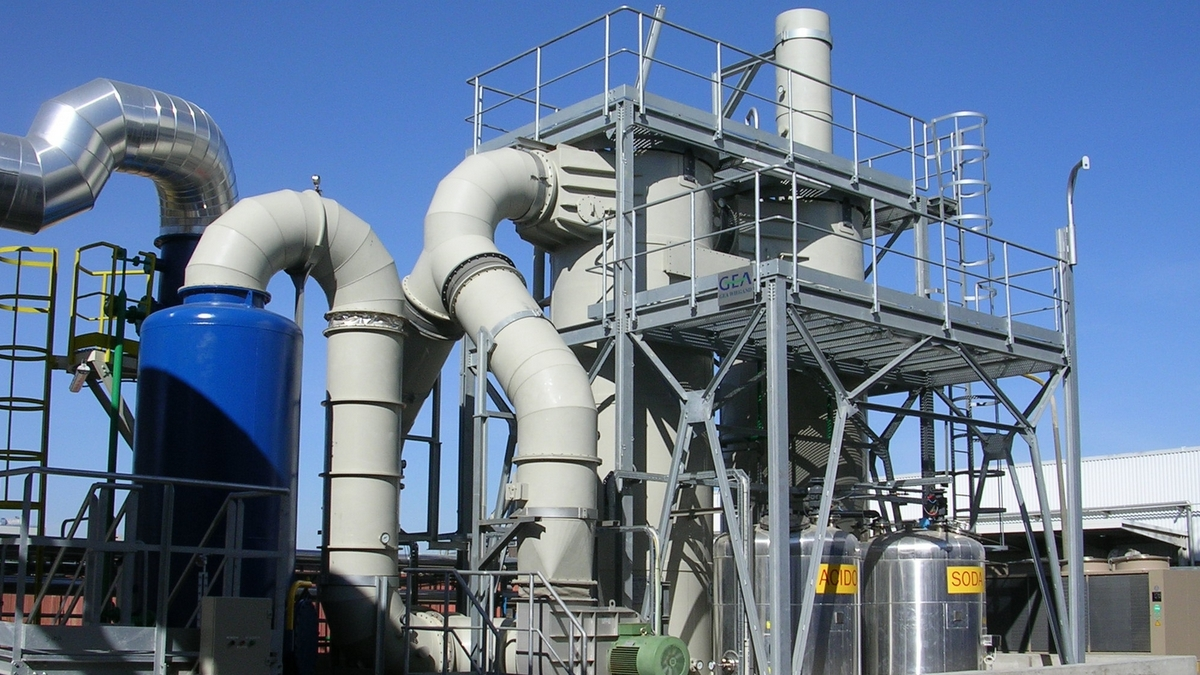
Have you ever wondered how large industrial facilities keep the air around them clean? Factories, power plants, and ships often release gases that can be harmful to the environment and our health. A key piece of technology used to manage these emissions is the scrubber. This device is a hero of environmental protection, working behind the scenes to wash pollutants out of industrial exhaust streams. Think of it as a giant washing machine for factory smoke. It uses a liquid—often water—to “scrub” harmful particles and gases from the air before they are released into the atmosphere. This process is essential for meeting air quality standards and protecting our planet.
Understanding how a scrubber works helps us appreciate the efforts being made to balance industrial progress with environmental responsibility. This article will explore the different types of scrubbers, how they function, their importance across various industries, and the regulations that make them necessary.
Key Takeaways
- A scrubber is an air pollution control device that removes harmful substances from industrial exhaust gases.
- There are two main types: wet scrubbers, which use a liquid solution, and dry scrubbers, which use a dry reagent.
- They are crucial for industries like manufacturing, power generation, and marine shipping to comply with environmental regulations.
- The selection of a scrubber depends on the specific pollutants, operating conditions, and cost-effectiveness.
- Proper maintenance is vital for ensuring a scrubber operates efficiently and reliably over its lifespan.
What Exactly is a Scrubber?
At its core, a scrubber system is designed for one primary purpose: to clean industrial exhaust gases. When factories burn fuel, create chemicals, or process materials, they produce byproducts in the form of gases and particulate matter. If released directly into the atmosphere, these emissions can cause significant harm, contributing to acid rain, smog, and respiratory illnesses. A scrubber intercepts these exhaust streams, known as flue gas, and removes the harmful components.
The most common method involves spraying a liquid, typically water mixed with a neutralizing chemical like limestone, into the gas stream. As the gas passes through this liquid spray, pollutants are absorbed into the liquid droplets or react with the chemicals to form new, less harmful substances. These substances are then collected and disposed of safely. This process is highly effective at removing pollutants such as sulfur dioxide (SO₂), a major cause of acid rain, as well as other acidic gases and fine particles. By installing a scrubber, facilities can significantly reduce their environmental footprint and ensure they are operating within legal emission limits.
The History and Evolution of Scrubber Technology
The concept of air pollution control is not new, but the modern scrubber has evolved significantly over the last century. Early efforts to control industrial smoke were rudimentary, often just involving taller smokestacks to disperse pollutants over a wider area. However, as the understanding of air pollution’s impact grew, so did the need for more effective solutions. The development of the first wet scrubber systems began in the early 20th century, but their widespread adoption took off with the rise of environmental movements and subsequent government regulations in the 1960s and 1970s.
Initial designs were simple, but they laid the groundwork for today’s advanced systems. Engineers improved efficiency by optimizing the contact between the gas and the scrubbing liquid. Innovations led to different designs, such as packed towers, spray towers, and venturi scrubbers, each suited for different applications. The materials used to build a scrubber also evolved, moving from basic metals to corrosion-resistant alloys and composites capable of withstanding harsh chemical environments. More recently, advancements in automation and sensor technology have allowed for real-time monitoring and control, ensuring peak performance and compliance with increasingly strict air quality standards.
The Two Main Categories: Wet and Dry Scrubbers
While all scrubbers aim to clean gas streams, they do so using different methods. The primary distinction is between wet and dry systems. The choice between a wet scrubber and a dry scrubber depends on several factors, including the type of pollutant, the temperature of the gas stream, the required removal efficiency, and the facility’s operational budget. Both types play a critical role in global pollution control efforts.
Wet Scrubber: The Liquid Solution
A wet scrubber is the most common type of scrubber used in industry today. It operates by bringing the polluted gas stream into direct contact with a scrubbing liquid. This liquid is usually water, but it can also be a solution containing reagents that are specifically chosen to target and neutralize certain pollutants. For example, a limestone slurry is often used to capture sulfur dioxide (SO₂).
As the flue gas enters the scrubber chamber, it is sprayed with or forced to bubble through the liquid. The pollutants in the gas either dissolve into the liquid or react with the chemical reagents. The cleaned gas then exits the top of the scrubber, while the liquid containing the captured pollutants is collected at the bottom. This liquid byproduct, known as slurry, is then treated to remove the contaminants before the water is either recycled back into the scrubber system or discharged safely. Wet scrubbers are highly effective, capable of removing over 99% of certain pollutants.
Common Types of Wet Scrubbers
There isn’t a one-size-fits-all wet scrubber. Different designs have been developed to handle specific industrial processes and pollutants.
- Spray Towers: These are the simplest type, consisting of an empty chamber where the scrubbing liquid is sprayed through nozzles into the gas stream. They are effective for removing larger particles.
- Venturi Scrubbers: These are highly efficient at removing fine particulate matter. Gas is accelerated through a narrow throat section (the venturi), where it collides with the scrubbing liquid at high velocity, forcing particles into the liquid droplets.
- Packed Bed Scrubbers: The chamber is filled with packing material like plastic or ceramic shapes. This material creates a large surface area for the gas and liquid to interact, making it excellent for absorbing gaseous pollutants.
Dry Scrubber: The Powder-Based Approach
A dry scrubber, or dry sorbent injection system, works without creating a wet slurry byproduct. In this system, a dry reactant powder, such as hydrated lime or sodium bicarbonate, is injected directly into the hot flue gas stream. The high temperature of the gas facilitates a chemical reaction between the reactant and the pollutants, primarily acidic gases like sulfur dioxide and hydrogen chloride.
This reaction converts the gaseous pollutants into a dry, solid particulate matter. These newly formed solids, along with any other particles in the gas, are then captured downstream by a separate device, typically a fabric filter or an electrostatic precipitator. One of the main advantages of a dry scrubber is that it doesn’t use water, eliminating the need for wastewater treatment. The dry byproduct is also easier to handle and dispose of. While sometimes less efficient at removing certain pollutants compared to wet systems, dry scrubbers are often a more cost-effective and simpler solution for specific applications.
How a Scrubber Works: A Step-by-Step Process
Understanding the inner workings of a scrubber reveals an elegant engineering solution to a complex environmental problem. While designs vary, the fundamental process for a typical wet scrubber involves several key stages. The goal is to maximize the contact between the dirty gas and the clean liquid to ensure the highest possible removal efficiency.
- Gas Inlet: The process begins when hot, polluted flue gas from a boiler, incinerator, or industrial process is directed into the scrubber chamber. This gas contains a mixture of harmless components like nitrogen and carbon dioxide, as well as harmful pollutants such as SO₂, NOx, and particulate matter.
- Liquid Introduction: Simultaneously, the scrubbing liquid is pumped into the upper part of the chamber. It is sprayed downwards through a series of nozzles, creating a fine mist that fills the chamber. This creates an enormous surface area for the chemical reactions to occur.
- Contact and Reaction: As the hot gas rises through the chamber, it is forced to pass through the descending mist of scrubbing liquid. This is the critical stage where the “scrubbing” happens. Gaseous pollutants are absorbed by the liquid droplets, and particulate matter is trapped. The chemical reagents in the liquid neutralize the absorbed gases. For example, limestone (CaCO₃) reacts with sulfur dioxide (SO₂) to form calcium sulfite (CaSO₃), a solid.
- Mist Elimination: Before the cleaned gas can exit the scrubber, it passes through a mist eliminator. This is a device, often a series of corrugated plates, designed to capture any remaining liquid droplets from the gas stream, preventing them from being carried out of the stack.
- Clean Gas Outlet: The now-clean gas, free from the majority of its pollutants, exits through the top of the scrubber and is released into the atmosphere through a smokestack.
- Byproduct Collection: The liquid containing the captured pollutants and newly formed solids falls to the bottom of the scrubber, forming a slurry. This slurry is continuously drained and sent to a wastewater treatment facility.
Key Industries Relying on Scrubber Technology
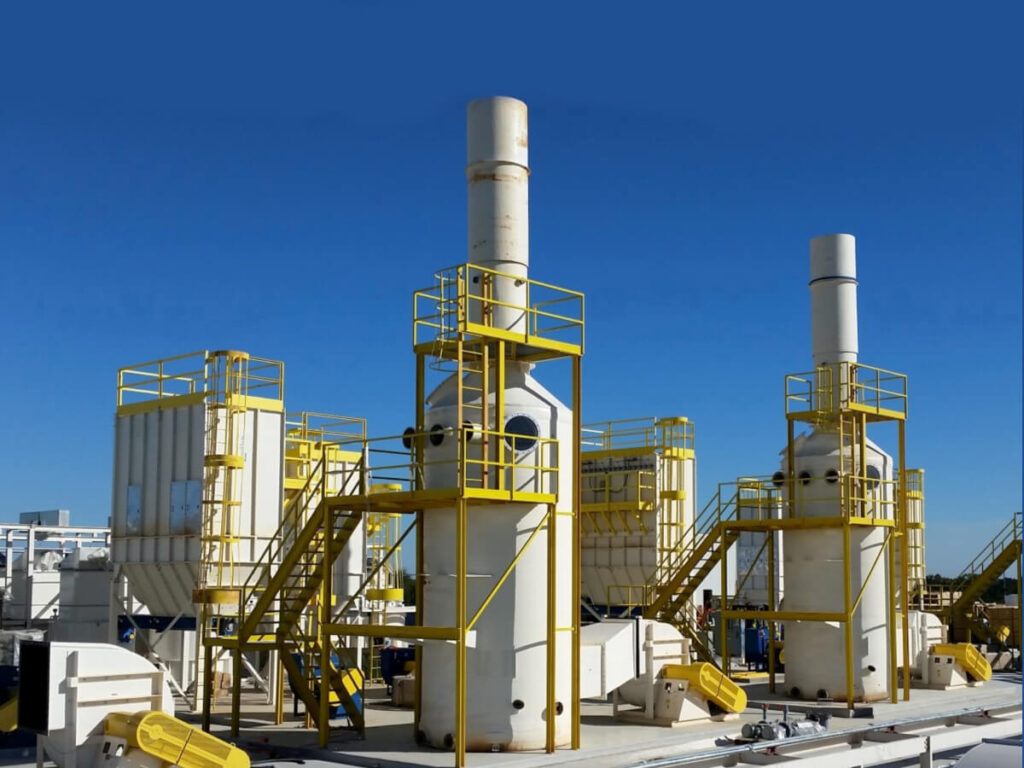
The scrubber is an indispensable tool for a wide range of industries whose processes generate significant air emissions. Compliance with environmental laws like the Clean Air Act in the United States makes this technology a necessity, not an option. From generating power for our homes to producing the goods we use every day, scrubbers are working hard to protect air quality.
Power Generation
Fossil fuel power plants, especially those that burn coal, are among the largest sources of sulfur dioxide (SO₂) emissions. Coal naturally contains sulfur, and when it is burned, this sulfur combines with oxygen to form SO₂. To combat this, nearly all modern coal-fired power plants are equipped with large-scale Flue Gas Desulfurization (FGD) systems, which are a type of wet scrubber. These massive systems can remove over 95% of the SO₂ from the flue gas, preventing the formation of acid rain and protecting public health.
Marine and Shipping
The international shipping industry is another major user of scrubber technology. Large container ships, tankers, and cruise ships traditionally burn heavy fuel oil, which has a high sulfur content. To comply with regulations set by the International Maritime Organization (IMO), ship owners have two choices: switch to more expensive low-sulfur fuel or install an exhaust gas cleaning system, commonly known as a marine scrubber. These scrubbers allow ships to continue using the more affordable high-sulfur fuel while still meeting strict emission limits, especially when operating in designated Emission Control Areas (ECAs).
Manufacturing and Chemical Processing
Various manufacturing sectors rely on scrubbers to control emissions.
- Pulp and Paper Mills: The chemical pulping process releases odorous and harmful sulfur compounds. Scrubbers are used to capture these gases.
- Steel Manufacturing: Furnaces and coking operations produce particulate matter and acidic gases that must be controlled.
- Chemical Plants: The production of acids, fertilizers, and other chemicals can release a wide variety of pollutants that require specialized scrubber systems for safe removal.
- Waste Incineration: Facilities that burn municipal or hazardous waste use advanced multi-pollutant control systems, where a scrubber is a key component for removing acidic gases and heavy metals.
Comparing Wet and Dry Scrubber Systems
When an industrial facility needs to install a scrubber, engineers must decide whether a wet or dry system is the better fit. The decision involves a trade-off between initial cost, operating costs, efficiency, and the specific pollutants being targeted.
|
Feature |
Wet Scrubber |
Dry Scrubber |
|---|---|---|
|
Pollutant Removal |
High efficiency for gases and particulates. |
Good for acid gases, less effective for particulates. |
|
Initial Cost (CAPEX) |
Generally higher due to complex construction. |
Generally lower and simpler to install. |
|
Operating Cost (OPEX) |
Can be high due to water use and sludge disposal. |
Lower, as there is no water treatment or sludge handling. |
|
Byproduct |
Creates a wet sludge that requires dewatering and treatment. |
Produces a dry, solid powder that is easier to dispose of. |
|
Water Usage |
Requires a significant amount of water. |
Uses no water in the primary reaction process. |
|
Footprint |
Typically larger and requires more space. |
More compact and suitable for retrofitting. |
|
Corrosion Risk |
High risk of corrosion due to the wet, acidic environment. |
Lower risk of corrosion. |
The Importance of Scrubber Maintenance
Installing a scrubber is a major investment, but its effectiveness depends entirely on consistent and proper maintenance. A neglected scrubber can quickly lose efficiency, leading to compliance failures, fines, and even a complete shutdown of operations. A proactive maintenance schedule is crucial for ensuring the long-term reliability and performance of these vital systems.
Key maintenance activities include:
- Nozzle Inspection: The spray nozzles in a wet scrubber can become clogged with solids or erode over time. Regular inspection and cleaning are necessary to ensure a uniform spray pattern for effective gas-liquid contact.
- Pump and Fan Maintenance: The pumps that circulate the scrubbing liquid and the fans that move the gas are the heart of the system. Regular lubrication, alignment checks, and monitoring for vibration are essential.
- Corrosion Monitoring: The wet, acidic environment inside a scrubber is highly corrosive. Regular inspections using techniques like ultrasonic thickness testing can detect thinning of the vessel walls before a failure occurs.
- pH and Chemical Monitoring: The chemical balance of the scrubbing liquid is critical. Automated sensors must be calibrated regularly to ensure the correct amount of reagent is being used to neutralize pollutants effectively.
- Ductwork and Damper Checks: Leaks in the ductwork or malfunctioning dampers can allow untreated gas to bypass the scrubber, leading to an immediate compliance violation.
A well-maintained scrubber not only ensures environmental compliance but also operates more efficiently, saving money on energy and chemical consumption in the long run.
The Future of Scrubber Technology
As environmental regulations become more stringent and the world pushes towards decarbonization, scrubber technology continues to evolve. Researchers and engineers are focused on several key areas of innovation. One major goal is to improve energy efficiency, as current systems consume a significant amount of power to run pumps and fans.
Another area of intense research is the development of systems that can capture multiple pollutants simultaneously, including nitrogen oxides (NOx) and even carbon dioxide (CO₂). While a conventional scrubber is not designed for CO₂ capture, the basic principle of gas-liquid absorption is being adapted for this purpose in the field of Carbon Capture, Utilization, and Storage (CCUS). For example, companies are developing and testing novel solvents that can selectively absorb CO₂ from flue gas. While still in the early stages for widespread commercial use, the integration of carbon capture capabilities with traditional scrubber functions represents a promising pathway for deep decarbonization in hard-to-abate industries.
Conclusion
The scrubber is a powerful and essential technology in the global effort to maintain clean air. By effectively removing harmful pollutants like sulfur dioxide and particulate matter from industrial emissions, these systems play a critical role in preventing acid rain, reducing smog, and protecting public health. From massive power plants to ocean-faring ships, the application of scrubber technology allows essential industries to operate in a more environmentally responsible manner. The choice between wet and dry systems depends on specific needs, but both paths lead to the same goal: cleaner exhaust and a healthier planet. As technology advances, we can expect the scrubber to become even more efficient and capable, continuing its silent but vital work of washing our skies.
To further your understanding, you can explore the comprehensive overview of these systems provided by Wikipedia. The continuous improvement of the scrubber and similar pollution control technologies is fundamental to achieving a sustainable balance between industrial activity and environmental stewardship for generations to come.
Frequently Asked Questions (FAQ)
1. Is a scrubber the same as a catalytic converter?
No, they are different devices. A scrubber primarily uses a liquid or dry sorbent to remove pollutants like sulfur dioxide. A catalytic converter, found on most cars, uses a catalyst (like platinum) to convert harmful gases like carbon monoxide and nitrogen oxides into less harmful substances like carbon dioxide and nitrogen gas.
2. Can a scrubber remove all pollutants from factory smoke?
No single scrubber can remove 100% of all pollutants. They are highly effective for specific substances, especially acidic gases like SO₂. A comprehensive air pollution control system might use a scrubber in combination with other devices, like an electrostatic precipitator for fine particles and a selective catalytic reduction (SCR) system for NOx, to achieve high removal rates across a range of pollutants.
3. Does using a scrubber create other environmental problems?
It can, which is why byproduct management is a key part of the system. A wet scrubber produces a liquid sludge that must be treated before the water can be reused or discharged. The solid byproduct can sometimes be repurposed. For example, the gypsum produced by some power plant scrubbers is sold to be used in wallboard manufacturing. A dry scrubber produces a dry powder that must be disposed of in a landfill.
4. Are there scrubbers for homes?
The term “scrubber” is generally used for large, industrial-scale equipment. However, some residential air purifiers use technologies like wet filtration or activated carbon that operate on similar principles of absorbing or capturing pollutants from the air, but on a much smaller scale.
5. How much does a scrubber cost?
The cost of a scrubber varies dramatically depending on its size, type, and complexity. A large Flue Gas Desulfurization system for a power plant can cost hundreds of millions of dollars to install. A smaller scrubber for a manufacturing plant might cost tens or hundreds of thousands of dollars. Operating costs, including energy, water, chemicals, and maintenance, are also significant ongoing expenses.
Related Posts



Stay Informed With the Latest & Most Important News
Previous Post
Next Post











Advertisement