

Now Reading: The Indonesia Tsunami Disaster: A Story of Resilience
-
01
The Indonesia Tsunami Disaster: A Story of Resilience


The world watched in shock as the waves crashed ashore. The indonesia tsunami disaster of 2004 remains one of the most powerful and devastating natural events in modern history. It wasn’t just a single event but a series of catastrophic waves that impacted multiple countries, with Indonesia bearing the brunt of the destruction. This event reshaped coastlines, communities, and our understanding of nature’s immense power. It also sparked an unprecedented global response, showcasing humanity’s capacity for compassion in the face of tragedy.
This article will explore the causes, impacts, and long-term consequences of this monumental event. We will delve into the science behind the tsunami, the human stories of survival and loss, and the incredible journey of recovery and rebuilding that followed. It’s a story of heartbreak, but it’s also a powerful testament to the resilience of the human spirit.
Key Takeaways
- Cause: The 2004 tsunami was triggered by a massive undersea earthquake off the coast of Sumatra, Indonesia, one of the most powerful ever recorded.
- Widespread Impact: While Indonesia was the hardest-hit nation, the tsunami’s effects were felt across 14 countries, leading to a global humanitarian crisis.
- Human Cost: The disaster resulted in an immense loss of life, with estimates reaching over 230,000 people, and displaced millions more.
- Global Response: The event prompted a massive international aid effort, uniting nations, organizations, and individuals in a common goal of relief and reconstruction.
- Lessons Learned: The indonesia tsunami disaster led to significant advancements in tsunami detection and warning systems, particularly the development of the Indian Ocean Tsunami Warning System.
What Caused the 2004 Indonesia Tsunami Disaster?
To understand the indonesia tsunami disaster, we first need to look deep beneath the ocean’s surface. The catalyst was a colossal undersea earthquake that occurred on December 26, 2004. This wasn’t just any earthquake; it was a megathrust earthquake with a magnitude of 9.1–9.3, making it the third-largest earthquake ever recorded on a seismograph. It ruptured along the fault line where the Indian Plate is subducting, or sliding under, the Burma Plate.
The earthquake’s epicenter was off the west coast of northern Sumatra, Indonesia. The rupture was immense, with the fault slipping for about 15 meters (50 feet) along a stretch of seabed more than 1,200 kilometers (750 miles) long. This sudden, violent movement of the seafloor displaced an enormous volume of water. Imagine lifting a gigantic section of the ocean floor in an instant—the water above it is pushed upwards and outwards, creating powerful waves that travel across the ocean at incredible speeds. These waves are the genesis of a tsunami.
The Science of a Megathrust Quake
A megathrust earthquake is the most powerful type of earthquake. It happens at subduction zones, where one of a planet’s tectonic plates is forced under another. The immense friction between these plates causes them to lock together. Over centuries, strain builds up like a compressed spring. When the strain overcomes the friction, the plates suddenly unlock and slip, releasing a tremendous amount of energy.
In the case of the 2004 event, this release of energy was so vast it was estimated to be equivalent to 23,000 Hiroshima-type atomic bombs. This raw power is what displaced the water and triggered the devastating waves that would become known as the indonesia tsunami disaster.
The Unfolding Catastrophe: A Timeline of Events
The tsunami waves did not strike everywhere at once. They traveled across the Indian Ocean at speeds comparable to a jet airliner, over 500 mph (800 kph). The proximity of Sumatra to the earthquake’s epicenter meant it was the first and hardest hit.
|
Time After Quake |
Location Struck |
Key Events |
|---|---|---|
|
~30 minutes |
Banda Aceh, Indonesia |
Massive waves, some over 30 meters (100 ft) high, decimated the city. |
|
~2 hours |
Thailand, Sri Lanka |
Popular tourist beaches and coastal villages were inundated. |
|
~4 hours |
India |
Southern coasts and the Andaman and Nicobar Islands suffered heavily. |
|
~7 hours |
Somalia, East Africa |
The tsunami’s power reached across the ocean, causing deaths and damage. |
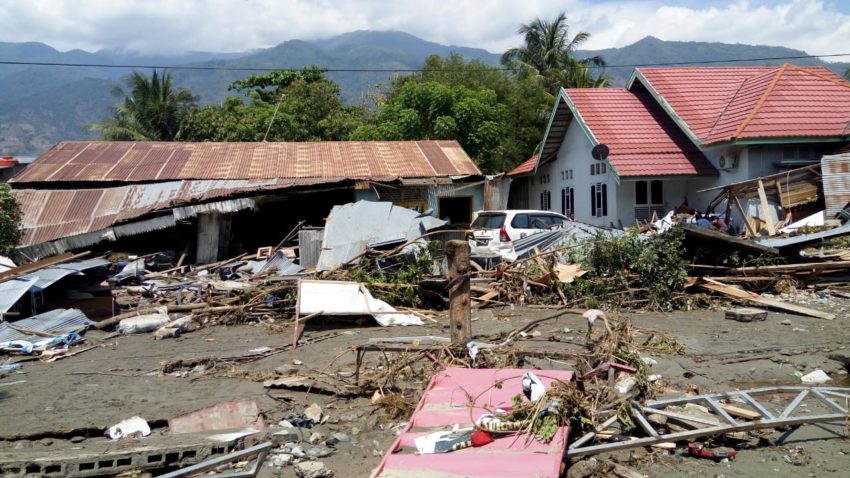
The first waves reached the shores of Aceh province in Indonesia in less than 30 minutes. Eyewitnesses reported the sea receding unnervingly, exposing the ocean floor, before a series of gigantic waves surged inland. These waves were not like typical beach waves; they were fast-moving walls of water, filled with debris, that smashed everything in their path. The city of Banda Aceh was almost completely flattened. The destruction continued as the waves radiated outwards, hitting Thailand, Sri Lanka, India, and eventually reaching the coast of Africa.
The Human Impact: Stories of Loss and Survival
Behind the staggering statistics of the indonesia tsunami disaster are millions of individual stories of profound loss, incredible survival, and heartbreaking choices. The tsunami did not discriminate, affecting local residents and international tourists alike. In an instant, families were torn apart, and entire communities were wiped from the map.
In Aceh, the province closest to the epicenter, the death toll was catastrophic, with over 170,000 people losing their lives. Survivors spoke of being swept away by the current, clinging to debris for hours or even days before being rescued. They witnessed the destruction of their homes, schools, and everything they had ever known. Many were left as the sole survivors of their families, grappling with immense grief and trauma.
The Psychological Scars
The impact of the indonesia tsunami disaster went far beyond physical destruction. The psychological trauma for survivors was immense and long-lasting. Many suffered from Post-Traumatic Stress Disorder (PTSD), anxiety, and depression. The sound of the ocean, once a source of livelihood and comfort, became a trigger for fear.
Children were particularly vulnerable. Many were orphaned, and those who survived had witnessed terrifying events that were difficult to process. Aid organizations quickly recognized the need for psychosocial support, setting up counseling services and safe spaces for children to play and begin to heal. The recovery process was not just about rebuilding houses but also about mending broken hearts and minds.
Global Response to the Indonesia Tsunami Disaster
The scale of the indonesia tsunami disaster prompted an unprecedented wave of global solidarity. News of the devastation spread quickly, and the world responded with an outpouring of aid and support. Governments, non-governmental organizations (NGOs), and individuals from every corner of the globe mobilized to help. It became one of the largest humanitarian relief efforts in history.
Financial aid poured in, with governments and the public donating billions of dollars. But the response was more than just money. Emergency response teams, including doctors, engineers, and logistics experts, were dispatched to the affected regions. Military forces from countries like the United States and Australia provided critical logistical support, using ships and aircraft to deliver food, clean water, medical supplies, and temporary shelter to isolated communities.
Challenges in Aid Distribution
Despite the overwhelming generosity, the aid effort faced significant challenges. The sheer scale of the destruction made it difficult to reach many affected areas. Roads, bridges, and ports were destroyed, cutting off access to remote villages. Coordinating the efforts of hundreds of different aid organizations was a massive logistical puzzle.
There were also concerns about ensuring the aid reached those who needed it most and was used effectively. Lessons were learned about the importance of coordination, transparency, and involving local communities in the reconstruction process. Organizations like those featured on Forbes Planet often highlight the importance of sustainable and community-led recovery efforts in the wake of such events. These challenges helped shape future disaster response protocols, improving how the world responds to large-scale emergencies.
Rebuilding and Recovery: A Long Road Ahead
The aftermath of the indonesia tsunami disaster left a landscape of ruin. The task of rebuilding was monumental. It wasn’t just about constructing new buildings; it was about rebuilding entire societies, economies, and lives. The recovery process would take years and required a sustained commitment from both local governments and the international community.
In Indonesia, the reconstruction effort was led by a special agency, the Rehabilitation and Reconstruction Agency (BRR) for Aceh and Nias. This body oversaw the coordination of funds and projects, aiming to “build back better.” This philosophy meant not just replacing what was lost but also improving infrastructure, building standards, and community resilience to future disasters.
Building Back Better
The “build back better” approach had several key components:
- Safer Housing: New homes were built to be more resistant to earthquakes and tsunamis. Many were relocated to safer areas further from the coast.
- Improved Infrastructure: Roads, bridges, schools, and hospitals were reconstructed to higher standards.
- Economic Revival: Efforts were made to restore livelihoods, particularly in fishing and agriculture, which were the backbone of the local economy. Microloans and training programs helped people start new businesses.
- Environmental Restoration: The tsunami caused significant environmental damage, including destroying coral reefs and mangrove forests. Replanting mangroves became a key strategy, as they serve as a natural barrier against storm surges.
The recovery was a long and complex process, but the progress made in the years following the indonesia tsunami disaster is a testament to the resilience and determination of the affected communities.
A Legacy of Warning: The Indian Ocean Tsunami Warning System

One of the most significant and lasting legacies of the 2004 indonesia tsunami disaster was the creation of the Indian Ocean Tsunami Warning and Mitigation System (IOTWMS). In 2004, there was no coordinated system in the Indian Ocean to detect tsunamis and warn coastal communities. While seismologists knew a massive earthquake had occurred, there was no mechanism to predict the ensuing tsunami and alert the populations in its path. This tragic gap in preparedness cost countless lives.
Spurred by the disaster, nations across the region, with support from the international community, worked together to establish a state-of-the-art warning system. Officially launched in 2006, the IOTWMS consists of a network of seismic and sea-level monitoring stations, including deep-ocean buoys known as DART buoys.
Components of the IOTWMS:
- Seismographic Stations: These detect earthquakes in real-time and assess their potential to generate a tsunami.
- Sea-Level Stations: Coastal tide gauges and deep-ocean buoys measure changes in sea level to confirm if a tsunami has been generated.
- Dissemination Centers: National Tsunami Warning Centers in countries like Indonesia, Australia, and India analyze the data and issue warnings to their respective governments and the public.
- Public Education: A crucial part of the system is educating coastal populations on how to respond to a tsunami warning, including evacuation routes and safety procedures.
This system, which you can learn more about on its Wikipedia page, has since issued numerous warnings, undoubtedly saving lives and proving to be a vital outcome of a terrible tragedy.
Frequently Asked Questions (FAQ)
Q1: What was the date of the Indonesia tsunami disaster?
The main earthquake that triggered the tsunami occurred on December 26, 2004. This event is often referred to as the “Boxing Day Tsunami.”
Q2: How many people died in the 2004 tsunami?
The total number of deaths across all affected countries is estimated to be between 230,000 and 280,000 people. Indonesia, particularly the province of Aceh, suffered the highest number of fatalities.
Q3: How high were the waves in the indonesia tsunami disaster?
The height of the waves varied greatly depending on the location and the topography of the coastline. In some areas of Aceh, Indonesia, the waves reached astonishing heights of over 30 meters (100 feet), which is as tall as a 10-story building.
Q4: Could another tsunami like this happen?
Yes, tsunamis are a natural and recurring phenomenon. The region of the 2004 earthquake remains one of the most seismically active in the world. However, the key difference now is the existence of the Indian Ocean Tsunami Warning System and increased public awareness, which greatly improve the chances of evacuating coastal areas in time.
Q5: How did the tsunami affect the environment?
The environmental impact was severe. The powerful waves eroded coastlines, destroyed sensitive ecosystems like coral reefs and mangrove forests, and contaminated freshwater sources and agricultural land with saltwater and debris. Recovery efforts have included large-scale replanting of mangroves and other environmental rehabilitation projects.
Conclusion: Remembering and Preparing
The indonesia tsunami disaster of 2004 was a profound tragedy that left an indelible mark on the world. It demonstrated the terrifying power of nature and the fragility of human life. Yet, in its wake, it also revealed the incredible strength of the human spirit, the power of global unity, and our capacity to learn and adapt. The stories of loss are heartbreaking, but the stories of survival, recovery, and rebuilding are a source of inspiration.
The most important legacy of the disaster is the lesson it taught us about preparedness. The development of advanced warning systems and a greater focus on community education have made coastal regions safer. While we can never prevent natural disasters like earthquakes and tsunamis, we can be better prepared to face them. Remembering the indonesia tsunami disaster is not just about honoring the memory of those who were lost; it is a solemn promise to remain vigilant, to continue improving our warning systems, and to build more resilient communities for the future.
Stay Informed With the Latest & Most Important News
Previous Post
Next Post










Advertisement