

Now Reading: The Broadway Mormon Play: A Guide to the Hit Musical
-
01
The Broadway Mormon Play: A Guide to the Hit Musical

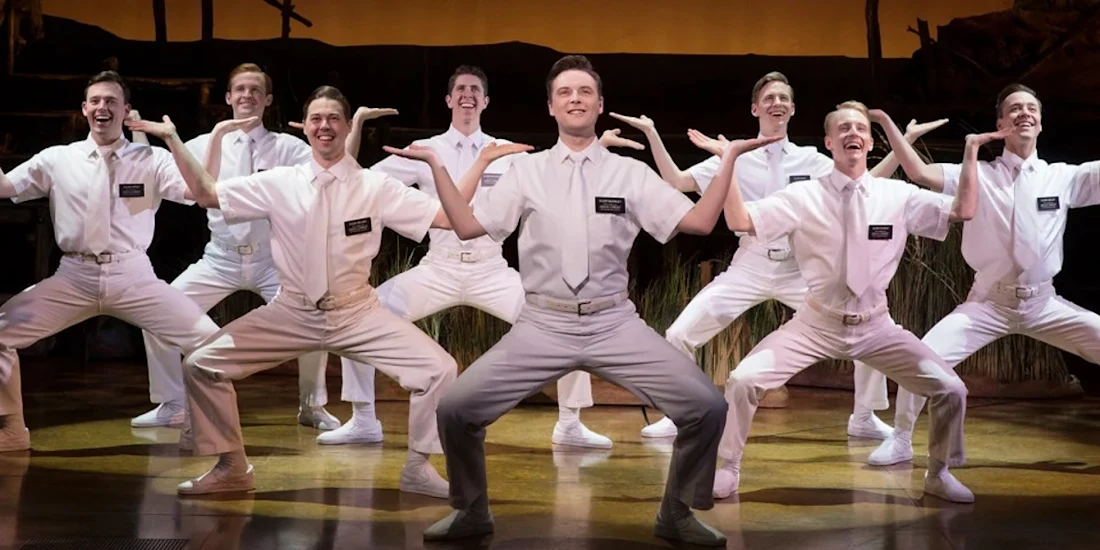
Have you ever heard of a Broadway show that is both hilariously funny and surprisingly sweet? The broadway mormon play, officially titled The Book of Mormon, is exactly that. It’s a musical that has been making audiences laugh out loud since it first premiered. This show takes a satirical look at faith, friendship, and the challenges of seeing the world from a different perspective. It follows two young Mormon missionaries who are sent to a remote village in Uganda, where their optimistic views are tested by the harsh realities of life. Despite its edgy humor, the play has a big heart and a message about the power of belief and community. Get ready to explore everything that makes this award-winning show a global phenomenon.
Key Takeaways
- What It Is: The broadway mormon play is a satirical musical comedy titled The Book of Mormon. It is not an official production of The Church of Jesus Christ of Latter-day Saints.
- The Creators: The show was created by Trey Parker and Matt Stone, the minds behind South Park, along with Robert Lopez, the co-composer of Avenue Q and Frozen.
- The Story: It follows two mismatched Mormon missionaries, Elder Price and Elder Cunningham, on their mission to a remote village in Uganda.
- Tone and Humor: The musical is known for its irreverent, satirical humor that pokes fun at religion, cultural differences, and musical theater itself. It contains adult language and themes.
- Critical Acclaim: The play has won numerous awards, including nine Tony Awards, one of which was for Best Musical.
Understanding the Broadway Mormon Play
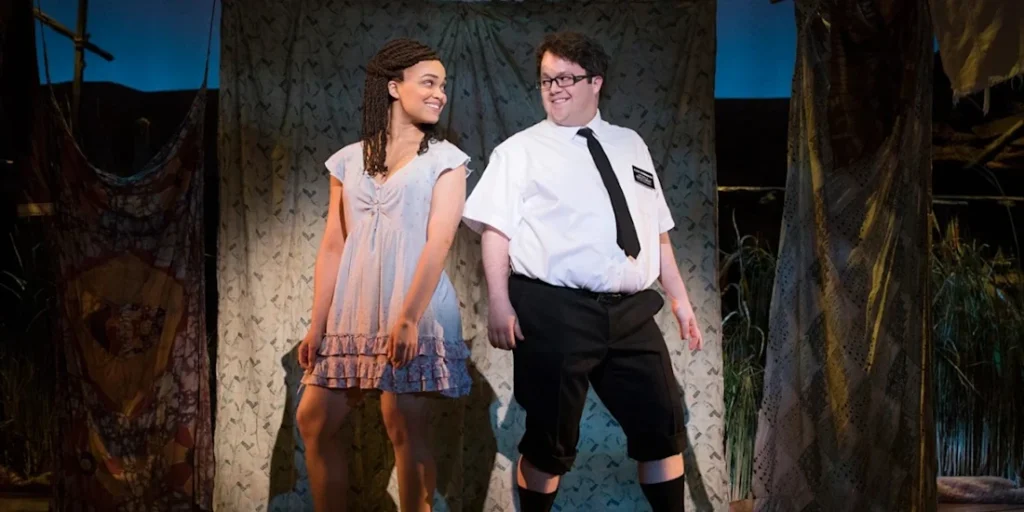
The Book of Mormon is a musical that tells a fictional story about two missionaries from The Church of Jesus Christ of Latter-day Saints. The main characters, the ambitious Elder Price and the well-meaning but socially awkward Elder Cunningham, are sent on a two-year mission to spread their faith. Instead of being sent to a place like Orlando, Florida, as Elder Price had prayed for, they are assigned to a village in northern Uganda. The villagers are dealing with serious issues like famine, poverty, and a violent warlord. The missionaries’ attempts to share their religious texts are met with indifference and skepticism, as the villagers’ problems are far more immediate. This sets the stage for a story filled with culture clash, hilarious misunderstandings, and unexpected personal growth.
The Creative Minds Behind the Curtain
The success of the broadway mormon play can be attributed to its brilliant creative team. Trey Parker and Matt Stone, famous for creating the long-running animated series South Park, brought their signature style of sharp satire and fearless comedy to the project. They had wanted to create a musical about Mormonism for years, fascinated by its history and its public image. To bring their vision to life, they teamed up with Robert Lopez, a gifted composer and lyricist who had already won a Tony Award for the puppet-filled musical Avenue Q. Lopez’s talent for crafting catchy, show-stopping tunes that also serve the story was the perfect match for Parker and Stone’s comedic sensibilities. Together, this trio created a musical that is as musically rich as it is outrageously funny.
The Core Story: Missionaries in a New World
The plot of the broadway mormon play centers on the dynamic between its two lead characters. Elder Kevin Price is the “golden boy,” a top student in his missionary class who believes he is destined for greatness. He is confident, polished, and expects his mission to be a huge success. His partner, Elder Arnold Cunningham, is his complete opposite. He is insecure, prone to exaggeration, and has a habit of making things up when he doesn’t know the answer. When they arrive in Uganda, Elder Price’s confidence is quickly shattered by the harsh realities he finds. In contrast, Elder Cunningham, in his clumsy attempts to connect with the villagers, starts to find his own way. He begins altering the stories from the Book of Mormon to make them more relatable to the villagers’ lives, mixing in elements of science fiction and fantasy. This unconventional approach starts to yield surprising results, challenging the very idea of what it means to have faith.
The Journey to Broadway Stardom
Before the broadway mormon play became a massive hit, it spent years in development. Parker, Stone, and Lopez began working on the show in 2004. They took their time to get it right, writing the book, music, and lyrics themselves. They wanted to create a show that felt like a classic, old-fashioned musical in its structure and style, even as its content pushed boundaries. This dedication to the craft of musical theater is a big part of what makes the show so effective. It pays homage to classics like The King and I and The Sound of Music while simultaneously subverting audience expectations. This careful blend of tradition and subversion helped the show find a massive audience, attracting both seasoned theatergoers and people who had never seen a Broadway show before. Its success is a testament to the power of original storytelling and bold creative choices.
A Sensation from Day One
When The Book of Mormon finally opened on Broadway at the Eugene O’Neill Theatre in March 2011, the reaction was immediate and overwhelming. Critics raved about its cleverness, its humor, and its surprisingly heartfelt story. The New York Times called it “the best musical of this century.” Audiences flocked to see it, and tickets became incredibly difficult to get. The show was a cultural phenomenon, discussed everywhere from morning news shows to late-night talk shows. It proved that a musical could be provocative and irreverent while still being incredibly entertaining and even uplifting. The show’s success quickly went beyond New York, with national tours and international productions launching in cities like London, Chicago, and Melbourne, Australia. Each production was met with similar enthusiasm, cementing the broadway mormon play as a true global hit.
Sweeping the Awards Circuit
The critical and commercial success of the broadway mormon play was matched by its incredible performance during awards season. At the 2011 Tony Awards, the most prestigious awards in American theater, the show was nominated for 14 awards and won an amazing nine of them. These wins included the coveted prize for Best Musical, as well as awards for Best Book of a Musical, Best Original Score, and Best Direction of a Musical. The show also won a Grammy Award for Best Musical Theater Album, honoring its fantastic cast recording. This collection of awards solidified its place as one of the most successful and acclaimed musicals of its generation. For anyone interested in the business of entertainment, its journey is a fascinating case study, often covered in publications like those on https://forbesplanet.co.uk/.
The Music and Humor of the Show
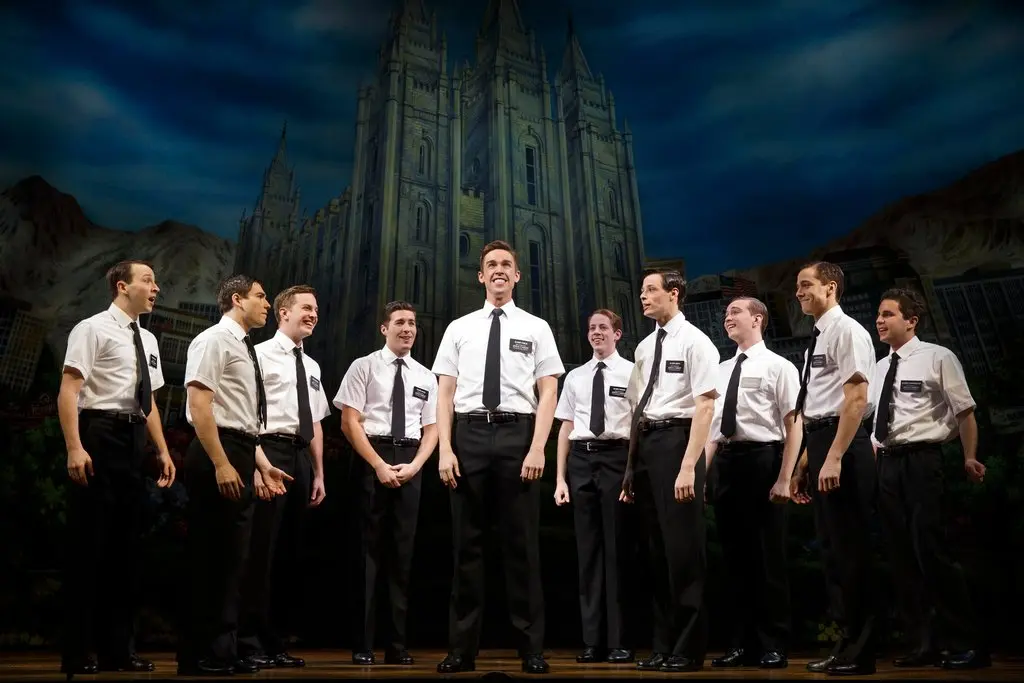
The music in the broadway mormon play is a key ingredient to its success. Robert Lopez, along with Trey Parker and Matt Stone, crafted a score that is full of catchy, memorable songs that sound like they could have come from a classic Broadway hit. The opening number, “Hello!,” is a perfect example. It’s a bright, cheerful song where the young missionaries practice their doorbell-ringing technique, instantly establishing the show’s tone. Other songs, like Elder Price’s powerful “I Believe,” are soaring “I want” songs that are a staple of musical theater. However, the lyrics are often filled with satire and jokes that turn musical theater conventions on their head. This combination of traditional musical styles with modern, edgy comedy is what makes the soundtrack so unique and beloved by fans.
Key Musical Numbers
The show is packed with unforgettable songs that drive the story forward. Here are a few standout numbers:
- “Hello!”: The energetic opening number that introduces the missionaries and their signature greeting.
- “Two by Two”: A song showing the newly trained missionaries receiving their assignments and partners.
- “Hasa Diga Eebowai”: The villagers’ signature song, which hilariously (and profanely) expresses their feelings about their difficult lives. It’s a major culture shock for the newly arrived elders.
- “I Believe”: Elder Price’s passionate declaration of his unwavering faith, even as everything around him is falling apart. It’s both a powerful anthem and a parody of blind faith.
- “Spooky Mormon Hell Dream”: A wild, surreal number where Elder Price has a nightmare about being condemned for his failures.
- “Tomorrow Is a Latter Day”: An optimistic and uplifting song that closes the show, bringing both the missionaries and the villagers together.
The Unique Style of Comedy
The humor in the broadway mormon play is not for everyone. It is sharp, satirical, and often pushes the boundaries of good taste. Parker and Stone use the same style of comedy that has made South Park so popular for decades. They are not afraid to tackle sensitive subjects like religion, poverty, and cultural stereotypes. However, the goal is not simply to shock. The humor is used to make a point about faith, belief, and the human condition. By exaggerating stereotypes and placing its naive characters in an extreme situation, the show encourages the audience to think about their own beliefs and assumptions. It’s a comedy that makes you laugh but also makes you think. It’s important for potential audience members to know that the show contains explicit language and adult situations.
Characters at the Heart of the Story
While the humor and music are big draws, the story of the broadway mormon play works because of its characters. The journey of its two protagonists, Elder Price and Elder Cunningham, is what gives the show its heart.
Elder Kevin Price
Elder Price is the model missionary—smart, handsome, and deeply committed to his faith. He believes he is destined to do something incredible and is disappointed to be paired with Elder Cunningham and sent to Uganda. Throughout the play, his perfect world and unshakable faith are put to the test. He has to confront failure for the first time in his life, and his journey is about learning humility and discovering what it truly means to help people.
Elder Arnold Cunningham
Elder Cunningham is the lovable underdog of the story. He is desperate for a friend and has a tendency to stretch the truth to make himself seem more interesting. In Uganda, his lack of knowledge about scripture leads him to improvise, creating wild stories that mix Mormon doctrine with characters from Star Wars and The Lord of the Rings. Surprisingly, these fantastical stories resonate with the villagers and give them hope. Arnold’s journey is about finding his own voice and realizing that his unique qualities are actually his greatest strengths.
Nabulungi
Nabulungi is a young woman from the Ugandan village who dreams of a better life in a paradise called “Sal Tlay Ka Siti” (as she mispronounces Salt Lake City). She is intelligent, hopeful, and the first of the villagers to be truly interested in the missionaries’ message. She represents the hope and resilience of her community. Her character provides a crucial emotional anchor for the story, and her journey of faith—and eventual disillusionment and re-commitment on her own terms—is one of the most compelling parts of the show.
Themes and Messages
Beneath all the laughter and shocking jokes, the broadway mormon play explores some deep and meaningful themes. It asks important questions about the nature of faith, the power of storytelling, and the importance of friendship.
The Nature of Faith and Belief
One of the central themes of the show is the role of faith in people’s lives. It doesn’t mock the idea of having faith itself, but rather questions literal interpretations of religious stories. The play suggests that the value of a belief system may not lie in whether its stories are factually true, but in the good it can do. Elder Cunningham’s made-up stories, while not “true” in a literal sense, bring the villagers hope, unity, and the strength to improve their lives. The musical ultimately argues that a belief is powerful if it inspires people to be better and to help one another.
Friendship and Community
At its core, The Book of Mormon is a story about an unlikely friendship. The bond that forms between Elder Price and Elder Cunningham is the emotional heart of the show. They start as a mismatched pair who can barely stand each other, but by the end, they have learned to rely on and support one another. The play shows how their friendship helps both of them grow as people. It also highlights the theme of community. The missionaries and the Ugandan villagers come from vastly different worlds, but they ultimately find common ground and come together to build a better future. The final message is one of unity and understanding, suggesting that what people have in common is far more important than their differences.
Controversy and Reception
Given its subject matter and its creators, it was no surprise that the broadway mormon play generated some controversy. The show’s satirical take on The Church of Jesus Christ of Latter-day Saints and its use of profanity and adult themes led some religious groups to protest or condemn it. However, the official response from The Church of Jesus Christ of Latter-day Saints was notably mild. Instead of condemning the play, the Church took a different approach. They placed ads in the show’s playbills in various cities with phrases like, “You’ve seen the play, now read the book” and “The book is always better.” This measured and good-humored response was widely praised and showed a savvy understanding of public relations.
Many commentators and theater critics have pointed out that despite its edgy humor, the show is not mean-spirited. The missionary characters are portrayed as well-intentioned and fundamentally good people. The play’s message about the power of faith and service is, in its own way, quite positive.
Is the Show for Everyone?
It is crucial for anyone thinking about seeing the broadway mormon play to understand what they are getting into. This is not a family-friendly show in the style of The Lion King or Wicked.
|
Audience Consideration |
Details |
|---|---|
|
Adult Language |
The show contains frequent and strong profanity. |
|
Mature Themes |
It deals with adult subjects including poverty, disease, and violence in a satirical way. |
|
Religious Satire |
The humor is centered on making fun of religious beliefs and practices. |
|
Recommended Age |
Due to its content, it is generally recommended for mature teenagers and adults. |
Ultimately, whether someone will enjoy this musical depends on their sense of humor and their tolerance for provocative material. For those who appreciate sharp, intelligent satire and are not easily offended, it is often considered one of the most brilliant and entertaining theatrical experiences available.
Conclusion
The broadway mormon play, The Book of Mormon, is more than just a successful show; it is a landmark in modern musical theater. It masterfully blends classic Broadway craftsmanship with the fearless, satirical comedy of its creators. The result is a production that is simultaneously hilarious, shocking, and surprisingly full of heart. Through the story of two young missionaries on an impossible assignment, the musical explores profound themes of faith, friendship, and the unifying power of storytelling. While its edgy content means it isn’t for every audience, its clever writing, catchy music, and universal message about finding hope in unexpected places have made it a global phenomenon that continues to entertain and provoke audiences around the world.
Frequently Asked Questions (FAQ)
Q1: Is the Broadway Mormon play an official production of the Mormon Church?
No, The Book of Mormon musical is a work of satire and is not created, endorsed, or produced by The Church of Jesus Christ of Latter-day Saints.
Q2: Who created the Broadway Mormon play?
The musical was created by Trey Parker and Matt Stone, the creators of the TV show South Park, in collaboration with Robert Lopez, the co-composer/lyricist for Avenue Q and Frozen.
Q3: Is the show appropriate for children?
No, the show is not recommended for children. It contains explicit language, adult themes, and sexual references that make it suitable for mature audiences only.
Q4: How long is the musical?
The Book of Mormon runs for approximately 2 hours and 30 minutes, including one intermission.
Q5: Has the Broadway Mormon play won any major awards?
Yes, it has won numerous awards. Most notably, it won nine Tony Awards in 2011, including Best Musical, Best Score, and Best Book. It also won a Grammy Award for Best Musical Theater Album.
Q6: Is the story in the musical based on real events?
No, the story is entirely fictional. It uses the real-world practice of Mormon missionary work as a backdrop for a comedic and imaginative plot.
Related Posts



Stay Informed With the Latest & Most Important News
Previous Post
Next Post









Advertisement