

Now Reading: Porto FC: A Deep Dive into Portugal’s Legendary Dragons
-
01
Porto FC: A Deep Dive into Portugal’s Legendary Dragons


Welcome to the world of Porto FC, one of the most celebrated and successful football clubs in Portugal and across Europe. Known for their fierce competitiveness, passionate fanbase, and a long history of winning, the club from the city of Porto has a story worth telling. Whether you are a long-time soccer fan or just getting into the sport, understanding the legacy of this iconic team is a great way to appreciate the beautiful game.
This article will explore everything from their early days and legendary stadium to their greatest triumphs and the stars who have worn the famous blue and white stripes. Get ready to learn about the team they call the Dragões (Dragons).
Key Takeaways
- Porto FC is one of Portugal’s “Big Three” clubs, alongside Benfica and Sporting CP.
- The club’s home is the Estádio do Dragão, a modern marvel of a stadium that hosted the opening match of UEFA Euro 2004.
- They are one of the most decorated clubs in Portuguese football, with a massive collection of domestic league titles and cups.
- Porto has a rich history on the European stage, having won the UEFA Champions League twice, a rare feat for a club outside of Europe’s top four leagues.
- The club is famous for its incredible scouting network and ability to develop world-class talent, often selling players for significant profits.
The Origins of a Football Giant
Every great story has a beginning, and the tale of Porto FC starts in the late 19th century. The club was officially founded on September 28, 1893, by António Nicolau de Almeida, a local port wine merchant who had become fascinated with football during his travels to England. Initially, the club’s activities were intermittent, but they were revitalized in 1906 by José Monteiro da Costa. He helped establish the club as a more organized and competitive entity, setting the stage for future success.
In these early years, football was just starting to capture the imagination of the Portuguese people. Porto FC quickly became a dominant force in regional competitions, winning local championships and building a reputation for its strength and determination. The club’s colors, blue and white, were chosen to represent the colors of the Portuguese flag at the time. This decision symbolized the club’s deep connection to its city and country, a bond that remains incredibly strong to this day. These foundational years were crucial in shaping the identity and values that continue to define the club.
The Heart of the Dragon: Estádio do Dragão
A club’s stadium is more than just a place to play games; it’s a home, a fortress, and a symbol of its identity. For Porto FC, that home is the magnificent Estádio do Dragão, or “Stadium of the Dragon.” Opened in 2003, this state-of-the-art venue replaced the club’s former home, the Estádio das Antas. The name “Dragão” is derived from the dragon that sits atop the city of Porto’s coat of arms, a mythical creature that has become synonymous with the club’s fierce and fiery spirit.
With a seating capacity of just over 50,000, the atmosphere on match day is electric. The fans, known as Portistas, fill the stands with a sea of blue and white, their chants echoing throughout the stadium. The architecture itself is stunning, designed by Manuel Salgado to be both modern and welcoming. It was built to host matches for the UEFA Euro 2004 tournament and even held the opening ceremony. The Estádio do Dragão is not just a sports venue; it’s a landmark for the city and a cathedral for the supporters of Porto FC.
Beyond the Pitch
The stadium complex is a destination in itself. It includes the Porto FC Museum, an interactive space where fans can relive the club’s greatest moments. The museum showcases trophies, legendary jerseys, and displays dedicated to iconic players and managers. It tells the story of the club’s 130-year history in a compelling way, making it a must-visit for any soccer enthusiast. The complex also features restaurants, shops, and event spaces, making it a hub of activity even on non-match days.
A Legacy of Domestic Dominance
In Portuguese football, there is a group of teams known as the “Três Grandes,” or “Big Three,” that have historically dominated the top division, the Primeira Liga. Porto FC is a proud and prominent member of this elite group. The club’s trophy cabinet is overflowing with domestic silverware, a testament to its consistent excellence over many decades. They have won the Primeira Liga title more than 30 times, frequently battling their rivals Benfica and Sporting CP in thrilling title races that captivate the entire nation.
Beyond league titles, Porto FC has also achieved incredible success in Portugal’s cup competitions. They have won the Taça de Portugal (Portuguese Cup) on numerous occasions, a knockout tournament that is highly prized. Their consistent ability to compete for and win multiple trophies year after year is what cements their status as a football powerhouse. This domestic success has provided the foundation for their ambitions on the European stage, allowing them to attract top talent and build competitive squads.
The Unforgettable “Penta”
One of the most remarkable achievements in the history of Porto FC is the Penta, which refers to winning five consecutive league titles. The club accomplished this feat between the 1994-95 and 1998-99 seasons. This period of sustained dominance is incredibly rare in modern football and showcased the club’s superior organization, coaching, and player quality during that era. It remains a benchmark of success in Portuguese football and a source of immense pride for Portistas.
Conquering Europe: Champions League Glory
While domestic success is vital, a club’s international reputation is often forged in the crucible of European competition. Porto FC has not only competed at the highest level but has reached the summit of European football on two separate occasions by winning the UEFA Champions League (formerly the European Cup).
The 1987 European Cup Final
The club’s first European crown came in 1987. Under the guidance of manager Artur Jorge, Porto faced the mighty Bayern Munich in the final in Vienna. Trailing 1-0, Porto staged a remarkable comeback in the final 15 minutes. The equalizing goal, scored by Algerian striker Rabah Madjer, is one of the most famous in football history—an audacious backheel that caught the German goalkeeper completely by surprise. Just a few minutes later, Juary scored the winner, sealing a 2-1 victory and sparking wild celebrations. This triumph put Porto FC on the map as a European force.
The 2004 Champions League Triumph
Seventeen years later, the club did it again, this time in an even more astonishing fashion. Managed by a charismatic and brilliant young coach named José Mourinho, the 2003-04 Porto FC team was a tactical masterpiece. They navigated a tough path to the final, famously knocking out Manchester United along the way. In the final, held in Gelsenkirchen, Germany, they faced AS Monaco. Porto delivered a commanding performance, winning 3-0 with goals from Carlos Alberto, Deco, and Dmitri Alenichev. This victory was a tactical masterclass and launched Mourinho into global stardom, but it was a testament to a perfectly built team that played with discipline, intelligence, and flair.
The Famous Blue and White Stripes
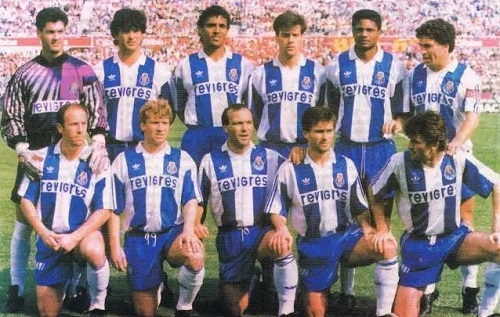
The identity of Porto FC is visually defined by its iconic blue and white vertical stripes. These colors were chosen in 1909 and are said to represent purity (white) and the sky (blue). The jersey is one of the most recognizable in world football. Over the years, the design has seen slight variations in the width of the stripes or the style of the collar, but the core combination of blue and white has remained a constant.
Wearing the Azul e Branco (Blue and White) is a great honor for players, and for fans, it is a symbol of their unwavering loyalty and passion for the club. The jersey represents more than just a team; it embodies the spirit of the city of Porto and a century-long tradition of excellence.
A Factory of Stars: Porto’s Scouting and Development
One of the most impressive aspects of Porto FC is its incredible ability to identify, develop, and profit from world-class football talent. The club has a global scouting network that is renowned for finding hidden gems in places like South America and other European leagues. These players are brought to Porto, where they are given the platform to develop and showcase their skills in a competitive environment.
The club’s business model is one of the most effective in football. They buy promising players for relatively low fees, help them realize their potential, and then sell them to Europe’s wealthiest clubs for massive profits. This strategy has not only ensured the club’s financial stability but has also allowed them to continually rebuild their squad without sacrificing competitiveness. This cycle of refreshing talent is a key reason why Porto FC remains a consistent contender for titles.
Famous Players Developed at Porto
The list of stars who have passed through Porto is long and impressive. Here are just a few examples of players who became global superstars after their time with the club.
|
Player Name |
Nationality |
Position |
Notable For |
|---|---|---|---|
|
Radamel Falcao |
Colombian |
Striker |
Prolific goalscorer, dominated the Europa League |
|
James Rodríguez |
Colombian |
Attacking Mid. |
Technical skill, won the 2014 World Cup Golden Boot |
|
Hulk |
Brazilian |
Forward |
Incredible strength and powerful long shots |
|
Ricardo Carvalho |
Portuguese |
Center-Back |
Key part of the 2004 Champions League team |
|
Deco |
Portuguese |
Midfielder |
The creative genius behind the 2004 triumph |
|
Luis Díaz |
Colombian |
Winger |
Dazzling dribbling skills, now at Liverpool |
The Fierce Rivalries of Porto FC
Football is a sport of passion, and nothing fuels that passion quite like a fierce rivalry. Porto FC is involved in some of the most intense derbies in all of European football.
O Clássico: Porto vs. Benfica
The biggest match in the Portuguese calendar is O Clássico (The Classic), the clash between Porto FC and SL Benfica. This rivalry is about much more than just football. It represents a clash between Portugal’s two largest cities, Porto and Lisbon. It’s a contest of north versus south, industry versus capital, and two distinct cultural identities. The matches are incredibly tense, emotional, and often controversial. For fans of both clubs, winning O Clássico is almost as important as winning a trophy. The rivalry has produced some of the most memorable moments in Portuguese football history.
Derby da Invicta: Porto vs. Boavista
While O Clássico is the national rivalry, the main local derby for Porto FC is against their city neighbors, Boavista FC. This match is known as the Derby da Invicta (The Unvanquished Derby), a nod to Porto’s nickname as “the unvanquished city.” Although Porto has historically been the more dominant club, the matches against Boavista are always hard-fought and carry significant local bragging rights. It’s a rivalry that splits families and workplaces across the city, adding another layer of excitement to the football season.
Conclusion: More Than a Club
Porto FC is far more than just a football club. It is a cultural institution that represents the heart and soul of its city. From its humble beginnings to its glorious nights on the European stage, the club has built a legacy of fighting spirit, technical excellence, and unwavering ambition. The Estádio do Dragão stands as a modern monument to this legacy, a place where generations of fans come together to support the team in the iconic blue and white stripes.
The club’s unique ability to reinvent itself by discovering new talent is a model for teams around the world and a key part of its enduring success. Whether you are analyzing football business strategies or just love to watch great competition, the story of this team is truly inspiring. Exploring the history of clubs like this can provide fascinating insights, much like the detailed analyses you might find on platforms such as forbesplanet.co.uk/. For over a century, Porto FC has been a symbol of pride for its supporters, and its dragon spirit continues to burn brightly in the world of football.
Frequently Asked Questions (FAQ)
Q1: What is the nickname of Porto FC?
The club’s main nickname is Dragões (The Dragons), which comes from the dragon symbol of the city of Porto. They are also known as Azuis e Brancos (The Blue and Whites) because of their jersey colors.
Q2: How many times has Porto FC won the Champions League?
Porto FC has won the UEFA Champions League (and its predecessor, the European Cup) two times. The first victory was in 1987, and the second was in 2004.
Q3: Who is Porto FC’s biggest rival?
Their biggest and most famous rival is SL Benfica, a club from Lisbon. The matches between them are called O Clássico and are the most anticipated games in Portuguese football.
Q4: Who is the all-time leading goalscorer for Porto FC?
The all-time leading goalscorer for Porto FC is Fernando Gomes. He was a legendary striker for the club in the 1970s and 1980s and scored an incredible 355 goals in all competitions.
Q5: What is the “Penta”?
The Penta refers to the historic achievement of winning five consecutive Primeira Liga titles. Porto FC accomplished this amazing feat between the 1994-95 and 1998-99 seasons.
Stay Informed With the Latest & Most Important News
Previous Post
Next Post










Advertisement