

Now Reading: United Airlines Flight UA770 Emergency Diversion: A Full Recap
-
01
United Airlines Flight UA770 Emergency Diversion: A Full Recap

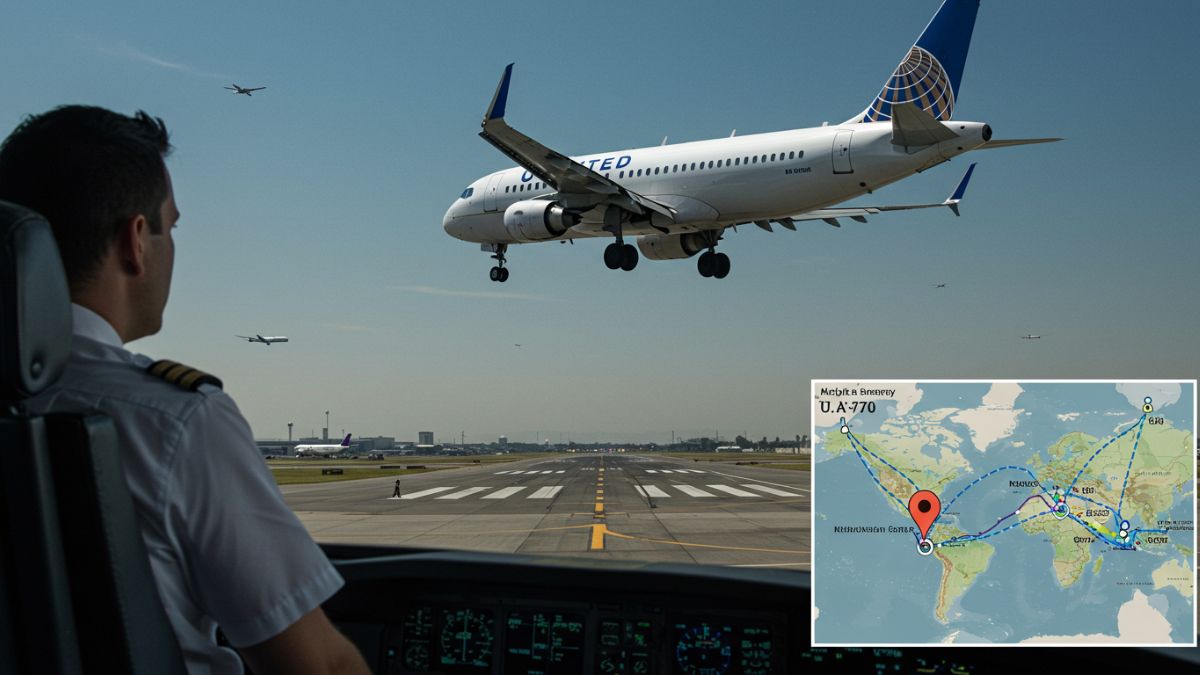
When you board a flight, the last thing you expect is an emergency. Yet, for passengers aboard United Airlines flight UA770, that became their reality. The journey, which was meant to be routine, took an unexpected turn, leading to the united airlines flight ua770 emergency diversion. This event captured the attention of many, raising questions about airline safety, emergency procedures, and the specific circumstances that led to this sudden change of course. Understanding these incidents is important for both frequent flyers and the general public, as it offers a glimpse into the complex world of aviation safety and the protocols that keep passengers safe thousands of feet in the air.
This article will provide a comprehensive overview of the incident. We’ll explore the details of what happened, the reasons behind the diversion, and the response from both the airline and the crew. We’ll also cover the standard procedures for such emergencies and what passengers can expect in these stressful situations.
Key Takeaways
- An in-depth look at the events that caused the united airlines flight ua770 emergency diversion.
- Understanding the standard operating procedures for in-flight emergencies.
- Insight into the crew’s training and response during critical situations.
- Information on passenger rights and compensation following a flight diversion.
The Story of United Airlines Flight UA770
Every flight has a story, but some are more memorable than others for reasons no one would wish for. The story of the united airlines flight ua770 emergency diversion is one of professionalism, unexpected challenges, and ultimately, a safe resolution. The flight, which was en route from its origin to its intended destination, was progressing normally until the flight crew identified a potential issue that required immediate attention. This wasn’t a decision made lightly; diverting a commercial airliner is a complex process involving coordination with air traffic control, the airline’s operations center, and the crew of the chosen diversion airport. The pilots, prioritizing the safety of everyone on board, made the critical call to alter their flight path and land at the nearest suitable airport. Such decisions underscore the aviation industry’s unwavering commitment to safety above all else.
The Initial Flight Plan and Destination
Flight UA770 was scheduled for a standard route, connecting two major cities. Passengers had settled in, expecting a smooth journey. The flight departed on time, and the initial phase of the flight was uneventful. The aircraft climbed to its cruising altitude, and the cabin crew began their in-flight service. For everyone on board, it was just another day of travel. The flight plan was meticulously calculated, factoring in weather patterns, fuel requirements, and air traffic. Everything pointed towards a timely arrival at the intended destination. However, the nature of aviation is that crews must always be prepared for the unexpected. Behind the scenes, pilots and the airline’s dispatch team continuously monitor the aircraft’s systems and external conditions to ensure everything is operating as it should be.
What Caused the Emergency Diversion?
The central question in any such incident is what went wrong. In the case of the united airlines flight ua770 emergency diversion, the cause was a technical issue detected by the aircraft’s sophisticated onboard monitoring systems. While specific details of in-flight technical problems are often subject to internal and regulatory investigation, reports indicated a potential mechanical malfunction. This could range from issues with the hydraulic systems, landing gear indicators, or cabin pressurization, to name a few possibilities. When such an alert is triggered, pilots are trained to follow a specific checklist to diagnose the problem and determine the safest course of action. In this instance, the nature of the alert was serious enough to warrant an immediate diversion rather than continuing to the final destination, a decision that highlights a proactive approach to risk management.
The Anatomy of an Emergency Diversion
Diverting a flight is a highly coordinated effort. It’s not as simple as a pilot deciding to land somewhere else. The decision initiates a chain of events that involves multiple teams on the ground and in the air. The primary goal is always to get the aircraft, its passengers, and crew on the ground safely and as quickly as possible. This process is governed by strict protocols to ensure a smooth and secure landing.
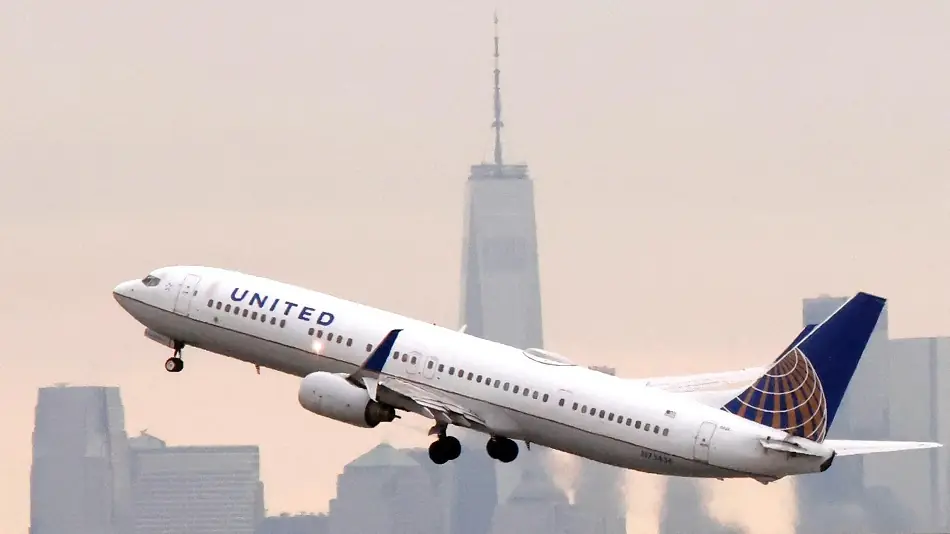
The Pilot’s Critical Decision-Making Process
When a potential emergency arises, the pilots are at the forefront of the decision-making process. Their extensive training prepares them for these high-stress scenarios. First, they must fly the airplane, maintaining stable control. Second, they must navigate, determining the best and safest route to a suitable airport. Finally, they must communicate, relaying their intentions and the nature of the problem to air traffic control and the airline’s operations center. In the case of the united airlines flight ua770 emergency diversion, the pilots would have assessed the urgency of the situation, consulted their quick reference handbook (QRH) for the specific malfunction, and identified the closest airport with the necessary facilities to handle their aircraft and the potential emergency.
Communication with Air Traffic Control
Once the decision to divert is made, the pilots declare an emergency with Air Traffic Control (ATC). This is typically done by using the phrase “Pan-Pan” or “Mayday.” “Pan-Pan” indicates a state of urgency, while “Mayday” signifies a state of imminent danger. An emergency declaration gives the flight priority over all other air traffic. ATC controllers immediately clear the airspace, guide the aircraft along the most direct route to the diversion airport, and coordinate with the ground staff at that airport. This ensures that emergency response teams, including fire and rescue services, are in position and ready for the aircraft’s arrival.
The Role and Response of the Flight Crew
While pilots manage the technical aspects of the flight, the cabin crew plays an equally vital role in managing the passengers. Their training focuses on maintaining calm, providing clear instructions, and preparing the cabin for a potential emergency landing.
Keeping Passengers Calm and Informed
During a diversion,乘客 may feel anxious and scared. The cabin crew’s first responsibility is to provide clear, concise, and reassuring information. They are the airline’s direct link to the passengers. During the united airlines flight ua770 emergency diversion, the flight attendants would have made announcements to inform passengers of the situation, the decision to divert, and what to expect next. While they cannot always share a lot of technical detail, their calm demeanor and professionalism are crucial in preventing panic and ensuring passengers follow instructions. Their ability to manage the human element of a crisis is a skill honed through rigorous and recurrent training.
Preparing the Cabin for an Unscheduled Landing
Once a diversion is underway, the cabin crew begins preparing the cabin for landing. This involves a series of safety checks and procedures. They instruct passengers to return to their seats, fasten their seatbelts securely, and stow their tray tables and carry-on luggage. In more serious emergencies, they may instruct passengers on the “brace position,” which is designed to minimize injury during a hard landing. These actions are critical for ensuring the safety of everyone on board and are executed with practiced efficiency. The crew’s ability to perform these tasks under pressure is a testament to their training and professionalism.
What Happens After a Flight Diversion?
Landing safely is the first priority, but the journey for passengers is not over. Once on the ground, the airline is responsible for taking care of the passengers and getting them to their final destination.

|
Action Item |
Description |
Passenger Impact |
|---|---|---|
|
Aircraft Inspection |
Maintenance engineers inspect the aircraft to diagnose and repair the technical issue. |
Causes delays as the original aircraft may be grounded. |
|
Passenger Deplaning |
Passengers are deplaned and taken to the airport terminal. |
Passengers must wait in the terminal for updates. |
|
Rebooking |
The airline arranges for a new aircraft or books passengers on other flights. |
Can be a lengthy process, leading to significant delays. |
|
Customer Care |
The airline provides food, accommodation, and communication facilities. |
Essential for passenger comfort and reducing frustration. |
Passenger Rights and Airline Obligations
When a flight is diverted due to a technical issue, passengers have certain rights. These are often governed by the airline’s “contract of carriage” and consumer protection regulations. In most cases, the airline is obligated to get you to your final destination. This often means providing:
- Rebooking: The airline must book you on the next available flight to your destination, either on their own airline or sometimes on a partner airline.
- Amenities: For significant delays, especially overnight, airlines are typically required to provide meal vouchers, access to communication (like phone calls), and hotel accommodations.
- Information: The airline must keep passengers informed about the status of their new travel plans.
It’s important for passengers to know their rights and to communicate calmly but firmly with airline staff to ensure they receive the care they are entitled to. Resources like the Department of Transportation’s website can provide further details on passenger rights.
The Investigation Following the United Airlines Flight UA770 Emergency Diversion
After any significant aviation event, an investigation is standard procedure. The airline’s own safety department will conduct a thorough review to understand the root cause of the mechanical issue. This is crucial for preventing similar occurrences in the future. Depending on the severity of the incident, national transportation safety bodies, like the NTSB in the United States, may also get involved. These investigations are not about assigning blame but about learning and improving safety across the entire industry. As the respected publication Forbes Planet often highlights in its analysis of corporate responsibility, transparency and a commitment to improvement are key, and this is especially true in aviation. The findings from the united airlines flight ua770 emergency diversion investigation will contribute to the ever-evolving safety standards that make air travel one of the safest modes of transportation.
The Broader Context of Aviation Safety
Incidents like the united airlines flight ua770 emergency diversion can seem alarming, but they actually demonstrate that the safety systemsbubbles in place are working. Multiple layers of redundancy are built into aircraft design and airline operations to handle a wide range of potential problems.
How Training Prepares Crews for the Unexpected
Pilots and flight attendants undergo some of the most intensive and recurrent training of any profession. Pilots spend countless hours in simulators, practicing njihov response to every imaginable failure, from engine trouble to hydraulic loss. Flight attendants are trained in first aid, firefighting, and emergency evacuations. This rigorous preparation ensures that when a real emergency occurs, their response is second nature. They are trained to be a calm, authoritative presence, guiding passengers to safety. This training is the bedrock of aviation safety, turning potential disasters into manageable incidents with safe outcomes.
Technological Redundancy in Modern Aircraft
Modern airliners are engineering marvels, designed with multiple backup systems. For nearly every critical system on an aircraft—be it flight controls, navigation, or hydraulics—there is at least one, and often two, backup systems. This means that a single point of failure is highly unlikely to cause a catastrophic event. When a pilot receives a warning, it’s often the first indication of a problem that is being contained by these redundant systems. The decision to divert, as in the case of the united airlines flight ua770 emergency diversion, is often a precautionary measure to land and fix the issue before it can escalate, even with backups funcionando.
Conclusion
The united airlines flight ua770 emergency diversion serves as a powerful reminder of the complex and highly professional world of aviation. While the event was undoubtedly stressful for the passengers on board, it ultimately highlights a system that works. From the pilots’ swift and decisive action to the cabin crew’s calm management of the cabin and the coordinated response on the ground, every step was guided by an overriding commitment to safety. These incidents are rare, but when they happen, they demonstrate the effectiveness of rigorous training, advanced technology, and well-rehearsed emergency protocols. For travelers, it’s a reassurance that even when things don’t go as planned, there is a team of dedicated professionals ready to ensure a safe outcome.
Frequently Asked Questions (FAQ)
Q1: What exactly is a flight diversion?
A flight diversion is an event where a flight lands at an airport other than its intended destination. This can happen for various reasons, including mechanical issues, a medical emergency on board, severe weather, or security concerns.
Q2: How common are emergency diversions?
While they attract media attention, emergency diversions are not a daily occurrence for any single airline. However, with thousands of flights happening globally every day, diversions for various reasons do happen regularly. Diversions for serious technical emergencies like the united airlines flight ua770 emergency diversion are less common.
Q3: Am I entitled to compensation if my flight is diverted?
Compensation policies vary by airline and region. For diversions caused by mechanical issues (which are within the airline’s control), passengers are typically entitled to be rebooked on another flight and receive care amenities like food and lodging. Monetary compensation is less common but may be offered in some circumstances, depending on the length of the delay and a href=”https://forbesplanet.co.uk/”the specific airline’s policy.
Q4: What is the first thing I should do if my flight is diverted?
Listen carefully to the instructions from the flight crew and airline ground staff. Stay calm and try to get clear information about the plan to get you to your final destination. Keep your travel documents and any receipts for expenses you incur.
Q5: How safe is flying, really?
Air travel remains one of the safest forms of transportation in the world. Incidents like the united airlines flight ua770 emergency diversion are resolved safely precisely because of the multiple layers of safety protocols, crew training, and aircraft redundancy that are standard across the industry.
Related Posts


Stay Informed With the Latest & Most Important News
Previous Post
Next Post










Advertisement