
Now Reading: What is the Dark Enlightenment? A Simple Guide
-
01
What is the Dark Enlightenment? A Simple Guide

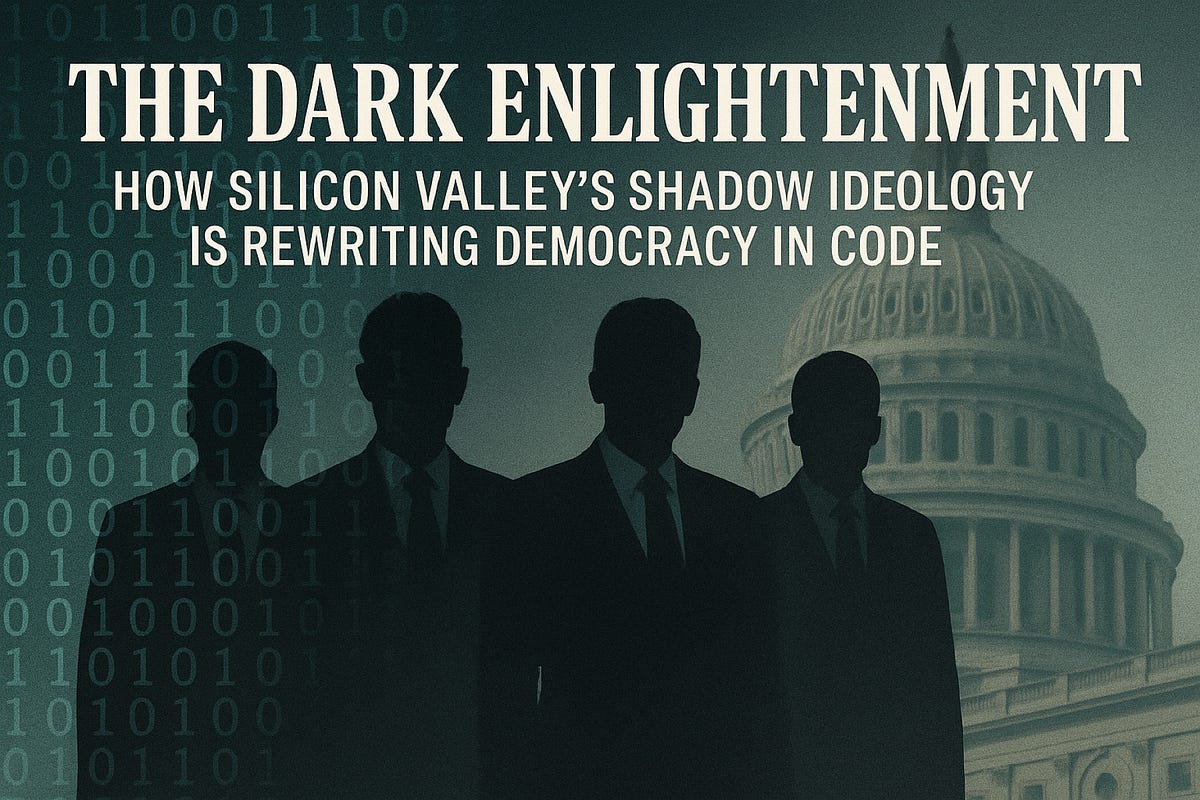
Have you ever stumbled upon a term online that seems confusing and a bit mysterious? The term dark enlightenment often fits that description. It sounds like something from a fantasy novel, but it’s actually a political and philosophical idea that has gained some attention online. Understanding it can help you make sense of certain corners of the internet and modern political discussions.
This guide will break down the core ideas behind the dark enlightenment in a simple, straightforward way. We’ll explore where it came from, what its main beliefs are, and why it matters. You don’t need to be a political expert to follow along. We’ll provide clear explanations to help you grasp this complex topic.
Key Takeaways
- What It Is: The dark enlightenment, also known as the neoreactionary movement (NRx), is a political philosophy that rejects modern democracy and egalitarianism (the idea that all people are equal).
- Core Beliefs: It favors older forms of government, like monarchy or corporate-run states, believing they are more stable and effective.
- Key Figures: The movement is heavily associated with thinkers like Nick Land and Curtis Yarvin (who wrote under the name Mencius Moldbug).
- Rejection of Modernity: It is fundamentally anti-progressive and views the last few centuries of social and political development as a mistake.
- Online Origins: The dark enlightenment largely grew and spread through blogs and online forums, rather than traditional academic or political channels.
The Origins of the Dark Enlightenment
To understand the dark enlightenment, we need to go back to its beginnings in the late 2000s and early 2010s. The term was popularized by Nick Land, a British philosopher. He used it to describe a loose-knit online community of thinkers who were deeply critical of modern Western society. These individuals, often calling themselves “neoreactionaries,” felt that democracy, equality, and human rights were failing institutions.
This movement didn’t start in a university or a political party. Instead, it grew out of blogs and online forums. The key figure here is Curtis Yarvin, an American computer scientist and blogger who wrote under the pseudonym Mencius Moldbug. His extensive blog posts laid much of the intellectual groundwork for what would become the dark enlightenment. He argued that modern democratic systems were inefficient, corrupt, and ultimately headed for collapse. Yarvin proposed that society should “reboot” itself by adopting older, more authoritarian models of governance.
The ideas resonated with a specific group of people online who were disillusioned with mainstream politics. They felt that both the left and the right were failing to address society’s deep-seated problems. The dark enlightenment offered them a radical alternative, one that completely rejected the foundations of modern political thought.
Who is Nick Land?
Nick Land is a central figure in the popularization of the dark enlightenment. Originally an academic philosopher at the University of Warwick in the UK, his work took a radical turn. In the 2010s, he began writing essays that outlined the core tenets of this new anti-democratic philosophy. Land’s writing style is often dense and complex, but his core message is clear: he believes that the historical process of “enlightenment”—which gave us concepts like liberty, equality, and democracy—has gone horribly wrong.
Land argues that democratic systems are inherently chaotic and self-destructive. He suggests that power, not rights or morals, is the most important force in society. In his view, a system that concentrates power in a single, effective authority (like a CEO-king) is superior to one that disperses it among the masses. His work connects the dark enlightenment to ideas about technology, capitalism, and artificial intelligence, creating a futuristic and often dystopian vision of where society is headed.
Who is Curtis Yarvin (Mencius Moldbug)?
Curtis Yarvin, better known by his pen name Mencius Moldbug, is arguably the intellectual father of the dark enlightenment. Starting in 2007, Yarvin wrote a series of incredibly long and detailed blog posts where he diagnosed what he saw as the fatal flaws of modern democracy. He called the mainstream political and cultural establishment “the Cathedral”—a term describing the combined power of universities, the media, and civil servants. Yarvin believes this “Cathedral” promotes a progressive ideology that suppresses dissent and leads society down a path of decay.
Yarvin’s proposed solution is radical. He advocates for a return to pre-democratic forms of government. He is particularly fond of the idea of a “formalist” government, where a country is run like a corporation with a sovereign CEO or monarch in charge. The goal would be to create a stable, orderly, and profitable state. His ideas, while complex and often shocking, formed the bedrock of the neoreactionary movement and the dark enlightenment.
Core Beliefs of the Dark Enlightenment
The dark enlightenment is built on a foundation of several key ideas that stand in direct opposition to modern values. Understanding these beliefs is crucial to understanding the movement as a whole. At its heart, it is a rejection of the idea that history is moving toward greater freedom and equality for all.
Neoreactionaries believe that the principles born from the historical Enlightenment—reason, individual rights, and democracy—have failed. They see modern society as chaotic, unstable, and decadent. Instead of progress, they see a steady decline. To fix this, they propose looking backward to older, more hierarchical systems of rule.
Rejection of Democracy
The most fundamental belief of the dark enlightenment is its total rejection of democracy. Proponents argue that democracy is a flawed system for several reasons. First, they believe that the average person is not well-informed enough to make good decisions about how a country should be run. They see voting as little more than mob rule, where popular opinion, rather than rational thought, dictates policy.
Second, they argue that democracy creates political instability. Because leaders are constantly campaigning for re-election, they focus on short-term populist measures rather than long-term strategic planning. This leads to inconsistent policies and a government that is always in flux. For followers of the dark enlightenment, a system where power is held securely by a single entity or a small group is far more efficient and stable. This ruler wouldn’t need to worry about public opinion and could focus on governing effectively.
An End to Egalitarianism
Egalitarianism is the belief that all people are equal and deserve equal rights and opportunities. The dark enlightenment forcefully rejects this idea. Its thinkers argue that human beings are not equal in their talents, intelligence, or abilities. They believe that trying to force equality upon society is unnatural and counterproductive. In their view, hierarchy is a natural and necessary part of any functional society.
This belief extends to all areas of life. Neoreactionaries are critical of movements that promote social, economic, or gender equality. They argue that these efforts create resentment and social conflict by trying to erase natural differences. Instead, they favor a society where people have clearly defined roles and statuses based on what they see as inherent abilities. This hierarchical structure, they believe, would lead to a more orderly and productive society, even if it is not “fair” by modern standards.
Favouring Authoritarian Governance
If you reject democracy and equality, what kind of government do you support? For followers of the dark enlightenment, the answer is some form of authoritarianism. They are not talking about the brutal dictatorships of the 20th century. Instead, they look to older models of rule or even futuristic, corporate-style governance.
Here are some of the models they propose:
- Monarchy: Some neoreactionaries believe that a hereditary monarch, who owns the country like a private estate, would have a long-term interest in its prosperity and stability.
- Corporate State (Neocameralism): This is an idea largely developed by Curtis Yarvin. In this model, a country is restructured to run like a business. The government is a corporation, and its citizens are its “customers.” The sovereign is a CEO-like figure who has absolute power but is motivated by profit to keep the country safe and efficient.
The common thread is a belief in a single, unaccountable sovereign power. The goal is to create a government that is maximally effective and stable, free from the messiness of democratic politics.
|
Governance Model |
Description |
Primary Goal |
|---|---|---|
|
Democracy |
Rule by the people, through elected representatives. |
Represent the will of the majority, protect individual rights. |
|
Monarchy |
Rule by a single hereditary sovereign (king or queen). |
Provide long-term stability and dynastic continuity. |
|
Neocameralism |
A country is run like a corporation with a CEO-king. |
Profitability, efficiency, and order. |
The “Cathedral”: A Central Concept
When you read about the dark enlightenment, you will almost certainly encounter the term “the Cathedral.” This is a key concept, first coined by Curtis Yarvin, and it’s essential for understanding the neoreactionary worldview. The Cathedral is not a physical building. It’s a metaphor for the decentralized network of institutions that neoreactionaries believe sets the dominant social and political agenda in Western societies.
According to this theory, the Cathedral is composed of the nation’s top universities (especially elite ones), the mainstream media, and the civil service. Yarvin argues that these institutions, while appearing independent, all work together to promote and enforce a progressive, egalitarian ideology. They act as a sort of unofficial state religion, dictating what is acceptable to think and say. Anyone who challenges this orthodoxy is branded as hateful or ignorant and is pushed out of public discourse.
For followers of the dark enlightenment, the Cathedral is the primary enemy. They believe it is the force that maintains the failing democratic system and suppresses any real dissent. It works not through overt force, but by shaping public opinion and controlling the flow of information. The goal of the neoreactionary project is to find a way to either bypass or dismantle the Cathedral to allow for a fundamental restructuring of society.
How is the Dark Enlightenment Different from Other Movements?
It’s easy to lump the dark enlightenment in with other right-wing or alternative political movements, but it has some key differences. Understanding these distinctions helps clarify what makes it unique.
Dark Enlightenment vs. The Alt-Right
While there is some overlap in their critiques of modern society, the dark enlightenment and the alt-right are not the same thing. The alt-right was a primarily populist movement focused on identity politics, particularly white nationalism. It was characterized by public rallies, online trolling, and a focus on winning mainstream political influence.
The dark enlightenment, on the other hand, is more of an intellectual and philosophical movement. It is generally elitist, not populist. Its followers are less interested in mass movements and more interested in developing complex theories of government. While some individuals may have connections to both, the core focus is different. The alt-right wanted to take over the existing democratic system; the dark enlightenment wants to abolish it entirely. For more information on complex global topics, one might look at resources like those available at https://forbesplanet.co.uk/.
Dark Enlightenment vs. Traditional Conservatism
The dark enlightenment is also very different from traditional conservatism. Mainstream conservatives in the United States generally believe in the principles of the American founding: constitutional government, individual liberty, and free-market capitalism. They want to conserve the existing system, albeit with their own policy preferences.
Neoreactionaries reject this system entirely. They do not believe the U.S. Constitution is a document worth saving. They see the American Revolution and the entire democratic experiment as a mistake. Where conservatives see a tradition to be preserved, followers of the dark enlightenment see a failed project that needs to be replaced. Their ideas are far more radical and revolutionary than anything found in mainstream conservative thought.
Criticisms and Controversies
The ideas of the dark enlightenment are highly controversial and have drawn intense criticism from across the political spectrum. Many view the movement as dangerous, backward-looking, and fundamentally opposed to the values of a free and open society.
One of the most significant criticisms is that the movement’s rejection of equality and democracy is inherently authoritarian and anti-humanistic. Critics argue that its vision of a hierarchical society is a recipe for oppression, where the rights of individuals would be sacrificed for the sake of order and efficiency. The proposed models of governance, like monarchy or a CEO-run state, offer no checks and balances on power, leaving citizens vulnerable to the whims of an absolute ruler.
Furthermore, the movement is often accused of providing an intellectual framework for racist and sexist views. While its main thinkers may focus on abstract theories of governance, their rejection of egalitarianism is seen by many as a justification for discrimination. The idea that some people are inherently “less than” others is a core component of many hateful ideologies. Because of this, the dark enlightenment is often associated with extremist online communities and is widely condemned for its potential to fuel intolerance.
Why Does the Dark Enlightenment Matter?
You might be wondering why a small, obscure online philosophy matters at all. The dark enlightenment is unlikely to become a mass political movement. Its ideas are too complex and too radical for most people. However, its influence is not zero.
First, the ideas developed within the dark enlightenment have trickled out into other, more mainstream political discussions, especially in online spaces. Concepts like “the Cathedral” or the critique of democracy have been picked up by other groups on the political fringes. It represents an extreme example of the growing disillusionment with liberal democracy that can be seen in many parts of the world.
Second, studying the dark enlightenment is a useful exercise in understanding the full spectrum of political thought. It shows just how different a person’s worldview can be. It challenges us to think about why we believe in things like democracy, equality, and human rights. By engaging with these radical critiques, we can develop a stronger and more well-reasoned defense of our own values. It serves as a stark reminder that the principles of modern society are not universally accepted and are constantly being challenged from the fringes.
Conclusion
The dark enlightenment is a challenging and often unsettling political philosophy. Born from the minds of online thinkers like Curtis Yarvin and Nick Land, it presents a complete rejection of modern democratic values. It calls for an end to equality and a return to authoritarian forms of government, all in the name of creating a more stable and orderly society.
While its ideas are elitist and unlikely to gain widespread popularity, they provide a fascinating and disturbing look into the deep dissatisfaction that some feel with the modern world. Understanding this movement helps us make sense of the complex and sometimes extreme ideologies that exist in the digital age. It pushes us to examine the foundations of our own beliefs and to appreciate the ongoing debate about how societies should best be governed.
Frequently Asked Questions (FAQ)
Q1: Is the dark enlightenment a conspiracy theory?
While it contains elements that resemble conspiracy theories (like the concept of “the Cathedral”), the dark enlightenment is more accurately described as a political philosophy or ideology. It offers a complete, albeit radical, worldview and a set of prescriptions for how society should be organized.
Q2: Are all followers of the dark enlightenment a-narchists?
No, quite the opposite. Anarchists want to abolish government entirely. Followers of the dark enlightenment want a very strong, centralized, and authoritarian government. They are anti-democratic, but they are not anti-government.
Q3: Where can I read the original writings of the dark enlightenment?
The foundational texts of the movement are primarily found on blogs. Curtis Yarvin’s writings are on his blog, “Unqualified Reservations,” and Nick Land’s essays can be found on various websites dedicated to his work. Be aware that the material is often very dense, long, and contains controversial and offensive ideas.
Q4: Is the dark enlightenment the same as fascism?
There are some similarities, such as a rejection of democracy and a belief in strong, authoritarian rule. However, there are also key differences. Fascism is typically a populist, nationalist mass movement focused on militarism and national rebirth. The dark enlightenment is an elitist, intellectual movement more interested in governance models like monarchy or corporate states.
Q5: Is the movement growing?
It is difficult to measure the size of a decentralized online movement. The dark enlightenment reached its peak of discussion and influence in the early to mid-2010s. While the core community of dedicated followers remains small, its ideas continue to influence other dissident political groups online.
Stay Informed With the Latest & Most Important News
Previous Post
Next Post










Advertisement