

Now Reading: Electrical Energy: The Spark That Powers Our World
-
01
Electrical Energy: The Spark That Powers Our World

From the moment you wake up to the alarm on your phone, to the late-night movie you stream before bed, your day is powered by an invisible force: electrical energy. It’s so woven into the fabric of our lives that we often take it for granted. But what exactly is this powerful phenomenon? How does it get from a giant power plant to the outlet in your wall? And how can we use it more wisely to protect our planet?
This guide will illuminate the world of electrical energy. We will explore its fundamental principles, how it’s generated, the journey it takes to reach our homes, and the exciting future of electricity. Get ready to uncover the science behind the spark that runs our modern society.
Key Takeaways
- Electrical energy is a form of energy resulting from the flow of electric charge (electrons). It is a secondary energy source, meaning it is converted from other primary sources like coal, solar, or wind.
- The journey of electricity involves three main stages: generation at power plants, transmission across long distances via high-voltage lines, and distribution to local homes and businesses.
- We measure electricity in units like volts (pressure), amps (flow), watts (power), and kilowatt-hours (energy consumption over time).
- There are diverse methods for generating electrical energy, from traditional fossil fuels and nuclear power to renewable sources like solar, wind, and hydropower.
- Safety, conservation, and the shift toward renewable energy sources are critical aspects of our relationship with electricity, shaping a more sustainable future.
What Exactly Is Electrical Energy?
At its simplest, electrical energy is the energy carried by moving electrons. Everything in the universe is made of atoms, and atoms contain even smaller particles, including electrons. When these electrons are prompted to move from one atom to another in a steady stream, they create an electric current. This flow of charge is what we harness as electrical energy.
Think of it like water in a hose. The water itself represents the electrons. The pressure pushing the water through the hose is the voltage, and the amount of water flowing past a point per second is the current. The combination of this pressure and flow gives the water the power to spin a water wheel—this is the work done by the energy. In the same way, electrical energy does work by powering our lights, charging our devices, and running our appliances. It’s a highly versatile and convenient form of energy because it can be easily converted into other forms, such as light, heat, or motion.
The Science Behind the Flow: Conductors and Insulators
For electrical energy to be useful, we need to control its path. This is where conductors and insulators come in.
Conductors: The Superhighways for Electrons
Conductors are materials that allow electrons to flow through them with very little resistance. They are like wide, smooth highways for electric current. Most metals are excellent conductors. Copper is the most common material used for electrical wires because it’s a great conductor and relatively affordable. Aluminum is another popular choice, especially for long-distance power lines where its lighter weight is an advantage. The reason metals are good conductors is because their atoms have electrons in their outer shells that are not tightly bound and are free to move. This “sea of electrons” can easily be set in motion by a voltage.
Insulators: The Guardrails of Electricity
Insulators are the opposite of conductors. They are materials that strongly resist the flow of electrons. Their atoms hold onto their electrons very tightly, making it difficult for a current to pass through them. Common insulators include rubber, plastic, glass, and wood. Insulators play a vital safety role in our electrical systems. The plastic coating around a copper wire, for instance, keeps the electrical energy contained, preventing it from escaping and causing shocks or short circuits. They act as the guardrails, ensuring the electric current stays on its intended path.
How We Measure Electrical Energy
To understand and manage our use of electrical energy, we need a way to measure it. You’ve probably heard terms like “watts” and “volts” before, especially when buying light bulbs or looking at your utility bill. These are the fundamental units we use to quantify electricity.
- Volt (V): Voltage is the “pressure” or “push” that causes the electric charge to move. Think of it as the force behind the current. A standard wall outlet in the United States provides about 120 volts.
- Ampere or Amp (A): Amperage is the measure of the volume of electrons flowing through a circuit. It’s the rate of the current’s flow. A circuit breaker in your home might be rated for 15 or 20 amps, meaning it will trip if the current exceeds that limit.
- Watt (W): A watt is the unit of power, representing the rate at which electrical energy is being used or produced. It’s calculated by multiplying volts by amps (Watts = Volts x Amps). A 100-watt light bulb uses energy faster than a 60-watt bulb.
- Kilowatt-hour (kWh): This is the unit you’ll see on your electricity bill. It measures the total amount of energy consumed over time. One kilowatt-hour is the energy used by a 1,000-watt appliance running for one hour.
Understanding these units helps you make sense of your energy usage. For example, if you leave a 100-watt light bulb on for 10 hours, you have used 1,000 watt-hours, or 1 kWh of electrical energy.
|
Unit |
Symbol |
What It Measures |
Analogy |
|---|---|---|---|
|
Volt |
V |
Electrical Pressure |
Water pressure in a hose |
|
Ampere (Amp) |
A |
Electrical Current Flow |
The amount of water flowing through the hose |
|
Watt |
W |
Rate of Energy Use (Power) |
The total power of the water stream |
|
Kilowatt-hour |
kWh |
Total Energy Consumption |
The total gallons of water used over an hour |
The Journey of Electricity: From Generation to Your Home
The electrical energy that powers your television doesn’t magically appear in the wall socket. It undertakes a long and complex journey through a vast network known as the power grid. This journey has three main stages: generation, transmission, and distribution.
Step 1: Generation
This is where it all begins. Electrical energy is a secondary energy source, meaning it has to be created from a primary source. This happens at a power plant. Inside the plant, a large generator, which is essentially a massive machine with magnets and coils of wire, is spun at high speeds. The spinning motion creates a magnetic field that forces electrons in the wires to move, generating an electric current.
The key is finding a way to spin the generator. This is where primary energy sources come in:
- Fossil Fuels: Power plants burn coal, natural gas, or oil to heat water into high-pressure steam, which then spins a turbine connected to the generator.
- Nuclear Power: Nuclear fission (splitting atoms) generates immense heat, which is used to create steam to spin the turbine.
- Hydropower: The force of falling or flowing water from a dam spins a turbine.
- Wind Power: The wind turns large blades, which are connected to a generator.
- Solar Power: Photovoltaic (PV) cells convert sunlight directly into electricity, while concentrated solar power uses mirrors to create steam.
Step 2: Transmission
Once the electrical energy is generated, it needs to travel long distances from the power plant to cities and towns. This is the job of the transmission system. To make this journey efficient, the electricity’s voltage is “stepped up” to extremely high levels—sometimes over 500,000 volts—at a transformer substation.
Why such high voltage? High voltage allows the electricity to travel with less energy loss. Sending a large amount of power at a low voltage is like trying to push a lot of water through a tiny straw—there’s a lot of friction and loss. By increasing the voltage, the same amount of power can be sent with a lower current, reducing energy lost as heat in the transmission lines. These high-voltage lines are the massive steel towers you see stretching across the countryside.
Step 3: Distribution
As the electricity nears its destination, it enters a local distribution network. Here, the process is reversed. The high-voltage electrical energy is sent to smaller substations where transformers “step down” the voltage to safer, more usable levels. From the substation, medium-voltage lines carry the power along streets, either on overhead utility poles or underground.
Finally, a small, pole-mounted or pad-mounted transformer near your house steps the voltage down one last time to the 120/240 volts used by your home’s outlets and appliances. This electricity flows through your home’s circuit breaker panel, which directs it to the various circuits that power your lights, electronics, and kitchen appliances, completing the journey.
How Is Electrical Energy Generated?
The methods for generating electrical energy are diverse, each with its own benefits and drawbacks. These methods are broadly categorized into non-renewable and renewable sources.
Non-Renewable Sources
These sources rely on finite resources that cannot be replenished on a human timescale. For many decades, they have been the backbone of global electricity production.
Fossil Fuels (Coal, Natural Gas, Oil)
Burning fossil fuels has been the most common way to generate electricity for over a century. These plants are reliable and can produce large amounts of power on demand. However, their environmental impact is significant. The combustion of fossil fuels releases greenhouse gases like carbon dioxide, which contribute to climate change, as well as pollutants like sulfur dioxide and nitrogen oxides that cause acid rain and respiratory problems.
Nuclear Energy
Nuclear power plants use nuclear fission to generate heat. A single uranium pellet can produce as much energy as a ton of coal, and the process produces no greenhouse gases. This makes it a powerful, low-carbon source of electrical energy. However, nuclear power comes with its own challenges, including the safe management and disposal of radioactive waste and the risk, though small, of accidents. Public perception and the high cost of building and decommissioning plants are also major factors.
Renewable Sources
Renewable sources harness natural processes that are continuously replenished. They are at the heart of the transition to a more sustainable energy system. More information on sustainable development can be found at resources like https://forbesplanet.co.uk/, which covers topics on global environmental progress.
Hydropower
Hydropower is one of the oldest and largest sources of renewable energy. It uses the kinetic energy of flowing water to generate electricity. Large-scale hydroelectric dams can provide massive amounts of low-cost, reliable power. However, building large dams can have significant environmental and social impacts, including disrupting river ecosystems, displacing communities, and altering landscapes.
Solar Power
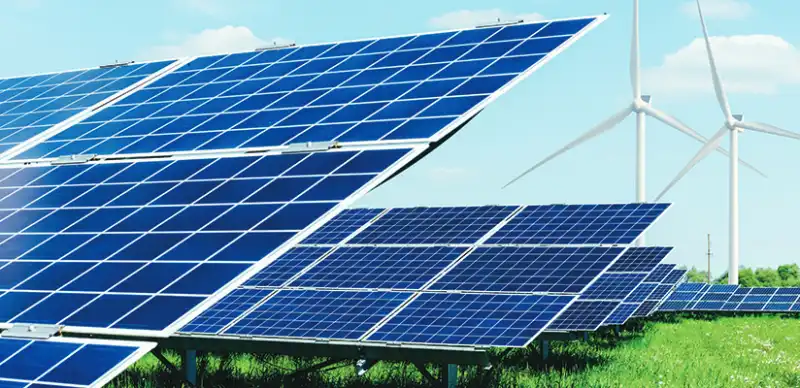
Solar power converts sunlight directly into electrical energy using photovoltaic (PV) panels or indirectly using mirrors to concentrate solar radiation to heat water. The cost of solar technology has fallen dramatically, making it one of the fastest-growing energy sources. It is clean, silent, and can be deployed at any scale, from rooftop panels on a single home to massive solar farms. The main limitation is its intermittency—it only generates power when the sun is shining.
Wind Energy
Wind turbines capture the wind’s kinetic energy to spin a generator. Wind power is another clean and increasingly cost-effective source of electrical energy. Wind farms, both onshore and offshore, are becoming a common sight. Like solar, wind is an intermittent source, as it depends on weather conditions. The visual impact on the landscape and potential harm to birds and bats are also considerations in its deployment.
The Future of Electrical Energy
The world of electrical energy is undergoing a massive transformation. Driven by the need to combat climate change, improve air quality, and ensure long-term energy security, the focus is shifting dramatically towards cleaner, smarter, and more decentralized systems.
The Rise of the Smart Grid
The traditional power grid is a one-way street: power flows from large central plants to passive consumers. The “smart grid” changes this dynamic. It’s a modernized electrical grid that uses information and communication technology to gather and act on information about the behavior of suppliers and consumers.
A smart grid can:
- Improve efficiency and reliability: By monitoring power flow in real-time, utilities can reroute power to prevent outages and reduce energy loss.
- Integrate renewables: It can better manage the intermittent nature of solar and wind by balancing supply and demand more dynamically.
- Empower consumers: With smart meters and home energy management systems, you can track your energy use in real-time and even sell excess power from your rooftop solar panels back to the grid.
The Role of Energy Storage
One of the biggest hurdles for renewable energy sources like solar and wind is that they are not always available. What do you do when the sun isn’t shining or the wind isn’t blowing? The answer is energy storage. Large-scale batteries, pumped-hydro storage, and other technologies can store excess electrical energy generated during sunny or windy periods and release it when needed. Advances in battery technology, particularly lithium-ion, are making energy storage more affordable and scalable, providing the key to a reliable grid powered by renewables.
Electrification of Everything
Another major trend is the “electrification” of sectors traditionally powered by fossil fuels. The most visible example is the shift to electric vehicles (EVs), which use electrical energy from the grid instead of gasoline. This trend also extends to home heating, where electric heat pumps are replacing natural gas furnaces, and to industrial processes. Widespread electrification can dramatically reduce greenhouse gas emissions, provided the electricity itself is generated from clean sources.
Electrical Safety: Handling Energy with Care
While electrical energy is incredibly useful, it can also be very dangerous if mishandled. Respecting its power is crucial for staying safe at home and work. A flow of current through the human body can cause severe injury or even death.
Here are some fundamental safety tips:
- Never touch downed power lines. Always assume they are live and dangerous. Keep a safe distance and report them to the utility company immediately.
- Keep electrical appliances away from water. Water is a good conductor of electricity, and mixing the two can lead to a fatal shock.
- Don’t overload your outlets. Plugging too many devices into a single outlet or power strip can overheat the wiring and cause a fire.
- Replace damaged cords. Frayed or cracked electrical cords expose live wires and are a major shock and fire hazard.
- Use Ground Fault Circuit Interrupters (GFCIs). These special outlets, typically found in kitchens and bathrooms, quickly shut off power if they detect a current leak, preventing serious shocks.
- Turn off the power at the circuit breaker before attempting any electrical repairs, like replacing a light fixture or outlet. If you are not 100% confident, always hire a licensed electrician.
Frequently Asked Questions (FAQ)
Q1: What is the difference between AC and DC?
AC stands for Alternating Current, and DC stands for Direct Current. In DC, electrons flow steadily in one direction, like the power from a battery. In AC, the direction of the current reverses back and forth many times per second. The power grid in our homes and businesses uses AC because it is easier to transform its voltage up and down for long-distance transmission.
Q2: Why is my electricity bill measured in kWh?
Your electricity bill reflects the total amount of electrical energy you’ve used over a period, typically a month. A watt is a measure of power (the rate of energy use), but to know how much energy you’ve consumed, you have to multiply that power by time. A kilowatt-hour (kWh) is a standard unit that represents using 1,000 watts of power for one hour.
Q3: Can a person store electrical energy?
No, the human body cannot store electrical energy in the way a battery can. The body can conduct electricity, which is why electric shocks are dangerous. The shock occurs as the current passes through the body.
Q4: How can I reduce my electrical energy consumption?
There are many ways! You can switch to energy-efficient LED lighting, unplug electronics when they’re not in use (to avoid “phantom loads”), use smart power strips, upgrade to Energy Star-rated appliances, and improve your home’s insulation to reduce heating and cooling needs.
Q5: Is it better to have solar panels on my roof?
For many homeowners, installing rooftop solar panels can be a great investment. It can lower your electricity bills, reduce your carbon footprint, and increase your home’s value. However, the benefits depend on factors like how much sun your roof gets, local electricity rates, and available incentives. It’s best to get a consultation to see if it makes sense for your specific situation.
Stay Informed With the Latest & Most Important News
Previous Post
Next Post
Previous Post

Next Post








Advertisement