
Now Reading: 45.6 Billion Won to USD: A Deep Dive into Currency Conversion
-
01
45.6 Billion Won to USD: A Deep Dive into Currency Conversion


Have you ever seen a massive number in a foreign currency and wondered what it actually means in your own money? It happens all the time, especially when you hear about international business deals, movie budgets, or even lottery winnings from other countries. A figure like 45.6 billion Korean won sounds immense, but what does that translate to in a more familiar currency like the U.S. dollar? The conversion of 45.6 billion won to usd isn’t just a simple math problem; it’s a gateway to understanding global economics, exchange rates, and the real-world value of money across borders.
This article will break down everything you need to know about this specific conversion. We will explore the factors that influence exchange rates, look at historical trends, and see how this amount of money compares to real-world assets. By the end, you’ll have a clear picture of not just the final number, but the entire story behind it.
Key Takeaways
- The Conversion Value: The value of 45.6 billion won to usd fluctuates daily due to changing exchange rates, but as of late 2025, it is approximately $33 million USD.
- Exchange Rate Dynamics: Currency values are not static. They are influenced by economic indicators like inflation, interest rates, political stability, and trade balances.
- Why It Matters: Understanding large-scale currency conversions is crucial for international business, investment, tourism, and even for comprehending global news and entertainment.
- Real-World Context: This sum of money is comparable to the budget of a major Hollywood film, the cost of significant real estate, or the valuation of a successful startup company.
Understanding the Basics of Currency Exchange
At its core, currency exchange is the process of converting one country’s money into another’s. Think of it as a marketplace where currencies are bought and sold. The “price” in this market is the exchange rate. This rate tells you how much of one currency you can get for a unit of another. For example, if the KRW to USD exchange rate is 1,380, it means you need 1,380 Korean won to buy one U.S. dollar.
What Determines the Exchange Rate?
The value of a currency is not set in stone. It floats freely and is determined by the forces of supply and demand. Several key factors influence these forces:
- Interest Rates: Higher interest rates tend to attract foreign investment, increasing demand for that country’s currency and strengthening its value.
- Economic Performance: A strong economy, characterized by low unemployment and robust GDP growth, often leads to a stronger currency.
- Political Stability: Countries with stable political environments are seen as safer for investment, which supports their currency’s value.
- Inflation: High inflation erodes purchasing power and typically causes a currency to weaken against others.
- Trade Balance: A country that exports more than it imports (a trade surplus) will have higher demand for its currency, pushing its value up.
Understanding these factors is key to grasping why the conversion for 45.6 billion won to usd can change from one day to the next.
Calculating 45.6 Billion Won to USD
So, how do we get to the final number? The calculation is straightforward once you have the current exchange rate. The formula is:
Amount in USD = Amount in KRW / KRW to USD Exchange Rate
Let’s use a sample exchange rate to see this in action. The rate between the South Korean won and the U.S. dollar has fluctuated significantly over the years. For our calculation, we will use a hypothetical but realistic rate of approximately 1,380 KRW per 1 USD.
- Amount in KRW: 45,600,000,000
- Exchange Rate: 1,380
Calculation: 45,600,000,000 / 1,380 ≈ $33,043,478 USD
So, 45.6 billion won is roughly equivalent to 33 million U.S. dollars. It’s important to remember this is an estimate. For any real-world transaction, you would need to use the exact exchange rate offered by a bank or financial service at that precise moment.
The Impact of Daily Fluctuations
Even a small change in the exchange rate can have a massive impact on a sum this large. Let’s see how a slight shift affects the conversion of 45.6 billion won to usd.
|
KRW to USD Rate |
Converted Amount (USD) |
Difference |
|---|---|---|
|
1,350 (Stronger Won) |
$33,777,778 |
+$734,300 |
|
1,380 (Baseline) |
$33,043,478 |
$0 |
|
1,410 (Weaker Won) |
$32,340,426 |
-$703,052 |
As you can see, a seemingly minor swing in the rate can alter the final U.S. dollar value by hundreds of thousands of dollars. This volatility is why international businesses often use financial tools to lock in exchange rates for future transactions, a practice known as hedging.
Historical Context of the KRW/USD Exchange Rate
The relationship between the Korean won and the U.S. dollar has a rich and dynamic history, shaped by decades of economic policy, global events, and market forces. Looking back helps us understand why the rate is where it is today.
Post-Korean War Era
After the Korean War, South Korea’s economy was heavily dependent on aid, and its currency was closely managed. The exchange rate was fixed for long periods, reflecting the government’s efforts to rebuild and industrialize the nation. This was a time of rapid growth, often referred to as the “Miracle on the Han River.”
The 1997 Asian Financial Crisis
A pivotal moment for the won was the 1997 Asian Financial Crisis. Facing a severe shortage of foreign currency, South Korea was forced to let the won float freely. The currency’s value plummeted dramatically, at one point nearing 2,000 KRW to 1 USD. This was a painful but necessary transition that led to significant economic reforms and a more market-driven exchange rate system. Since then, the won has been a floating currency, with its value determined by the open market.
The 21st Century: Stability and Volatility
In the 2000s, the won gradually strengthened as the South Korean economy recovered and became a global powerhouse in technology and manufacturing. However, it has remained susceptible to global shocks, such as the 2008 financial crisis and the COVID-19 pandemic, which caused periods of significant volatility. Today, the exchange rate for converting sums like 45.6 billion won to usd reflects this modern, floating system where global economic health plays a major role.
What Can You Buy with Approximately $33 Million?
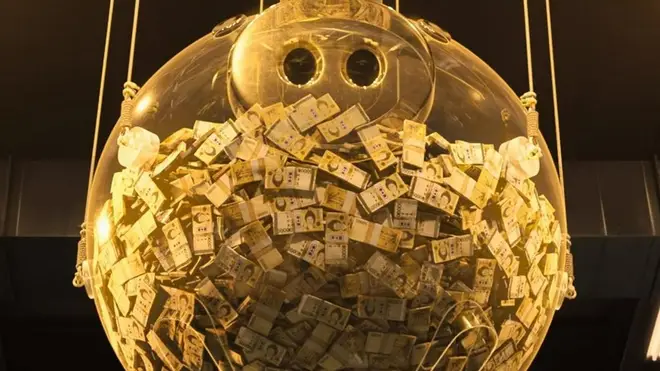
To truly grasp the scale of 45.6 billion won to usd, it helps to put the dollar equivalent—around $33 million—into a real-world context. This amount of money represents significant purchasing power.
Luxury Real Estate
With $33 million, you could purchase premier real estate in some of the world’s most expensive cities.
- New York City: A luxurious penthouse in Manhattan with stunning city views.
- Los Angeles: A sprawling mansion in Beverly Hills or Malibu, complete with a pool and guest house.
- London: A historic townhouse in a prestigious neighborhood like Kensington or Mayfair.
- Seoul: Multiple luxury apartments in the affluent Gangnam district.
High-End Investments
This sum could also form the basis of a powerful investment portfolio.
- Business Ventures: You could acquire a medium-sized company, become a major angel investor for several promising startups, or launch a significant business of your own.
- Art and Collectibles: This budget would allow you to bid on masterpieces by famous artists at major auction houses or acquire a collection of rare classic cars.
- Philanthropy: A donation of this size could establish a charitable foundation, fund a new hospital wing, or create scholarships for thousands of students.
Entertainment and Media
In the world of entertainment, $33 million is a substantial figure. It could fund the entire production budget for a mid-range Hollywood movie or a high-end streaming series. For context, this is comparable to the budgets of critically acclaimed films like Parasite (which had a budget of around $15 million) or Everything Everywhere All at Once (around $25 million).
Why This Conversion Matters in Business and Finance
The conversion of 45.6 billion won to usd is not just an academic exercise; it has real-world implications for businesses, investors, and governments.
International Trade and Corporate Finance
For a South Korean company like Samsung or Hyundai, dealing with large sums in foreign currencies is a daily reality. If Samsung sells 45.6 billion won worth of electronics to a U.S. retailer, the final dollar amount they receive depends entirely on the exchange rate at the time of payment. A weaker won means they receive fewer dollars, impacting their revenue and profit margins. This is why corporate finance departments closely monitor exchange rates and often employ strategies to mitigate currency risk. For more insights on global financial trends, platforms like Forbes Planet often provide detailed analysis.
Foreign Direct Investment (FDI)
When a U.S. company decides to invest in South Korea—for instance, by building a factory or acquiring a local firm—it must convert its dollars into won. A favorable exchange rate makes the investment cheaper, encouraging more capital to flow into the country. Conversely, if a Korean firm wants to acquire a U.S. company for $33 million, they need to know how many won that will cost them. The 45.6 billion won to usd figure represents the scale of such cross-border investments.
Global Economic Health Indicator
The KRW/USD exchange rate is often viewed as a barometer of economic health for both South Korea and, to some extent, the global economy. South Korea is a major exporter, and the strength of the won can indicate global demand for its goods (like semiconductors and cars). A weakening won might signal economic uncertainty or a “risk-off” sentiment among global investors, who tend to move their money into perceived safe-haven currencies like the U.S. dollar during turbulent times.
How to Get the Best Exchange Rate
If you ever need to convert a large sum of money, getting the best possible exchange rate is crucial. A small percentage difference can translate into thousands or even millions of dollars.
- Avoid Airport Kiosks: Currency exchange services at airports are convenient but notoriously expensive. They often have wide spreads, meaning a significant gap between the buying and selling price.
- Compare Banks and Financial Services: Your bank can handle the conversion, but it’s wise to compare their rate with specialized foreign exchange services like Wise (formerly TransferWise) or Remitly. These platforms often offer more competitive rates and lower fees.
- Understand the “Mid-Market” Rate: The rate you see on Google or financial news sites is the mid-market rate—the midpoint between the buy and sell prices. You will never get this exact rate as a consumer. The goal is to find a service that offers a rate as close to the mid-market rate as possible.
- Lock in a Rate: For very large transactions, some services allow you to lock in a favorable exchange rate for a future transfer. This protects you from potential negative fluctuations while you arrange the funds.
Conclusion
The seemingly simple question of converting 45.6 billion won to usd opens up a fascinating window into the world of international finance. We’ve seen that the answer—approximately $33 million USD—is not a fixed number but a dynamic value influenced by complex economic forces. This single conversion connects to everything from historical events and national economic policy to the practical decisions of global corporations and individual investors.
Understanding this process gives you a deeper appreciation for how interconnected our world is. The value of money is relative, and its journey across borders tells a story of trade, investment, and economic health. Whether you’re an investor, a business owner, a traveler, or just a curious individual, grasping the fundamentals of currency exchange is an invaluable tool for navigating our globalized economy.
Frequently Asked Questions (FAQ)
Q1: What is the current value of 45.6 billion won to usd?
The value changes daily. As of late 2025, 45.6 billion won to usd is approximately $33 million. However, you should always check a real-time currency converter for the most up-to-date rate before making any financial decisions.
Q2: Why does the KRW to USD exchange rate change so often?
The exchange rate is determined by supply and demand in the foreign exchange market. This is influenced by many factors, including differences in interest rates, economic growth, inflation, political events, and trade balances between South Korea and the United States.
Q3: Is the Korean won a strong currency?
The strength of a currency is relative. Compared to the U.S. dollar, the won has a high numerical value (e.g., over 1,300 KRW to 1 USD), but this doesn’t mean it’s “weak.” The South Korean economy is one of the largest and most advanced in the world. The currency’s strength is better judged by its stability and purchasing power over time, not the numerical value of its exchange rate.
Q4: Where can I get the best rate for converting a large sum of money?
For large conversions, it’s best to avoid airport exchange counters and compare rates between major banks and specialized online foreign exchange services. Online platforms often offer more competitive rates and lower fees than traditional banks. Always look for a provider with a rate close to the mid-market rate.
Q5: What does a “strong” vs. “weak” won mean for the conversion?
- A stronger won means it takes fewer won to buy one U.S. dollar (e.g., 1,300 KRW to 1 USD). In this case, 45.6 billion won would convert to more U.S. dollars.
- A weaker won means it takes more won to buy one U.S. dollar (e.g., 1,400 KRW to 1 USD). In this scenario, 45.6 billion won would convert to fewer U.S. dollars.
Stay Informed With the Latest & Most Important News
Previous Post
Next Post











Advertisement